
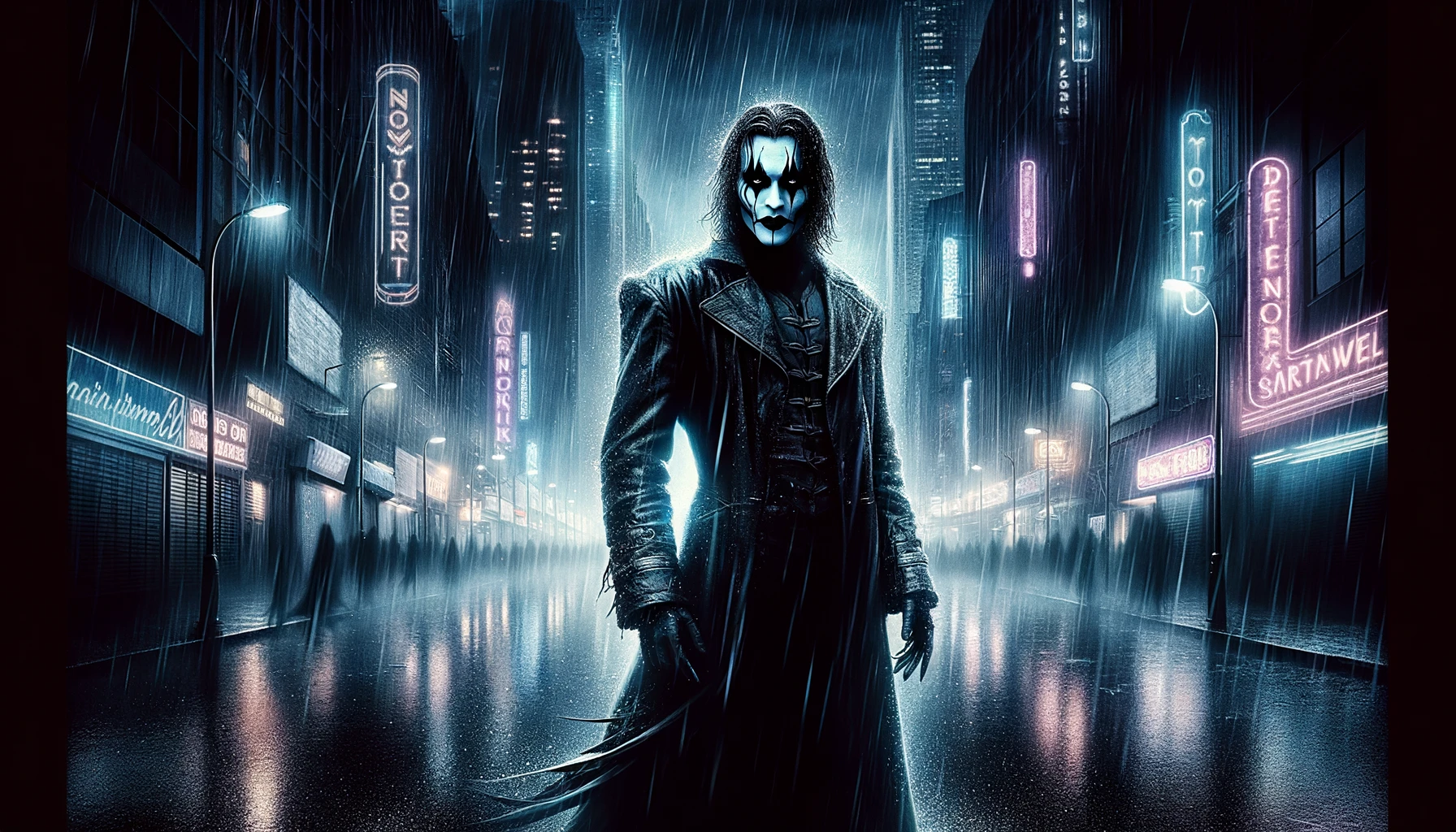
In honor of the 30th anniversary of the film 'The Crow,' we look at interesting and unexpected facts about the movie.
The cult 1994 film 'The Crow' directed by Alex Proyas, about a man who returns from the dead to avenge his own murder and that of his fiancée, was overshadowed by tragedy. Brandon Lee died in an accident on set just days before filming wrapped. Many know this fact, but there are several things you might not know about the film. That's what we'll discuss.
'The Crow' is based on a comic book inspired by two tragedies
In 1981, 21-year-old James O'Barr was drawing combat manuals for the Marine Corps when he decided to create 'The Crow.' He hoped it would help him cope with the death of his fiancée, who was killed by a drunk driver.
O'Barr told The Baltimore Sun in 1994:
I tried every way to overcome depression: I abused drugs, went to clubs or parties every night, and just tried to keep myself numb as long as possible.
Eventually, I had enough sense to realize that was a dead end, and I thought that maybe by writing something down on paper, I could exorcise some of that anger.
The key moment in creating the comic's plot came from another tragedy. Around the same time, O'Barr heard a story about a couple killed for their wedding ring.
I thought it was absurd: a $30 ring, two lives wasted. That became the starting point, the idea that there could be a love so strong that it could overcome death, that it could refuse death, and that soul would not rest until it could make things right.
Interest in turning the comic into a film arose immediately
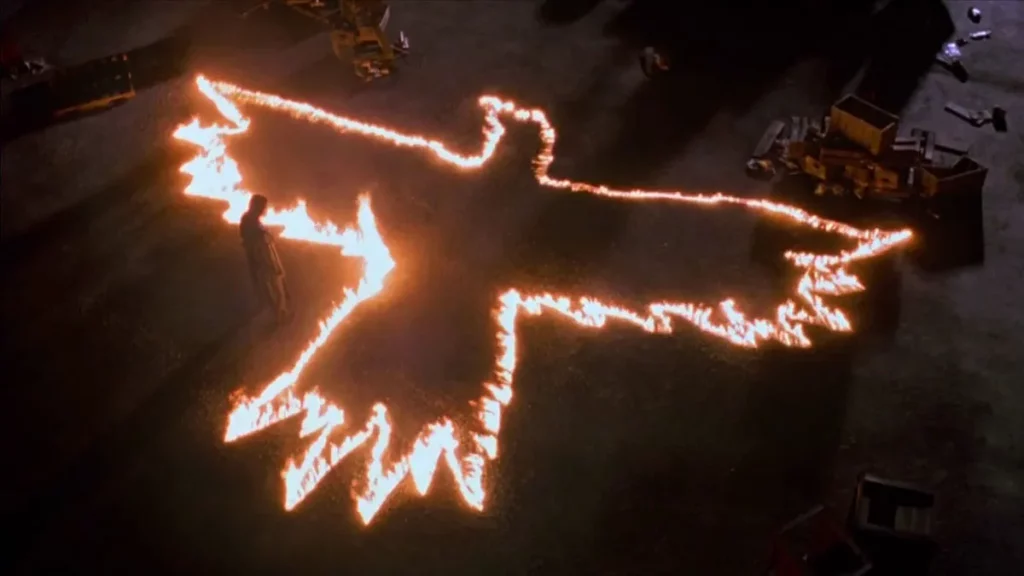
The comic 'The Crow' debuted on February 1, 1989. Shortly after the second issue was released, a young director approached O'Barr, who was working in auto body repair at the time, interested in buying the rights to 'The Crow' for a one-time payment. The plan was to include all rights across all media without a time limit.
The money was decent, so O'Barr was about to accept the offer. But friends convinced him to consult a Hollywood agent, who advised him not to sell the comic rights in that format.
When the third issue came out, O'Barr met screenwriter John Shirley and producer Jeff Most, who were very eager to turn the comic into a film.
Their enthusiasm convinced me that the film would be done right. Even though the amounts were smaller than what I had been offered before, it was the best chance that the film would be something I would want to watch. I just followed my instincts.
Screenwriter John Shirley and producer Jeff Most made changes to the antihero's image
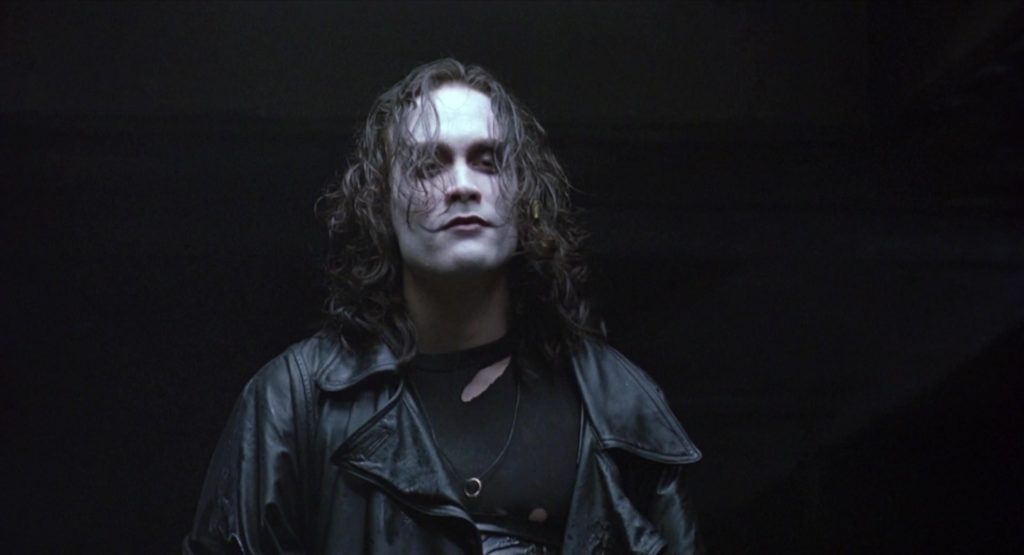
Shirley and Most immediately got to work adapting 'The Crow' for the big screen. They made several changes, downplaying Eric's drug use and bringing the love story to the forefront. They also made the crow a real bird, rather than just a figment of Eric's imagination as in the comic.
Independent producer Edward Pressman agreed to help make the film, and over the next two years, Shirley refined the script. He added an older brother for Sarah (a version of the comic character), a girl with a drug-addicted mother who befriends Eric, and so on.
Eventually, O'Barr felt the creative team had gone too far with their changes, and he created a 10-page outline explaining his characters' motivations to bring them back to the original ideas.
Soon after, horror specialist David J. Schow ('The Texas Chainsaw Massacre 3: Leatherface', 'Critters 3', 'Freddy's Nightmares') took over the script, telling Pressman that Eric Draven should be a 'gothic, rock 'n' roll Terminator.'
Schow reduced the number of villains, gave the remaining ones a clear hierarchy, and added 'Devil's Night' as the motivation for the initial attack on Eric and his fiancée. 'Just to give the villains a more esoteric character,' he said in an interview for a documentary about the making of 'The Crow.'
With that decision, the screenwriter also justified the setting—Detroit, a city where fires and riots regularly occur on the night before Halloween.
Producers knew who they wanted as director and lead actor
Pressman suggested Alex Proyas, an Australian director who at the time was making music videos and commercials but not feature films, to direct 'The Crow.' Although Proyas was in high demand in Hollywood, he was waiting for the right project, and 'The Crow' turned out to be it. He signed on in 1991.
Initially, the producers considered musicians for the role of Eric Draven, including Charlie Sexton, a rocker from Texas. But ultimately, they chose Brandon Lee. At the time, Lee—the son of famous actor and martial artist Bruce Lee—had appeared in several films but had not had a breakout role.
We considered several well-known actors, and we were concerned that some of them lacked athletic ability. Others had athletic ability but not acting talent. Brandon combined everything necessary. When he walked into our office, we immediately knew we had Eric Draven.
Brandon Lee adjusted the script and asked to remove one character
As soon as Lee signed on for the lead role in 'The Crow,' he read the comic and suggested adjustments.
After the script was written, Alex [Proyas] and I went back to the comic and tried to find moments that hadn't made it into the script.
Proyas took Lee's notes seriously and often incorporated his changes into the script. In particular, he cut out a supervillain, an Asian character who wanted to steal Eric's powers, whom Lee considered stereotypical.
The makeup was not inspired by KISS and was a problem for the creators
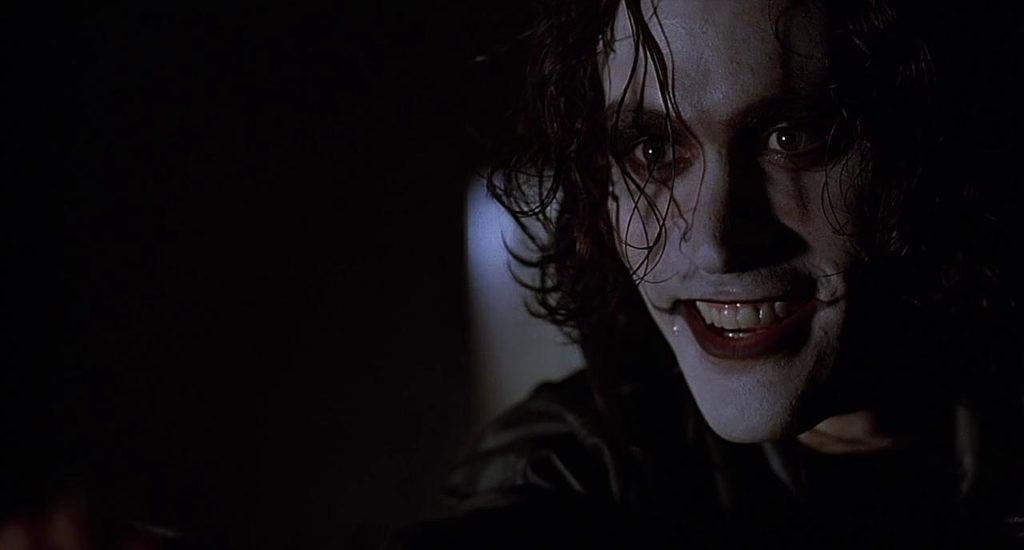
There are persistent rumors that Eric Draven's makeup was inspired by Alice Cooper or the band KISS, but O'Barr denies them. At ComicCon in 2009, the author said that the visual look of the Crow was based on a puppet mask he saw painted on a theater in London:
I thought it would be interesting to depict this painful face with a forced smile painted on.
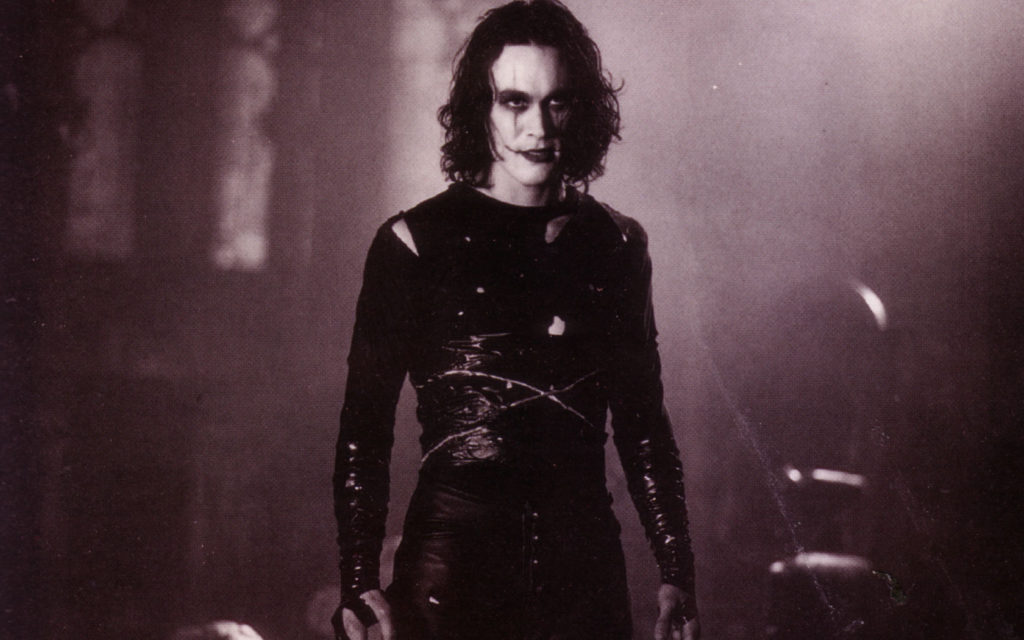
Regardless of what inspired the makeup, getting it right was very difficult. Applying the makeup, which had to last for hours, took between 35 minutes and an hour. Special effects artist Lance Anderson even created a rubber mask with slits to ensure the line pattern around the eyes and mouth was even.
David Patrick Kelly bought an antique copy of 'Paradise Lost' for filming
Some of the actors who played villains in 'The Crow' underwent training to portray their characters. For example, Laurence Mason worked with stunt coordinator Jeff Imada to learn real knife-fighting techniques to play Tin-Tin.
Others wore costumes: Michael Massee, who played Funboy, wore outfits inspired by Iggy Pop, and some looks were taken directly from the comic.
David Patrick Kelly, who played T-Bird, used... literature to get into character! In flashbacks, his character quotes John Milton. Kelly bought an antique copy of 'Paradise Lost' to use in those scenes.
Real crows were used during filming
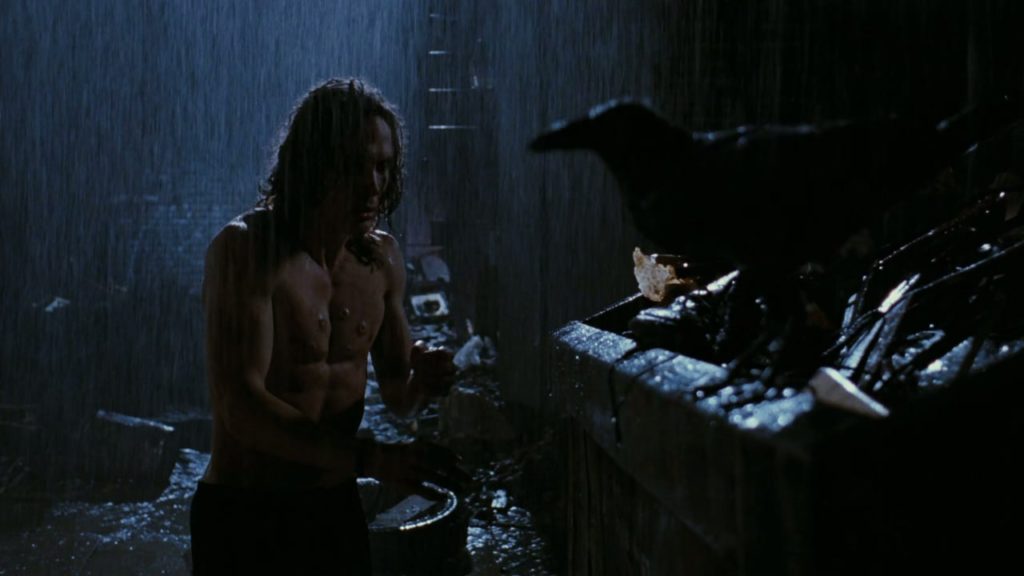
Trainer Larry Madrid prepared five crows for filming. Since 'The Crow' was filmed at night, when birds sleep, he had to acclimate them to that, as well as make them fly in the rain (also unnatural for these birds). One of the crows had to be trained to sit calmly on Lee's shoulder.
Many tricks were used on set
'The Crow' didn't have a huge budget, so the filmmakers sometimes resorted to tricks to get the shots they needed. For example, in the opening scene showing the burning city, miniatures and projection technology were used.
We put a lot of effort into projecting flames onto miniature sets. We had a screen set up to do it in several passes. These were the earliest days of digital images, and we didn't have the money to use them, so we tried to do everything in a much more optical way.
According to him, in one iconic scene where Eric throws a bunch of rings into the barrel of a shotgun and fires it, Proyas 'filmed several huge rings falling onto the camera through clouds of smoke. Because of how it was shot, you really think you see a bunch of rings that were thrown into the gun.'
The studio didn't have the money or space for a car chase, so instead they used miniatures. And the final rooftop confrontation between Eric and the main villain Top Dollar (Michael Wincott) was not filmed on a church roof, but on modular structures set up on a soundstage floor, made to look like a Gothic cathedral.
They also used special effects
For the scene where the crow attacks Myca (Bai Ling), effects artists built a mechanical bird with moving wings and claws.
For the scene where Eric is wounded in the arm and it heals, mechanical arms were also made. Lance Anderson explained:
In the end, we did this: we covered the arm up to the bullet hole, then took filler and filled the hole so that it completely closed and disappeared, like stop-motion.
They also created a full dummy of Top Dollar to use in the climactic fight scene where the villain is impaled on a gargoyle horn.
The original comic author James O'Barr can be seen in the film
He plays a looter who steals a TV after the explosion at Gideon's pawn shop.
Filming was plagued by misfortunes, culminating in the tragic death of Brandon Lee
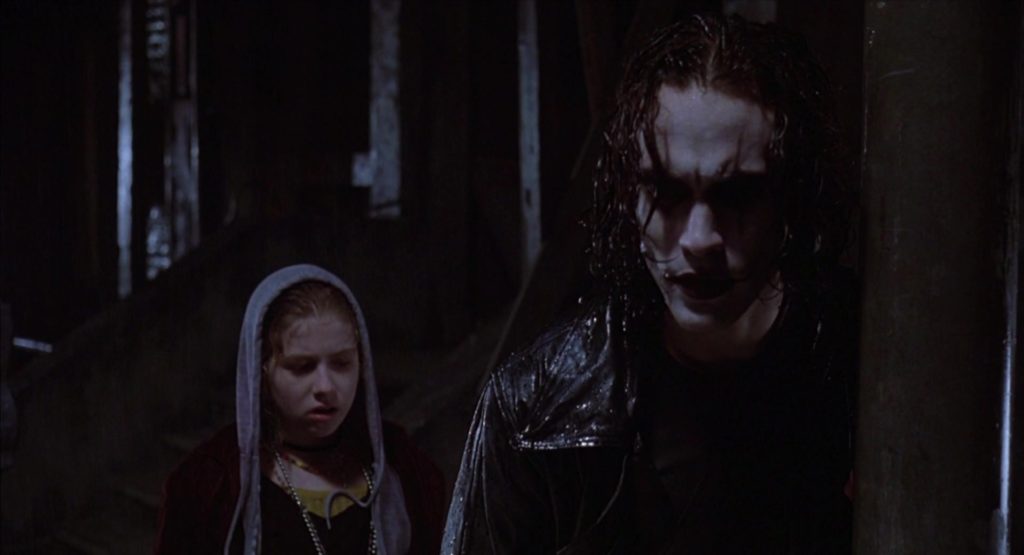
Actors and crew worked long, grueling hours, in the rain and at night, on the set of 'The Crow,' which was plagued by misfortunes almost from the start.
In February 1993, a carpenter was seriously injured when a crane he was working on hit power lines. That same night, an equipment truck caught fire. One of the builders accidentally stabbed his hand with a screwdriver. Then, in March, a hurricane destroyed some sets.
On March 31, 1993, they were filming a flashback showing Eric's death. As he entered the apartment he shared with Shelly and discovered her being raped and beaten by Top Dollar's henchmen, Funboy pulled out his .44 Magnum and shot him. Here's what People magazine wrote about the incident:
The script called for a close-up of a loaded weapon. The crew, following standard procedure, used blanks, which are nothing more than bullets without gunpowder. When the close-up was done, the gun was unloaded and then reloaded with blanks. They sound just as loud as real ones, but when fired, the gun only ejects harmless cardboard wadding. However, this time the actions were far from safe. Massee pulled the trigger, and Lee collapsed to the ground with a hole the size of a quarter in the lower right part of his abdomen.
The crew didn't realize Lee was injured until Proyas said 'Cut!' and the actor didn't get up. He was rushed to the hospital, but doctors couldn't save him. Lee died that afternoon, at just 28 years old.
It took some time to figure out what happened, but according to The Telegraph, both the dummy bullets and the blanks used on set 'were hastily made by removing gunpowder from real bullets, as crew members were pressed for time.'
After the accident, Paramount, which had agreed to distribute the film, pulled out of the project, leaving it in limbo (Miramax eventually picked it up).
Producers, with permission from Lee's family, wanted to finish the film, and after a six-week hiatus due to the tragedy, actors and crew returned to Wilmington to complete filming of 'The Crow.'
No criminal case was ever filed regarding Lee's death, but his mother, Linda Lee Cadwell, filed a lawsuit against the producers and production company, which was eventually settled.
In 2005, Massee spoke about the accident for the first time:
This should never have happened. I shouldn't even have picked up the gun until we started filming the scene, and the director changed it. After that, I just took a year off, went back to New York, and did nothing. I didn't work. What happened to Brandon was a tragic accident... I don't think you can ever come to terms with something like that.
After Lee's death, the script was rewritten and one character was cut
A month after Lee's death, Pressman and Proyas began rewriting the plot, ultimately presenting, according to Entertainment Weekly, 'an emotionally softened, reworked script.'
The creators chose to use Lee's unfinished scenes in the edit, and one character was completely removed—Skull Cowboy, played by Michael Berryman, a guide who explained the rules of Eric's return to the world of the living.
Alex Proyas explained that he cut the character for several reasons:
I was never happy with that storyline... I felt it lowered the standards of the film, made it a bit cheesy. But I also felt that character was superfluous. I felt that audiences understand what's happening, they don't need someone to tell them what's happening, and that seemed to be his function. Also, we only managed to shoot one scene with him; two more were planned that we didn't get to. Dropping the character was a simple decision.
In the end, Skull Cowboy's narration was replaced by Sarah's voiceover, and Eric became vulnerable only when the crow was injured.
After Lee's death, cutting-edge visual effects were used to complete the film
In addition to using stand-ins and shooting scenes in shadow, VFX company Dream Quest Images was brought in to fill some gaps. Using footage of Lee from other scenes, the company completed work on seven shots.
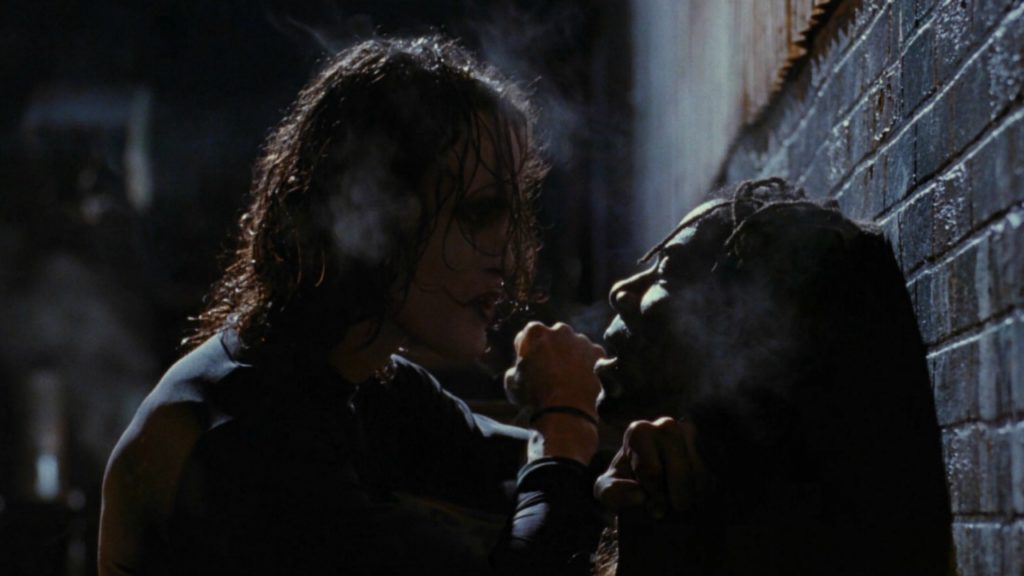
In one scene where Eric enters his abandoned loft, Dream Quest took a shot of Lee stumbling in an alley and removed the background; adding a matte painting of a doorway, they created the impression that he was actually walking into his apartment.
In another scene where Eric sees himself in a broken mirror, Dream Quest again isolated Lee from another moment. Using a photo of a double in front of the broken mirror as a reference, they created a grid that allowed them to overlay Lee's image onto the mirror.
Even more unusual was that the company did this on handheld shots—far from standard practice at the time. Typically, such shots were carefully planned, staged, and filmed with a steady camera. The studio was able to accomplish this task with newly developed image-tracking software.
Company executives feared audiences wouldn't understand the film
At the first test screenings, two or three people out of 300 asked: 'Why can Eric Draven come back with such abilities? Why can he return from the dead?'
Alex Proyas recalled that at the time, this was very important to everyone, but now when we watch the film, it's just ridiculous.
'The Crow' became a hit
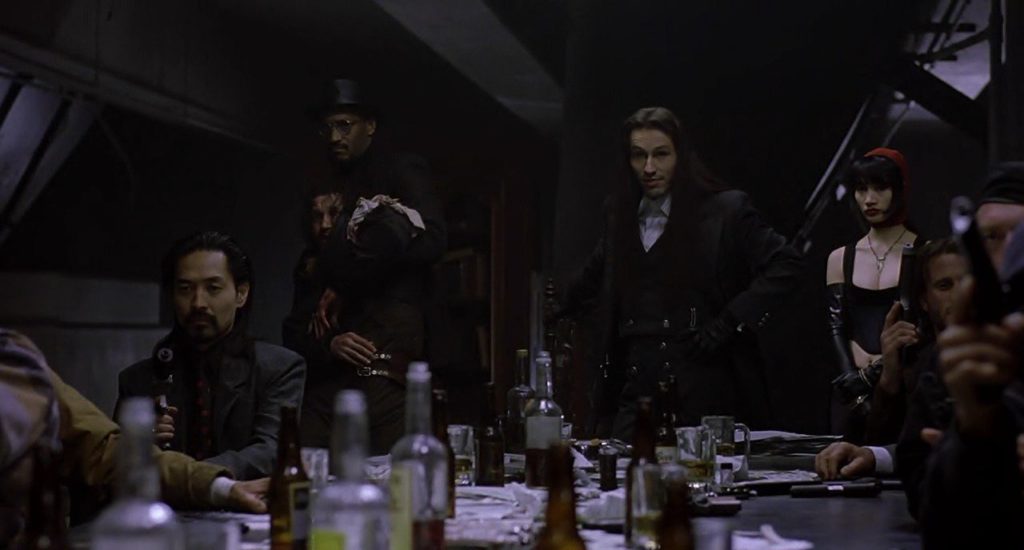
'The Crow' was released on May 13, 1994, and became the number one film in America in its opening weekend. Critics, including Roger Ebert and Peter Travers of Rolling Stone, praised the film. The project's domestic box office gross was nearly $51 million.
O'Barr donated most of his profits from the film to charity
James O'Barr bought his mother a car and a surround sound system for himself, and donated the rest:
I was friends with Brandon, so for me it was just blood money. I didn't want to profit from his death. And I kept that secret as long as I could. It's not charity if you get paid for it.
'The Crow' spawned several sequels
Alex Proyas noted that creating a franchise was not in his plans, but he understood that such a development was possible.
I would have loved to make 'The Crow 2,' and if Brandon had been involved, we would have had a great film.
But even without Lee, sequels appeared. 'The Crow: City of Angels' starring Mia Kirshner as Sarah and Vincent Perez as the Crow, Ashe Corven, was released in 1996.
In 1998, a television series 'The Crow' starring Mark Dacascos was released. Then, in 2000, Kirsten Dunst and Eric Mabius starred in 'The Crow: Salvation.' This was followed in 2005 by 'The Crow: Wicked Prayer,' starring Tara Reid, David Boreanaz, and Edward Furlong.
A remake of 'The Crow' is set for release in 2024
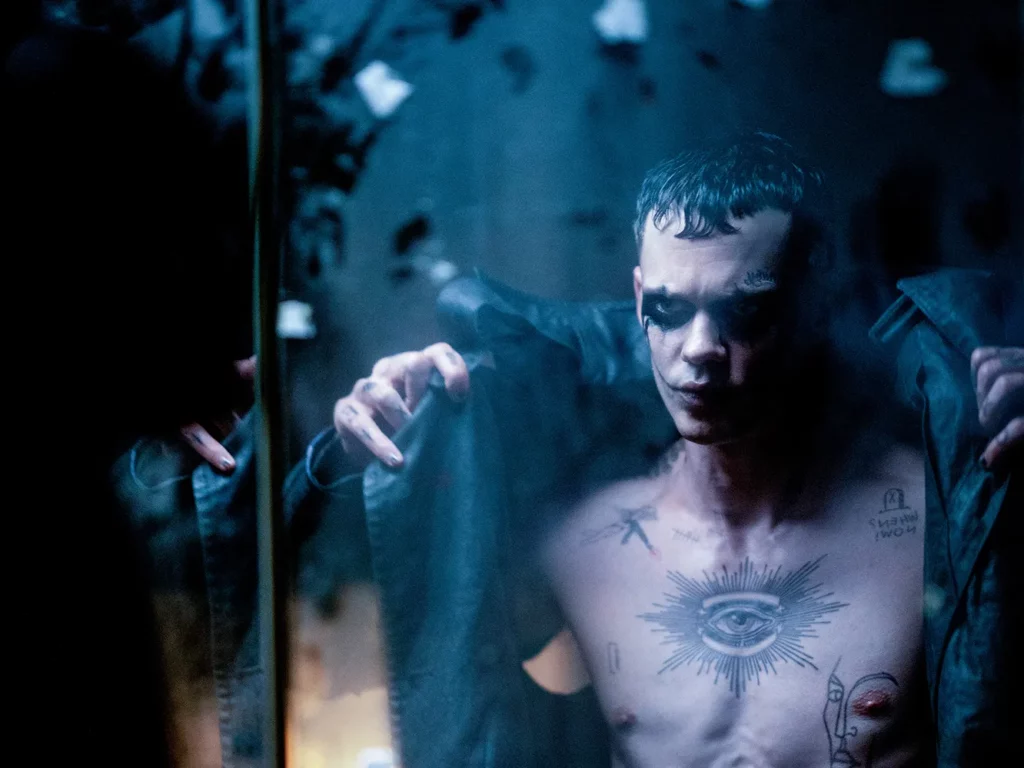
Talk of a 'The Crow' reboot has been circulating since 2008. The film lost several stars and directors (including, for example, Jason Momoa), survived the bankruptcy of the production company, but recently news emerged that the film, directed by Rupert Sanders and starring Bill Skarsgård, FKA Twigs, and Danny Huston, was acquired by Lionsgate, which will release it in 2024.
We appreciate what the character of the Crow and the original film mean to legions of fans. We believe the new film will offer audiences an authentic and 'gritty' reimagining of the emotional power and mythology of the original.
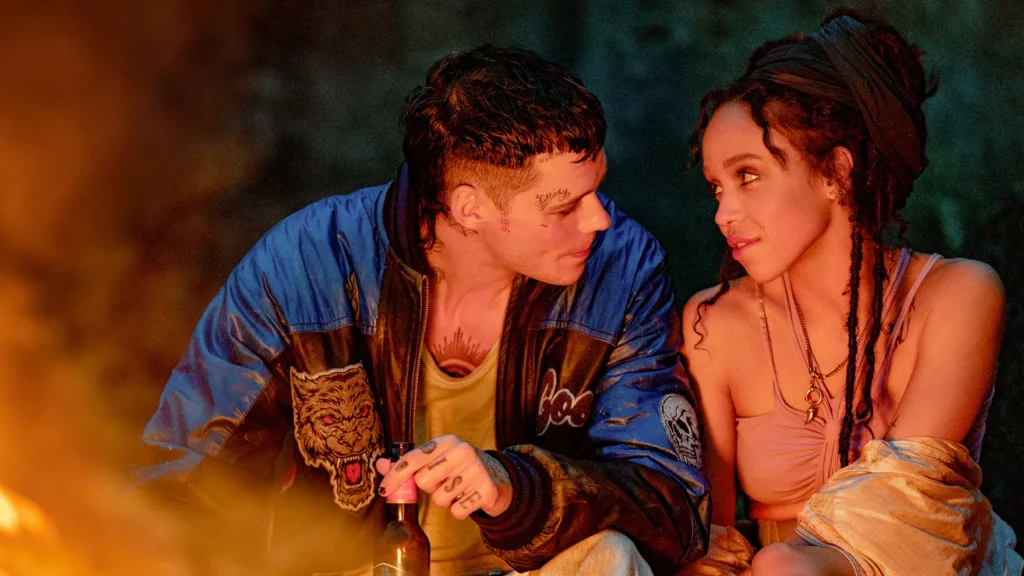
As much as Sanders makes it clear that his new film is a completely different take on James O'Barr's source material, he also considers it a kind of tribute to Lee:
Obviously, it was a terrible tragedy, and it's definitely something we always thought about while making the film. Brandon was the original voice, and I think he will always be synonymous with 'The Crow,' and I hope he is proud of what we've done and how we've brought this story back. His soul is alive in this film. There is a real fragility and beauty in his version of the Crow, and I think Bill feels like his successor.
Although the deaths of Eric and Shelly on screen occur in the first minutes of the 1994 film 'The Crow,' Sanders says he always wanted a more even balance between light and dark in his version of the story.
Does that mean we'll see more of the loving couple before tragedy separates them, making Eric's quest for revenge more emotional? As for whether the audience will believe in the romance, Sanders doesn't seem too worried:
I never did any tests between Bill and FKA Twigs. I invited them to dinner when they first arrived [on set] in Prague, and I was a bit like a nervous parent watching to see if a spark would fly, because you never know. And they were wonderful. They chatted and immediately got into it.
As for Skarsgård's fearsome appearance in the second half of the film, Sanders says the inspiration came not so much from O'Barr's comic or Lee's portrayal, but from his own life:
I think what's special about Bill is that he has a disturbing beauty, and as he transforms through his loss, he becomes something he can't even control. It's like the famous phrase: 'He who fights with monsters should be careful lest he thereby become a monster.' That image was me in the '90s when we lived in London. I hope that people who are 19 today will look at him and say, 'This guy is us.'
The new 'The Crow' is scheduled for release on June 7.
Comments
0No comments yet.
Sign in to join the discussion.