
'Fast Life' is the second short film by a young French director. Paul Rigou carefully paints the image of a modern Oblomov, reflecting on the acceleration of the pace of life. The film can be watched at the online festival MyFrenchFilmFestival until...
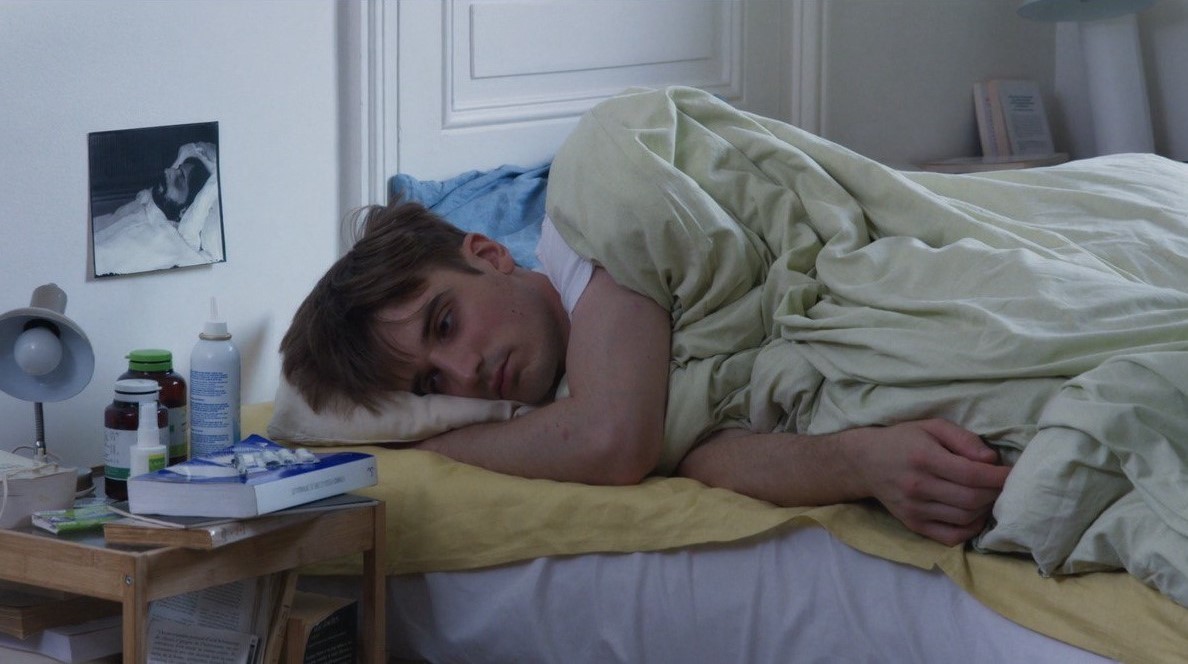
A rumpled bed, made with light, fresh linens. On one bedside table, a pile of books gathers dust; on the other, a heap of pills and a glass of water. At five in the morning, Jean drinks hawthorn, valerian, and a quarter of a bromazepam. After twelve hours of sleep, he takes a Doliprane tablet so his head won't hurt. Jean is a measured, somewhat slow young man, too sensitive to himself. It seems he spends time not on real life, but on empty reflection. This feeling intensifies when his hyperactive roommate, Alec, appears in the frame.
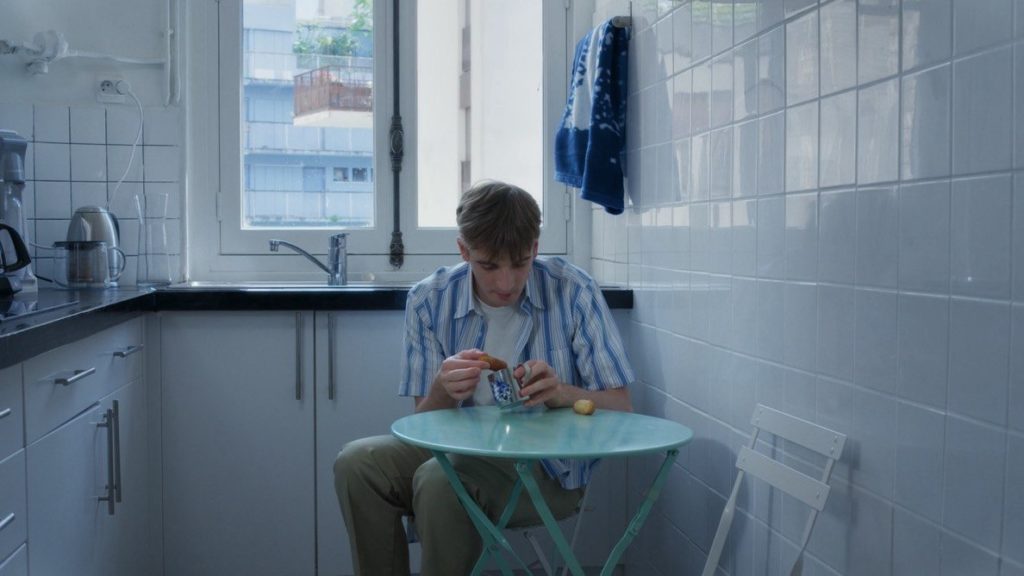
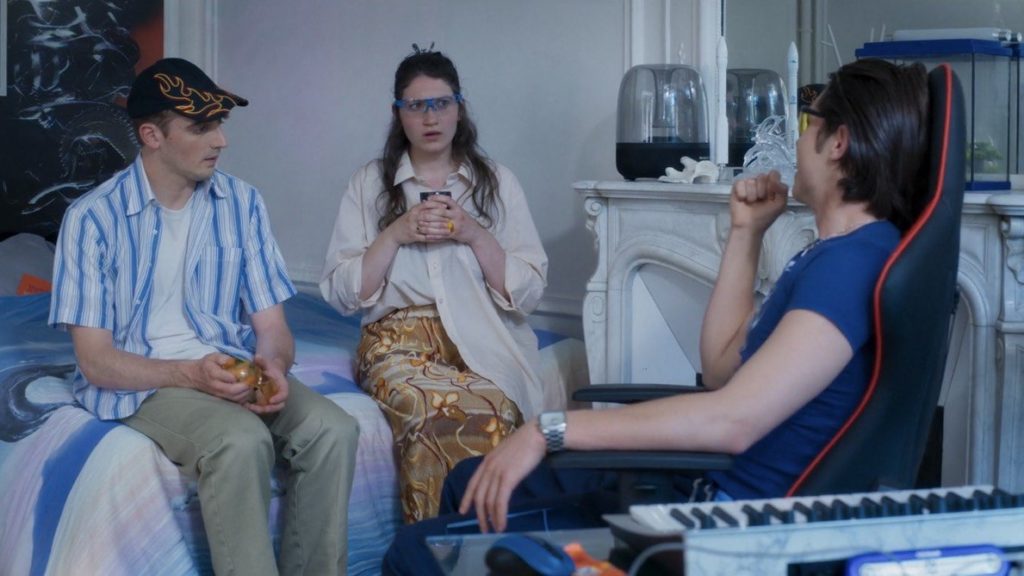
The rhythms of life and the characters of Alec and Jean are contrasted with each other. This is merely a hyperbolic imprint of real types of people, and within twenty minutes of runtime, their images cannot be deepened. On the canvas of the film, people are divided into only two types: those who love to fall asleep because the day is finally over, and those who love to wake up because the day has finally begun. But it is precisely in this pure form that these two heroes best harmonize and contrast simultaneously. Jean's pill-strewn, light room in warm tones seems somehow dull compared to Alec's room: cool shades, synthesizers, whimsical glass figurines, and flashing lights like at a techno party.
'Fast Life' is a commedia dell'arte in which one hero wears the mask of a pessimistic philosopher, and the other is clad as a convinced optimistic simpleton. And although Voltaire has already taught us that excessive optimism is absurd, the modern Candide in the person of Alec looks quite organic. He is easy to communicate with and rather given over to real life and the present moment, without even thinking about the most recent past.
But it is not for nothing that the author chooses this sickly, clumsy, awkward, unsociable guy as the main character. Studying Jean is much more interesting: a melancholic locked in his room, trying to find flaws in his health, thinks much deeper than his active friend. Alec has superficial interests, which mainly consist of jumping to hyperpop and wild outdoor games. But Jean is a true contemplator; he lives slowly to have time for reflection: 'only sadness elevates us.'
The heroes' girlfriends represent a certain variation of these two ways of perceiving time. Lou (Alec's girlfriend) is as dynamic as he is, but she is capable, if not of stopping, then at least of slowing down. Caroline (Jean's girlfriend) is as slow and awkward, but trying to fight herself: 'I don't like loneliness and I suffer from communication.'
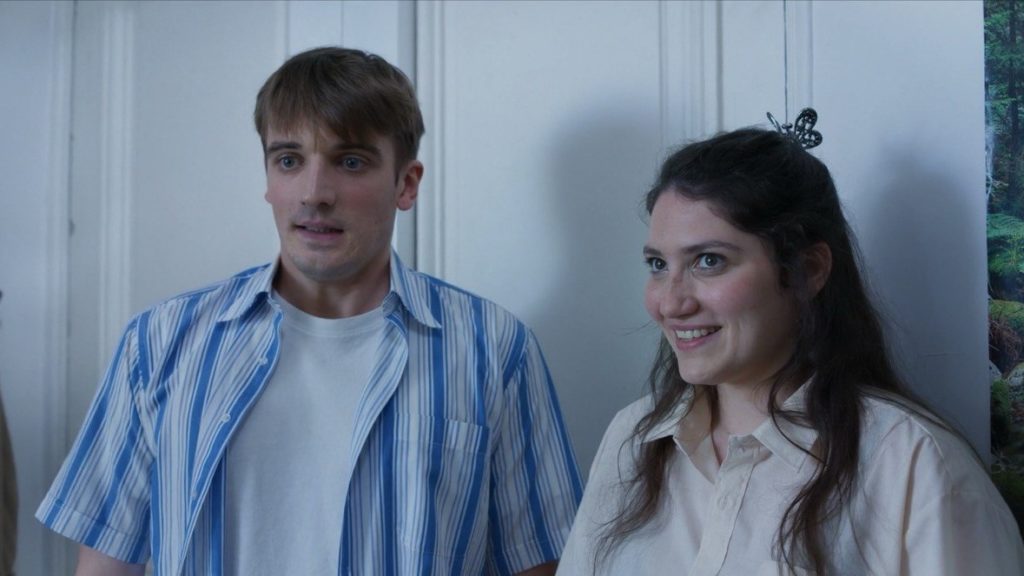
It is interesting how, without changing the camera position, the author showed the greeting of the first couple and the second. It seems that only Jean and Caroline are capable of deep sympathy: their awkward greeting is given more time, their dialogues are longer and more meaningful, their glances last longer, and the shy touch of their cheeks resembles real infatuation.
But during the conversation of all four, one can understand that Jean's measured life is a very fragile structure that can be destroyed by the fast pace of modern life. The acceleration of the subjective perception of time from activity will still sooner or later dominate his contemplative slowness. Moreover, Jean artificially tries to slow down his perception of time. He prefers to sit, stroking the grass in the shade, rather than playing in the park, because he knows that activity will only speed up time. Caroline compares him to Oblomov, but he is not only Oblomov; he is also the dreamy Lensky, and the Young Werther who finds himself in suffering.
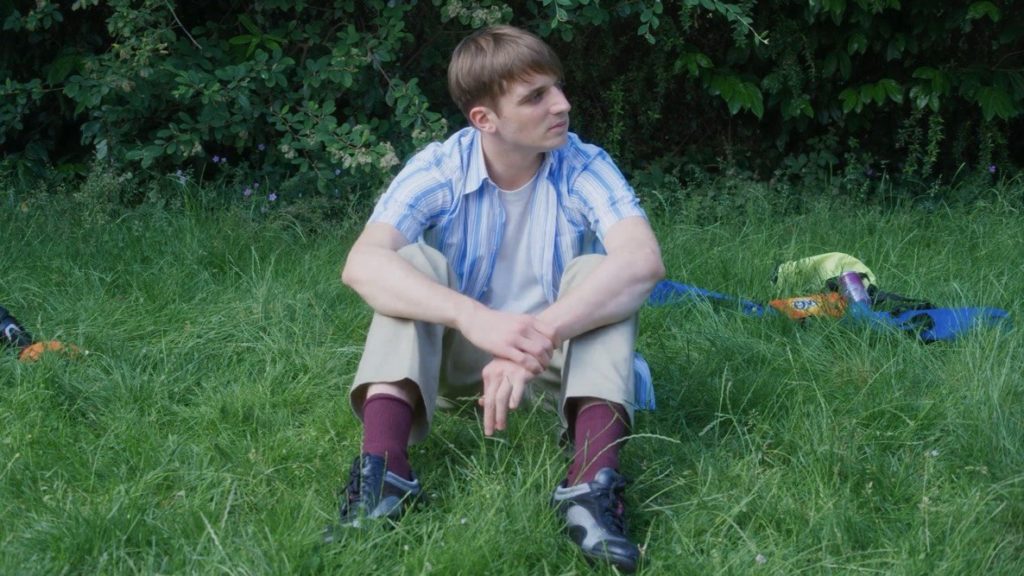
A great tradition of the past lies behind the awkward, slow, reflective hero. But 'Fast Life' shows that times are changing, and even Jean eventually tries to enjoy waking up from sleep rather than sinking into it. He changes for love and tries to impart a little of his slowness in exchange for dynamism, attempting to find something between oppressive melancholy and colorful but empty hyperactivity.
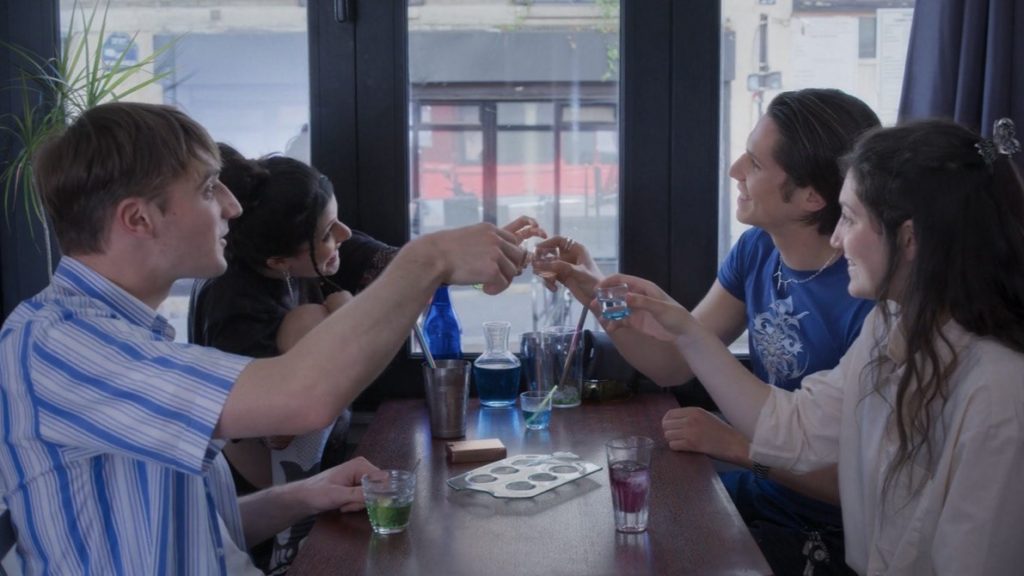
Another question that 'Fast Life' raises is the reason why contemporary authors turn to rethinking formal time. The theory developed in the early Middle Ages by Saint Augustine, continued in the works of Kant and Heidegger, is still subject to analysis in culture. As it seemed to me, the main internal conflict of the film is that the acceleration of the pace of modern life does not allow one to stop and rest, and the attempt to artificially slow its flow leads to disharmony.
Comments
0No comments yet.
Sign in to join the discussion.