

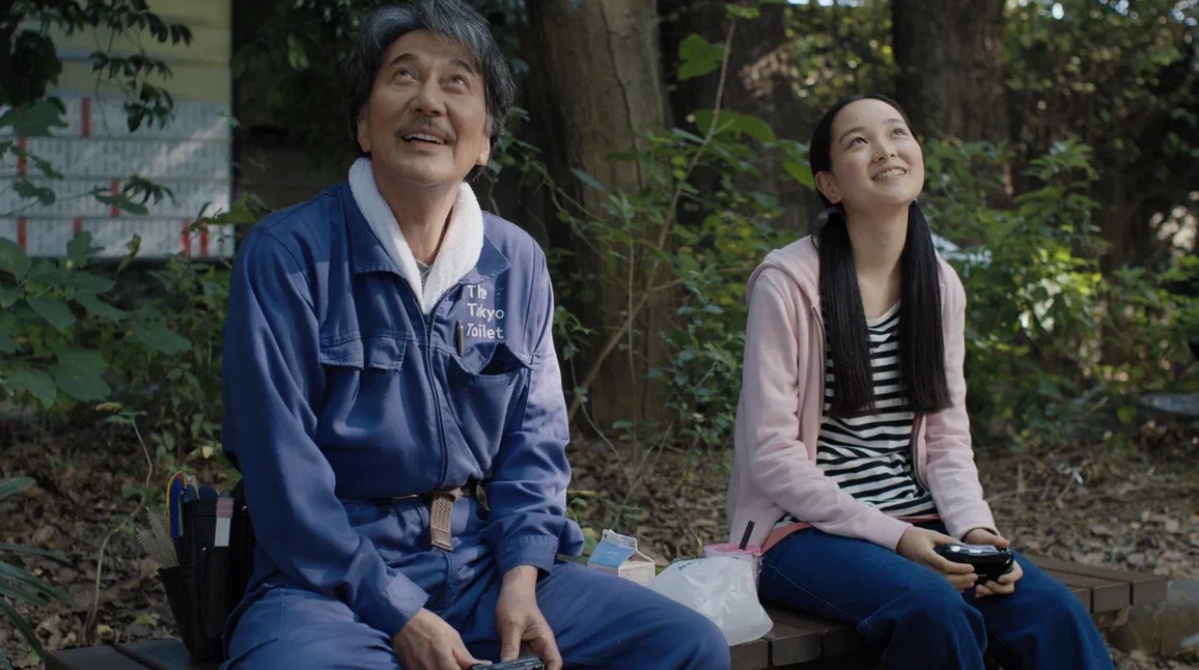
Recently, the American Academy of Motion Picture Arts and Sciences announced the Oscar nominees. The new film by director Wim Wenders, 'Perfect Days', about the life of a designer toilet cleaner in Tokyo, will compete for the title of Best Internatio...
Before us is Hirayama. He makes a living cleaning designer toilets in Tokyo, and in his free time he goes to the bathhouse, eats at various eateries, reads, and rides a bicycle. It is important for him to do his job well and for no one to disrupt his established daily routine. It seems that his life consists of tedious routine, with nothing interesting or truly significant. But in reality, each of his days is perfect.
German director Wim Wenders, who made a loud statement in the film world in 1987 with 'Wings of Desire', has finally released a new film six years after his last movie 'Submergence' — 'Perfect Days'. With this work, the German director seems to express his deep love and gratitude to Japan, and the country reciprocates: 'Perfect Days' has been nominated for an Oscar by Japan in the category 'Best International Feature Film'.
When you start watching the film, you might think it could be a documentary rather than a feature film, titled 'A Few Days in the Life of a Toilet Cleaner in Japan'. The first half hour immerses us in the measured rhythm of Hirayama's life, played by Koji Yakusho. Although it feels like he is not acting but living this character, experiencing all his emotions as his own.

Every frame here is like an unspoken poem, and the entire film is saturated with the poetry of everyday life. Neither the hero nor the camera operator is in a hurry; they move steadily at their own pace, absorbing moments of life. In feeling, this is very reminiscent of the films of Jim Jarmusch, who seeks beauty in every day, enjoys the routine and simplicity of ordinary weekdays when nothing supernatural happens in life. Life is beautiful here and now, so live it with pleasure — Jarmusch urges, and the same message is captured in 'Perfect Days'.
The hero uses every free minute to admire the rustling of leaves, reflections in glass, the play of shadows, and patterns from steam on windows. He likes to watch the local madman on the street and peek at passersby or random neighbors on a park bench. Moreover, there are not many conversations in the film; the main dialogue happens inside the hero himself, and his best interlocutors are books and music. Hirayama seems like an analog character lost in the digital world of the 21st century: his lifestyle baffles those around him, he does not fit into the framework of modern society. But that doesn't matter to him; he is comfortable with himself. And in all this lies the secret of his perfect day.
At the same time, there is an internal conflict in the film that overtakes Hirayama when his usual routine is disrupted. This cannot be called a climax in the traditional sense, but thanks to certain events, it becomes clearer how the hero manages to enjoy every day, love his work, and be at peace with himself and others.
The film gives no explanations about the reasons why the main character chose such a lifestyle. But it seems that the past in this film doesn't matter, because life is what is happening to us right now. And at first, it seems that Hirayama has a very predictable and carefree life. But Wim Wenders, at the right moment, very subtly and beautifully shows that a sincere smile every day costs the hero effort. And that being happy is a personal choice for everyone, not a coincidence of circumstances.
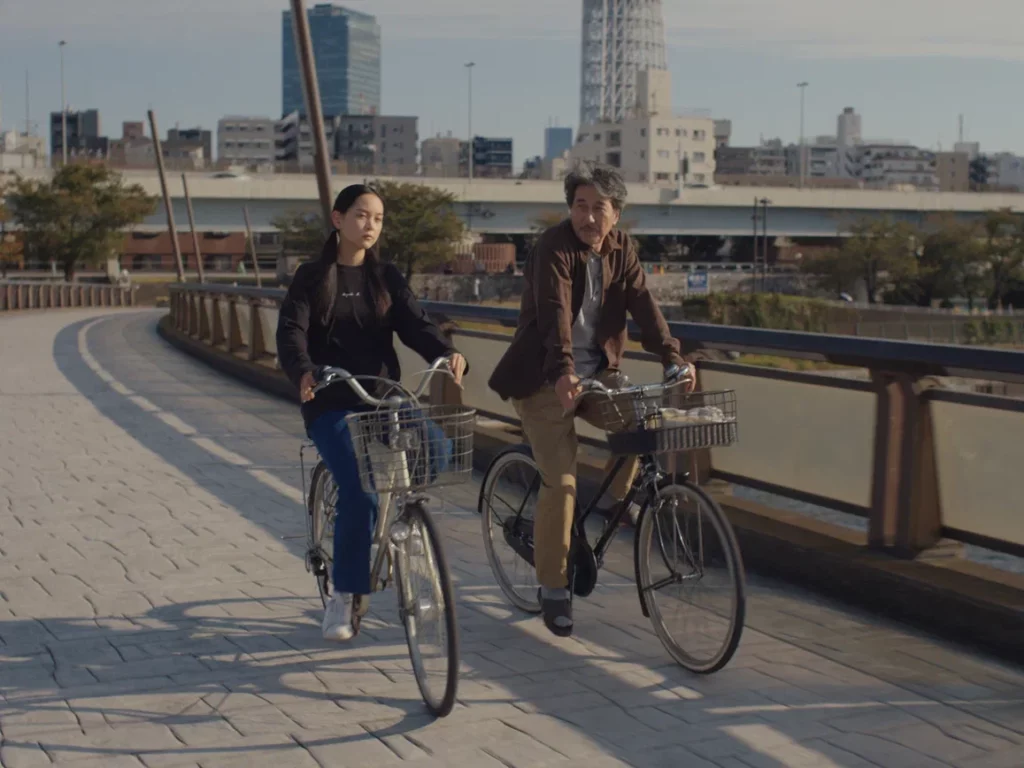
I would also like to note the incredibly beautiful visuals in the film: picturesque sunsets and sunrises, night landscapes, shots of rustling leaves as if we are sitting in a park rather than a cinema, mesmerizing views of Tokyo, cozy shots of local eateries and streets. And the songs playing here only enhance the feeling of overall beauty and soulfulness, add extra meanings to what is happening on screen, or simply delight the heart with familiar tunes. The music in the film is a separate character that is always there: it will support, comfort, evoke a sense of nostalgia, and remind you of something pleasant and kind. It seems Wim Wenders really loves Jim Jarmusch's cinema.
We are often tried to be convinced that happiness lies in the people around us, that only another person can give you what will give meaning to your life. Wim Wenders disagrees. His 'Perfect Days' is a film about chosen solitude that brings pleasure and teaches us to enjoy every lived moment. It is about inner harmony that allows us to find meaning in everyday life, not to seek joy, but to live it. To live here and now — that is what matters. And it is very symbolic that at the end of the film, the song 'Feeling Good' plays.
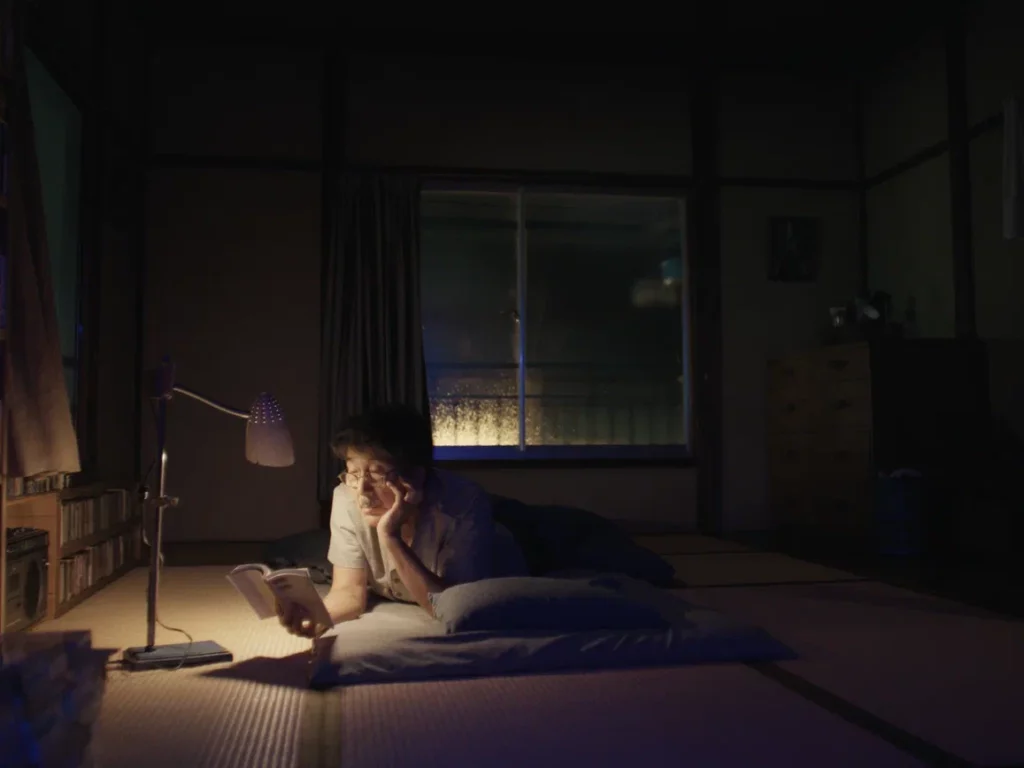
P.S. They say you can see Wim Wenders himself in the film, so keep your eyes peeled. And be sure to watch the credits to the end; there you will find an explanation of a very beautiful Japanese word that will add soulfulness to the viewing.
The film distribution company A-One is releasing 'Perfect Days' by Wim Wenders in wide release in Russia on February 1.
Comments
0No comments yet.
Sign in to join the discussion.