
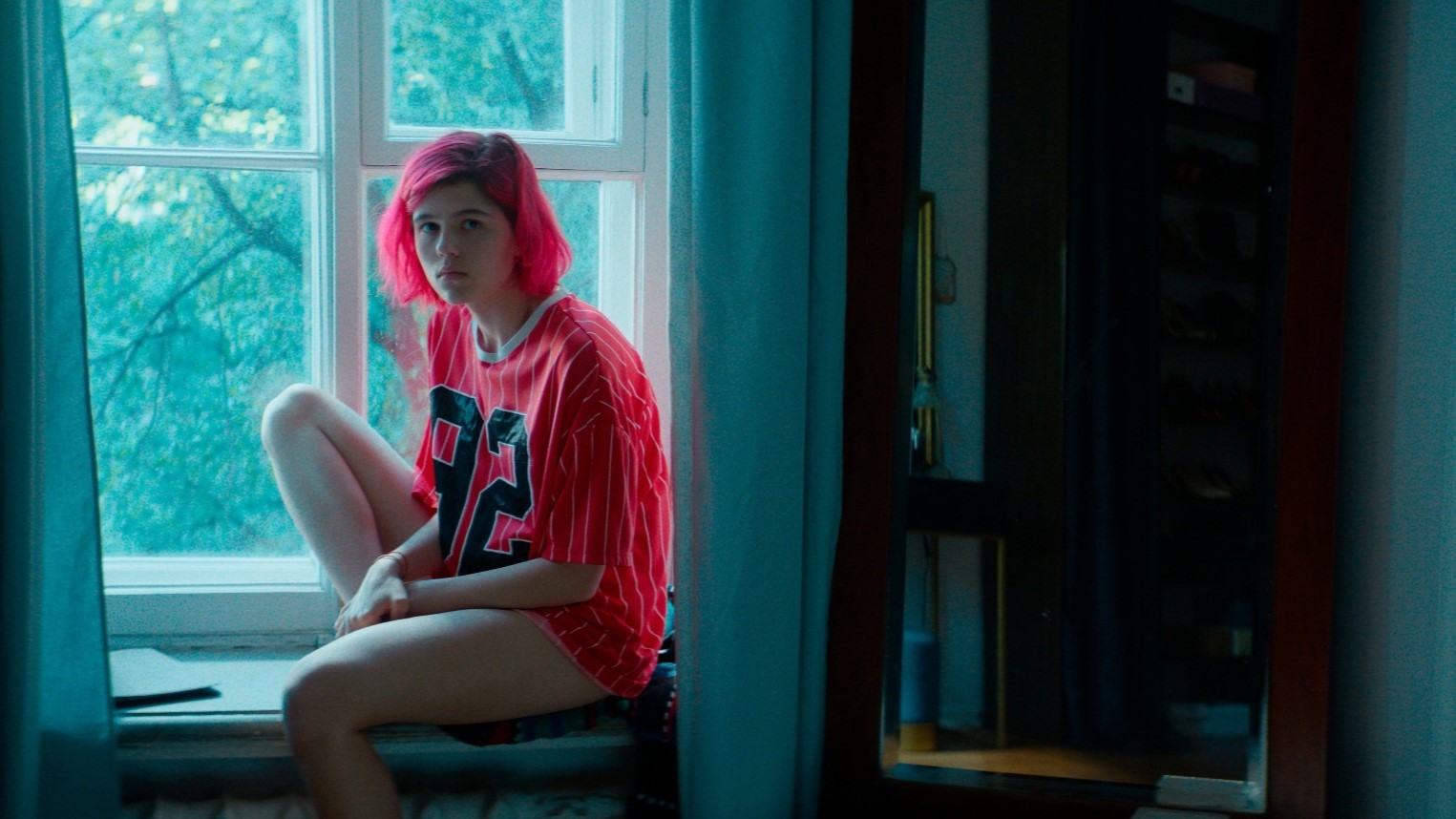
On February 1st, the (almost) teenage drama by Irina Bas, "Baby Girl," is released, which immerses the viewer for an hour and a half in one of the most insane and fundamental periods – growing up. We tell you why the film may appeal not only to high...
In 2021, the series "Sixteen+" was released, in which Irina Bas served as one of the directors. It is a musical almanac with short stories of teenagers, some of which you want to expand due to a feeling of understatement, and some you want to remove due to absurdity. But in 2023, the film "Baby Girl" is released, which raises the same issues, but much more confidently and fully. Was the series "Sixteen+" a trial run before the film "Baby Girl"?

"Sixteen+" is another melodrama about teenagers built on popular stereotypes.
Open material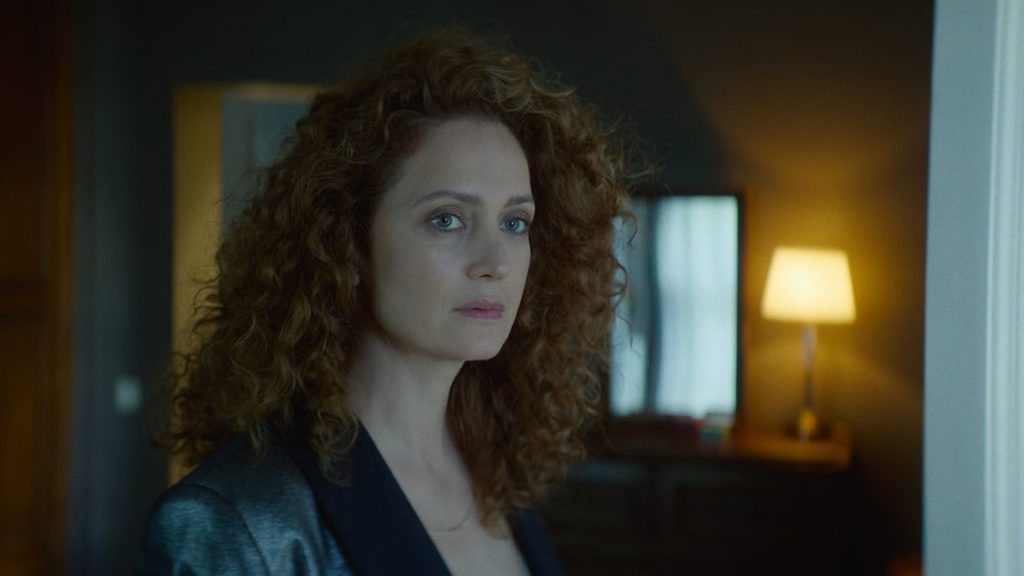
At the center of the plot is Dasha (Maria Matsel), who has just celebrated her graduation. She has lived since childhood with an overprotective, sometimes overly categorical father. Her mother (Victoria Isakova), as a very freedom-loving and creative person, decided to leave the family and build a career in St. Petersburg. Dasha deceives her father and sets off to find her mother, but runs into a beautiful, cold, self-absorbed woman who, at first glance, does not need a child.
The first few minutes of observing Lena (Dasha's mother) create the impression that we are watching a variation on the theme: what if "The Piano Teacher" by Michael Haneke lived not with her mother, but with her daughter and was successful in her personal life. But this parallelism disappears – Lena is not completely mentally stable, but there is still a chance for change.

Maria Matsel perfectly conveys Dasha's teenage awkwardness, angularity, and audacity. Sometimes she looks ridiculous, sometimes she slouches, sometimes she falls into some kind of arrogant provocation. Irina Bas often shows Dasha in various reflective surfaces – shop windows, mirrors. This duality, the appearance of some ominous shadow, tells about the problems of self-exploration at this age, the attempt to know oneself and put oneself together. Perhaps it is this feeling (besides admiration, of course) that draws Dasha to her mother – because who can tell you more about yourself than your mom.
Here a real parallelism arises – Dasha is too similar to Lena. They hold their cups the same way when drinking, they have completely identical taste in music, which somehow developed spontaneously, even in creativity they occupy approximately the same place. Dasha sings, Lena plays the piano.
And although they have equally complex characters, Dasha, constantly trying to provoke her mother, does not get what she wants. She tries to awaken maternal feelings in Elena, either by asking for a cigarette or by claiming to work in escort. But these manipulations are too naive, clumsy, still childish. They are easily read, especially by such a cold and self-absorbed woman, who herself is not averse to playing these games, asking Dasha if she has a light.
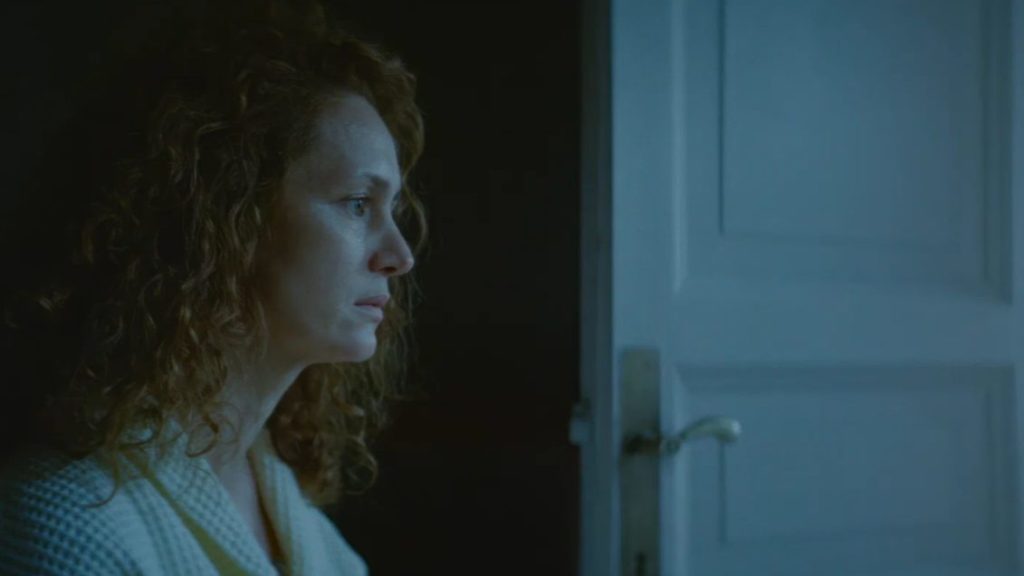
The heroine addresses Lena sometimes as "ty" (informal you), sometimes as "vy" (formal you), awkwardly trying to probe and realize the thickness of the barrier between them. With her clumsy antics, like "I'll leave, get drunk, and come back by morning," she tries to attract her attention, and Dasha even succeeds. But this does not lead to full mutual understanding. Mother and daughter will have to switch places several more times: sometimes Lena will wait for her daughter at home and be beside herself, sometimes Dasha will try to rescue her tipsy mother from trouble.
The usually cold color grading acquires colors in moments of rapprochement and unity of the heroines. Acid-green light on the dance floor, fuchsia-colored nylon signs, Dasha's bright dresses. But during and after quarrels, the indifferent cold pre-dawn hue reappears, accompanying truly oppressive loneliness.
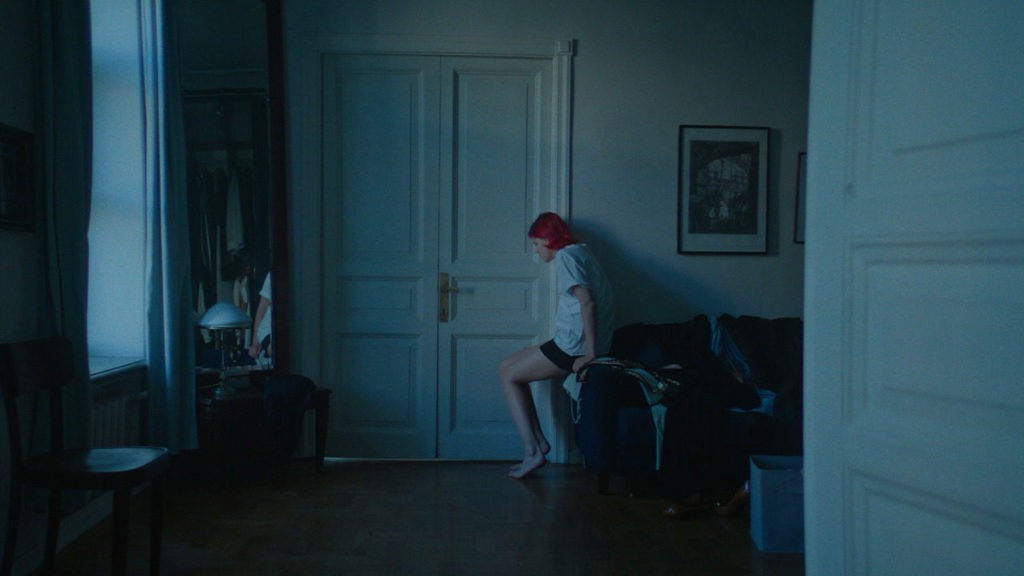
Another important theme of "Baby Girl" is the teenager's exploration of her sexuality. From the school disco to the last scene in the parking lot near the club. Dasha is just learning to be feminine, stealing dresses and lingerie from her mom. In an attempt to get money in exchange for an intimate relationship, the heroine realizes the boundaries of her body – she develops principles that will likely accompany her throughout her life.
Some of Dasha's strange, illogical, and hasty decisions can be justified by her age – she has already grown up and there is very little left until the coveted adulthood, but she has catastrophically little life experience. Like all teenagers, she has the feeling that after school you are inevitably an adult, independent, and free, even though you don't know what you want from life.
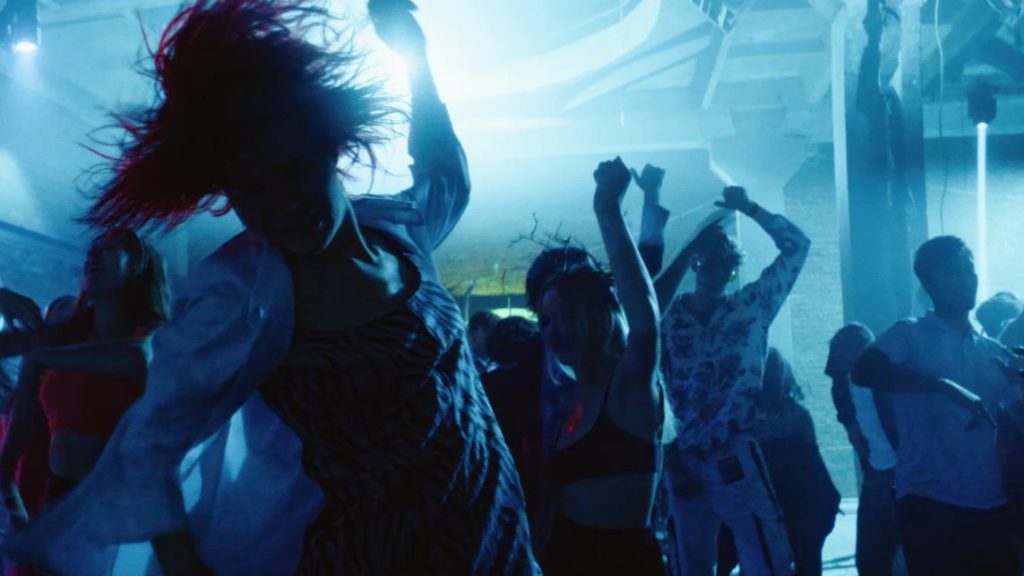
As it seemed to me, the authors were not chasing a realistic reflection of modern youth's life, but only wanted to reproduce with minimal losses that feeling of lostness, mixed with intoxicating freedom, which was inherent in the teenage years of all generations. Some "serial" plot twists can easily be forgiven in favor of interesting camera work and an unretouched picture with all the pores, goosebumps, pimples, and other manifestations of a real, living person.
I don't know if there is a connection between Dasha's "You're afraid to look inside yourself, but an actor helps you" and "What are you laughing at? You're laughing at yourselves!" by Nikolai Vasilyevich Gogol, but in my opinion, the essence of the film is somewhere here. "Baby Girl" can become a full-fledged reflection of teenage everyday life for an adult audience. Although this is a difficult period with raging hormones, emotional swings, and thoughtless actions, it lays some foundation through the acquisition of first life experience. And overall, looking at yourself at this age can be quite touching and funny.
Trailer:
Comments
0No comments yet.