
At the American film festival AMFEST, which promises to show several interesting independent films, the autobiographical coming-of-age drama 'The Cathedral' was shown, a smart and melancholic film about what cannot be returned. More about the film in...
The film begins with two parallel announcements: in 1986, the Statue of Liberty turned one hundred years old, and in 1987, a boy named Jesse was born, whose coming of age the film is dedicated to. 'The Cathedral' does not try too hard to explain the connection between these, frankly, events of different scales, but the narrative proceeds accordingly: the first day of school, a funeral, confirmation, various celebrations through which the life of Jesse and his family is shown, run parallel to key events in American history. Without answering the question of whether the boy's story could be understood without them, 'The Cathedral' seems to assert that world history cannot be understood without Jesse.
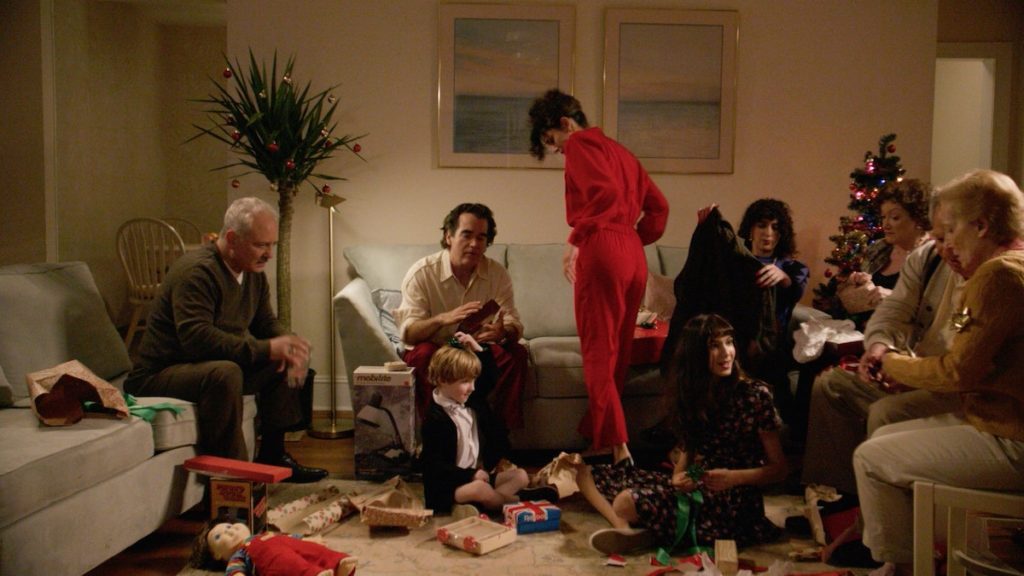
Indeed, the story of the family itself resembles a paragraph in some obscure textbook: these got married, those quarreled, the paternal grandmother (Melinda Tanner) cannot stand the heat, and those never spoke to each other again. An important role is given to class conflict and loans—the protagonist's father starts a business with money from a friend and his son's godfather, and he has a conflict with his father-in-law over differences in wealth.
There is also room for mystification—the protagonist's uncle supposedly died of AIDS, but everyone says it was from an intestinal infection; for family unity, the legend is important that the maternal grandmother's brother (Geraldine Singer) harassed the great-grandmother (Candy Dato, wonderful and, surprisingly, a novice actress who worked as a psychologist until retirement), and therefore she cannot live with him. Everything ends quite politically, that is, bleakly, but with a setup for a sequel (Jesse's later life)—compromise, reconciliation, squabble, disintegration.
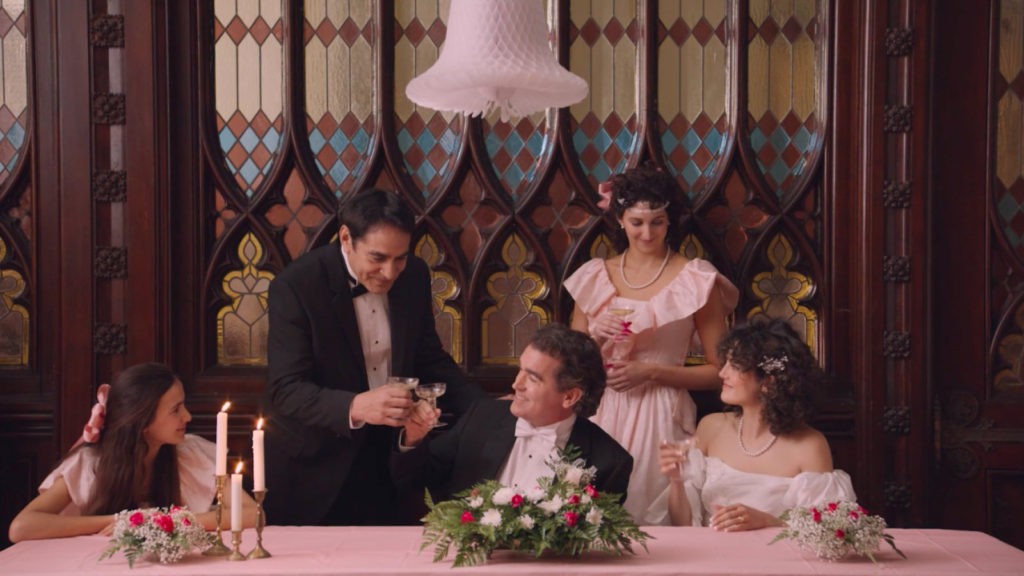
The boy's life is not so shockingly interesting to retell or even make a film about it, but director Ricky D'Ambros (and the film is autobiographical) takes not the plot but the method. The camera focuses on interiors, the play of light, on armchairs, chairs, forks, clean and not so clean, glasses—full and empty. With almost no dialogue, the story is told not only through voiceover but also through these external objects.
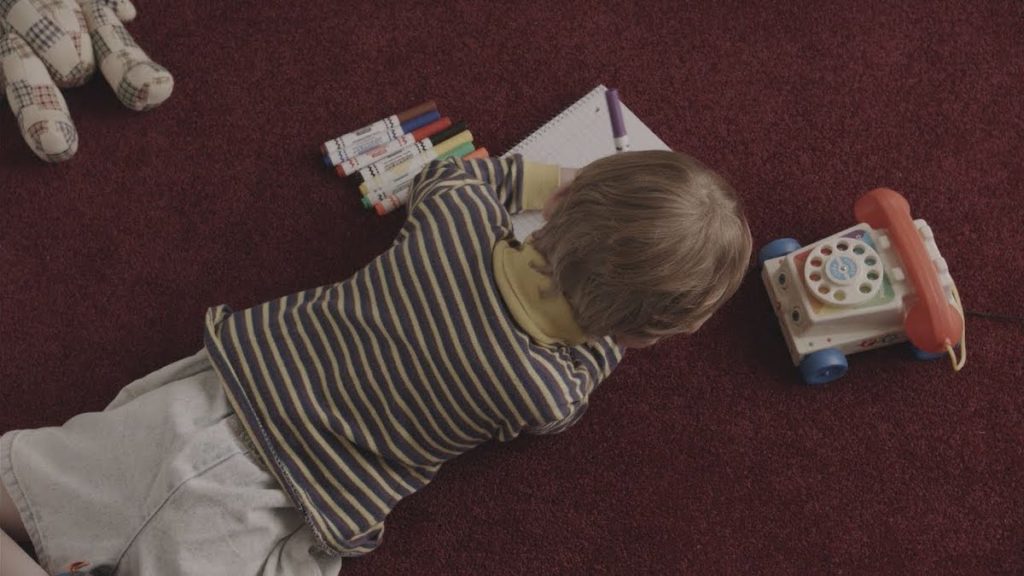
'The Cathedral' is a film about material history. About how people lived in certain interiors, houses, apartments, walked on specific carpets and looked out specific windows. And if they had looked out different ones, their lives might have turned out differently. But they turned out this way. The camera, looking sometimes from Jesse-the-character's perspective, sometimes from Jesse-the-narrator's, equalizes people and objects, their suffering and the wear and tear of things, and equalizes with all this world history, which the characters watch on TV. The subject's gaze ultimately equalizes everything.
An important theme of millennial culture—finding oneself in the postmodern world from childhood—is revealed in the film through this idea of observation. A person is imposed a model not of a participant in history, but of its spectator, at best a consumer. The progress of the late 20th century allowed the state to no longer demand great participation from people, and in this sense, 'The Cathedral' is about people who know how to observe but not particularly how to act.
However, probably, the director's goal is not a statement about the nature of history (although these motifs were also in his debut 'Notes on the Visible', a demanding film for viewers). He is a smart person and sympathetically rhymed Reagan's state funeral with the closed funeral of the hero's great-grandmother, but what truly interests him is something else. Perhaps the melancholy of loss. 'The Cathedral' is a rare coming-of-age film that is primarily about losses, not gains. It's not that Jesse grows up, reads Chekhov, learns to film, and even enters university, but what he will never get back. Grandmother, a full family, carefreeness, wholeness. D'Ambros argues here with the tradition of bildungsromans: growing up turns out to be not a process of becoming a person, but on the contrary—a process of disintegration.
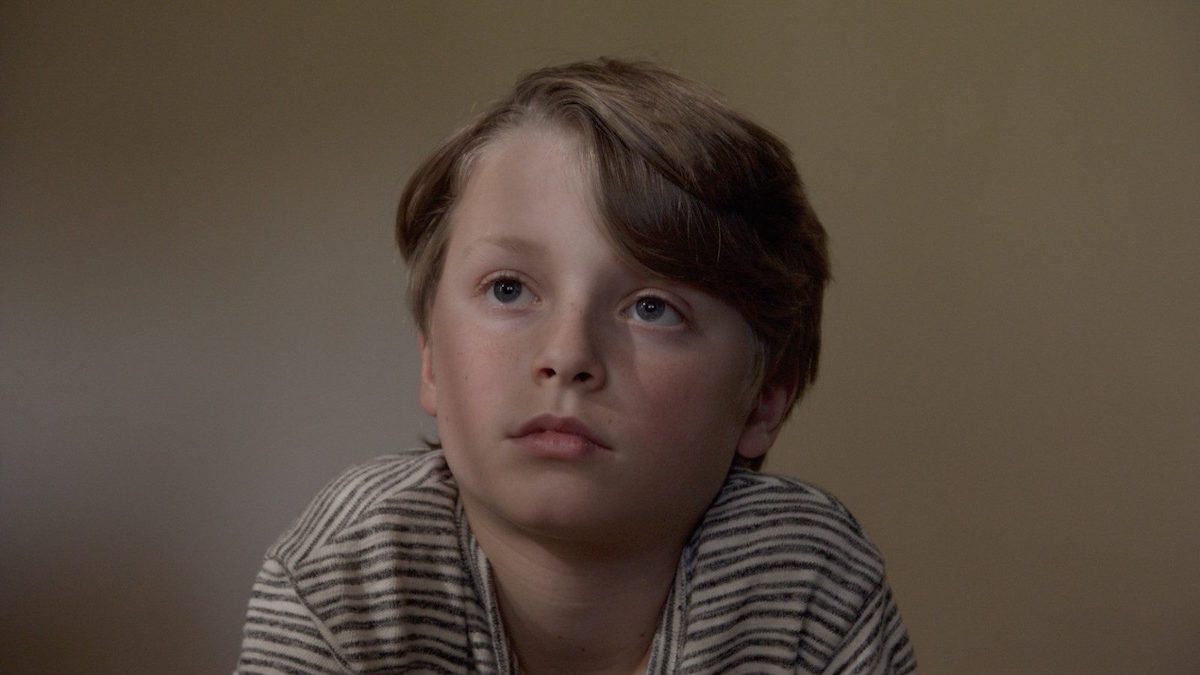
The holistic and primitive consciousness of a child disintegrates into social roles, political views, secrets, mysteries, questions, the need to choose, consciousness, desires, passions, and conscience. The conditional unity of the first part of the film is replaced by the eclectic flickering of the second: Reagan's coffin, school, September 11, university, books, memories, the advent of digital printing, forks, sandwiches, father, mother, grandfather, father's new wife, mother's new husband. Following the disintegration of the extended family in the first half of the film, the nuclear family also disintegrates in the second. All this is further interspersed with portraits of characters, static shots of sad faces on a yellow background. Fragments of life and personality increasingly move away from each other and have less potential to come together again.
Near the beginning of the film, little Jesse looks at the refraction of light in a window shaped like either a lattice or a crosswalk, and a significant part of the film is built on the ambivalence of this symbol, on the consonance of inevitability and possibility. In the finale, the hero looks at light and shadow already in the shape of a cross. What does this cross mean? Possibility or inevitability? The end of hopes, death, resurrection, forgiveness? Maybe it's just one of the most important material objects in the history of the Western world, and what else to end a film about the history of things in an individual life with, if not it. One thing is clear: if the director continues in the same vein, we cannot write him off. Before our eyes, independent cinema is finding its voice.
Comments
0No comments yet.
Sign in to join the discussion.