
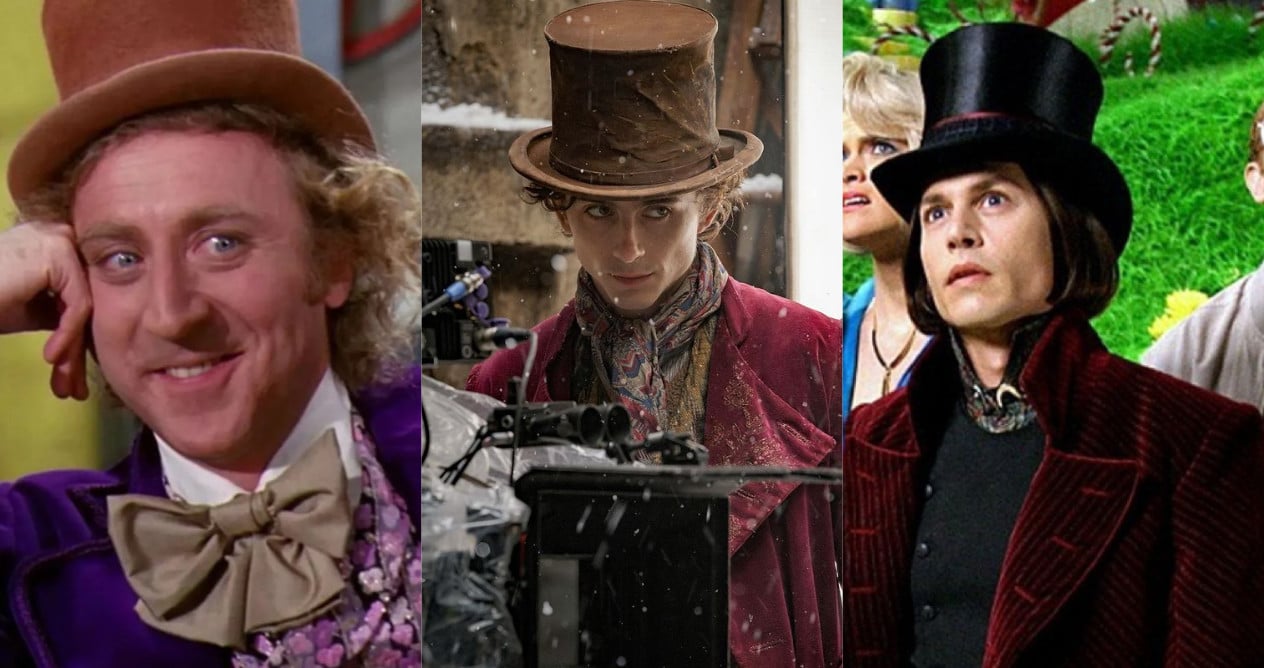
We analyze all film adaptations of Roald Dahl's famous work about the chocolate lover known as Willy Wonka, including the fresh adaptation with Timothée Chalamet, which turned out to be the worst of the three.
A little boy from a poor family, Charlie Bucket, by a stroke of luck, gets into the long-closed chocolate factory of the amazing reclusive confectioner Willy Wonka, among five children who found golden tickets. He is to spend an unforgettable day at the factory and receive a prize the child never dared to dream of.
Controversy of the Book
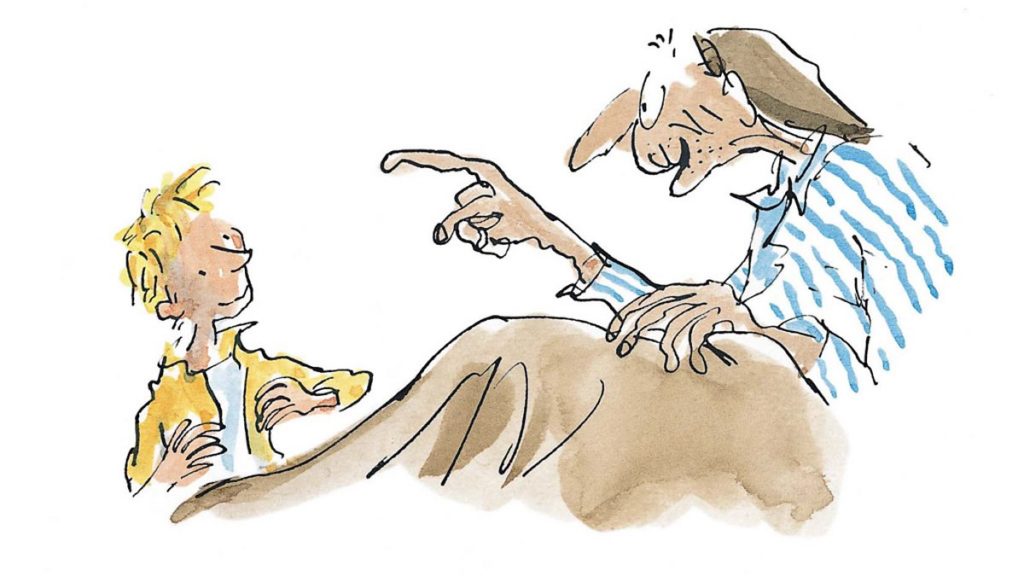
Roald Dahl's story 'Charlie and the Chocolate Factory' was published in 1964. Like other books by the writer (we wrote about the film adaptation of his stories), it immersed readers in a children's world full of magic, but did not avoid the author's characteristic manner of introducing far from childish elements and actions that sometimes lead to terrible consequences.
A captivating performance in four acts from the master of magical theatrical productions, Wes Anderson!
Open materialThe characters of the story – children Augustus Gloop, Veruca Salt, Violet Beauregarde, and Mike Teavee – convey through their flaws the deadly sins: gluttony, greed, pride, and sloth, respectively. And only the main character – Charlie Bucket – is an example of innocent childhood thoughts and purity of soul. Walking through various workshops and rooms of the factory, each of them revealed their true face, which, although caricatured by Dahl, vividly demonstrated vices. And despite being nurtured by adult indulgence, the responsibility, and consequently the punishment, lies entirely with the children.
The approach to some types of punishment, as well as the portrayal of children as harsh consumers, divided critics. Some saw an educational interpretation for children wrapped in magical fantasy, while others viewed the book as a direct consumer item that clearly goes beyond the format of a children's story, even though the plot barely focuses on adult personalities (even Wonka himself).
But the book was a success, so in 1971 the first film adaptation hit the screens.
'Willy Wonka & the Chocolate Factory' (1971)
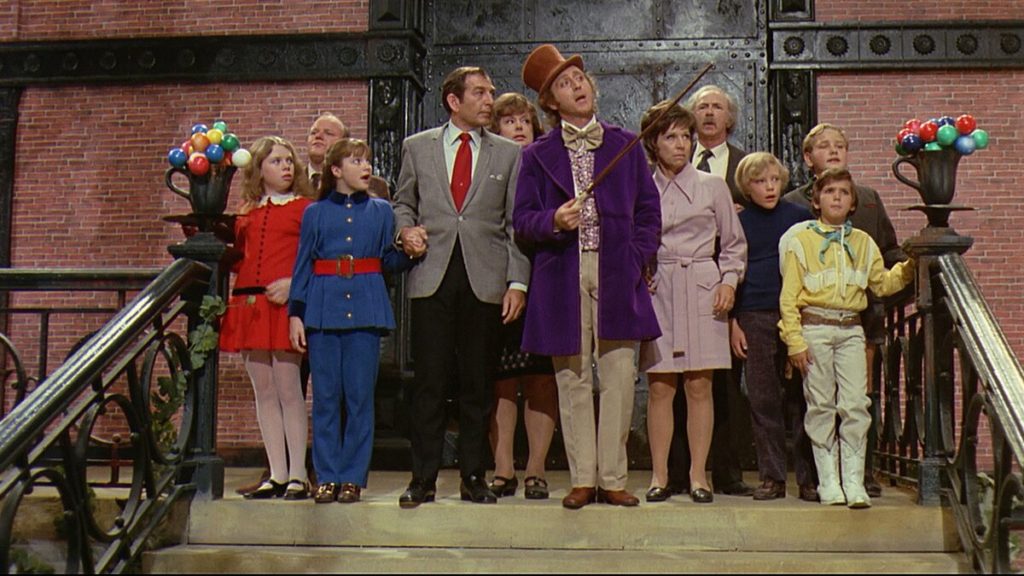
The film adaptation, made during the writer's lifetime, faces a difficult task – to please not only the audience but also the author of the source material. Unfortunately, 'Willy Wonka & the Chocolate Factory' pleased neither the audience nor the writer at the time of its release. And while viewers came to appreciate the 'chocolate' on television, and now even consider the film a classic, Roald Dahl never appreciated the creation of Mel Stuart.
Despite Dahl serving as the film's screenwriter, his concept was revised so many times that the narrative vector shifted from Charlie to Mr. Wonka, which is even reflected in the title. This is exactly what the writer disliked, as he placed the innocent child at the forefront, contrasting his modest lifestyle and thoughts with the sin-laden children. The film so rarely focuses on Charlie that even the viewer begins to forget about him.
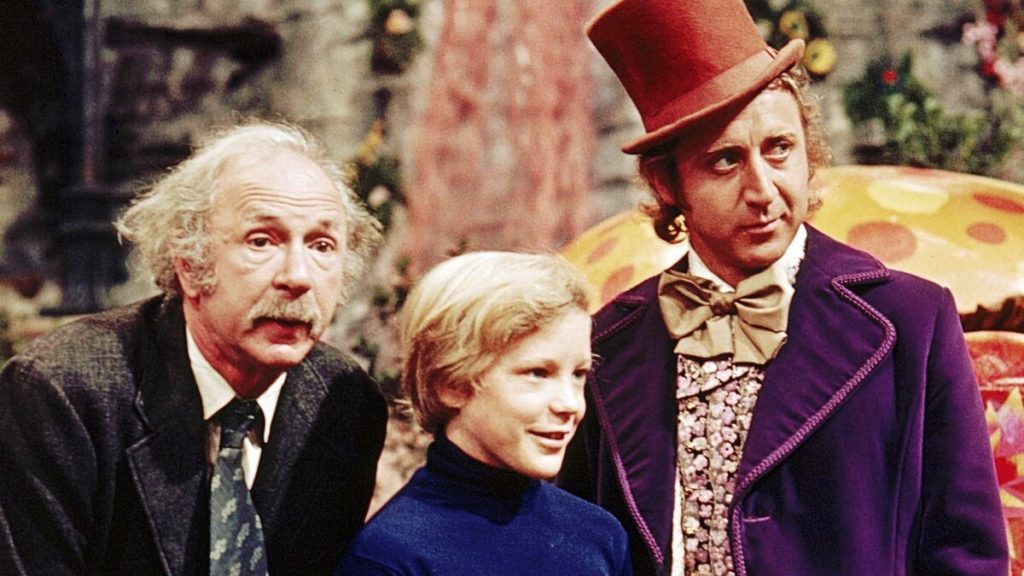
The central plotline becomes Wonka's competitor's attempt to uncover the secret of making the everlasting gobstopper. Like the Serpent-tempter (continuing the religious theme), the competitor persuades each of the children invited to the factory to steal the recipe and receive a reward. It later turns out that the competitor is a plant, and the theft offers are another test by the chocolatier.
Roald Dahl wrote nothing of the sort, and the plot change emphasized Charlie's purity of character. But this would not have been necessary if a scene had not been added earlier in which Charlie and his grandfather try a levitating soda despite Wonka's prohibition. Thus, the filmmakers' invention tarnished the boy's crystal-clear image, which in the finale even becomes an obstacle to receiving the prize.
There are many such structural changes in the film. Non-existent compositions are added, and the poems from the book are rewritten and set to the same recurring Oompa-Loompa song. Beware! It penetrates minds so deeply that it even resurfaced in the 2023 prequel. The accompanying characters and workshop inhabitants are replaced, and the workshops themselves (let's chalk it up to the filmmakers' capabilities) look nowhere near as luxurious as the story's fantasies, though they meticulously copy the textual descriptions.
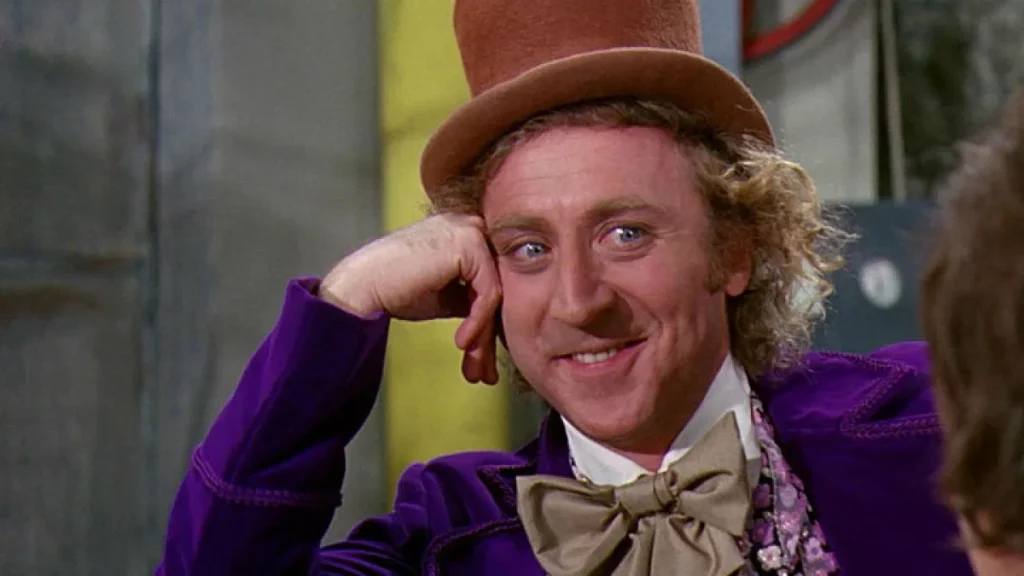
But the main message aimed at reinforcing lessons and highlighting morality is presented less vividly than in the source material. The focus on Wonka's image made the story blurry, sometimes faceless, and structurally underdeveloped, but left modern audiences with the internet meme 'go ahead, tell me'.
'Charlie and the Chocolate Factory' (2005)
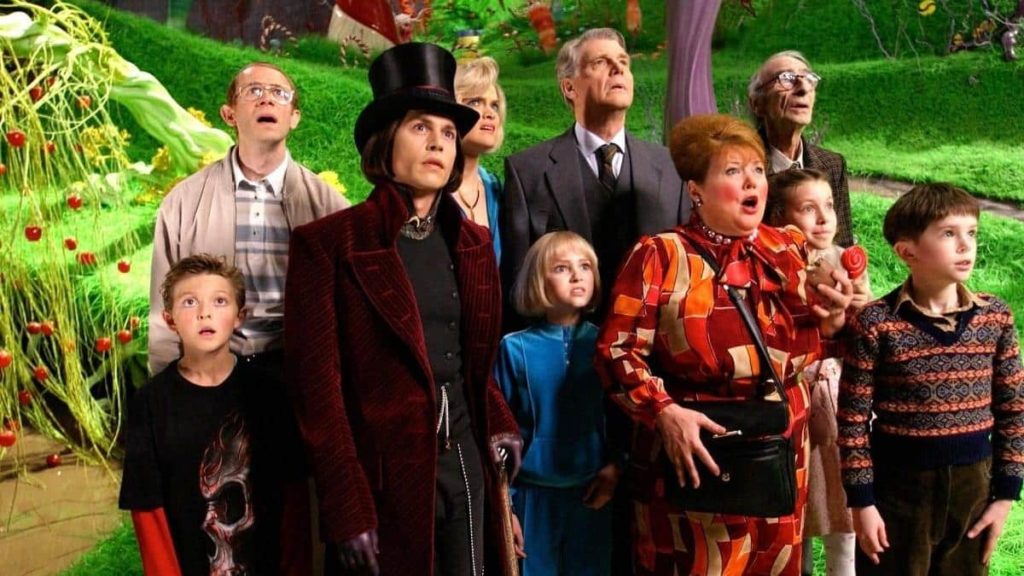
In the early 2000s, the film adaptation of the story was entrusted to Tim Burton, and he invited a regular of his cinematic madness – the master of transformations bordering on schizophrenia, Johnny Depp – to play Willy Wonka. The core of the story remained, the mise-en-scène was moved to the early 2000s and adapted to that time period, as were some details (for example, Charlie's father lost his job not due to the factory closure but due to production modernization with robots).
A master of original presentation, Burton introduced into the plot of the story, filled with bizarre elements, the mysticism inherent in his imagination, thereby creating sometimes eerie actions. Wonka's character acquired a touch of madness. The modern adaptation is replete with ambiguous phrases, double-meaning facial expressions, and actions that can be interpreted as Wonka's desire to push children toward disaster. He seems to say: 'I won't protect you from a bad deed, but will only pretend to protect you because I know what will follow!' (devil smiley included)
All this is different from the image of Wonka created by Dahl. Wonka, who warmly welcomed every child and adult with a handshake and was not afraid of the word 'parents.' It is the storyline related to the chocolate magnate's father that is an innovation introduced by Burton. If until this moment there was practically no information about the chocolatier's personality, in the 2005 film he acquires not only a backstory but also a soul tragedy associated with it. This problem brings Depp's character to the forefront, but unlike the first film, Wonka establishes a connection with Charlie.
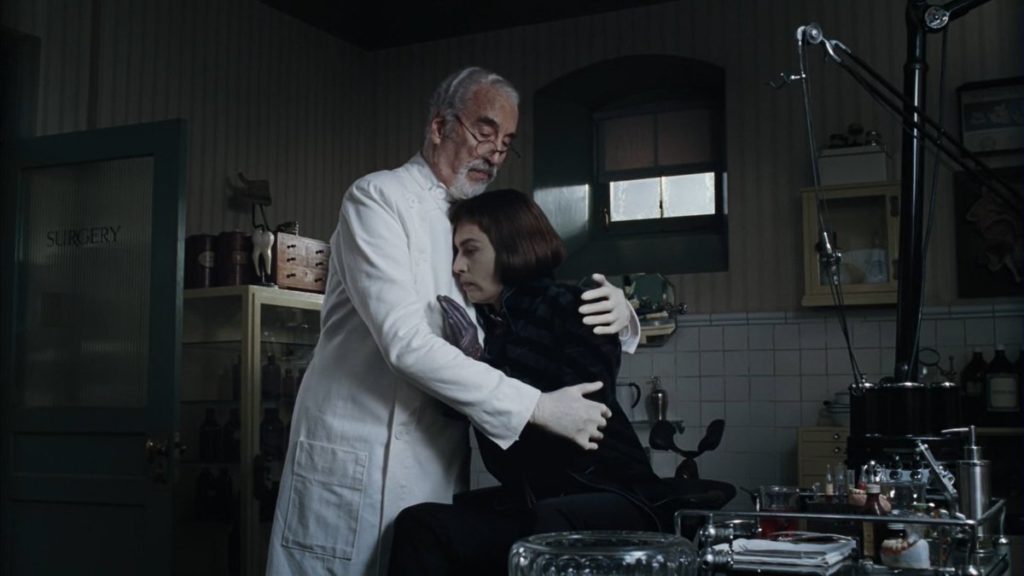
Their character arcs develop in tandem. Charlie's questions reveal Wonka's subconscious, while Wonka's phrases and ultimatums reveal Charlie's character and attachments. Despite the finale being built on a statement opposite to the book's, such an outcome has a place with the backstory written through the character of Christopher Lee.
Otherwise, Burton adheres to the basics, repeating moments described in the story, sometimes with full quotations. The modern picture looks as vibrant as the reader imagines, because some confectionery items were real, as was the chocolate provided by Nestle, and four of the five Oompa-Loompa songs were written by Roald Dahl in the book.
The film received positive reviews, grossed impressively, and was even nominated for the Academy Awards and Golden Globes. To this day, fans revisit it, ranking it among Burton's best works.
But, as after 1971, Willy Wonka, Charlie, and the chocolate factory went into retirement until 2021, when it was announced that a prequel to the story and the original film was in the works, directed by Paul King ('Paddington') with Timothée Chalamet in the lead role.
'Wonka' (2023)
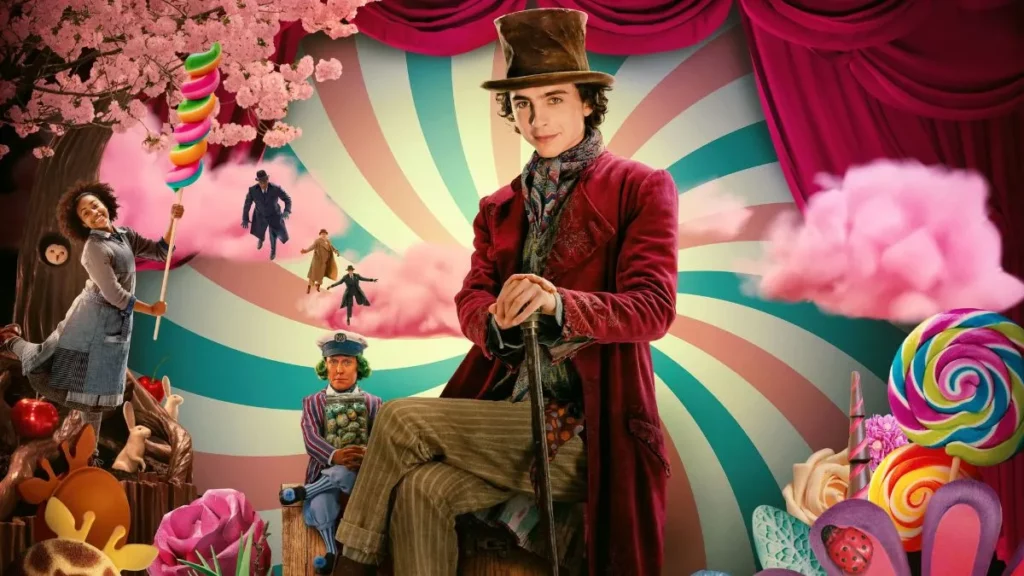
What could be scarier than films 'based on'? That's right! Modern films made based on and seasoned with agenda. Alas, Roald Dahl's character fell into this ruthless machine of bright but meaningless money-squeezing. Perhaps because he was detached from the foundation of the source material.
Meet young Willy Wonka – a magician, chocolatier, wizard, and simply a gullible fool. Yes, that same Wonka who ran an entire factory, easily recognized vices, and in the 1971 film cunningly made the children sign a contract without reading it (apparently from his own experience).
The announced prequel to the original film completely ignores Tim Burton's 'fantasy on a theme' and very conditionally uses images from the source material. For example, the Oompa-Loompa played by Hugh Grant is an exact copy of the fictional pygmies from the 1971 film (Dahl himself did not give a precise description of the characters). And even his first appearance is accompanied by the musical theme of Anthony Newley. Wonka already wears the canonical costume, and among the candy concepts are those that will be reflected in the original. But the similarities end there, and a stream of free-thinking washes over the viewer with a wave of low-quality chocolate.
Although it's hard to even call it free-thinking, since 'Wonka' is hardly different from any other film of the 'tolerant era.' The characters live in an atmosphere of poverty and facade gloom, and, naturally, are now represented by various races.
One of the central characters is an orphan girl whose intelligence, determination, and ability to act are almost the only engine of the protagonists, because the male and older characters are sometimes as meek as a flower in a pot. And, of course, the Oompa-Loompas, who previously suffered (in the opinion of some readers) from the writer's racist attacks, showing the people as oppressed slaves of a white man, have been rehabilitated in the eyes of the public, thanks to one Oompa-Loompa who turned out to be smarter than that same white man. Bingo!
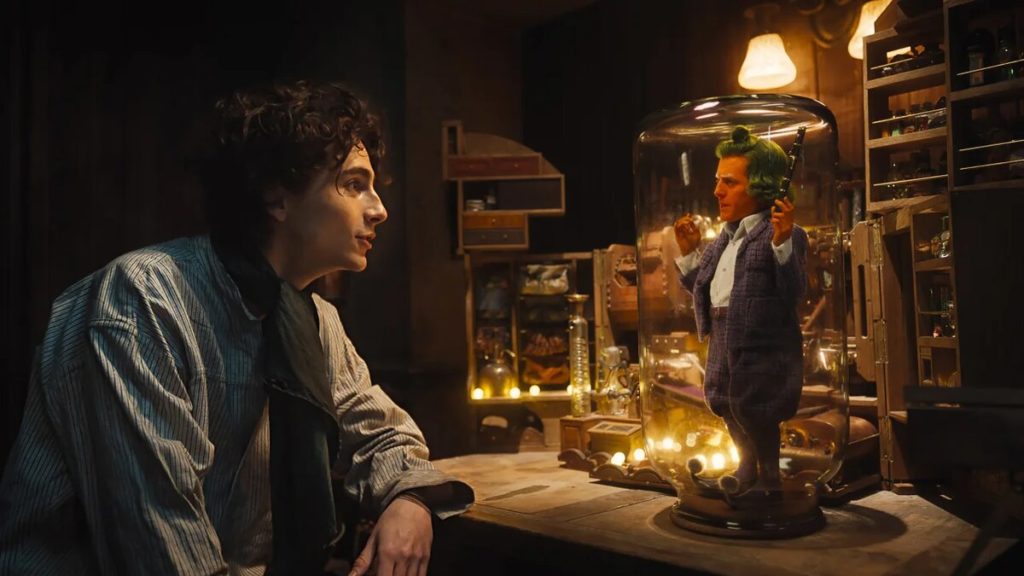
Due to the lack of a source material, the creators of 'Wonka' could even use a giraffe in their work (oh, excuse me, it is there!) But the path of the samurai chocolatier is one – into the inclusivity of the capitalist world.
The roles laid down by Dahl are used again but turned diametrically opposite. From the magical world of chocolate and children's fantasies, the viewer enters a world of vice-ridden adults (gluttony, greed), among whom Wonka himself looks like a child. It creates the impression that he has closed himself off in a childhood period, ignoring the development that is taken for granted for growing up, preferring absolute faith: in magic, people, dreams.
Until now, the book and films promoted the concept of learning: the viewer was exposed to vice, and then the consequences of succumbing to it. 'Wonka' insists on the idea that goodness, friends, and faith are the key to fulfilling a dream. And even Wonka's inventions, which were previously the result of, albeit whimsical, technical solutions, suddenly began to be explained by magic. Would you like a candy made from a storm cloud and sunlight?
The film meets all modern patterns of filmmaking. And if you abstract from the source material and accept the rules of the game, the musical may seem tolerable, but how much does it really have in common with the original concepts and text?
Wonka chocolate. Ingredients: cocoa beans, cocoa butter, references to the 1971 film, magical nonsense.
Comments
0No comments yet.
Sign in to join the discussion.