
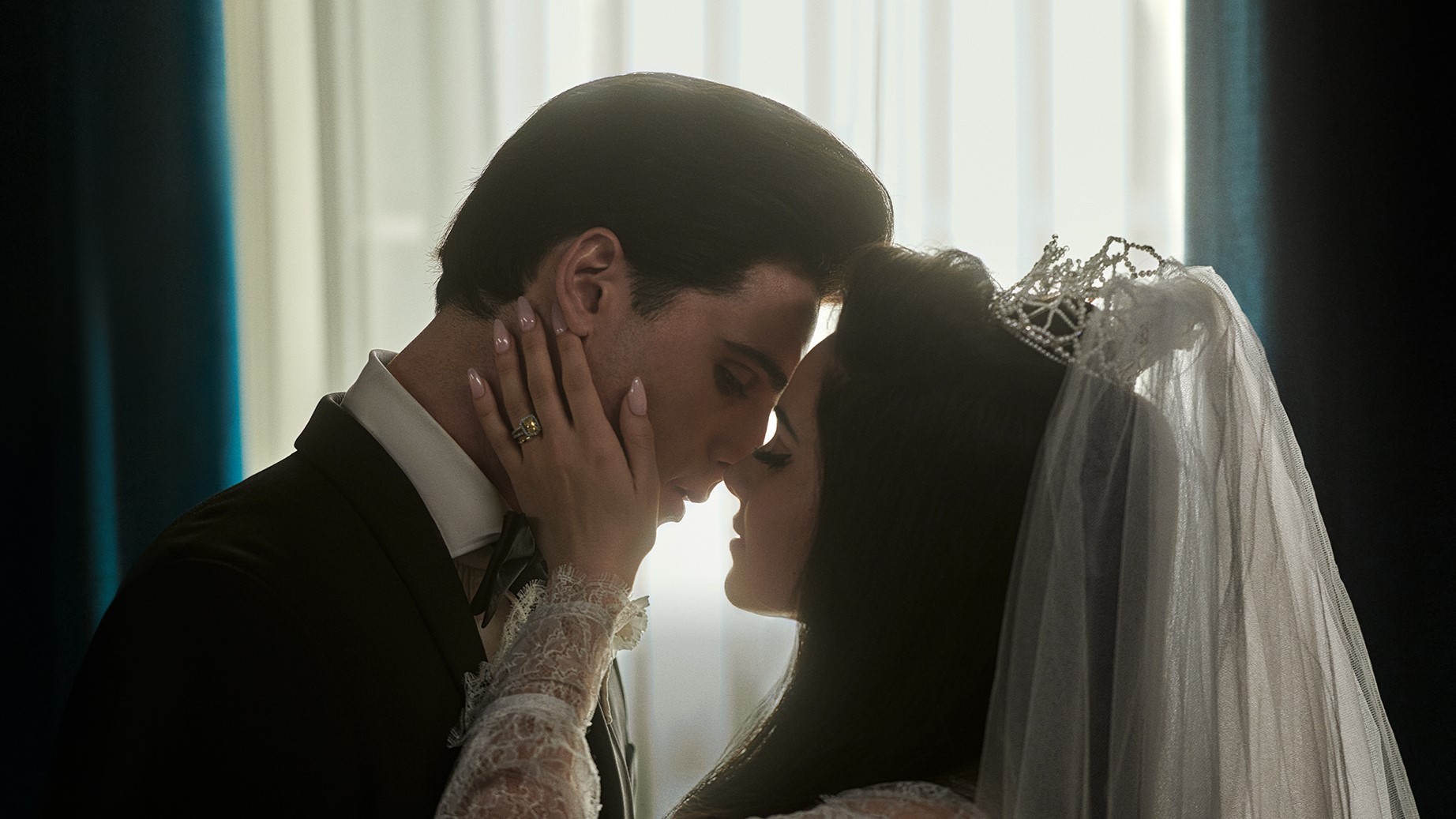
On January 25, Sofia Coppola's new work 'Priscilla: Elvis and Me' is released in Russian theaters, a touching drama based on Priscilla Presley's autobiographical book and awarded the Volpi Cup for Best Actress. We tell you what to expect from the fil...
Sofia Coppola in 2022 shot the film 'Priscilla: Elvis and Me' in just 3 months, a film about Elvis Presley's wife, without Elvis Presley's songs. Elvis Presley Enterprises did not grant permission to use the compositions of the 70s rock 'n' roll star. But the film only benefited from this: it was necessary to create a musical picture from other works that well reflect and fully immerse you in the era.
Melancholy as the Engine of the Plot
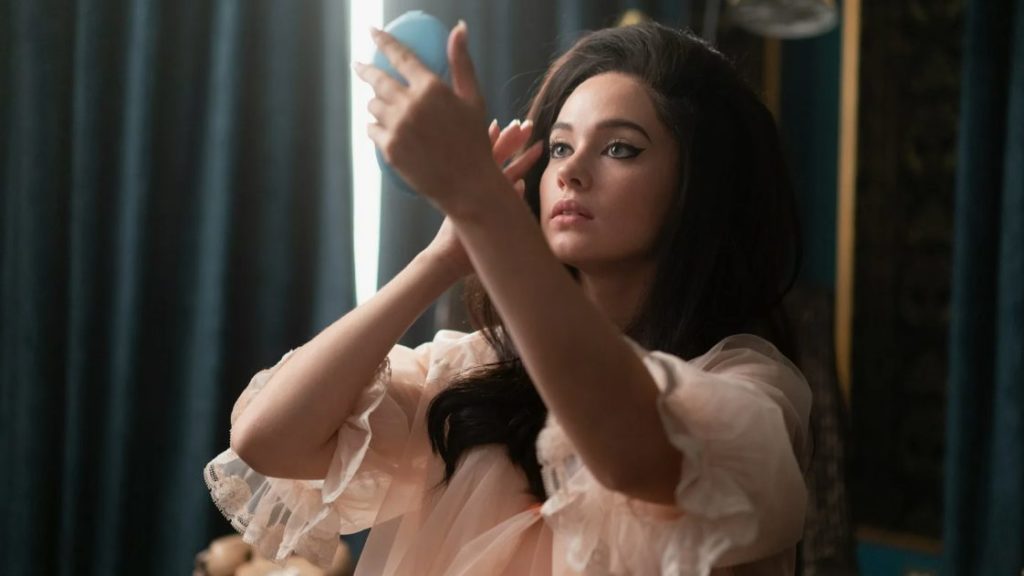
A very young Priscilla and the already famous Elvis meet at a party in Germany, a love affair develops between them that does not cross the line. Elvis returns home after his service and seems to forget about his girlfriend. First love drives Priscilla crazy, and it is at this moment that an inexplicable, even endearing melancholy, characteristic of Sofia Coppola's works, begins to appear.
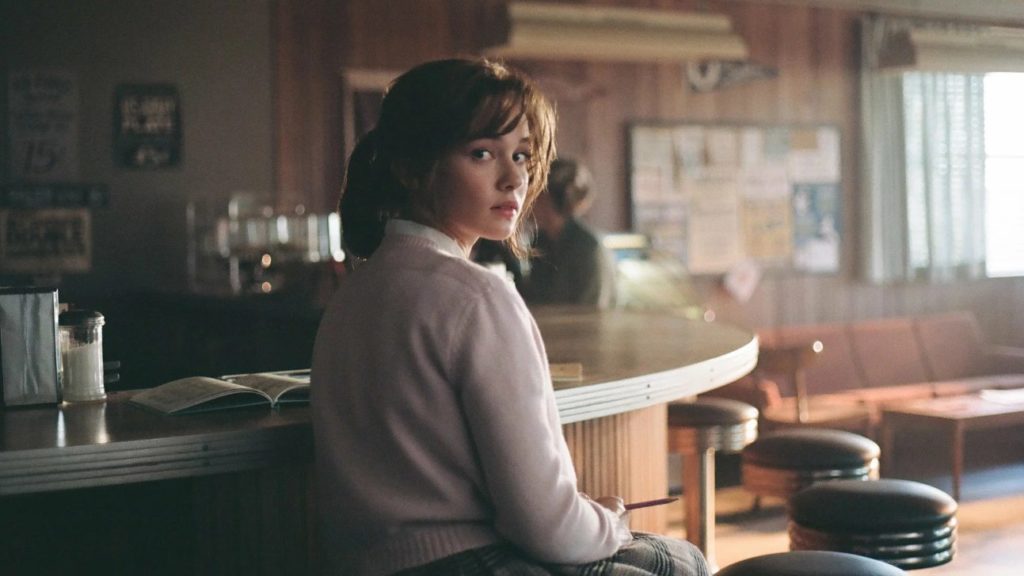
What the heroine of Coppola's new film will be like can be guessed even before watching: at the center of the plot is a young girl going through a difficult period that feels like a fusion of borderline madness and love agony. 'Priscilla' inherited the mood of 'The Virgin Suicides' more than any other film. These are the difficulties of female adolescence, mortal boredom within four walls, and waiting for a meeting with the object of affection.
Lace as Primary Matter
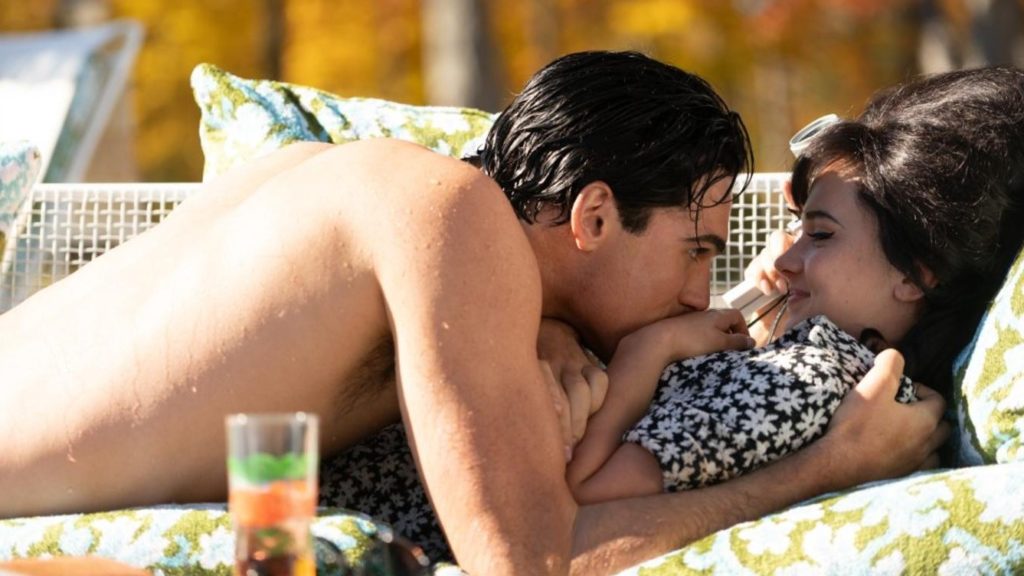
The space in the film often explains the hero's position, character, and worldview. For example, Priscilla is silk, soft carpets, tulle, lace, porcelain. Her room in her parents' house is in soft pink and peach tones. Elvis is velvet, leather, heavy fabrics, a dark brown room that seems to have no air or light. The juxtaposition of the heroes' textures reveals their differences: they not only have different characters and life goals—Elvis and Priscilla are made of different materials. Of course, neither silk nor velvet is primary matter in the literal sense, but their demonstration explains their dissimilarity on some natural level.
Moreover, the film is not just a screen adaptation of Priscilla Presley's autobiography; it is a loving look into the past. The author creates a full-fledged snapshot of the era: from fashionable bouffants to musical tastes. Frankie Avalon, Brenda Lee, Alice Coltrane, the 'Stars and Stripes' newspaper, old New Year's cards, records in colored paper sleeves. Sometimes it feels like the dialogue is about to end and a music video by Lana Del Rey from the album 'Born to Die' or 'Honeymoon' will begin, because in modern mass culture, the popularization of the aesthetics of the 1960s-70s is associated with her name.
Time for a Pink (Literally) Retrospection
Great attention to detail makes Priscilla closer to the viewer. We see what cosmetics she uses, what perfumes she loves, and what music she listens to. Many of her attributes we can purchase today. The snapshot of the era also does not alienate us from the heroine and her problems, because besides experiencing first romantic feelings, there is another problem—loneliness. It is expressed not only in idle wandering around the house during her husband's absences, but also in the nuclearization of families, the alienation from the social world that we all experience in the digital age.
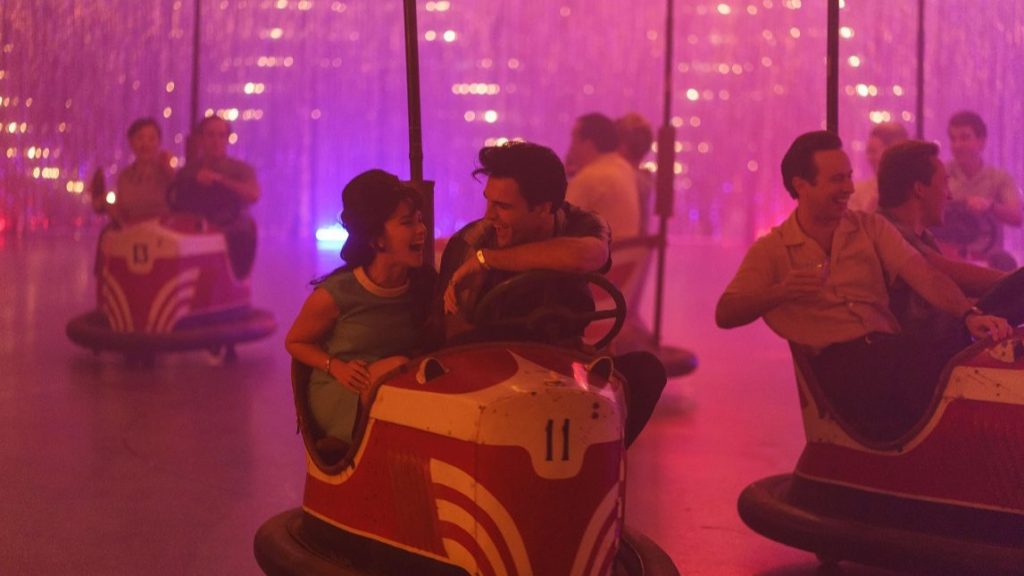
Talking about the problems in the Presleys' family life and that the marriage was doomed from the very beginning is pointless. It is much more interesting to observe the change of eras through Priscilla's eyes. The space and attributes of the heroes' daily lives reflect not only their mood; they change when fashion changes. For example, the 1960s is a very young Priscilla: boring gray school corridors in a romantic haze, dusty pink living room in Elvis's house, dark brown bedroom of the newlyweds, Placidyl before bed, long sharp eyeliner, fluffy dresses.
But the 1970s are delicate raspberry jungles after a piece of sugar, anxious red electric light, Priscilla's long chestnut hair, and fashionable flared jeans. This is not just a change of scenery, but also a change in the heroine's mood: she no longer wants to calmly wait at home for her husband with another infidelity, she does not want to sit locked up with a little white poodle and wistfully romanticize a luxurious but lonely life. The era of obedient housewives on antidepressants is fading away, and something new appears.
Mass Culture in Ecstasy
In 'Priscilla', Sofia Coppola not only shows the beautiful but painful love experience of a young girl, she gives detailed instructions on how to get rid of this feeling. Moreover, the release of this film may be the cause of another spiral of fashion: mass culture has again remembered 'Breakfast at Tiffany's', concerts of the already mentioned Lana Del Rey. Girls tie bows from pink satin ribbon and frantically search for where to buy cherry-colored patent leather shoes, while trying to style their hair like Britt Ekland.
Interestingly, Sofia Coppola was born in 1971 and she herself most likely does not remember either the psychedelic 70s or (even more so) the archaic 60s. But this does not prevent her from loving this era and conveying this love to the viewer. 'Priscilla' gave us a romantic look into the past and revealed the peculiar beauty of this melancholic but captivating image.
Trailer:
Comments
0No comments yet.
Sign in to join the discussion.