
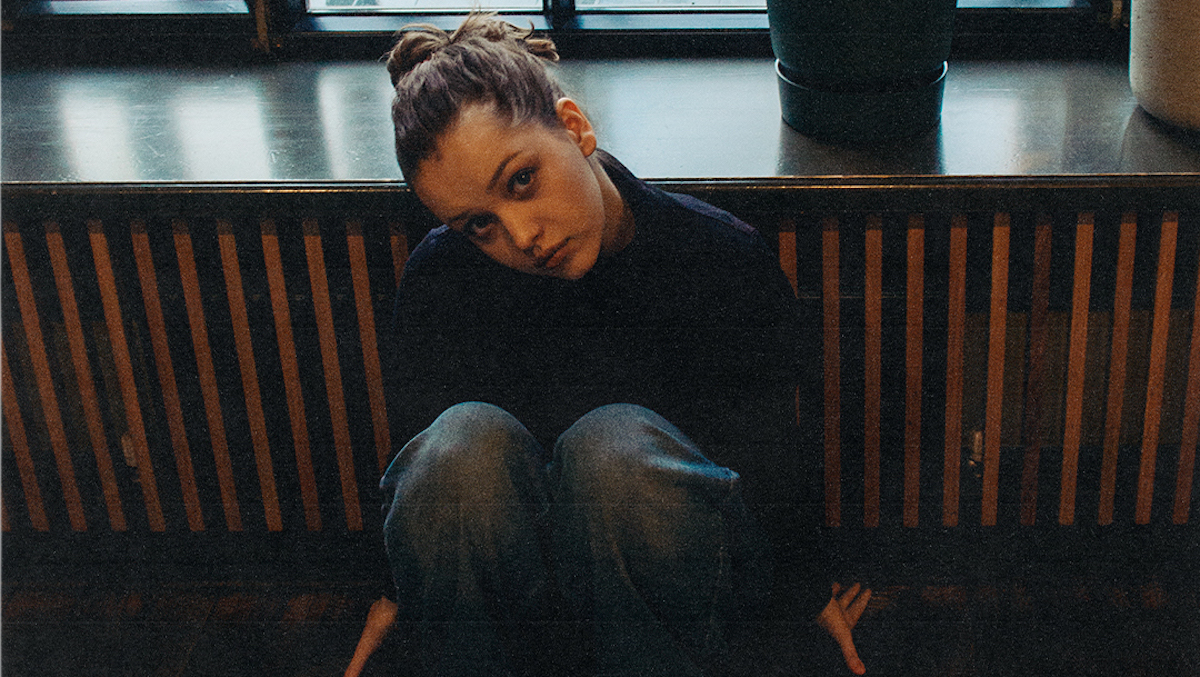
The series “Alice’s Dreams,” an interesting example of northern noir, has concluded. We spoke with one of the lead actresses, Vasilina Yuskovets, about filming the series, her path in the profession, and the series “Kikoriki.”
If you have a TV, you’ve almost certainly seen Vasilina Yuskovets in the series “Ivanovy-Ivanovy” and “IP Pirogova,” while “Alice’s Dreams” became her first serious experience in the dramatic genre. We talked to Vasilina to find out how she prepares for her projects, whether it’s hard to move from comedy to drama, and which films influenced her love of cinema.
– First question, of course, about your new series — “Alice’s Dreams.” It feels like a large-scale, complex project. Did you notice any difference, for example, from other series you’ve been in? Was there something new in this area?
Yes, the scale of work was absolutely different. Before that, I mainly acted in sitcoms. They were all of fairly high quality and made by good, solid directors, but “Alice’s Dreams” is something else entirely. On sitcoms, you sometimes shoot 10 to 15 minutes (rare, but it happened) of screen time per day. In “Alice’s Dreams,” we got 3 minutes a day, sometimes 5, and that’s a different, cinematic level of filming.
And, of course, we had simply magnificent prosthetic makeup, which also had to be constantly repeated (the character’s look is built on that), which was also new for me. The work of the director of photography was amazing, inspiring absolute trust. The most important thing was the atmosphere on set. “Alice’s Dreams” is a rather cold series (the north, an abandoned city, a dark intrigue), but it never felt that way during filming, and that’s a special professionalism of the team.
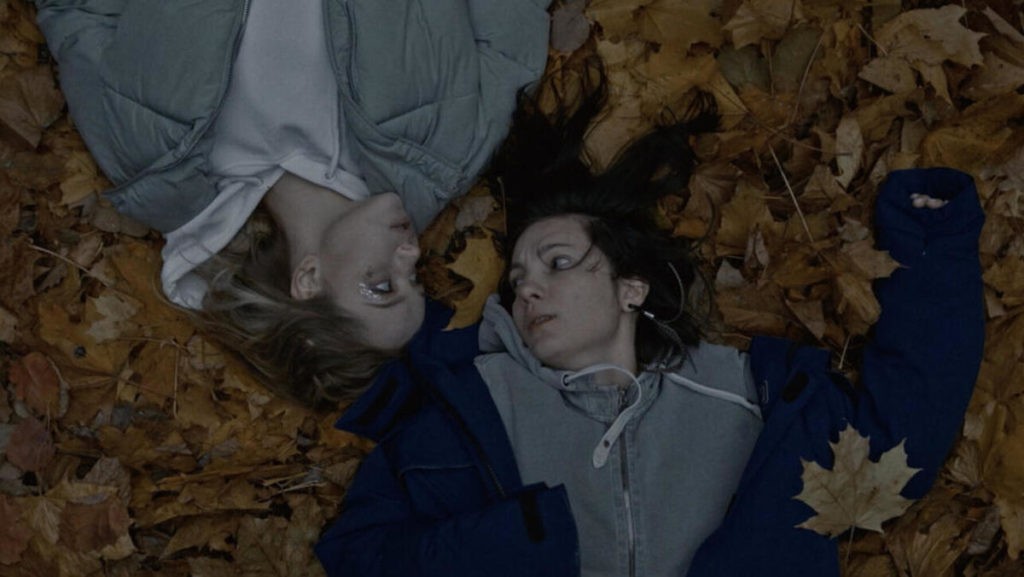
– The series had a rather complicated fate: the pilot was shown at several festivals in different years, and filming of the full season started much later. Was COVID-19 to blame?
Yes, we started shooting the pilot episode in 2019, filmed it in early 2020. And then the pandemic began. Of course, there is always some break between the pilot and the series filming, but ours dragged on for 2 years. The script was rewritten and changed a lot, but fortunately the team remained, and in 2022 we started filming the first 4 episodes. The second half was filmed six months later, and only in early 2023 did we finish everything.
– Now that you’ve acted in a dramatic project, do you have any understanding of what interests you more: acting in dramas or comedies? It’s a very different acting experience.
Absolutely. A very good question. This divide between comedy and drama is the basis of my current existential crisis. Crisis is an interesting concept. In Chinese, for example, this word is conveyed by two characters — death and opportunity. Roughly the same thing is happening to me. “Alice’s Dreams” is a very bright starting point where Vasilina, who acted in sitcoms and perhaps couldn’t do anything else on screen, died. It was a very familiar environment for me, and everything came quite easily. When “Alice’s Dreams” began, I realized that part was dying off, and I remembered that I always wanted to act in such films, because that’s the kind of cinema I always watched.
I was a cinephile at 14, 16, and for me there was almost nothing in life except cinema, only dramas and great thrillers, always with an unexpected ending. I think I watched them all at some point and always wanted to act in them.
For the last two years or so, I’ve been turning down a lot of projects — the type of just a pretty girl doesn’t interest me. Drama is what I want to strive for, what I want to grow for, and for which sometimes you have to, of course, “go hungry” in your acting career.
– So changing your typecast is not easy at all? Typecasting, in general.
Yes, it holds you very strongly. In 2019, I had no other experience besides acting in sitcoms, but somehow I got an audition for “Alice’s Dreams.” And that’s a big stroke of luck, although at that moment I certainly didn’t realize it would be my first dramatic role. But typecasting holds. And, of course, many are fine with it. Sitcoms are great: money, stability, success. The shake-up only happens when you want to get out of there. And naturally, I’ve had failures along the way: sometimes you have to work just to have money to live on.
But in general, yes, the industry is built on choosing, so to speak, already ready-made actors for a role. Because organizing dozens of rehearsals for a person to learn certain skills, change their organic nature, is actually very time-consuming. For us, it’s simply an unaffordable luxury: there’s no budget or time. All projects are prepared by actors in a month or two — it’s an amazing factory, of course.
– About unusual things. In “Alice’s Dreams,” were there any scenes that required special preparation? Is there something you hadn’t done and didn’t even think you would do.
We did all sorts of things, of course. Probably the newest and most difficult was singing. There’s a scene where my character sings, and a song was written. I needed to learn to play the piano on camera, but that was cut the day before. So I studied for a while, trying to hit the right notes with my fingers, but it was too complicated in terms of framing. And in the same scene, I sang.
We recorded the song, and eventually, during the dubbing stage, that is, a few months later, director Andrey Dzhunkovsky told me he saw the scene differently, and I was re-voiced in that scene. It was quite difficult, and the song, it seems, turned out good (everyone I showed it to liked it!), and probably I prepared for that scene the most, because it’s the climax for the character’s arc. I think it’s better if the actor prepares for some stunts themselves, performs the dance, fight, I don’t know, and vocals too. There’s something authentic about it.
– Do you see your acting career like Charlize Theron?
I’m very far from that. But ideally, that’s probably how it should be, although laziness gets in the way, I must say. I’m definitely a lazy person, and when I can avoid doing something, I won’t do it. But with a project like “Alice’s Dreams,” of course, you want to be involved, do everything necessary. I think the quality of the project determines your involvement. Again, why not lose 20 kilograms for a role? That’s never a bad thing, generally.
– You said you wanted to act in dramatic projects, but where did your desire to become an actress come from? Did you watch a movie and realize it about yourself, or was there something else?
Actually, no. It was, in a sense, accidental. I studied at a theater studio and then at a second theater studio, and there I was offered to go to a casting. Even at that moment, I didn’t really understand that I wanted to become an actress. I went because I thought they wouldn’t take me anyway. And having gone, I got my first role.
I think the conscious desire to become an actress appears when you’ve already taken a place and don’t want to leave it. When projects like “Ivanovy” appeared, I realized I felt competition, consciously went to auditions, and that was some kind of stability. Earning your own money from the age of 15, living on it — that’s something you don’t want to lose and is worth working for. But I never made a conscious choice in favor of education, so for some, I probably won’t be considered an actress. But in fact, of course, 8 years in the profession. I think I can already check that box.
– Did your family and friends support your desire? When you started becoming an actress, how was it perceived?
I think yes, I was lucky in that sense, because they had no other alternatives, so to speak (laughs).
I was a straight-A student only until the fifth grade, and then other interests appeared in my life: boys, girlfriends, rebellion. I didn’t want to study, and the only subjects I was seriously interested in were Russian language and literature. The professions that emerged were writing and poetry. And I really did write poetry and prose. But with the arrival of acting in my life, that went away. I think it’s the best alternative to being a writer in the modern world, unfortunately. Besides, my unexpected successes with series were probably the first in a long time: I had no particular achievements in studies, and outside of it, everything was unclear too. Everyone had already started doubting my future, and then such joy.
– A good story, with a happy ending.
About how in the land of the blind, the one-eyed man is king (laughs).
Everyone understood that the prospects with acting were uncertain, but they existed: I was always a charismatic child. And I was really interested in it, I approached the matter responsibly: it never happened that I didn’t learn the text or overslept. I clearly remember the difference between the morning before school and filming in the eighth grade. To avoid going to school, you could say you felt bad, you’d stay home today, but when you wake up for filming, even if you’re really sick, you won’t tell anyone and just go. I had that sense of responsibility from the very beginning. Fortunately, it hasn’t changed yet. Of course, my parents saw this and were probably glad that some seriousness was awakening in me.
– Is it hard to be a beginning actress in our industry? What difficulties, completely new tasks did you have to face?
I think that initially, what was needed from me was some total self-confidence, audacity again, even some wildness of character. At first, I played difficult teenagers, and when I encountered something that was uncomfortable for me personally, I had to suppress it in myself. For example, on the first day of filming, I didn’t feel that confidence, but they expected something completely different from me.

– Did you have anyone to discuss this with? Do young or beginning actors communicate with each other, is there any community?
Hmm, only now, probably, in the last two years, I realize that I had poor communication with people, relationships didn’t stick. I talked to colleagues on set, but it was somehow scary. It seemed that they were all adults, that they didn’t like me, that I annoyed them, something else.
And there were indeed sometimes situations where I was too energetic or emotional. The main thing is I didn’t know how to maintain relationships with people. It seemed to me that I was working with them now, and then it would all end, and there was no need to try to continue communication. It was scary, and I didn’t know how, and it seemed that people didn’t need it.
Now I think it’s actually very interesting to continue relationships with colleagues, meet them, remember them, open up somehow. But then I was completely unprepared for that, and I wanted to run away from it all and just do my job. Everything off-camera was probably the hardest for me.
We don’t have any guild, and that’s a big problem, because in the end you’re left alone with your fears and problems. Everything that happens to you stays within the bounds of your life, and you can’t share it with anyone. It’s simply scary: you can be misunderstood. You’ll talk about problems with some director, and in response you’ll hear that the problem is most likely in you, not in him.
The absence of such a formal community makes solidarity rare. Among young people, a group of friends may simply appear, and I often see this at festivals, but I haven’t advanced much in forming them myself, I need to develop that. Cohesion is important for the industry and for those in it as much as healthy competition. Just so that eternal questions about what people think of you behind your back don’t arise. Now they arise, probably.
– What do you think is the main thing in the acting profession now, at this stage of your career?
A difficult question. At this stage, the most important thing for me is to do things through which I can observe my own development. Some say they act in films so that people watch those films and understand something for themselves, discover something. I can’t say that. It seems to me that even during the filming of “Alice’s Dreams,” I didn’t think about that at all. There was no thought that someone would look at my character and say, “Now I understand everything about this life.” No, I think that’s not how it works at all. Although, if someone looks at my character and says they are inspired by it, that’s important to me, inspiration is great.
And I would probably also like to truly be inspired by my work and act in those films and series that I myself watch. And I have a clear filter of what I won’t watch, what I’m not interested in, or what I’ll turn off after the first episode.
I would like to be proud of what I do. That is probably the key process of receiving love from myself. I care less about what the audience’s reaction will be than about being able to be proud of myself for a role.
– What, in that case, is success in the profession for you? You have serious achievements already at an early stage of your career, and that probably makes it harder to determine what you’re striving for?
Before, I was completely satisfied with the step I was on. It seemed to me that I really had big roles, that everything was cool. Many people watch series with me, thousands of people follow me, I get a lot of comments. But again, a crisis happened, so to speak, and now it doesn’t matter much to me. Now what matters is what I myself think about where I’m acting, what people I respect think about it. Those whose opinion I would really like to hear. And I define success for myself now again by what passes my internal filter.
Much, I hope, is still ahead. For example, I haven’t yet worked with a master, a universally recognized great director. That’s still an empty, unpainted area for me. I haven’t had title roles, that is, roles on which the overall framework of the story rests. Leading roles — yes, I’ve had them, but they are largely subordinate to the title role.
There hasn’t been a case where, say, a director or screenwriter I’m friends with, or we’re on the same wavelength, wrote a role for me. That, it seems to me, is an amazing experience, when you come up with something together, for example, and the person feels that you can do it, and is set on you specifically. I’ve never had that, working with someone in co-authorship. These stages, goals, that’s where I see success for myself — not in external evaluation, which is completely beyond my control.
– You mentioned masters, who are these directors for you, with whom you would like to work, for whom you would act without hesitation?
In Russian directing, I’m very close to my master – Natasha Kudryashova. I would dream of acting in her film. I really like the work of Boris Khlebnikov, Natalia Meshchaninova, Valery Todorovsky, Nikolay Khomeriki. There are many young directors I’ve seen at the “Koroche” festival, and I would gladly work with them too. I think a director in the making is the most interesting. They are still very pure, sincere, not broken by the need to adapt to the producer’s vision to get reach, box office, contracts. In that sense, I would dream of acting, for example, in the early work of Nikita Mikhalkov. “Burnt by the Sun” is great cinema.
Of course, it’s impossible to list everyone. We also have very cool series now. Zhora Kryzhovnikov once came to our master class, and I found it very interesting how he sees the process of working interaction between director and actor. I would also gladly work with him.
– And from world cinema?
I think Lars von Trier. He’s the director whose cinema amazed me when I was about 14. I watched “Nymphomaniac,” “Antichrist” back then, shocking films. And “Breaking the Waves” is unforgettable cinema, and “Melancholia” with Kirsten Dunst.
– A wonderful film, my favorite actress.
Yes! And then I had, perhaps, a moment of transition, growing up, I think. And I would unconditionally act in any Trier film. Also with Gaspar Noé, by the way. Even though it’s, of course, very experimental cinema for the domestic psyche, explicit, overwhelming. But I think I would have enough courage to act in something like that.
From less, say, provocative, I naturally recall David Fincher. Also Darren Aronofsky. His “Black Swan” is flawless cinema, in my opinion, and Natalie Portman made an acting transition into drama of the highest degree there. That’s the milestone I would really like to overcome someday.
In general, I thought that my parents used to go to the disc store and ask the seller what to watch, what to buy, what they might like, and my preferences in cinema are based on the tastes of that unknown film lover.
– Oh yes, I understand, same feelings. They once slipped Kim Ki-duk to my mom, it was a heavy evening at home. If not for something like that, I might not even be sitting here.
Yes, you understand: a strange feeling that I as a person am the result of the advice of that cassette seller.
– Now that the fuss with the year-end tops is over, I can ask: what were your favorite films in 2023?
Oh. Alas, I’ve seen relatively little new stuff. But generally speaking, I haven’t exactly gotten hooked this year, but I’ve recently come to love Korean cinema — I watched “Oldboy” for the first time this year, “Burning” by Lee Chang-dong. Among more or less new things, the Japanese “Drive My Car” (the festival hit of 2022) really impressed me. At the “Koroche” festival, I watched the film “Pravda” (Truth), it’s magnificent, in my opinion. Russian cinema as I think it should be. Among the very new, I really liked Khlebnikov’s.

In domestic release, Boris Khlebnikov’s drama “The Bullfinch.” A film where the struggle with the elements looks like a way to escape from what is happening on the ship.
Open materialThe global problem with my cinephilia is that sometimes I find a film, write it down, read the description, like the trailer, and then I just don’t watch the film itself. Either there’s not enough time, or while I’m choosing, the mood is already gone. I don’t know what to do about it, honestly.
– And you haven’t watched the so-called hyped premieres?
“The Boy’s Word”?
– I haven’t watched “The Boy’s Word” myself, although .
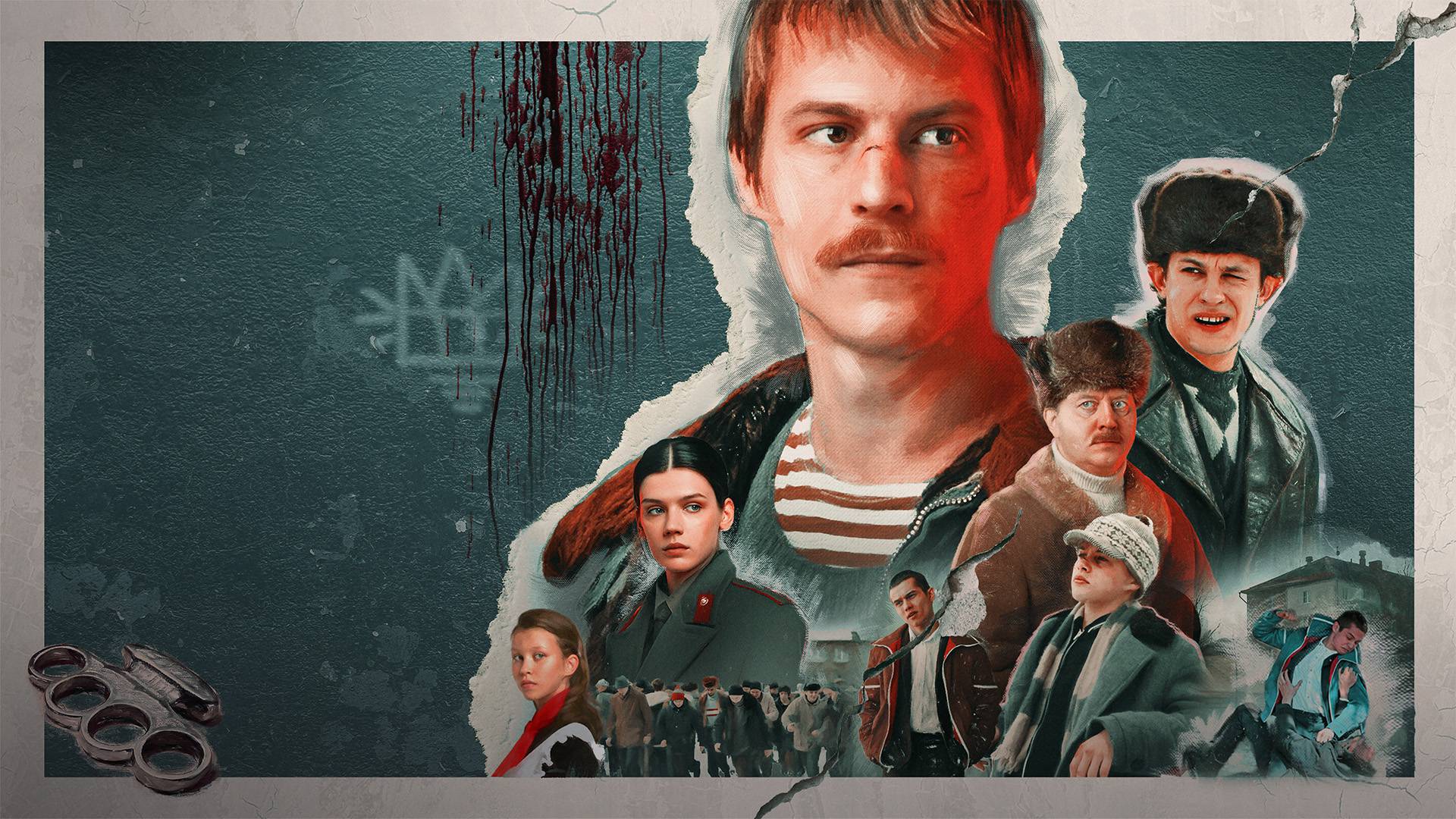
On December 21, 2023, the final episode of perhaps the most popular series of the past year, “The Boy’s Word. Blood on the Asphalt,” was released on the START and Wink platforms. Now that the viewing is...
Open materialI liked it too. It’s a huge leap for the industry, and of course, being in such a project is a dream. And I really like not only how it’s shot, but the script itself, the story the series tells.
– And in the competition between “Barbie” and “Oppenheimer”, who are you for?
I liked “Barbie” — I cried several times. And I had no high expectations, so it was a surprise. And I was late for “Oppenheimer” at the cinema and didn’t watch it. But I’ll definitely come back to it. By the way, about Greta Gerwig. It’s her husband Noah Baumbach who directed “Marriage Story”? I also watched it this year, and that was an absolute revelation: I saw myself in those characters, in their problems, even though I’m much younger.
– A wonderful film, and Adam Driver also sings himself at the end.
Driver is incredible there. And in general. I have a category for some actors. There are “wet” actors and “dry” ones. Adam Driver is just the embodiment of “wetness.” His cry through tears, the way he sprays saliva, the way he talks. He’s absolutely animalistic, he describes himself that way. Just amazing.
– And a bonus question, so to speak. In one interview, you mentioned that you grew up on, among other things, “Kikoriki” (Smeshariki). I naturally have to ask: which one is your favorite?
Barash, of course. Yes, Barash. He always seemed to me somehow mesmerizing and the most cinematic — a doubting, searching hero. I really like the episode “The Meaning of Life” and the one where he sings the song “How Nice It Is to Get Sick.” I just don’t remember what it’s called.
– “ARI,” I think.
Yes, exactly, “ARI.” There’s also an episode that I think describes human life very interestingly: about how he wrote poems to Nyusha and pasted them all over the walls…
– Ah, that’s when he also wrote letters to her and didn’t send them. That’s one of the best episodes, I think.
Yes, yes, it says something important, in my opinion. About the unwillingness to live, probably. About other characters, I clearly remember the episode with the hedgehog and Krosh about candy wrappers, where all the wrappers fly out of the hedgehog’s album, and Krosh runs in the rain to find them. A wonderful episode. In general, what I like about “Kikoriki” is that it’s not a children’s cartoon. It’s accessible, understandable, but it’s often about adult problems. By the way, I ask my brothers and sisters, and none of them like “Kikoriki.”
– How come?
I don’t understand it myself. There’s some gap in upbringing. That is, they calmly watch the current “Carousel” and “STS,” while I remember getting up at six in the morning before school to watch “Kikoriki.” Again, it’s something ingrained in the subconscious, that it’s all about adult life, about truly adult relationships, but made in a child’s language. And I’m very glad you asked this question. Do you like “Kikoriki” yourself?
– Of course, I grew up on them, I even woke up on Saturday mornings to watch them. Back then, “Chip ’n Dale: Rescue Rangers” was also cool, I think.
Right, “Chip ’n Dale,” yes. And “TaleSpin” was also great, about the bear pilot. So “Kikoriki” is part of the personality, literally.
– There’s even a theory that a person can always define themselves through characters. You need one to three Kikoriki to define a personality.
I haven’t heard that, by the way. Now I’ll really have to think about it all the time. I’ll go rewatch them, since that’s the case.
– That is the way, I suppose.
Yes, that is the way.
Comments
0No comments yet.
Sign in to join the discussion.