
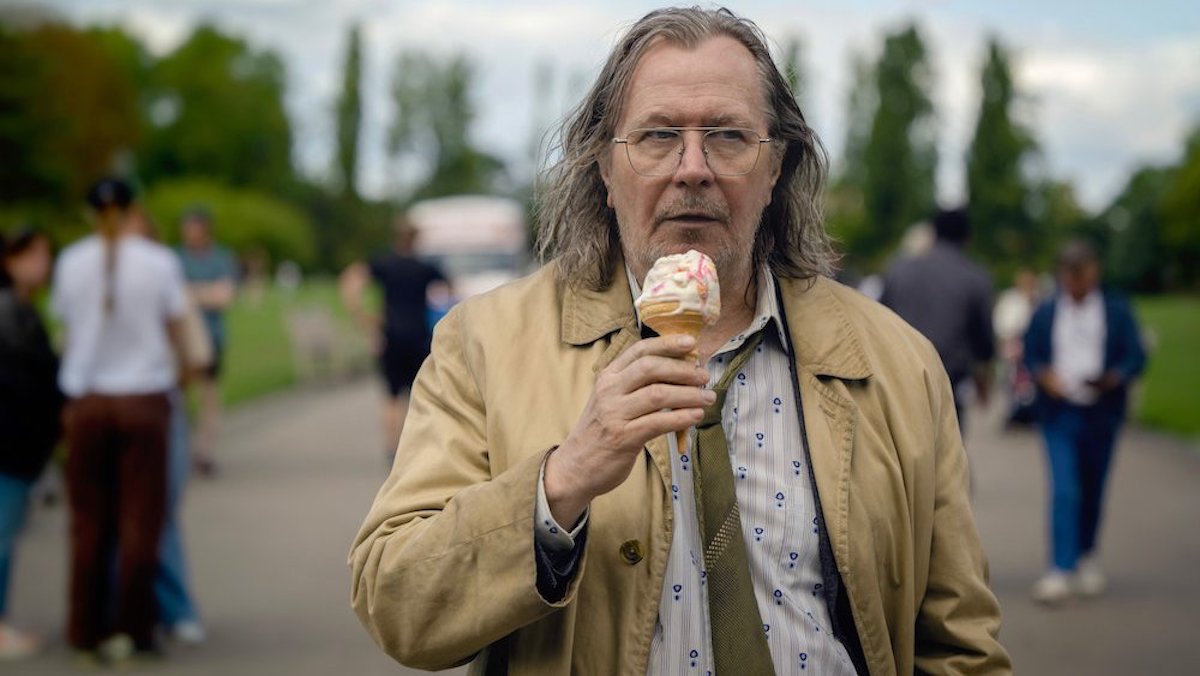
The third season of 'Slow Horses', one of Apple TV+'s main hits, has concluded. About how for the third year now we follow Gary Oldman and his charges in this spy thriller, and they don't disappoint us – in our review.
Of all the third seasons released in 2023 ('The Mandalorian', 'Only Murders in the Building', 'Ted Lasso'), 'Slow Horses' takes the least time to get going and handles its compact runtime more skillfully than its heavier counterparts. Six hours, even if watched in one go, fly by unnoticed — it's hard to tear yourself away from everything that happens between a Bond-style prologue and an epilogue in the spirit of Le Carré's prose, and you don't want to.
In the segment of escapist series about tough guys, this simultaneously serious and sarcastic show stands out for its intelligence, sleight of hand, and a thoroughly English approach. Moreover, 'Slow Horses' primarily recalls not the Bond epics it mocks, but forgotten British hits of the sixties — the series of spy thrillers about Harry Palmer (with Michael Caine as the ironic agent in glasses), 'The Quiller Memorandum', and other wonderful films. Spy work here is a boring, absurd profession: everyone deceives, betrays, and periodically kills each other, and then wonders why there are only traitors around.

Spying reaches its peak of absurdity at Slough House, a dumping ground for disgraced counterintelligence officers (the 'slow horses'), who can't be kept in the main branch but can't be fired either. River Cartwright (blond Lowden of heroic type) failed the entrance test, Marcus is a gambler, Shirley (excellent Aimee-Ffion Edwards from 'Peaky Blinders') beat up her boss, secretary Catherine Standish is a recovering alcoholic. Now they sift through cases from thirty years ago, sort archive files, try to find out why each one ended up in exile, and, of course, drink at the pub around the corner. While his subordinates live their worst lives, their boss Jackson Lamb (Gary Oldman), a Cold War veteran and agent of supernatural professionalism, quietly drinks himself to death, smokes, and fouls the air, as if sending an SOS signal to the universe.
Nevertheless, for the third year now, on screen and off, it's the slow horses who save the honor of the nation — British intelligence and British television. In the first season, the loser spies unraveled a nationalist conspiracy; in the second, they exposed a network of KGB agents. In the third, they confront the main revelation of our time: the main enemy is internal.
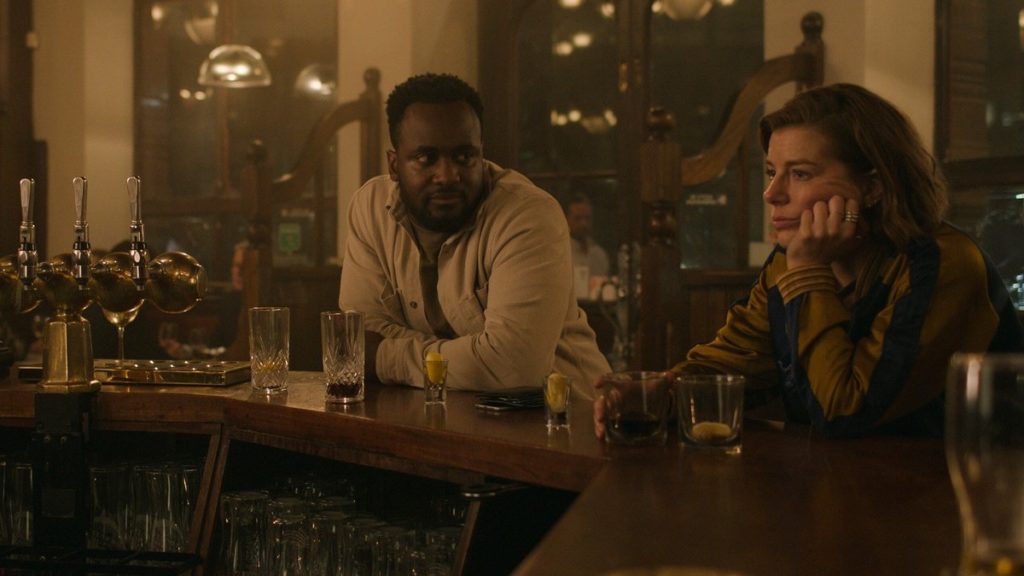
The season's plot revolves around an inspection that the Home Secretary (delightfully played by Samuel West) decided to conduct on MI5's security services by hiring a private military company (the authors still have an amazing sense of the times). Everything, naturally, goes wrong.
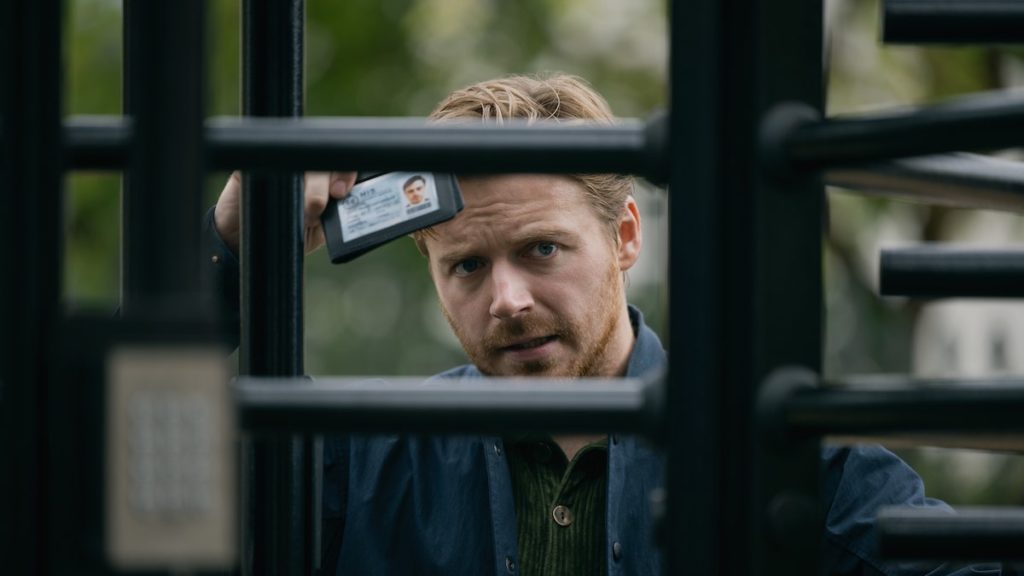
The Home Secretary plays his own game, while MI5's deputy head, Diana Taverner, schemes on the side. One of the mercenaries wants to look at intelligence archives related to conspiracy theories (the so-called 'gray books', which analyze all conspiracy theories of the last 100 years). River Cartwright is required to infiltrate MI5's basements, and his main rival from previous seasons is inexplicably crying on a bridge. And all of this is somehow connected to the tragic events in Istanbul from the prologue. The matter is further complicated by Jackson Lamb's involvement, as his secretary Standish is unfortunately taken hostage by conspiracy enthusiasts.
In the role of the misanthropic professional — a popular archetype this year — Gary Oldman is both more convincing and simply better than, say, Fassbender, his closest competitor from 'The Killer'. His Jackson Lamb resembles Bond in the version of Timothy Dalton (the saddest 007 agent in film history), if he were played not by a Scottish Shakespearean actor, but by Shrek. A worthwhile spectacle, overall.
This not very pleasant, crude hero is a vicious parody of British intelligence and at the same time its most loving portrait. Lamb dodges chases only into a kebab shop, replaces a shower with five minutes at the sink with dish soap, fouls the air in an expensive clinic's waiting room and someone else's Rolls-Royce, and then unexpectedly straightens up and puts capitalists, idiots, security forces, the head of intelligence, the Home Secretary, and generally all those people you always want to put in their place when you see them on TV.
Like any serious professionals, the creators of 'Slow Horses' don't puff out their cheeks to express some great truth; they simply make a gripping spy thriller. And as with any truly good cinema, the statement comes out on its own. In 2023, there is no series — and you'd have to search among films too — that speaks more accurately and harshly about the temptation of unlimited power and its repulsiveness. With Lamb's directness, 'Slow Horses' shows MI5's main branch operatives as rather pathetic executioners, the top brass of the special services as unscrupulous killers, and the minister and officials as shortsighted fools.
The key conflict of the season is the struggle for power waged by the bad and the very bad, while conditionally good but lost people try to restore justice they themselves don't believe in. The current season is the best, most vigorous and dashing of the three, and at the same time the most honest, because for the first time 'Slow Horses' looks not at the canons of the spy genre, but at the arbitrariness of the special services. Intelligence is not democratically controlled — you can't conduct a public audit of secret activities, missions are kept secret, and their victims don't get obituaries in newspapers. Big politics, however, requires big sacrifices, and they are made each time in the name of a great goal.
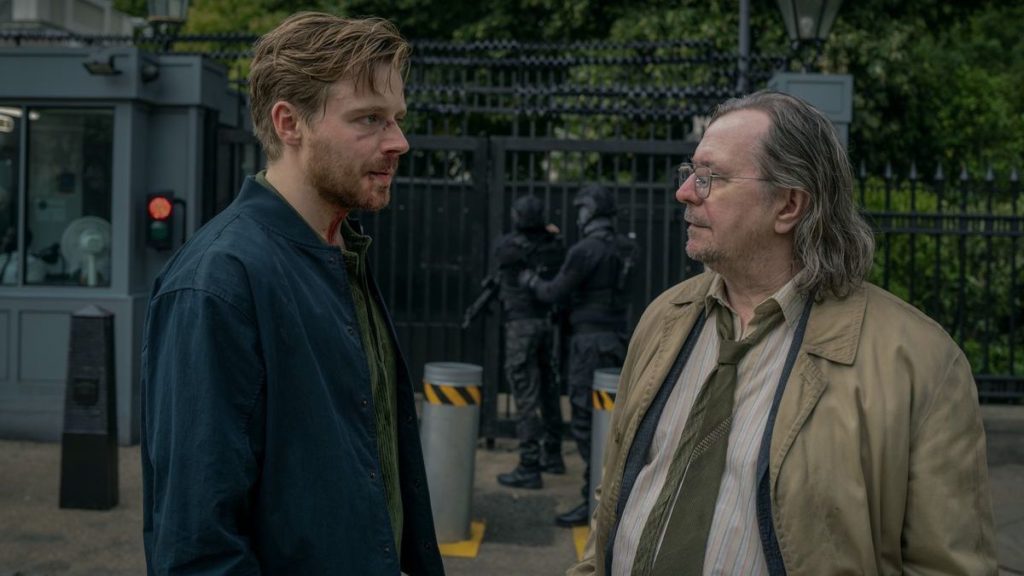
However, 'Slow Horses' refuses to see world domination and 'geopolitical' interests as that very great goal and demonstrates how, in the absence of control, intelligence — and in a broader sense, the state — turns into what it should protect its own population from. At best, into a boorish thug (like MI5's main operative). At worst, into a shortsighted tyrant praising himself for his foresight (like Kristin Scott Thomas's character). Of course, Jackson Lamb (like Harry Palmer in the sixties and George Smiley in the seventies) stands up to all of them, but he's no longer a stallion.
Comments
0No comments yet.
Sign in to join the discussion.