
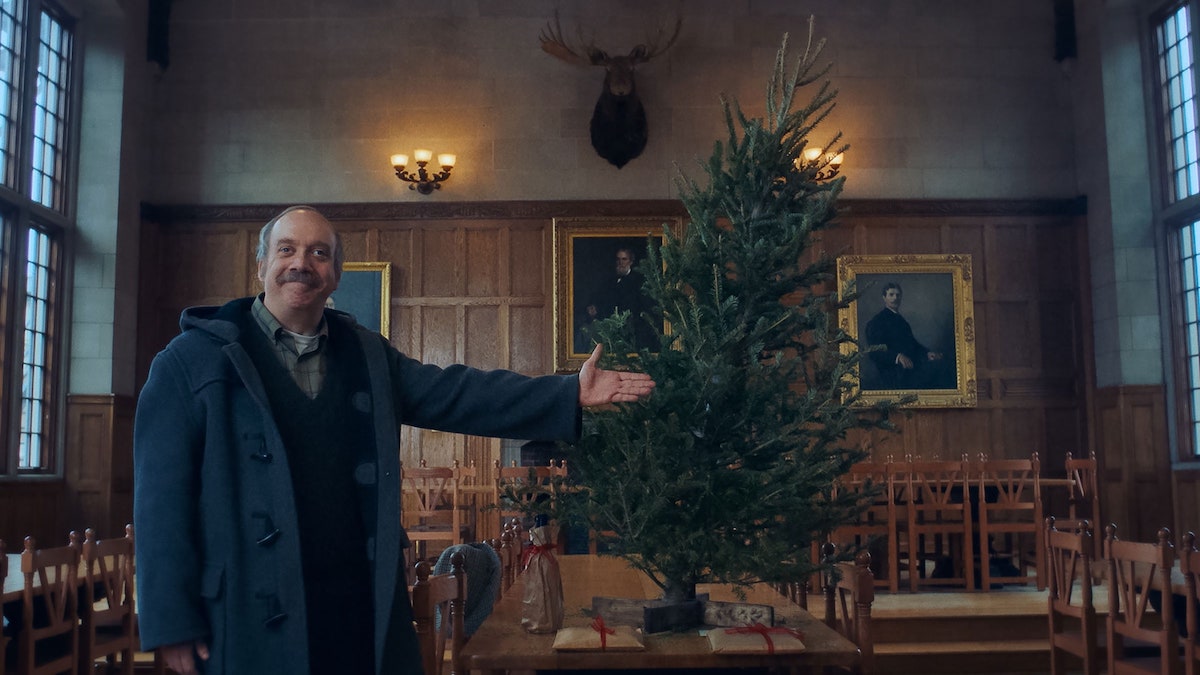
Online you can (and should) find Alexander Payne's new film, the New Year's comedy 'The Holdovers' – a deep and surprisingly warm movie for which one of America's smartest directors is predicted to win an Oscar. More about this old-fashioned hit in o...
At the end of 1970, at a closed boys' school, several students whose parents didn't pick them up, cook Mary, and an ancient history teacher left in charge remain for Christmas. All but one student eventually leave, leaving the smart repeat student Angus Tully alone with the disliked teacher, feeling like an outcast among classmates and with his recently remarried mother.
The teacher (an outstanding role by Paul Giamatti) is indeed hard to like. Boring, slightly aggressive, barely respecting students, Mr. Hunham thinks too much about the Roman Empire to pay attention to modernity, friends, and colleagues. He is not the kind of person who inspires sympathy at first sight. And even a second glance hardly helps.
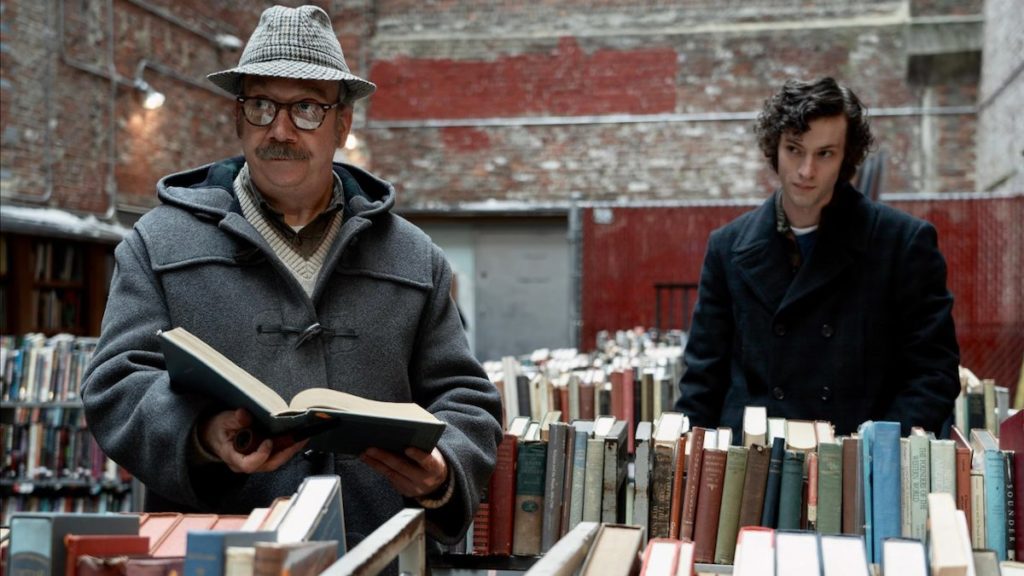
Their strange coexistence with the student (Dominic Sessa, a smart debut) and the black cook (a wonderful role by Da'Vine Joy Randolph), who lost her son in Vietnam, to a certain extent recalls two great films of the eighties. The first is, of course, 'The Breakfast Club', John Hughes' main contribution to world culture, and indeed – left alone in the empty school with themselves and each other, the characters ultimately understand a lot, and a friendship develops between them (spoiler for those who haven't seen the movie) that could not have formed under other circumstances. The second film is 'The Shining' by Stanley Kubrick, a film about a hotel abandoned in the snow and quiet claustrophobic madness, an evil twin of Hughes' masterpiece.
Plot-wise, Payne follows both stories: the confinement of space in 'The Holdovers' provokes hatred, friendship, and sadness. But being original, even in borrowed plots, an independent author, he mid-film trades the claustrophobia of the eighties for a characteristic seventies road trip. The characters' feelings, as if bottled up in the school, must be tested by fresh air. And it is in the second part, when the teacher and student go to Boston, that 'The Holdovers' truly blossoms.
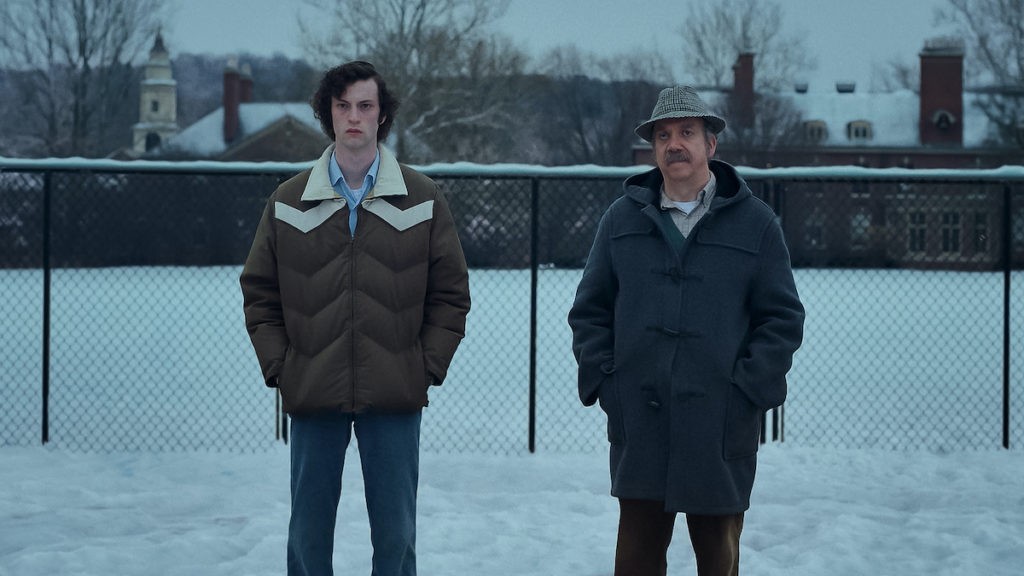
Filming the journey of a negligent student and a bad-tempered teacher, Alexander Payne – and this is perhaps his main achievement – shows us the real magic of cinema from the New Hollywood era (in this sense, he is a brilliant student of Bogdanovich, and perhaps Altman). Themes raised for the hundredth time, familiar echoes of Vietnam (quite a touching storyline, it must be said), the classic plot of forced bonding between such dissimilar adults and teenagers – we've all seen this many times. Yet 'The Holdovers' looks and sounds fresh, original. It is a touching film, but not stale. Its coziness is the coziness of a Christmas revelation, not of hackneyed clichés. Both the characters and the film itself breathe the winter-fresh air, yet manage to warm themselves and warm others.
However, reducing 'The Holdovers' to a Christmas fairy tale is still not worth it (and it's clear why the director gets upset when people do that). The film begins with credits where you can even see an indication that the film was supposedly shot in 1971, and it substantively, not cosmetically, conveys the tragedies and highs of that paranoid, decadent time, yet one of the most culturally productive eras in American history. The film also captures the main theme of the seventies – the confrontation between the system and the nonconformist, with a significant portion of the characters' nonconformism lying in simply refusing to live as dictated by their class, race, and hierarchical affiliation. In the teacher, an unexpected depth of rebellion is revealed; in the student, a sensitivity to injustice uncommon among his classmates; in the cook, honesty and vitality.
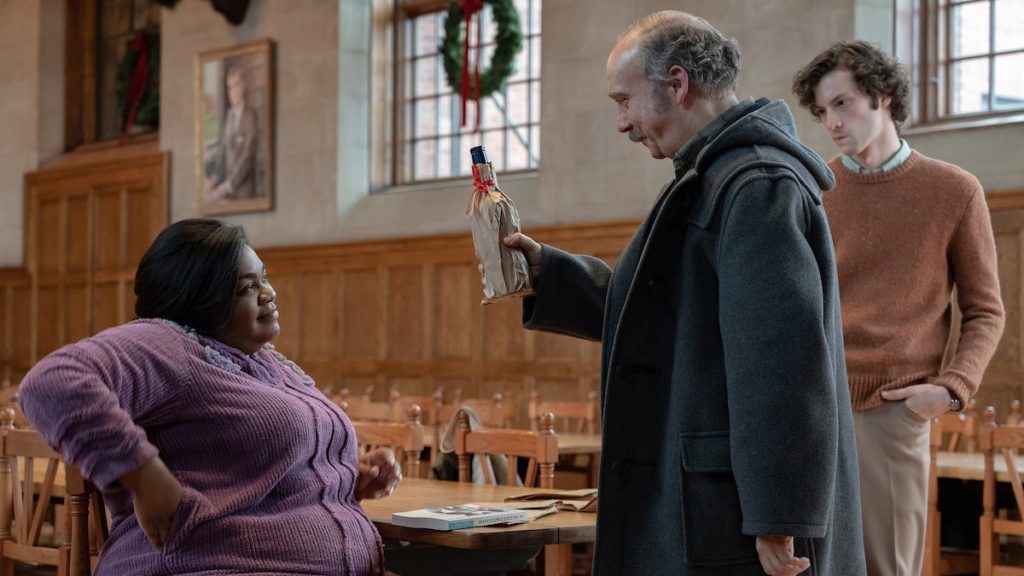
Grainy film, closed school, New Year's address in the finale also figure as signs of the times, but much more important is that 'The Holdovers' is a film about a country lost in the shift of eras and people lost in it. They are all (this, though obvious, is a working allegory), clearly, left alone not only at Christmas but in life. Here, as always with Payne, there is a serious, not superficial drama, the pain of depression unnoticed by others, attempts to hide in the grandeur of the Roman Empire from the melancholy of one's own times. With restrained optimism, the ending is sad – after all, even the Roman Empire eventually collapsed, and the new year does not guarantee new happiness, and the whole film, in essence, is a picture of shared loneliness.
But it is in this quiet sadness – for missed opportunities, bygone times, irretrievable losses – that, oddly enough, the main therapeutic effect of the film lies. Payne does not try to mask the pain or say it doesn't exist. He does the main thing an honest director can do – he offers to share it with the audience. And, since we're talking about the seventies, this is, of course, an offer that cannot be refused.
Comments
0No comments yet.
Sign in to join the discussion.