
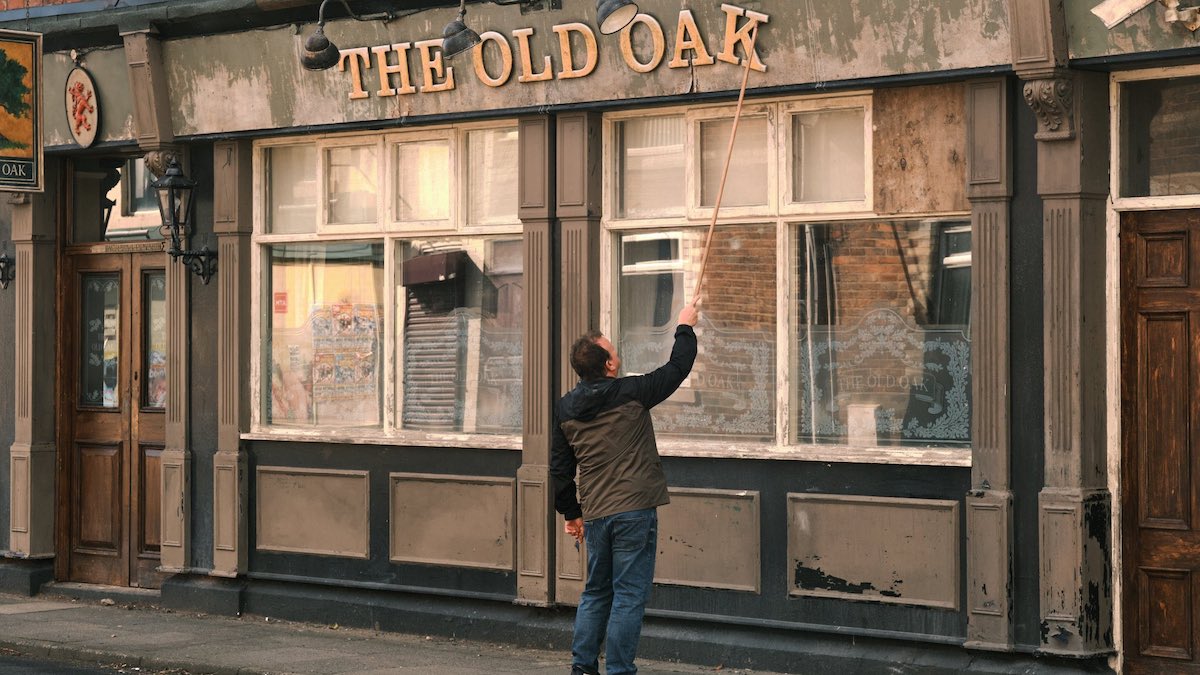
"The Old Oak," likely Ken Loach's final film, the British living classic, has been released online. About why this is not his greatest film but a touching and noteworthy manifesto—in our review.
In a small town in Wales, life stopped about a generation ago with the closure of the mine—the main local industry. People there are living out their days, unable to sell their homes, barely tolerating each other, slowly drinking themselves to death, and, of course, hating outsiders. TJ Ballantine (Dave Turner) also barely endures such a life and barely keeps "The Old Oak," the last pub in town, afloat, but he doesn't hate outsiders, and when Syrian refugees arrive in town, he strives to help them.
Ballantine strikes up a friendship with Yara (Ebla Mari), a Syrian photographer whose father is either in prison or dead, and who tries to support her mother and brothers, even though she herself is struggling. Things aren't made easier by the fact that upon arrival, her camera was smashed by a local thug, and in general, Syrian refugees are not welcome in Wales.
By helping Yara, Ballantine, his friend Linda, and other good people of the town begin to realize that this is probably how one should live. They recall the experience of their parents, who once united despite conflicts to go on strike. They try to restore unity and community values to the townspeople. In summary, it seems that in retelling, this all looks at best like a social drama from Russia's Channel One, i.e., 24 episodes, a mandatory happy ending, an evil mother-in-law, and other little joys of daytime television.
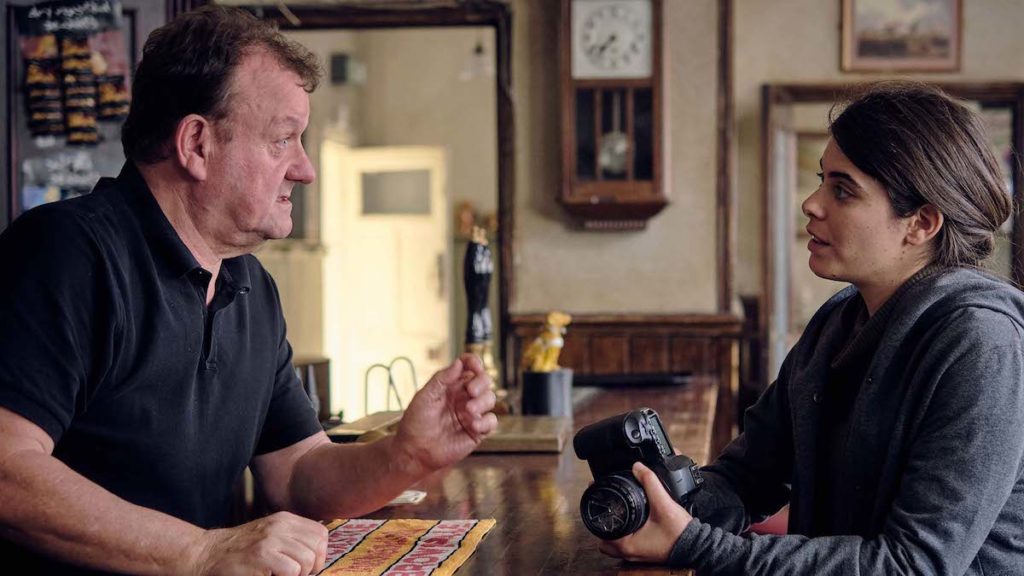
And indeed, "The Old Oak" is a terribly non-essential, weightless film despite its imposing title, which should have turned out to be wildly vulgar, but for some reason it didn't. Of course, behind that "for some reason" coyly hides the film's director, the British living classic and staunch socialist, Ken Loach.
For years, he has been making essentially the same film—sad, furious, always very lively sketches about the daily lives of workers, abandoned, forsaken, and now also refugees. And of course, in the hands of any other director—some young talent, for example—Loach's recent films would look like rather dreadful melodramas. Cheap attempts to squeeze a tear from the audience on a, frankly, obvious theme of sympathy for everyone, which is, of course, easiest to do from the comfort of one's favorite screen without getting up from the chair.
However, both "I, Daniel Blake" with its undisguised fury, quarrelsomeness, rebelliousness; and "Sorry We Missed You," a film of quiet longing and doom; and "The Old Oak," a film of modest artistic merit about how it's better to live together, certainly do not look cheap and do not seem like attempts to exploit audience emotions or tear-jerking fairy tales for fundraising. These are serious, sincere statements from a man who, even at 87, finds the strength to stand up and say what he thinks. , like his peer Polanski , but to sympathize with everyone.

The Palace, a dubious New Year's comedy about a failed apocalypse with cult potential, is being released. About how Polanski reimagined his early film The Fearless Vampire Killers
Open material"The Old Oak" in this sense is a toast to solidarity stretched over nearly two hours, which, like any such lengthy toast, is justified only by the fact that Loach really has something to say and believes in what he says. Minor everyday troubles, ascetic mise-en-scènes, melodramatic dialogues, and some plot sagging acquire, against the backdrop of their author, not greatness perhaps, but some kind of humanistic significance.
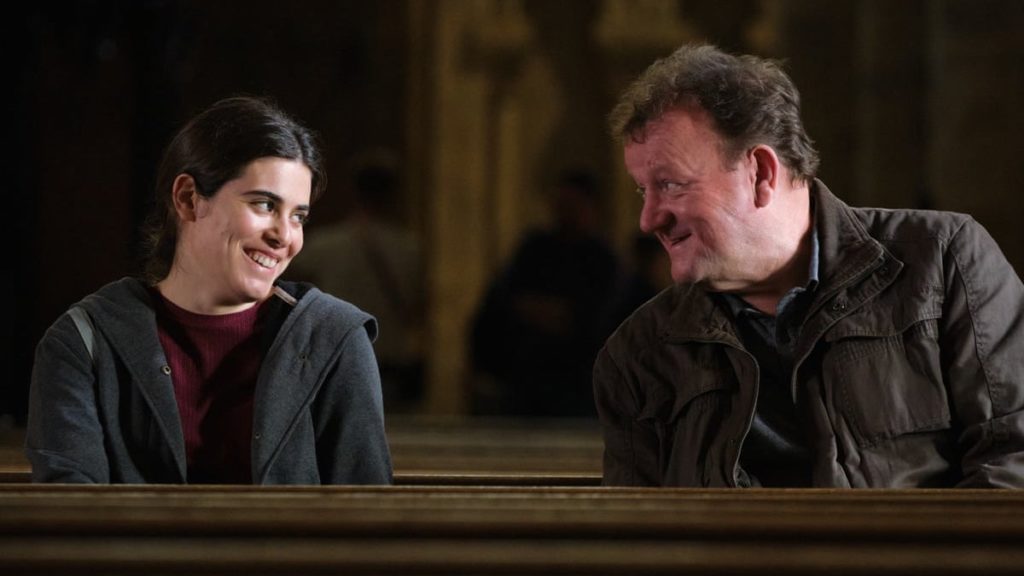
Loach's heart beats with his characters, no matter how petty and sometimes cowardly they may be, and they—bartenders, workers, refugees—rise above their surroundings and the injustice of the world, gaining in cinema, though not in real life, alas, strength, hope, solidarity. In this sense, every Loach film is a radical statement, a breaking of hierarchies, a refusal to show the weak as weak. The characters of his works are people living next door, and he knows how to see dignity in them, how to discern heroes of big cinema in little people.
Many see the film as the director's creative testament, and if that's true, then although he is leaving not with his best film, it is on a high note. Firstly, it's a great thing to make a film about how the main social problems of a town are solved precisely in a pub (kitchen sink realism has finally flowed toward the beer tap), and secondly, at the end credits, one wants to drink to solidarity. A rare desire in our time.
Comments
0No comments yet.
Sign in to join the discussion.