
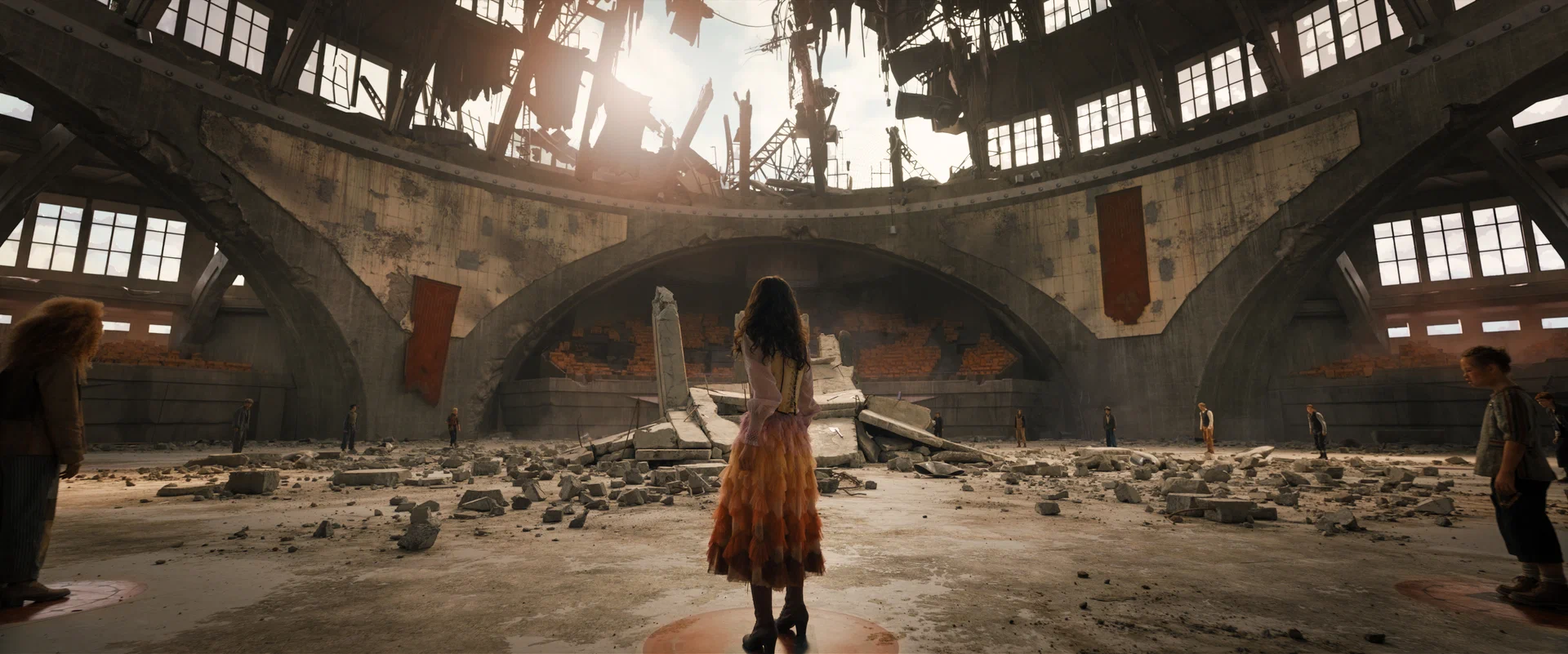
On November 17, the prequel to Suzanne Collins' book franchise 'The Hunger Games: The Ballad of Songbirds & Snakes' was released worldwide. Eight years after the premiere of the final film about the rise of the Mockingjay, Katniss Everdeen, a new nov...
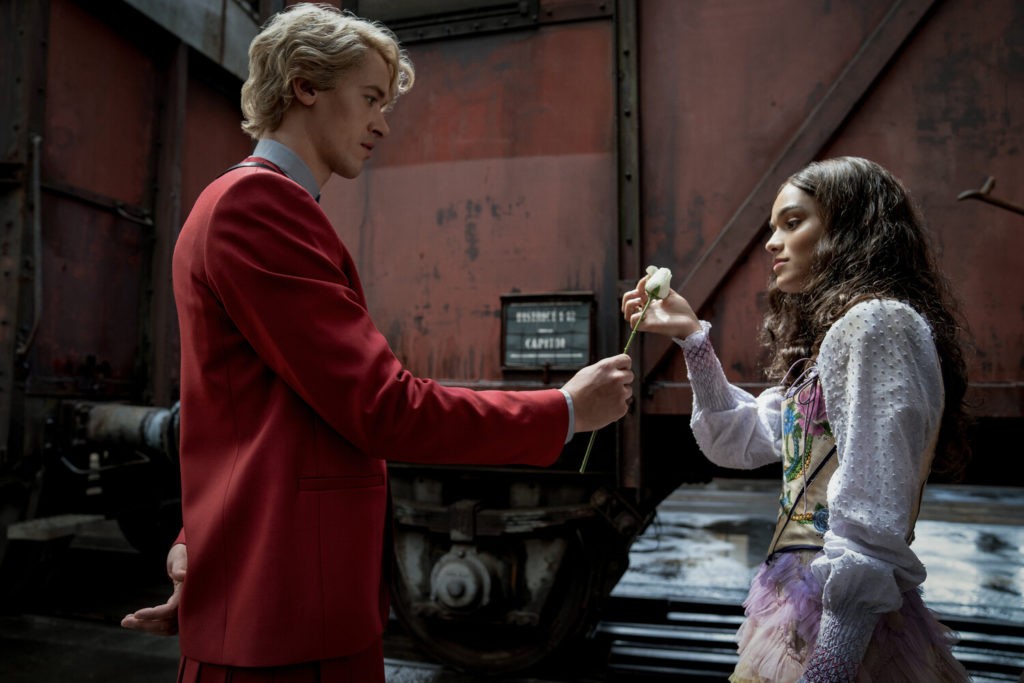
Once, before the end of the Great War between the districts and the Capitol, the Snows were one of the most influential families in the Capitol, but now all that remains of their former grandeur is a family townhouse with a small greenhouse. In it, the only surviving adult member of the family, "Madame Ba," grows white roses, while her young wards Tigris and Coriolanus (Tom Blyth) try to maintain their nearly lost high social status. The girl works as a designer's assistant and alters old clothes, while the heir to the Snow family attends the best school in the Capitol and competes for a prestigious prize that could pay for his university tuition.
On the eve of the tenth, anniversary Hunger Games, due to low ratings, the creators and designers of the competition decided to reform it by adding mentor-assistants for the tributes in the form of the best students from the Capitol. Now, in the battle for survival, Coriolanus must fight side by side with the games' outsider, a girl from District 12, Lucy Gray (Rachel Zegler).
The Hunger Games - Again
In the 2010s, teen films were the flagship franchises. Against the backdrop of movies like 'The Maze Runner', 'Divergent', 'Percy Jackson', 'The Hunger Games' looked much more high-quality and cohesive. Of course, in all of them, the main storyline was romantic, but the 'Games' were distinguished by an interesting, well-developed, and grounded world, without an unrealistic future society with teen trackers and teen runners. As Suzanne Collins said, the idea to write a book about a totalitarian state and its harsh tradition came to her when she was flipping through TV channels and saw a reality show and a report from the war in Iraq back-to-back. Thus, realism and spectacle became the main components of the franchise's success.
The prequel to the story maintains the traditions of the previous films; it's no coincidence that Francis Lawrence, who directed all the sequels of the franchise, was chosen as director, and screenwriters Michael Arndt ('The Hunger Games: Catching Fire') and Michael Lesslie ('Assassin's Creed') took on adapting the novel. Their task was not only to bring the book's events to the screen but also to expand the universe, introducing new elements without harming the original.
In the quadrilogy, we saw the world through the eyes of a simple girl from a district; now we have before us the journey of a resident of the Capitol, who is on the other side of the arena. Coriolanus Snow's privileges become ours: from the distribution of tributes and peculiar banquets to inspecting the arena and participating in the show. This format of the story allowed it to become closer to the show; here, as in previous parts, there are performances for the audience, a hilariously pedantic host in the form of Lucretius "Lucky" Flickerman (Jason Schwartzman), and poor children fighting for the crowd's entertainment. The only thing missing is the competition and the intensity of emotions. Everything turned out quite predictable, and the asceticism of the arena, standing right in the middle of the city, destroyed the aura of mystery, although it made the world a bit more grounded.
A Worthy Heir?
Showing the making of a villain is a difficult task, especially when an original work exists. Here, on one hand, it managed to reflect the formation of an ambiguous, torn between love and duty Snow into a future tyrant, but on the other hand, it turned out somewhat unemotional and sparse on events. The novel itself was difficult to adapt to the big screen due to the abundance of events and characters, but splitting it into two parts would not have been agreed to by Lawrence himself, who recently spoke out against the studios' decision regarding 'Mockingjay' and its division into two parts. Making a series would have been riskier, especially since the act structure would not have allowed it to be as cohesive.
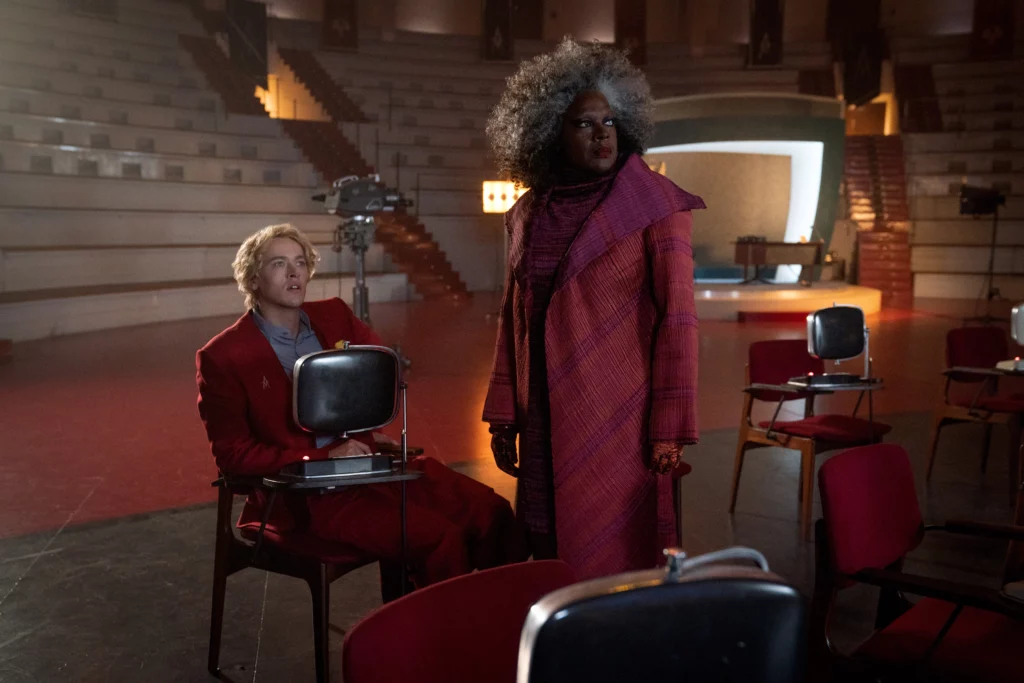
'The Hunger Games' manages to show Snow's relationships with his friends, close ones, and enemies, but it comes off rather superficially, with the exception of his interaction with the military commander Dr. Gaul (Viola Davis). Interestingly, despite the uplifting nature of the film's conditional resistance in the form of Lucy Gray, sister Tigris (Hunter Schafer), Sejanus Plinth (Josh Andrés Rivera), and another mysterious character, it seems even more ambiguous than categorical evil. This is reflected in the incredibly beautiful, poignant soundtrack by James Newton Howard, and in the detailed costumes, thought out to the smallest embroidery and color (for example, online it was noticed that Lucy Gray's 'parade' dress features katniss and primrose flowers, which refer us to the names of the Everdeen sisters).
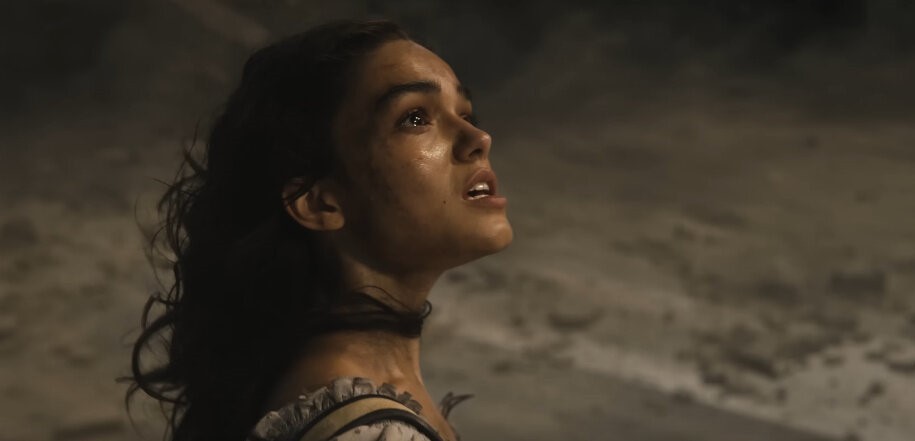
Lucy Gray, played by the charming Rachel Zegler, although she was a conditional Katniss with her homages from the first parts, turned out to be a fairly cohesive and strong character, though sometimes stealing attention from Coriolanus. Bright, attractive, truly a songbird, she not only managed to be a femme fatale in the protagonist's life but also helped understand some behavioral motives of the future president, expanding the film's world with her songs. For example, we learn how Katniss's propaganda song from the first part of 'Mockingjay' came about, as well as the nature of the name itself and why Snow was unpleasant to the original franchise's heroine from the very beginning.
Will There Be a Sequel?
There is no clear answer. On one hand, the film received decent reviews from critics and audiences, still holds a top position in box office earnings, and the producers at Lionsgate Films themselves admitted that they would like to expand the film series. Indeed, the prequel showed incredibly rare resilience at the box office and in preserving the spirit of the original, which is often the main problem with this format. Expanding the world of Panem gave fans many theories, such as about Lucy Gray's fate and her hypothetical relation to Katniss's family tree, and unfortunately, watching 'The Hunger Games' has become more relevant than it was back in the early and mid-2010s.
However, it is important to remember that the final decision depends on Suzanne Collins, and although she has not officially announced her vision for the franchise and its expansion, it is highly likely that we will see a continuation of Coriolanus Snow's story.
Comments
0No comments yet.
Sign in to join the discussion.