
With the release of an American series and a Japanese film in which Godzilla is once again the most relevant screen hero, we recall the classic films about him and figure out how, why, and in what order to watch movies where a Japanese man in a rubbe...
The franchise about Godzilla, the king of kaiju (the established transliteration of the Japanese word for "monster"), the most famous dinosaur in cinema history, is hardly Japan's most significant contribution to world culture, but probably its most famous. Over its long life, this dinosaur has been an illustration of war, a defender of the environment, a supervillain, and a superhero.
The classic period of the franchise, the Showa era, consists of the original 1954 film and its 14 sequels. These are films of very different quality, content, and even genres, which (except for the great first part) are now rarely watched for any other interest than historical. Nevertheless, it is a curious and quite fun part of film history, which also allows us to look at its modern segment from a different angle.
Godzilla was the superhero of his time, and the birth of his star, its rise and fall, can tell us a lot about, for example, the path of the Marvel franchise and the eternal decline of DC. So who was Godzilla for the 50s and 60s? Why did he have to reinvent himself in the 70s and take a ten-year break? Why, in the end, does this monster still remain with us? We look for answers in and around the fifteen films of the Showa era.
How Did It Happen?
1950s: A Star Is Born
"Godzilla" (1954)
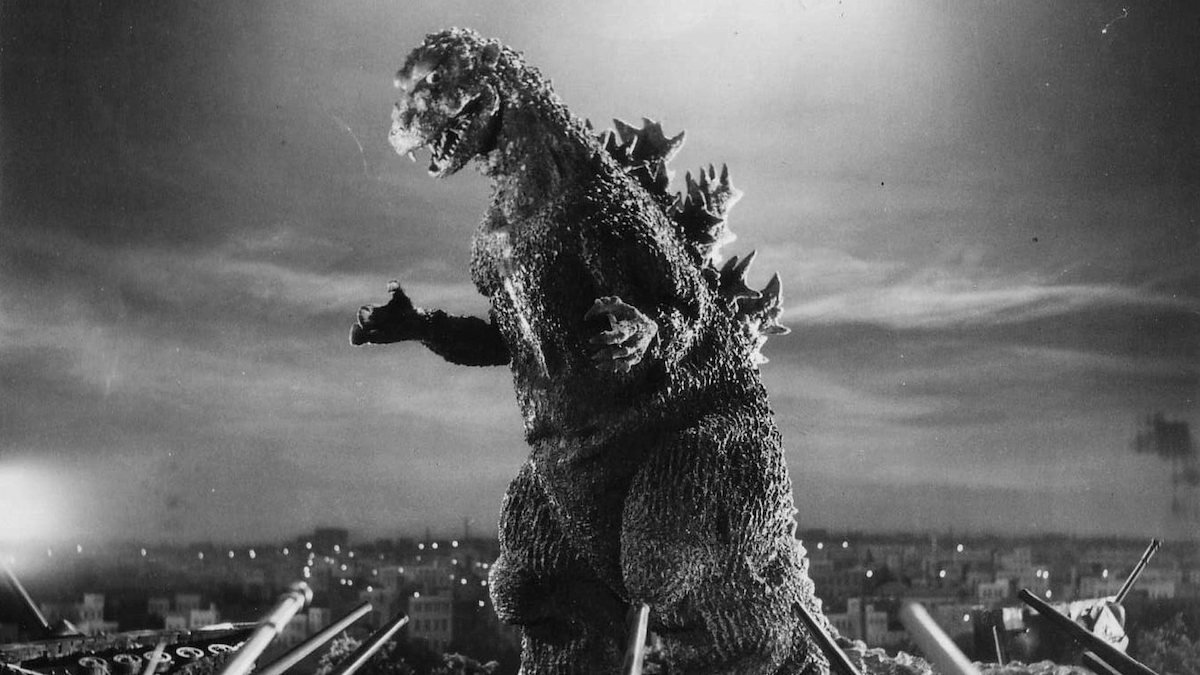
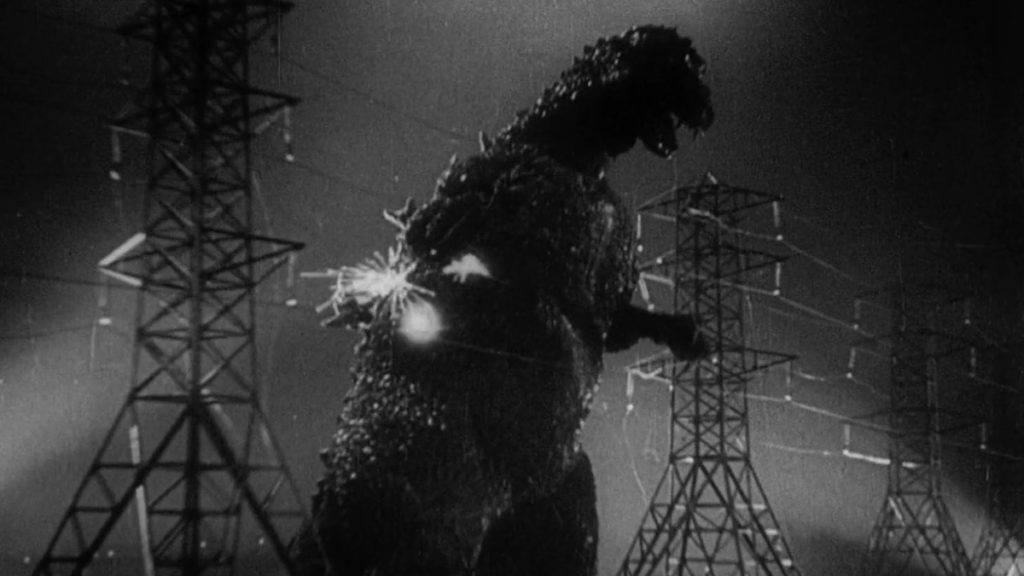
The most serious, thoughtful, and simply best film in the entire franchise, directed by its best director Ishiro Honda, a close friend of Kurosawa and a great thinker in general, one of the creators of the genre. Godzilla here is not just a monster, stupid, evil, or conversely benevolent, but a metaphor. In the plot, this reptile from the Jurassic period awakens and leaves its shelter after it was destroyed during underwater hydrogen bomb tests.
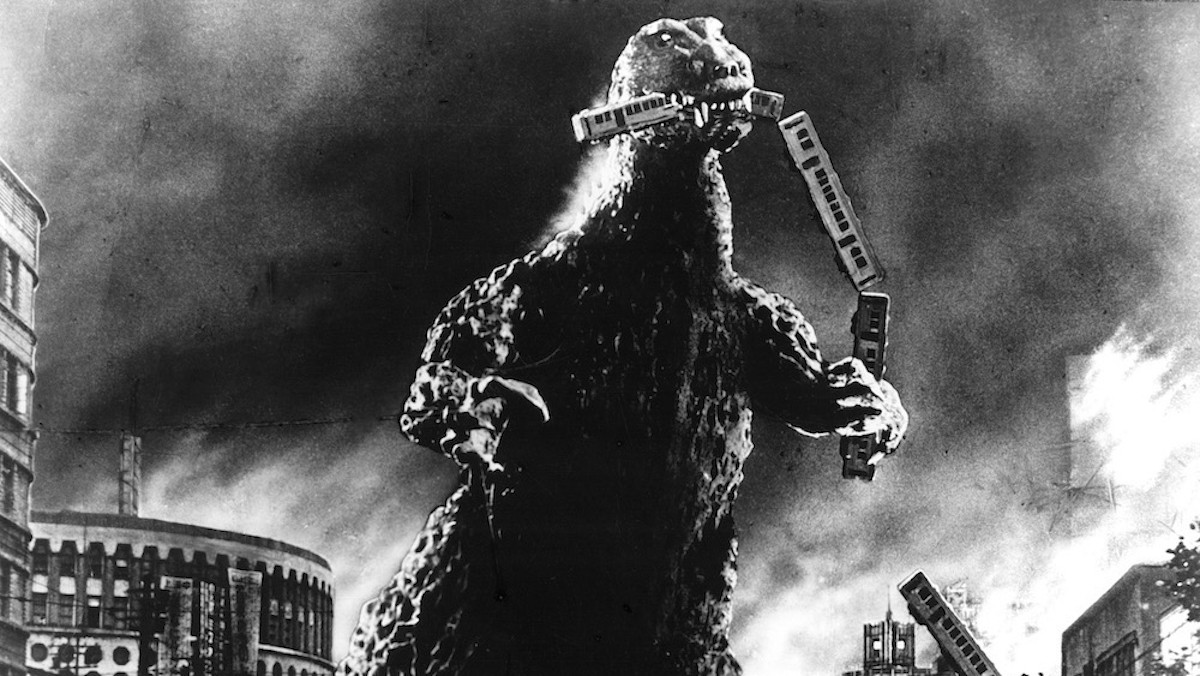
Godzilla's attack is a direct consequence of unrestrained technological progress; the monster itself is a mindless force of nature, cruel, merciless, but ultimately pitiful. The last of its kind, it is doomed to perish, like the best of people (in the authors' view, also endangered species), and it's not that you want to go to a rally for "Godzilla lives matter," but the fact that man won this fight is somehow quite sad.
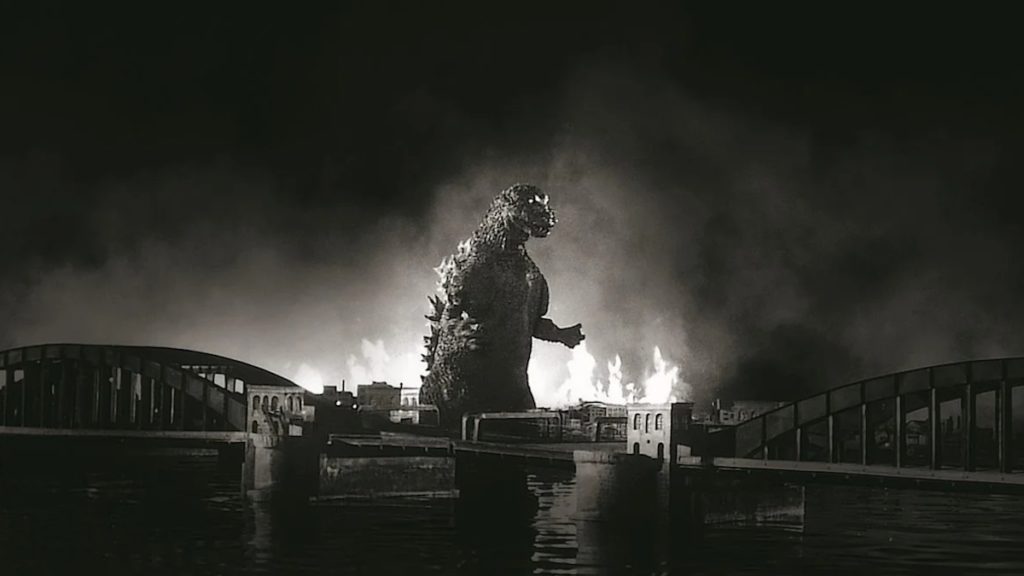
Most memorable scene: when the monster destroys Tokyo and close-ups of the residents are shown. It makes you think about the fragility of our everyday life.
Best Godzilla appearance: the very first in history. The head peeks out from behind a hill; it's clear these are the funniest practical effects, but the eeriness is amazing.
Paranoia: war and nuclear weapons.
"Godzilla Raids Again" (1955)
The sequel to the great first film was made in a hurry, and it shows. The monster plot practically duplicates all the main moves of the original, not even trying to reproduce the atmosphere (which is impossible, director Honda understood that), and Godzilla's enemy – another revived evil dinosaur Anguirus – turns out to be quite meaningless, as the authors don't know what to do with him. However, the part related to the daily life of pilots and dispatchers, who this time need to defeat Godzilla, on the contrary, both delights and amazes, and redeems all the sins of the stupid monster fight staging. The love of a pilot and a female dispatcher, a cheerful bachelor friend with sad eyes, kind-hearted small capitalists – everyone is friends, drinks sake, fears death, and it looks like a modest draft of an Ozu film, to which Godzilla was added in the final edit.
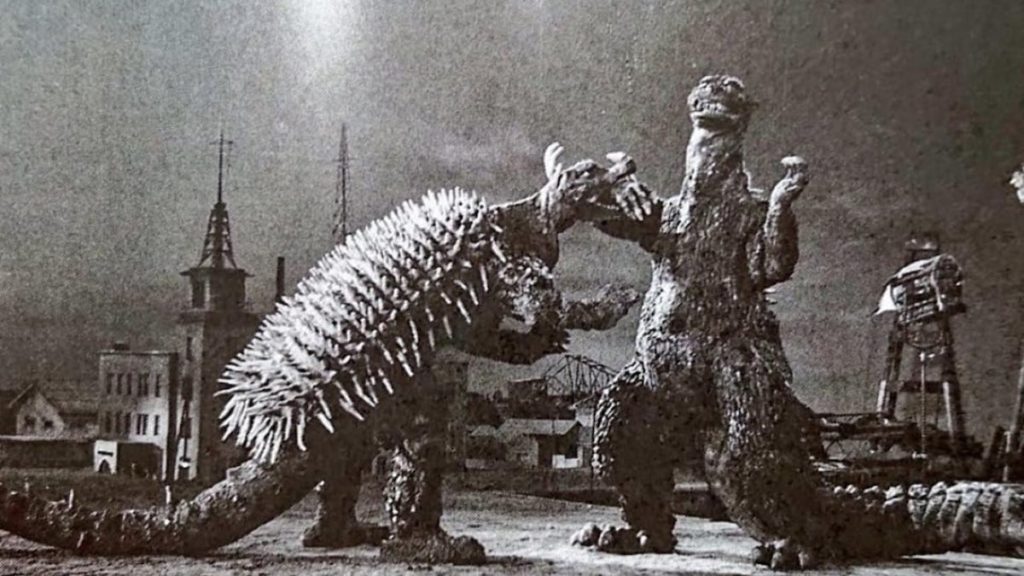
Most memorable scene: When everyone gets drunk on sake.
Best Godzilla appearance: When the pilots spot Godzilla against the backdrop of rocks and glaciers. The lonely monster looks somehow terribly small against the nature it embodies.
Paranoia: old horrors return too easily.
_
1960s: Godzilla vs. Everyone
"King Kong vs. Godzilla" (1962)
An amazing thing, the first such large-scale crossover in the world (although there were, of course, Universal's "Frankenstein Meets the Wolf Man" and several other strangest films). The main intrigue, naturally, is who will win: the ancient dinosaur or the giant ape? In the end, capitalism won, and in two countries at once – Japan and the USA. The film exists in two versions, both were box office hits, but you should probably watch the Japanese original. It has more jokes, everyone bets on which monster will win, and at the same time everything is somehow more solid and the soundtrack is quite great. All the human storylines are provocatively boring, although the part about the TV people is quite okay.
Like every great thing, this movie is timeless – the ridiculous fights are heartfelt and touching, and when King Kong electrocutes Godzilla like Palpatine, you realize that this is simply the best movie in the world. Only the scenes on Kong's island are morally outdated: we still condemn blackface.
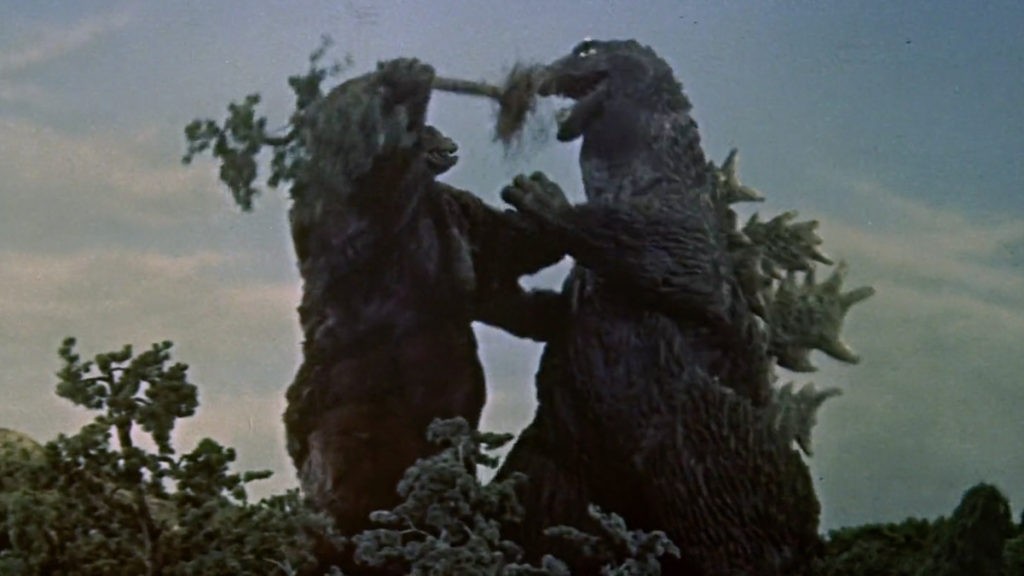
Most memorable scene: there can be no two opinions – when Kong and Godzilla beat each other up for ten minutes straight.
Best Godzilla appearance: his first meeting with Kong. Anyone who has seen Godzilla's joy will understand.
Paranoia: the development of television and reality shows.
"Godzilla vs. Mothra" (1963)
Nonsense, but charming. Actually, this movie is about Mothra, or rather, about her offspring, the continuity of generations, and the stupidity and greed of people. Godzilla here is a bit of a figurehead, and his suddenly protruding Brezhnev eyebrows somehow especially emphasize the whole comicality of the situation when an ancient dinosaur confronts two caterpillars dousing him with sticky liquid. Godzilla in this film still acts as evil, but very sluggish evil. He destroys houses and falls into the same traps set by people, as if only because he doesn't know what else to do. The human storyline is more interesting, and at some point it strangely looks like a movie about honest journalists and the social responsibility of capitalism, while Godzilla is in an obvious existential crisis.
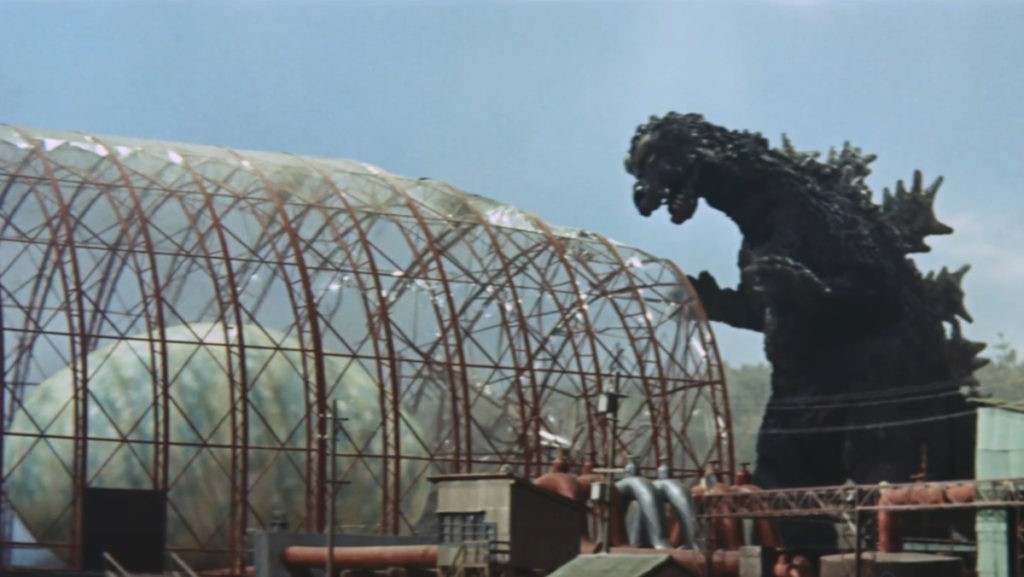
Most memorable scene: all scenes with the tiny fairies in Mothra's service. Anyone who watched this sober will never forget it, it seems.
Best Godzilla appearance: when he is sequentially tormented by people, a butterfly, and caterpillars. Pitiful beyond belief.
Paranoia: capitalism.
"Ghidorah, the Three-Headed Monster" (1964)
Godzilla is not in the title, but of course this strange, absurd, but in its own way great kaiju party couldn't do without him. This film is often loved even by those who haven't seen the other sequels, and for good reason. The novel "Inherent Vice" presents the best analysis of this film: "Ghidorah" is a mix of "Roman Holiday" and a story about an inevitable apocalypse, and in this sense, the movie is genius.
From the film with Gregory Peck – the plot about a princess of an unnamed country, who is constantly accompanied by a heroic policeman, while against the backdrop of their tragic mutual sympathy, the world prepares to plunge into chaos. The source of chaos is a three-headed space dragon resembling the Slavic Zmey Gorynych, who wants to destroy Earth. He is opposed by Godzilla, Mothra, and Rodan, who in previous films couldn't stand each other. This again absurd plot is actually very curious: why do kaiju agree to help people? what is dear to them on Earth? why do we so often see ourselves as the central form of life on the planet and what, exactly, is our evidence?
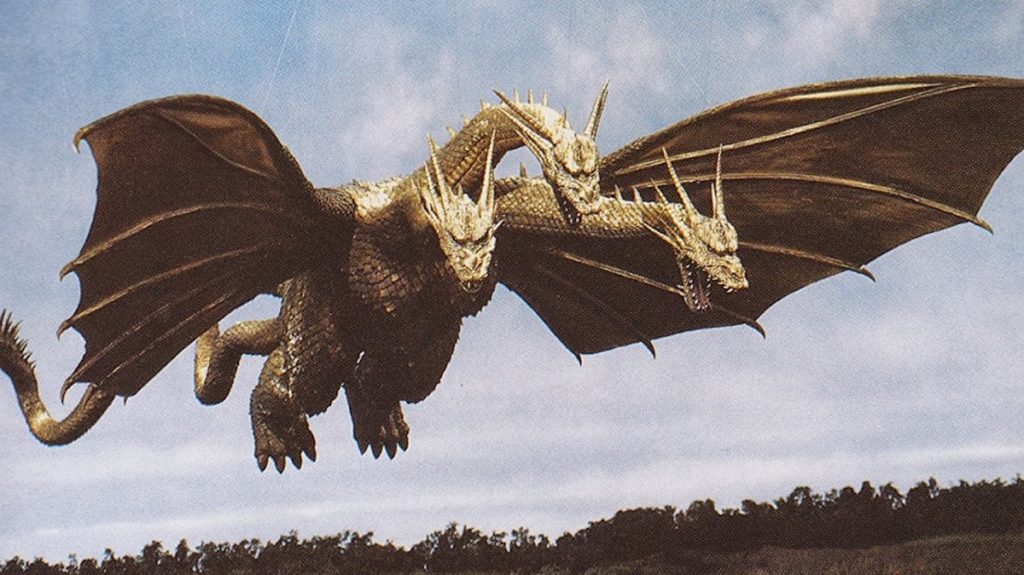
Most memorable scene: the schizophrenic song from Mothra's island. It's such nonsense that even the screenwriters of "The Green Elephant" are a model of mental health against this background.
Best Godzilla appearance: when at the kaiju meeting he asks the central question for the franchise – "Why should we help people if they are so cruel to us?"
Paranoia: extraterrestrial life forms and government conspiracy.
"Godzilla vs. Monster Zero" (1965)
Don't fall for the curious title: Monster Zero is King Ghidorah from the previous part, who this time ends up on Planet X, inhabited (don't be surprised) by strange aliens in foil. These aliens want to take Godzilla and Rodan to them and use their services to expel Ghidorah, and in return promise people a cure for cancer. It's clear that this is Gagarin's bad trip after watching a Godzilla movie (and not the first one, but some worse one), and there's no other way to explain such a plot, but it surprisingly looks decent.
This is perhaps a somewhat boring movie (although it has plenty of fans), the human storylines, which take up most of the runtime, are not written very well, but you can, for example, discern important paradoxes of Japanese society. A man can go into space, but cannot accept that it's not the 19th century and his sister has the right to decide for herself whom to date. The contradiction between technological progress and unresolved old conflicts is also reflected in the figure of Godzilla: spaceships have already been invented, but this decrepit dinosaur is still lurking somewhere nearby.
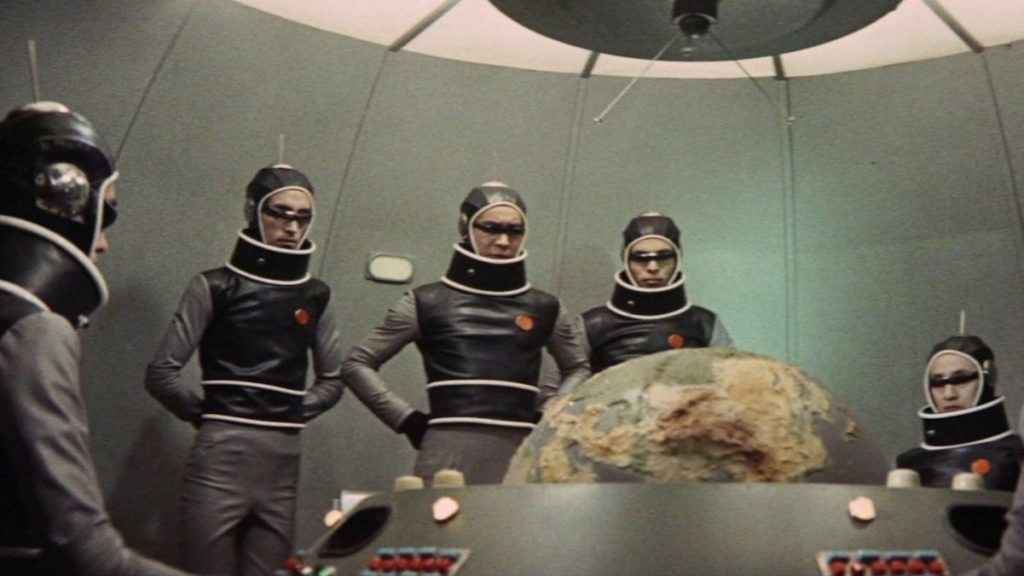
Most memorable scene: the small subplot with identical alien women, which would later be developed in the series "Battlestar Galactica".
Best Godzilla appearance: his victory dance.
Paranoia: unemployment, women's emancipation, and aliens.
"Godzilla vs. the Sea Monster" (1966)
One of the most controversial parts. As a rule, with Godzilla films it's immediately clear how bad they are and whether they are bad enough to fall into the "so bad it's good" category. About this film, some write as one of the most fun and inventive, others – as a movie whose main advantage is its short runtime.
The latter, however, is debatable: the film lasts an hour and twenty minutes, but Godzilla appears only in the last half hour, and without him it all looks like a failed episode of the Bond franchise, where there is basically everything that flickered in films with Roger Moore ten years later, except, actually, Roger Moore and even the slightest hint of meaning in what is happening. Characteristically, the role of Godzilla was originally written for Kong, and it shows. Fans of the king of kaiju, however, will appreciate how he literally bullied the monstrous lobster Ebirah – his main opponent in this part.
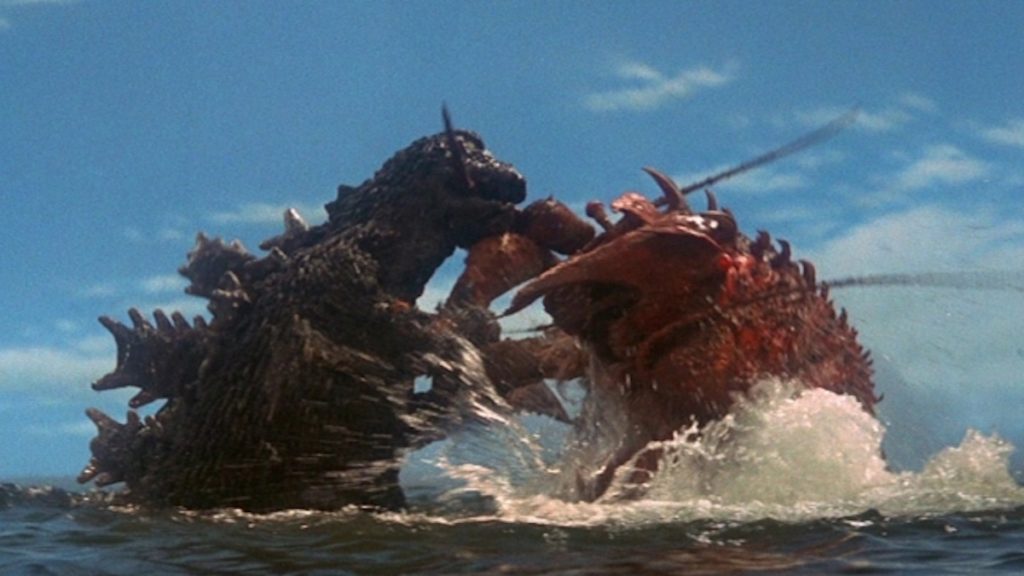
Most memorable scene: dances at Mothra's call. They dance and dance, dance and dance, and apparently never get tired.
Best Godzilla appearance: when he was still sleeping in stone. Better if he hadn't woken up.
Paranoia: nuclear tests again. And international terrorism.
"Son of Godzilla" (1967)
As in the previous film, Godzilla here has the plasticity of a hungover partygoer at seven in the morning on Monday. Meanwhile, the movie is completely childish: Godzilla has a son, he is a so-so parent, but in the end, naturally, he saves the baby. Parallel to this – main – plot, people run around on screen for some reason and try to turn a tropical island into a glacier.
"Son of Godzilla," frankly speaking, is not the pinnacle of world cinema, but strangely enough, it makes you look at the long-familiar monster and his son, who looks like a lump of dirt, with some unexpected warmth, and even genuinely worry about them in the finale. Essentially, something like this could be shown on the children's channel Karusel.
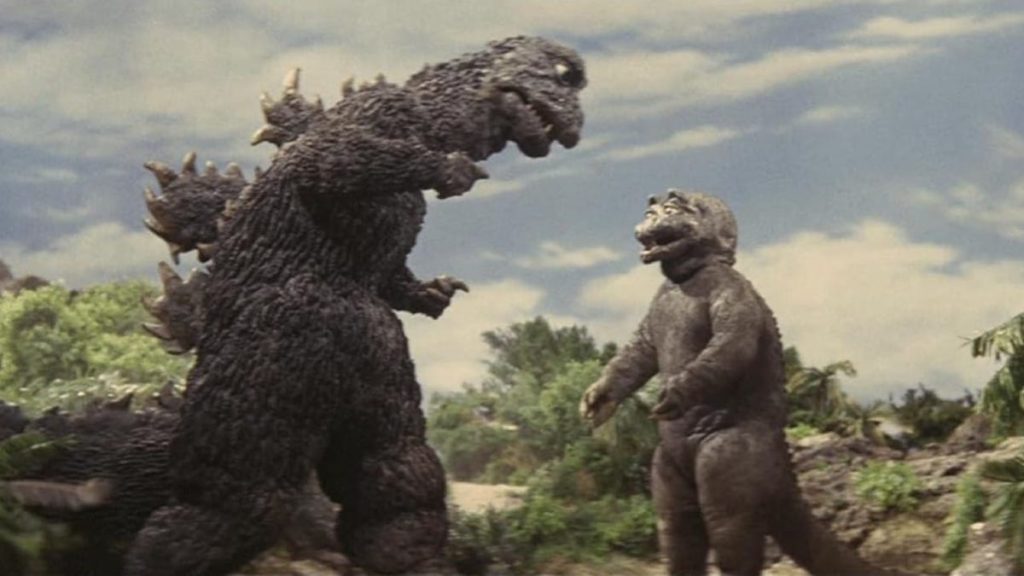
Most memorable scene: when the giant spider douses Godzilla with the same substance as in the film "Godzilla vs. Mothra" (keep children away from screens), and it becomes like a monstrous version of a completely non-childish film. It's memorable, however, not in a good sense, but in the sense that it's impossible to erase from memory.
Best Godzilla appearance: this time, his son, Minilla Godzillovich, appeared best. Dad, move over.
Paranoia: no one is afraid of anything.
"Godzilla: Parade of Monsters" (1968)
This film was planned as the finale of the Godzilla story, and it shows. All monsters live in an analogue of Jurassic Park, but suddenly evil as usual aliens fly to Earth, this time in the guise of emancipated women – finalists of the Snow Maiden contest – and zombify both monsters and people. They want not to openly enslave humanity, but simply to push it aside a little, for which they destroy New York, Moscow, Paris, London, and, of course, Tokyo.
Tokyo gets the most, because in such disaster films, aliens always hate the country where the movie was made the most. In general, the classic plot from "Monster Zero" is repeated here with amazing enthusiasm and more advanced technology. This is not bad science fiction, and even if you remove Godzilla from it, it would still be watchable, although it's unclear why.
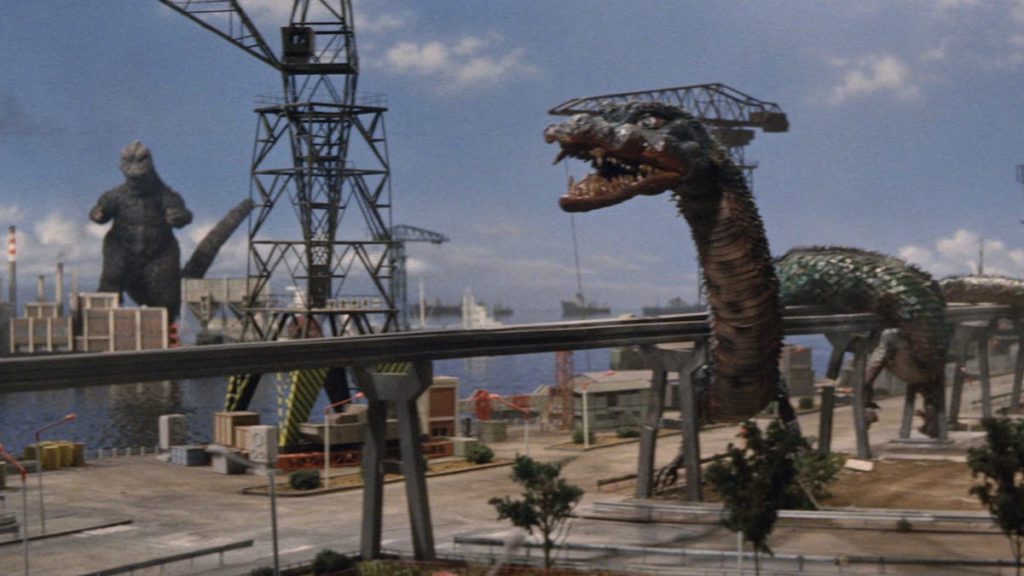
Most memorable scene: when the evil space feminists turn into stone at some point. It's clear that this idea gave the authors some special pleasure.
Best Godzilla appearance: the fight with King Ghidorah. Godzilla at the peak of his abilities.
Paranoia: feminists.
"Attack of Godzilla" (1969)
A non-obvious, to say the least, movie: Godzilla appears here with his son Minilla only in the fantasies of a boy who is bullied at school. Falling into dreams on Monster Island and communicating there with Minilla, he learns to deal with his problems and eventually even somehow defeats two adult criminals who tried to kidnap him. This is a bad film by all measures, and even a significant part of the fights are re-edited episodes from other parts, but as a children's movie in the sixties, "All Monsters Attack" was probably okay. It teaches, after all, the main thing – that monsters can be lonely too, and that even Godzilla can awaken the best in us. The finale, however, is undoubtedly idiotic.
Most memorable scene: almost everything is forgotten immediately, except for the monologue of the main character's neighbor about how children believe in Godzilla the way adults believe in their gods.
Best Godzilla appearance: when he was happy for his son.
Paranoia: loneliness in the big city, destruction of social ties.
_
1970s: Kaiju, Death, and Robots
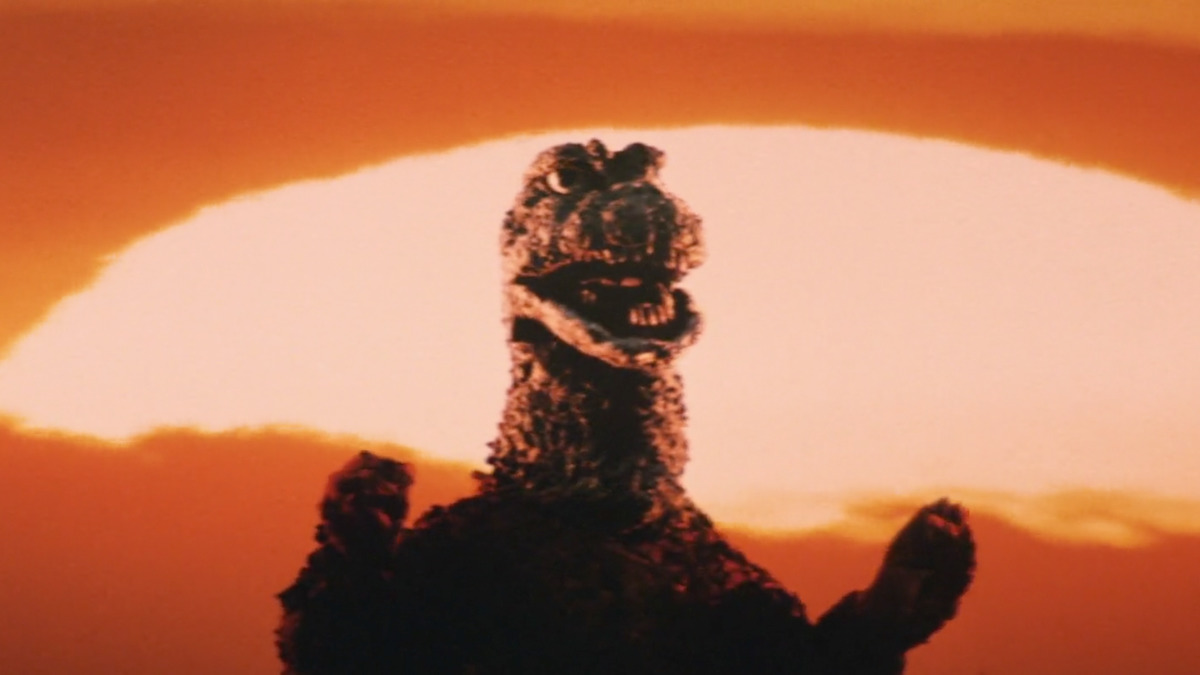
"Godzilla vs. Hedorah" (1971)
A strange but in its own way remarkable countercultural film: after frankly childish and not the most successful films, it looks like a deep, meaningful work that revises the canon and laughs at it. This is not hindered even by the fact that Godzilla opposes a monster composed of garbage and toxic waste, which at some point turns into a flying saucer. The monster naturally embodies the ecological catastrophe that cannot be solved simply by destroying it: "Godzilla vs. Hedorah" thus continues the tradition of the smartest films in the franchise – and the most important thing in it comes after the victory over the monster and, perhaps, even after the final credits. In our problems, says the scientist hero, we have no one to blame but ourselves.
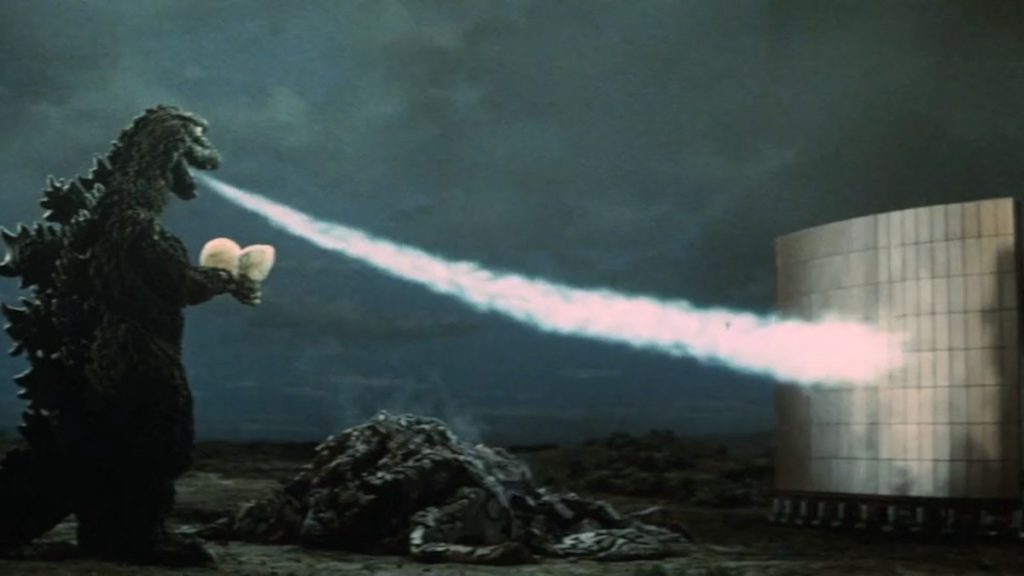
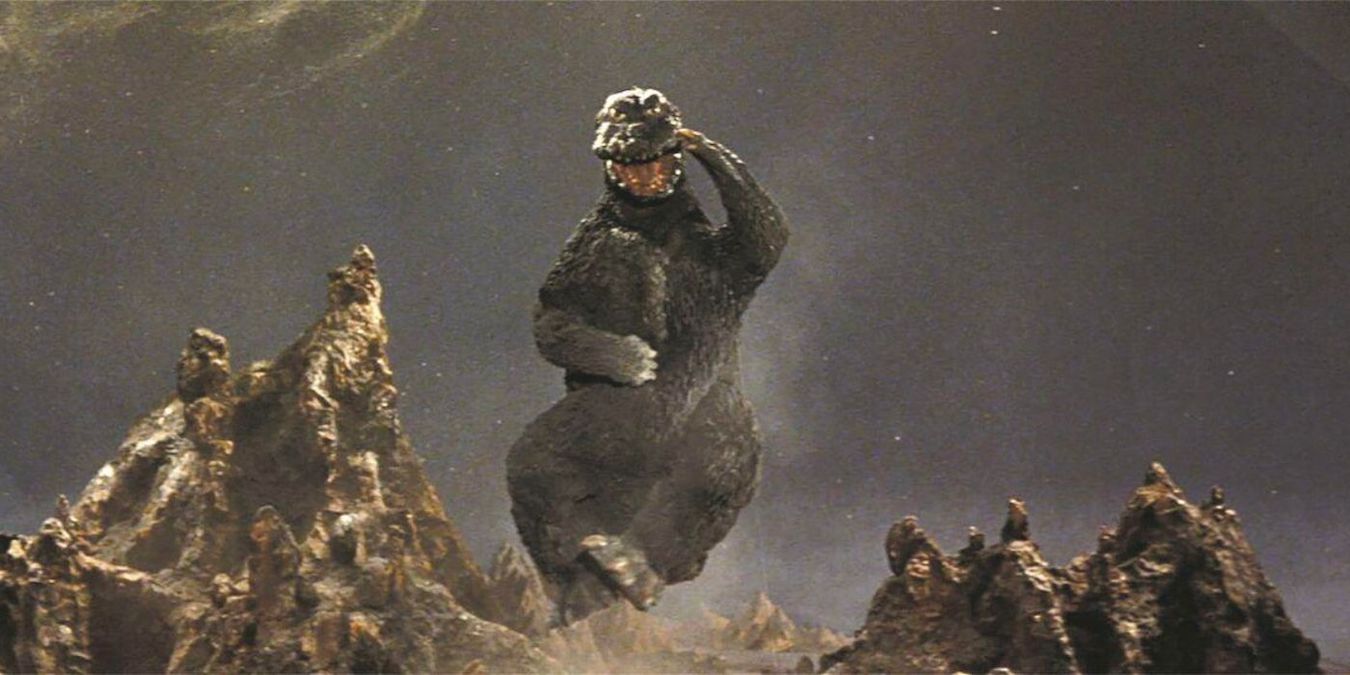
Most memorable scene: the final confrontation between Godzilla and Hedorah, especially the moment when Godzilla flew for the first and last time in the franchise.
Best Godzilla appearance: against the backdrop of a bloody dawn. Possibly one of the best shots in the history of the franchise. The love for red, by the way, unites this film with its counterpart in a completely different universe: Rian Johnson's "The Last Jedi" did roughly the same thing with the Star Wars canon.
Paranoia: ecological catastrophe.
"Godzilla vs. Gigan" (1972)
A comic book artist can't find work, but by chance gets a job on the design team of a large amusement park where all the kaiju from Monster Island will be recreated. The creators also blissfully inform him that after the park is built, the real kaiju will be destroyed. The artist, suspecting something is wrong, gets drawn into a conspiracy: at some point it turns out that behind the creation of the park are alien cockroaches who want to destroy humanity and take over Earth. People summon Godzilla and Anguirus, and the cockroaches summon Gigan and King Ghidorah.
Gigan, you should understand, is a giant space rooster-cyborg with hooks instead of hands and a circular saw that pops out of his belly at the right moment. This is a fun, very cleverly conceived movie, in which the carefree aesthetic of sixties aliens gives way to the paranoia of the seventies – secret organizations are closer than we think, and every big undertaking should be approached with suspicion.
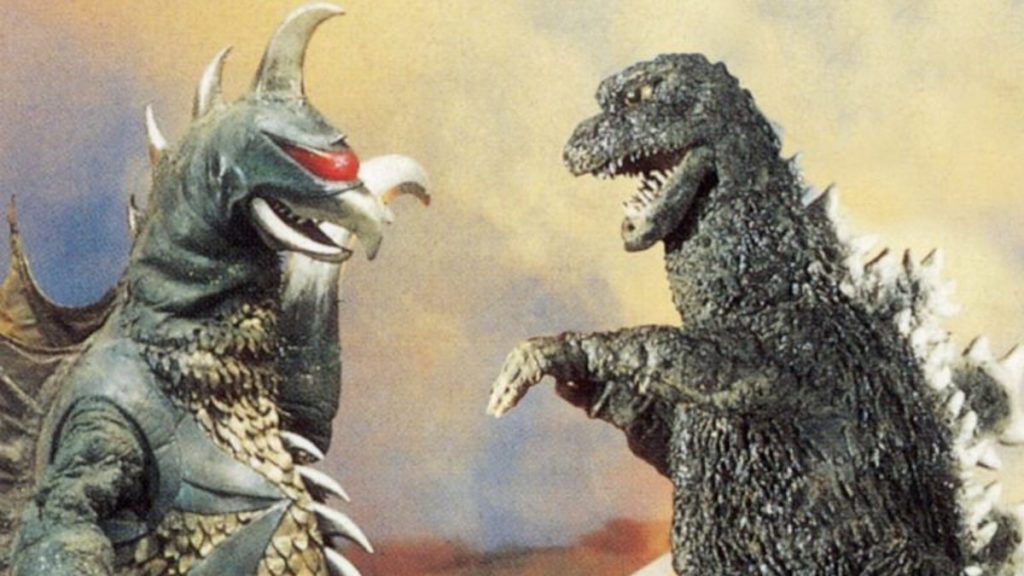
Most memorable scene: when the cockroach conspiracy is revealed. In essence, it's hard to imagine a better metaphor for an all-pervasive conspiracy.
Best Godzilla appearance: when he calls his friend Anguirus to save Earth from Gigan. The only time in history when monster speech is displayed on screen with funny subtitles.
Paranoia: corporate conspiracy, pop culture industry.
"Godzilla vs. Megalon" (1973)
After 12 films, the plot scheme in which Godzilla and some other good kaiju oppose evil – and most often space – monsters, got boring not only for the audience but also for the authors. Therefore, in the thirteenth part, although Godzilla still has to confront the space kaiju Gigan (the antagonist of the previous part) and the beetle-cyborg Megalon with drill hands, he is helped not by another kaiju, but by a robot Jet Jaguar created by a scientist-inventor, resembling the grandfather of Optimus Prime. This is a fun part – there are races, kind scientists, an underwater civilization that wants revenge on people, and also here the giant kaiju finds a friend for the first time. At some point, he shakes Jet Jaguar's hand and covers his wounded comrade with his back from grenades. The monster has become completely humanized.
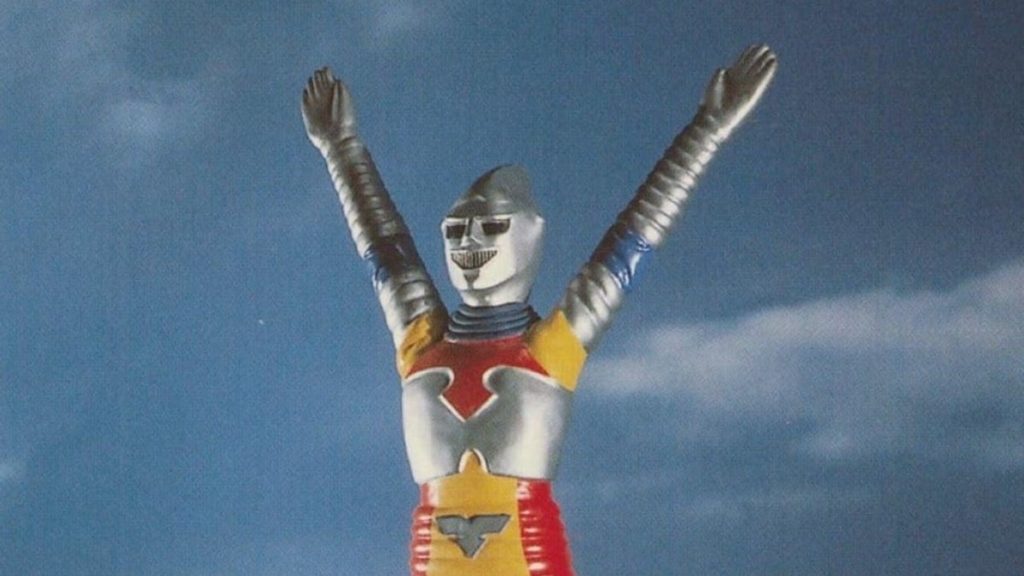
Most memorable scene: dances in the underwater kingdom (in the best traditions of all rituals in Mothra films), it's simply impossible to forget. This kingdom itself, by the way, is the mythical sunken continent of Lemuria, which in the mythology of American hippies embodies something like a lost paradise and promises happiness to those who find it.
Best Godzilla appearance: when he almost hugs his new friend Jet Jaguar.
Paranoia: that dreams will turn into horror, and humanity does not deserve happiness.
"Godzilla vs. Mechagodzilla" (1974)
From a plot perspective, this film is undoubtedly a step back. Godzilla is weak again, the aliens are in foil again (their design is borrowed from "Planet of the Apes"), and at the center of the action is again a dubious mechanism. But almost all these flaws can probably be forgiven for the screenwriters' imagination in choosing an opponent for Godzilla. Mechagodzilla first appears in camouflage, he is mistaken for the original, but he brutally beats the king of monsters' friend Anguirus and begins to destroy the Japanese coast, while Godzilla had long since given up that business.
When everyone senses something is wrong, an ancient prophecy, descendants of a long-deposed royal family, and Interpol come into play. Another novelty is that the main characters are now not journalists or astronauts, but archaeologists – in the second half of the seventies, Godzilla had finally lost relevance. Now this cute relic is of interest only to children (as in the previous film) and lovers of digging into the past.
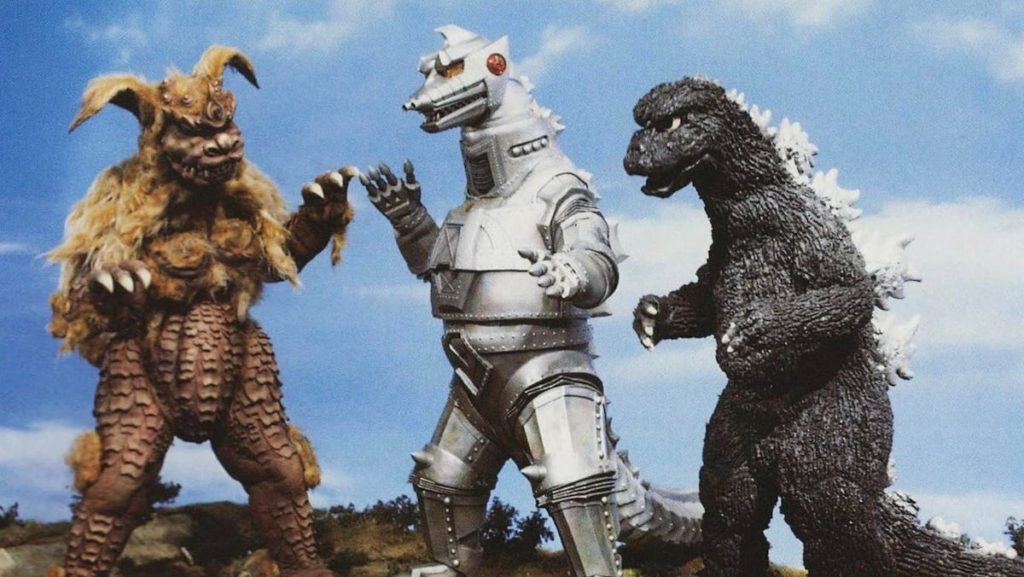
Most memorable scene: when a Nobel laureate was attempted to be fried in a gas chamber.
Best Godzilla appearance: when he confronts his double.
Paranoia: historical revanchism, end of the world.
"Terror of Mechagodzilla" (1975)
They say that meeting your double is a sign of imminent death. Godzilla met his twice, and although he survived the second meeting within the film, he never returned to form. "Terror of Mechagodzilla," again directed by the great Honda, exploits the setup of the previous film, but looks more interesting, larger-scale, and more coherent.
Here, for the first time, people are shown next to Godzilla in real scale, not through composite shots; the monster fights look fresh, and the cyborg girl is simply magnificent, and this is an interesting example of how important the director actually is in blockbusters. And, of course, an example of the last stage of development of any popular franchise: Godzilla shared the frame with people, finally defeated even an improved version of himself, and no more worthy opponents remained for him on earth or in heaven. It became clear that it was time to wrap it all up.
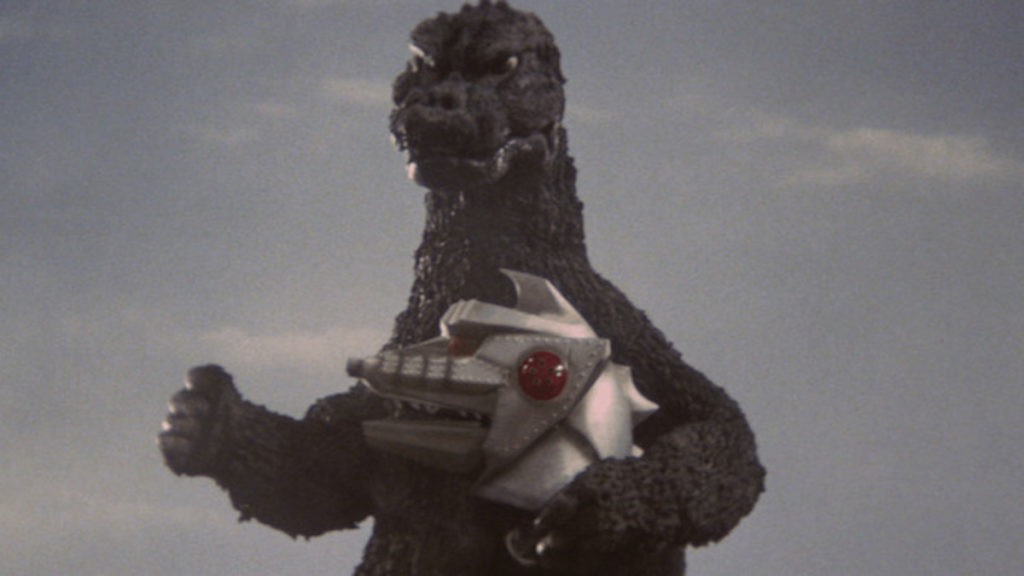
Most memorable scene: Godzilla's last fight, when he went out alone against two.
Best Godzilla appearance: the final one.
Paranoia: offended scientists and technological progress.
What Was It?
The first film was a direct response to US nuclear tests in the late forties, but of course it also evoked memories of the bombings of Hiroshima and Nagasaki. It was a movie about how an entire nation never recovered from the horror of an invincible enemy. Therefore, in the first film, Godzilla could only be defeated by a weapon that destroys everything around it. Great evil, according to the authors, awakens not great good, but simply an even more terrible evil. The pessimism of the first film was replaced by dashing revanchism in the second. There, pilots, whose military brotherhood obviously formed during the war years, defeat the monster with significantly less effort.
Starting with the third film, the franchise became what it is to this day, albeit with better special effects and, as a rule, American surnames in the credits: each film is an arena for a sparring match between the plot-wise invincible Godzilla and some new opponent. At first, the monster opponents were inhabitants of Earth (like the butterfly guardian of the planet Mothra, Godzilla's kindest ally, and the shrimp Ebirah), and most often – dinosaurs, like the iconic hedgehog-like Anguirus and the pterodactyl Rodan.
Starting with the fifth part, the cult film "Ghidorah, the Three-Headed Monster" in narrow circles, Godzilla's enemies began to be supplied from space. The most famous of them is undoubtedly Ghidorah himself, but there were also Gigan, Hedorah, and Mechagodzilla. All of Godzilla's opponents embodied the fears of the era (and we tried to focus on this): the monster Ebirah was, like Godzilla, a mutated inhabitant of the deep sea as a result of nuclear tests (in the film about him, the theme of terrorist organizations also surfaced, pun intended); Ghidorah set off to conquer Earth three years after Gagarin's flight into space; the monsters of the seventies – Hedorah and Megalon – took revenge on humanity for the ecological catastrophe, and Gigan personified the paranoia of corporate conspiracies.
All of them were opposed by Godzilla – strange, contradictory, having outlived his era by 200 million years and stayed in trend for another 20 – he also embodied horror, but domesticated horror. Although, of course, it wasn't always like that, and these 20 years did not pass without a trace for the kaiju. At first, Godzilla acted in the image of God, an inevitable force. He is larger than any visible part of the landscape, he always stands out from the scenery, and the eternal composite shots – people running against the background of real buildings, and Godzilla in the next frame destroying toy ones – only emphasize his otherworldliness.
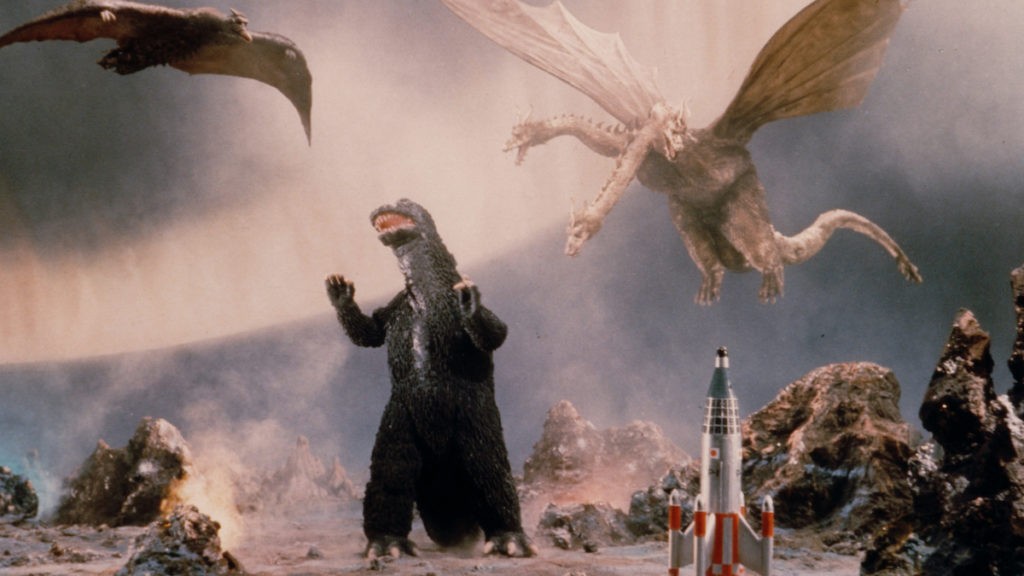
Inevitable as fate, Godzilla always punished bad people – for example, in the buildings he destroyed after the first film, mostly thieves and dishonest capitalists died – but at the same time, he always lost to the good ones in the finale. Primarily because fate must yield to virtue.
In the films of the franchise's decline, all this began to be stated directly: Godzilla is called a god, people believe in him, they summon him. Then, having seemingly established himself as a deity, the monster changed greatly and began to embody not inevitability, but a miracle. A little boy defeats two adult criminals, Earth is saved from an ecological catastrophe, evil and very dangerous aliens fly away with nothing. From an Old Testament Leviathan, Godzilla turned into a demi-season Santa Claus, fulfilling the wishes of those who behaved well, if not for a whole year, then at least for the hour and twenty minutes that the films last.
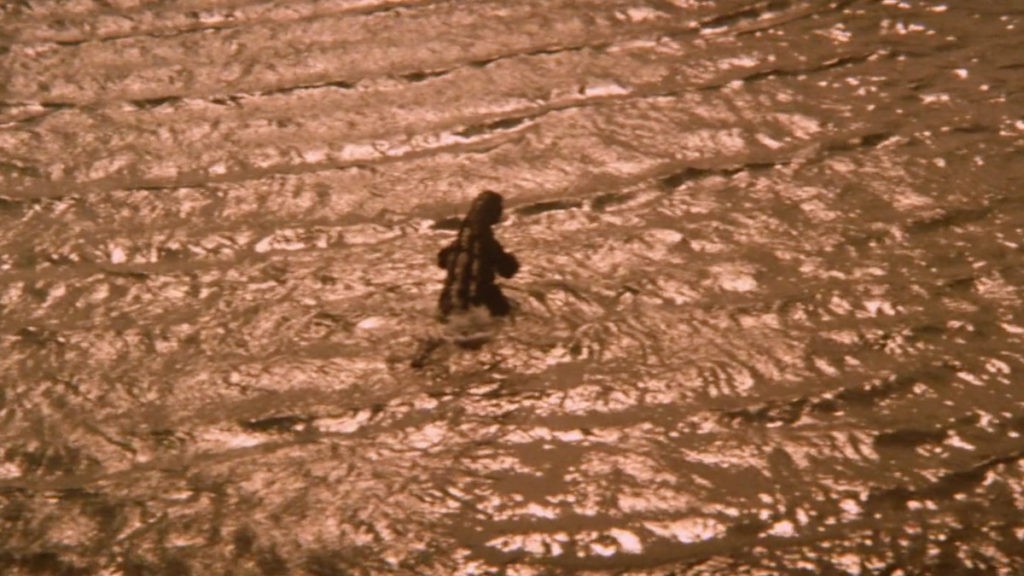
His fifteenth appearance already feels like meeting an old friend who has come from afar, and this is surprising for films about a giant monster whose hobby is destroying everything in its path. And in the final shot of his epic, Godzilla unexpectedly appears very small. The biggest movie hero in the world turns out to be, in general, a dot in the ocean.
This is an unexpected, perhaps, but telling outcome. Few franchises demonstrate the therapeutic possibilities of cinema so clearly. Its ability to turn the terrifying into the familiar; to fit the immense within the frame of the screen; to articulate fears and thereby defeat them. The ability, ultimately, to reconcile with reality, although sometimes it seems completely impossible.
Comments
0No comments yet.
Sign in to join the discussion.