

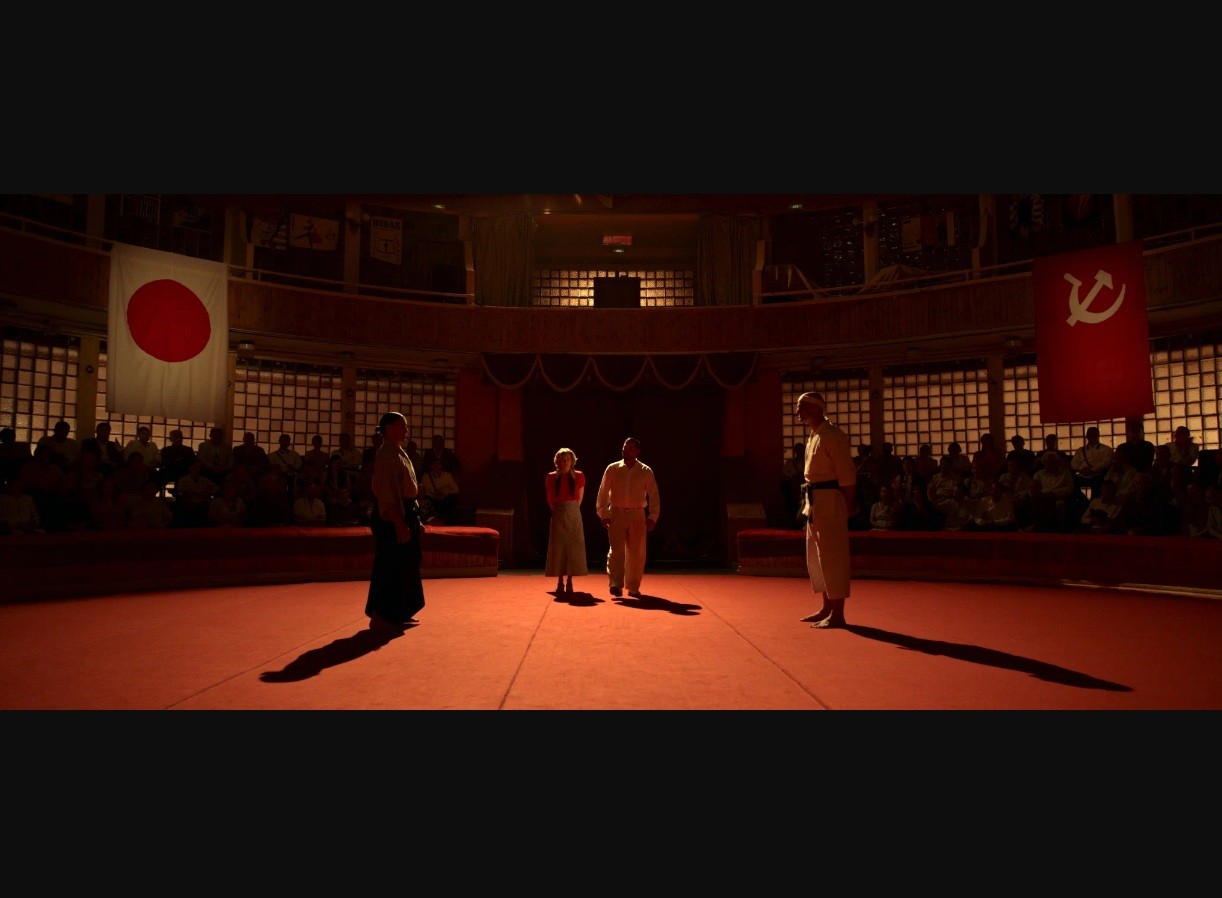
In wide release is Andrey Bogatyrev's film 'The Legend of Sambo', in which the director tries to return to the exploitation film genre.
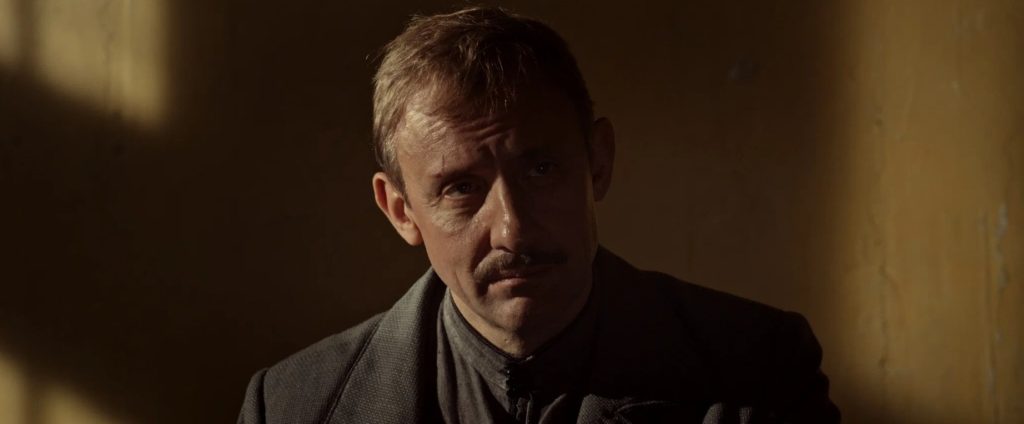
1918. During the Russo-Japanese War, young second lieutenant Viktor Spiridonov (Dmitry Pavlenko) miraculously survives the Battle of Mukden. There he first sees elements of Japanese judo. Later, in the hospital, the wounded Spiridonov, trying not to forget what he saw, carefully sketches the basic techniques and throws from memory in a notebook, gradually adding his own and developing the first layer of the combat sport later called sambo.
After some time, the already successful martial arts specialist Viktor Spiridonov is invited to work at the Cheka to teach employees of the department and police officers this new type of wrestling, so that they can fight back in street fights with bandits if someone suddenly finds themselves unarmed.
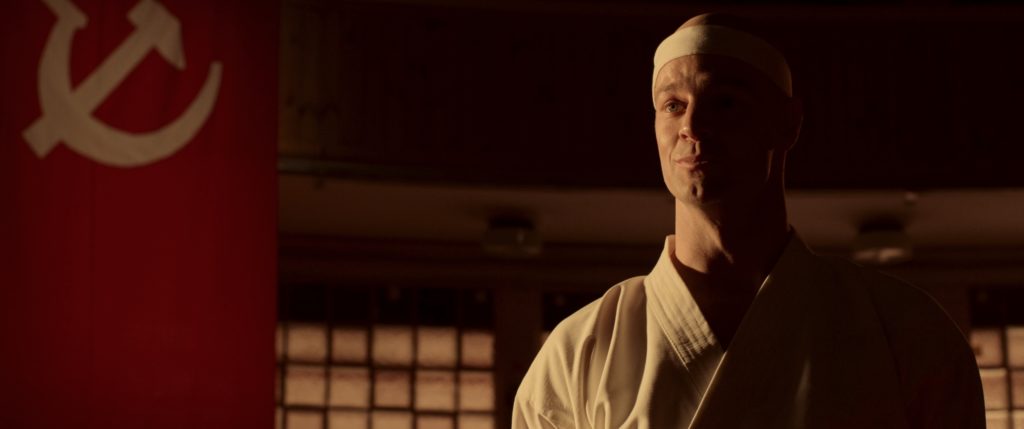
1936. A group of Japanese judo masters arrives in Moscow. It was decided to organize a friendly match between the USSR and Japan, but "friendly" is a formality: victory must remain with the Soviet athletes. On the day of the match, another judo master, a natural talent from Novosibirsk, Vasily Oshchepkov (Wolfgang Cherni), arrives in Moscow and at the last moment enters the decisive fight with the Japanese master and wins.
Spiridonov does not like that Oshchepkov invites anyone who wants to train, while the system should only work within the authorities, otherwise any criminal could turn this weapon against those who detain them. The growing conflict between them will divide not only their students; the tectonic shift will also affect the upcoming Spartakiad. The question is stark: who will represent the Soviet school? Spiridonov or Oshchepkov? After all, the winner will lead the country's first training center.
The film's plot on paper resembles a fairly typical and quite popular sports biopic today with a standard set of clichés. But the director of 'The Legend of Sambo', Andrey Bogatyrev, who knows how to work with material, took a different path, essentially once again demonstrating his rich cinephile roots, as in his earlier 'The Red Ghost'. That is, he presented a bright, colorful exploitation film with a slant towards 1970s Hong Kong kung fu action films that were churned out on television and later exuberantly quoted in 'Kill Bill'.
Music like in Raymond Chow's films, soft half-shadows, sharp zoom on eyes, grainy picture, comic book storyboarding, and strong fists as the main tool of struggle between bad and good. Or rather, between former class enemies (the words "bourgeois" and "counter" are heard here almost more often than the word sambo itself).
But in reality, there are clearly not enough colorful fights here, which is not at all like Bogatyrev, who shot a dashing shootout in the same 'Ghost', paying homage to spaghetti westerns. In 'The Legend of Sambo', the director unexpectedly shifts the emphasis and does not savor the most delicious moments of the fight, preferring either to move the camera away or focus closely on the faces of the battle participants, somewhat reminiscent of paintings from the era of romantic realism. All the most expressive and necessary elements of the genre are sadly left off-screen.
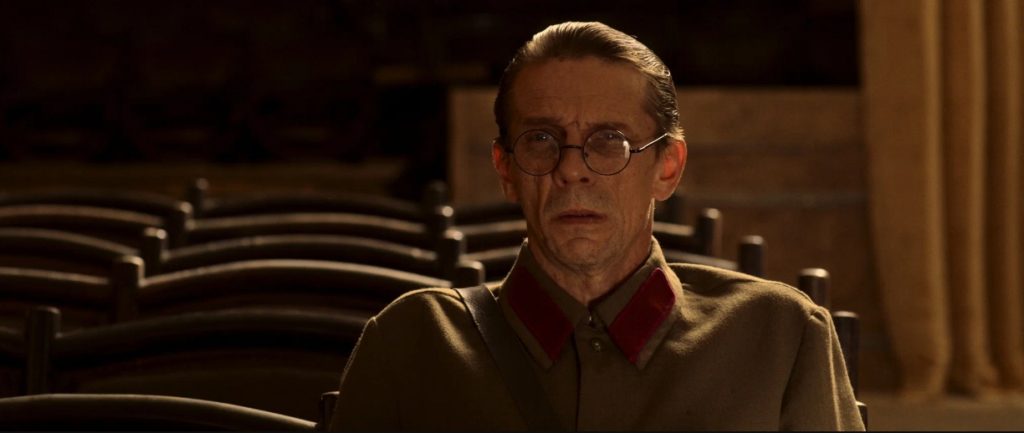
The historical part of the film is also quite conditional, as warned by the off-screen title at the very beginning (the word "legend" is not accidental). The result is an action movie without colorful fight choreography and a historical biopic with a somewhat loose presentation of facts, sometimes veering into self-parody. 'The Legend of Sambo' gets too carried away with the poster-like struggle against the system within the plot, pushing out the charming little details of niche cinema, but ultimately loses this struggle, losing along the way all the mood that Bogatyrev had aimed for at the start.
Nevertheless, the film 'The Legend of Sambo' has a number of obvious advantages. First, the performance of the talented Alexey Shevchenkov, the physique of Wolfgang Cherni playing with muscles (the image of a northern Viking in a kimono suits him very well), and the charisma of Dmitry Pavlenko, who looks good in the role of a teacher and mentor with sad eyes (by the way, almost the entire cast of the film moved from 'The Red Ghost').
Second and perhaps most importantly is the childlike enthusiasm with which Bogatyrev made his film. The attempt to play in a pure genre and the unconventional form clearly distinguish the film from its counterparts on the same subject. It's like retelling an action movie you just watched on VHS as a child. In this incoherent but passionate story, where the heroes are already mixed up and there are no winners or losers, there is one undeniably important quality that makes 'The Legend of Sambo' a personal film for the director: faith in a happy ending and the victory of justice. In today's era, that is enough.
Comments
0No comments yet.
Sign in to join the discussion.