

On October 26, a new film “Crash Test” will be released on the KION streaming service. What is the Russian “Euphoria” like, and how did the new interpretation of an old coming-of-age story surprise? Read our review.
Teen exploitation is a genre where the main characters are teenagers who find themselves in situations typical of their age. This is such a broad type of film that the characters can be in a dystopian setting (“The Hunger Games,” “Divergent,” “The Maze Runner”) or in a local place, like a school (“10 Things I Hate About You,” “The Breakfast Club”). The main thing is that teenagers are searching for themselves and tasting adult life, as they do in “Crash Test.”
In the Russian city of N, three best friends – Tanya, Arina, and Dasha – are finishing school and want to escape their backwater for Moscow. After graduation, they face a summer full of love, hopes for a bright future, and the struggle for it. But what will this path be like, and will they be able to find meaning in life?
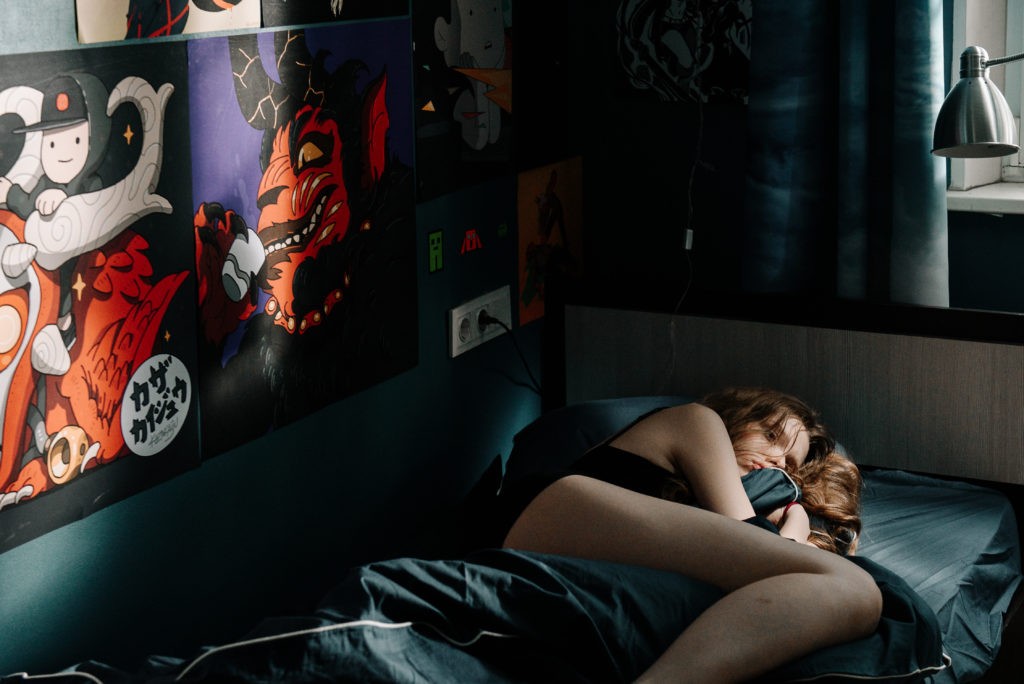
Harsh Realism
The glossy poster of “Crash Test” is deceptive: under a ton of glitter and neon apartments lies a pessimistic but realistic life of teenagers in a small town, from which they want to escape at any cost.
The film’s idea is as old as the world, and structurally it is simple. Three heroines, classmates and close friends, existing outside social institutions and their prejudices, try not only to preserve their friendship but also to escape the panel-block hell.
According to the laws of Russian drama films, there is, of course, vodka here. The heroines drink it at a house party instead of that most cultured but boring graduation ceremony organized more for parents than for children. This party becomes the springboard for the beginning of the end, because someone will fall in love with a friend’s boyfriend, someone will smartly boast about their Unified State Exam scores and justify the journalism faculty, and someone will change their life forever.
One of the most interesting topics in this film is teenage pregnancy. It is not popular in Russian cinema (the last one being in 2021), but it is important for our society. The storyline with the pregnant heroine Dasha (Daria Kharchenko) also highlights the main problem of this film – its toothlessness. When tackling such serious and relevant topics as teenage pregnancies, the statistics of which increase every year, one must act more decisively. “Crash Test” shows the terrible realities faced by this abandoned and unhappy girl, but her friends are on her side and offer help, and her boyfriend tries to take out a loan for an abortion. The choice in favor of increasing the birth rate arises by itself, without any logic or desire of the character.

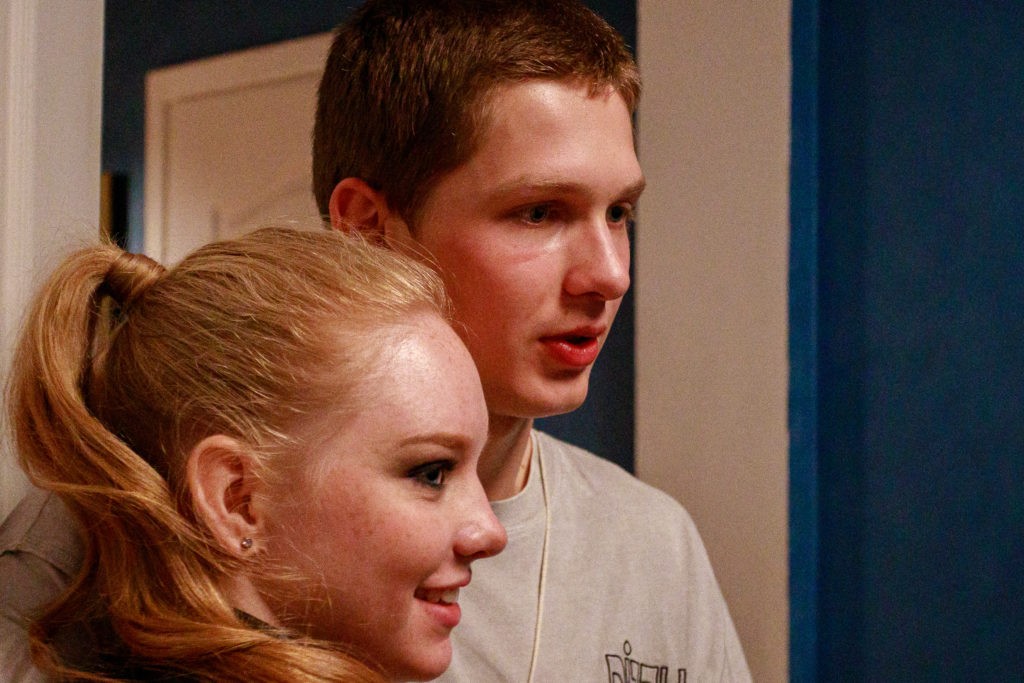
“Crash Test” of Adult Life
Meeting adult life head-on, children are just beginning to realize their strengths, and relationships with parents become more strained. This can manifest as overprotectiveness, with which Tanya’s mother (Anna Kotova) “suffocates” her child, or as simple strictness from Arina’s parents, or indifference from Dasha’s. The girls, one way or another, face misunderstanding and physical or emotional detachment, from which, of course, the children suffer.
They seek love from anyone but their families. For example, Arina, the heroine of the wonderful Elizaveta Ivashchenko and last year’s star of Natalia Meshchaninova’s teen series “Alice Can’t Wait,” needs love not only from a boy but also from the audience at a song contest. Her storyline, like much in this film, seems underdeveloped, and her emotional turmoil is driven by that very coldness of her parents.
Perhaps the weak link among the trio of problems and characters is the conditional main heroine, the modest Tanya (Varvara Volodina), who participates in events from the sidelines. Unlike her two more vibrant friends, she is a litmus test of this society: she shares all their hobbies and aspirations, but they are more down-to-earth, which makes her less interesting, and the character herself looks pale and boring. Getting lost with her in this dynamic and well-written world, you notice more inconsistencies in characters and problems with conflict resolution in “Crash Test.”
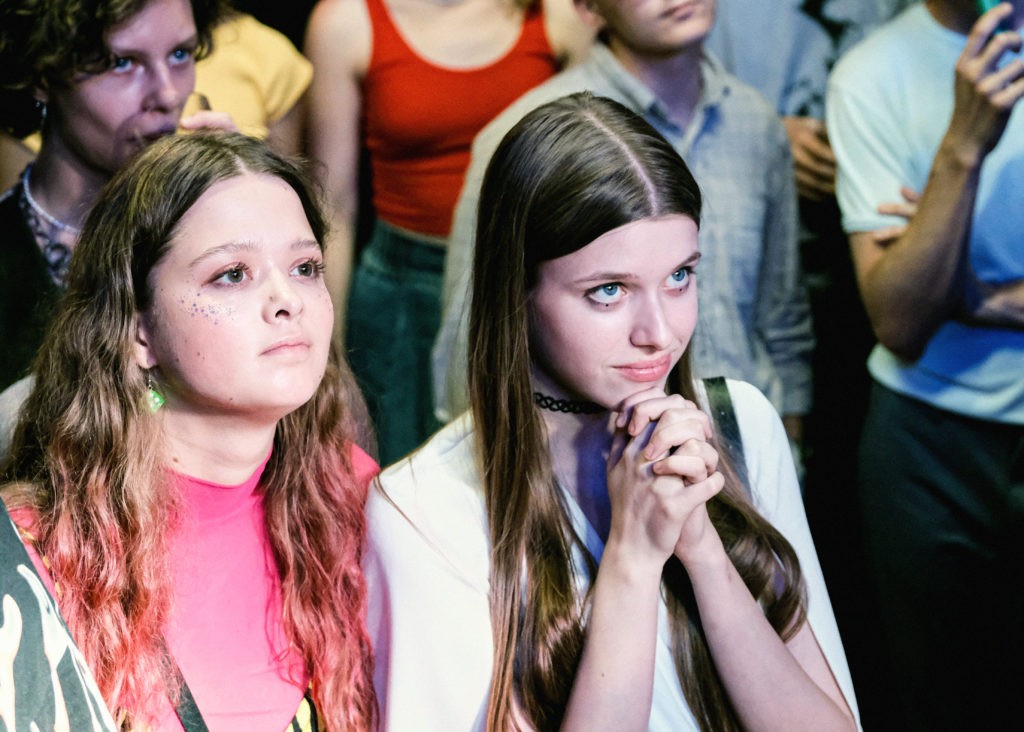
A Reflection of Our Modern Life
The film’s merit and the reason to watch it is that it is a cross-section of our time’s society. This makes “Crash Test” akin to the 2008 teen hit “Everyone Will Die, But I’ll Stay,” in which director Valeria Gai Germanika managed not only to authentically depict the 2000s era but also to preserve it for posterity. Now, instead of bangs, skinny jeans, and shoulder bags with keychains, the “aesthetic” of zoomers has arrived with their glitter, mesh dresses, and colorful glasses.
Debutant feature director Anastasia Borisova has managed to leave us and future generations this old story with a touch of cheap fruit beer and social media broadcasts that no one maintains anymore. However, no matter how the world and its pop-cultural imprints on us change, the desire to be free and move to a better “Moscow” will be eternal.
Trailer:
Comments
0No comments yet.