
A captivating performance in four acts from the master of magical theatrical productions, Wes Anderson!
What is Mr. Wes Anderson made of? Of abundant spot-on dialogues, of the finest ochre veil and bulky constructions is Mr. Wes Anderson made! And the notorious "not for everyone" best characterizes his cinematic language. But the director went even further, turning cinema into an audiobook with animated pictures, literally making the viewer part of a theatrical performance.
"The Wonderful Story of Henry Sugar" (as well as "The Swan," "The Rat Catcher," and "Poison") are stories by British writer Roald Dahl. Wes Anderson had previously linked his aesthetic to Dahl's authorial spirit, introducing viewers to the incomparable (the author considers this tautology more than appropriate!) "Fantastic Mr. Fox." Now Anderson has created a more localized work that not only stays within Dahl's oeuvre, carefully transferring its originality to the screen, but even within temporal brackets—short stories transformed into short film novellas.
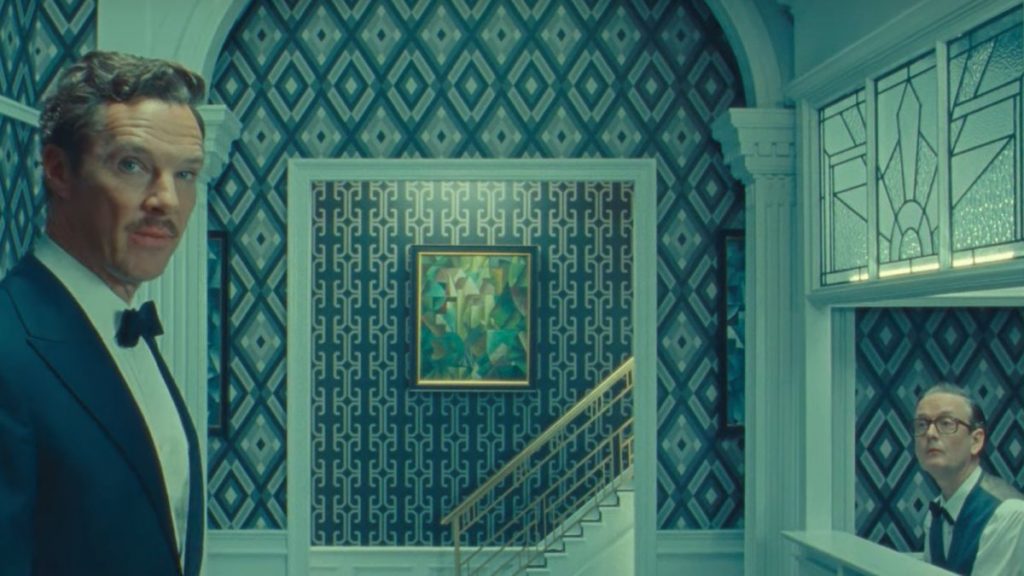
In the very first frame, built according to the rules of the director's world, in every established pattern, in the meticulously placed constructions of a centered and seemingly ruler-verified picture, lives the spirit of a master who seemed only to lack Dahl's characters. It's a crime, no less, that methodical in their narratives and invariably detached-looking characters waited so long for their turn to ascend the Andersonian mise-en-scène (which was recently occupied by ""), but they find their place on the digital pages of a muted-color world that invites the viewer to read.
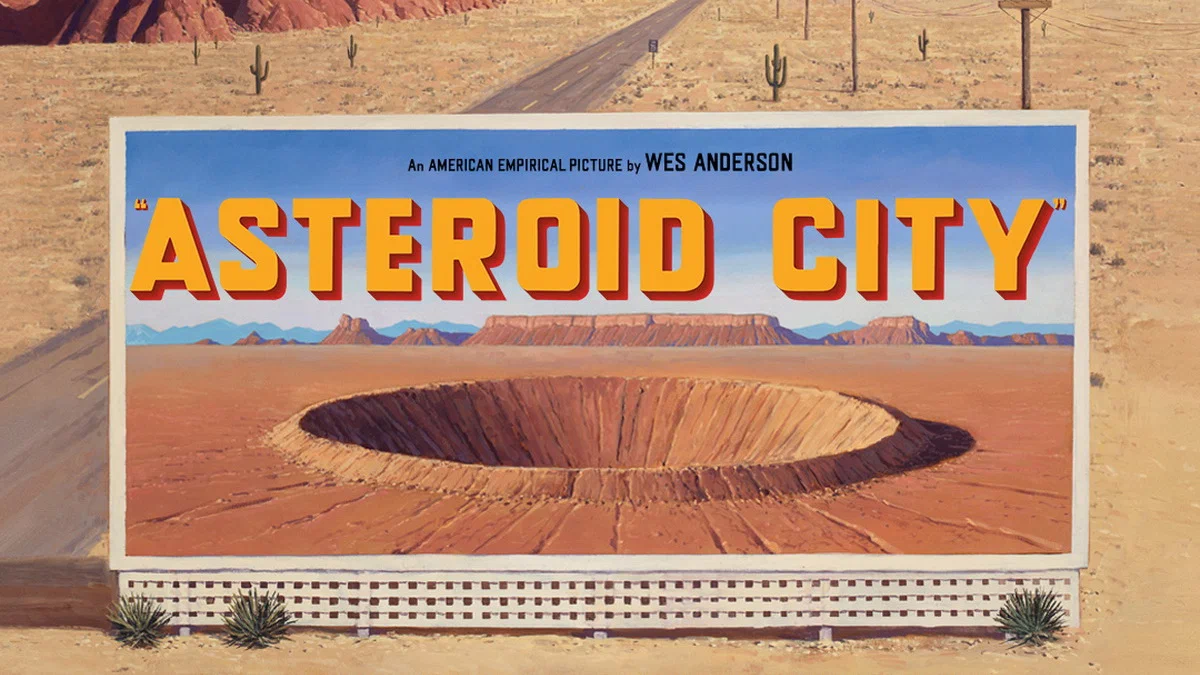
An intimate story in ochre, captivating with its sad stagnation, or a toothless metafiction where plot fades before the charm of the picture? What is "Asteroid City"?
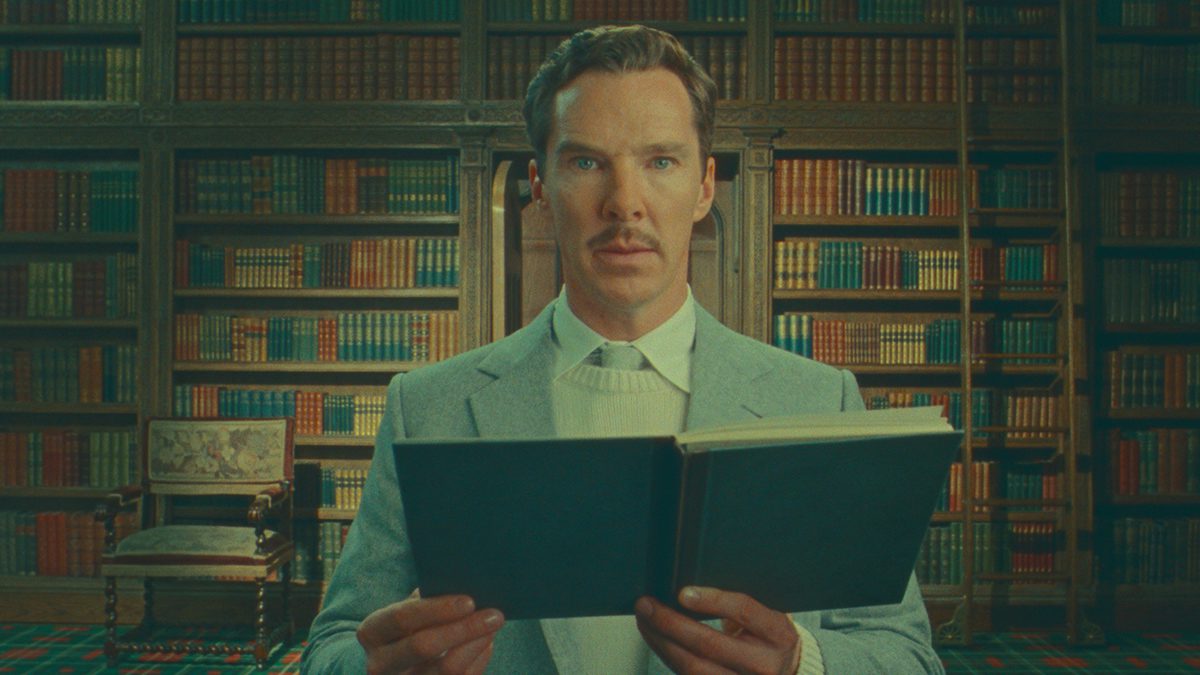
Open materialImagine a voluminous book, each spread opening into stable 3D illustrations. There is a foreground and a background hidden deeper near the top of the book. So are Anderson's short films—a multi-layered narrative. The first level of narration is conducted by Roald Dahl himself (Ralph Fiennes), who, sitting in a meticulously recreated set of the writer's house, immerses the viewer a level deeper and introduces his hero Henry Sugar (Benedict Cumberbatch), who leads into the depths of a book he is reading, recorded from the words of magician Imdad Khan (Ben Kingsley). It seems we have just fallen into Carroll's rabbit hole! One wants to say: "Curiouser and curiouser!"
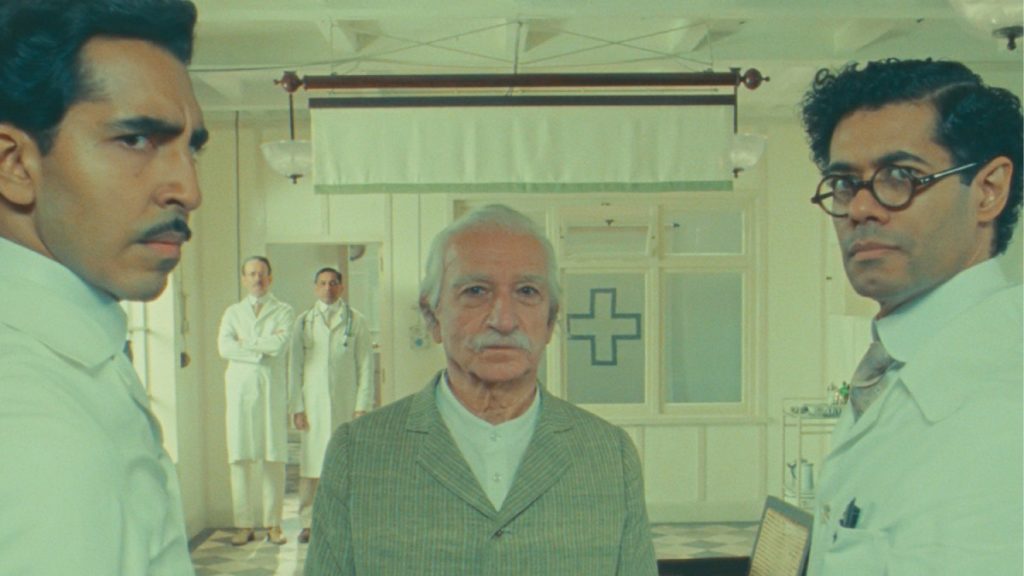
And if you think Anderson is excessive in the complexity of framing, you will be surprised how the apogee of this measure suddenly organically merged with the simplest stories. The answer: theater! Sets are built as the narrative progresses. And the characters are not part of the background; they are superimposed on it. Emerging from behind the curtains through a door in a bush of reeds or sitting on a stool painted to match the backdrop, the characters read the pages of the book with utmost detachment. The point is not to grasp the acting, but to study the background while the actors deliver lines in first and third person, and only occasionally heed their piercing gaze through the fourth wall, hearing the characteristic remark "I said."
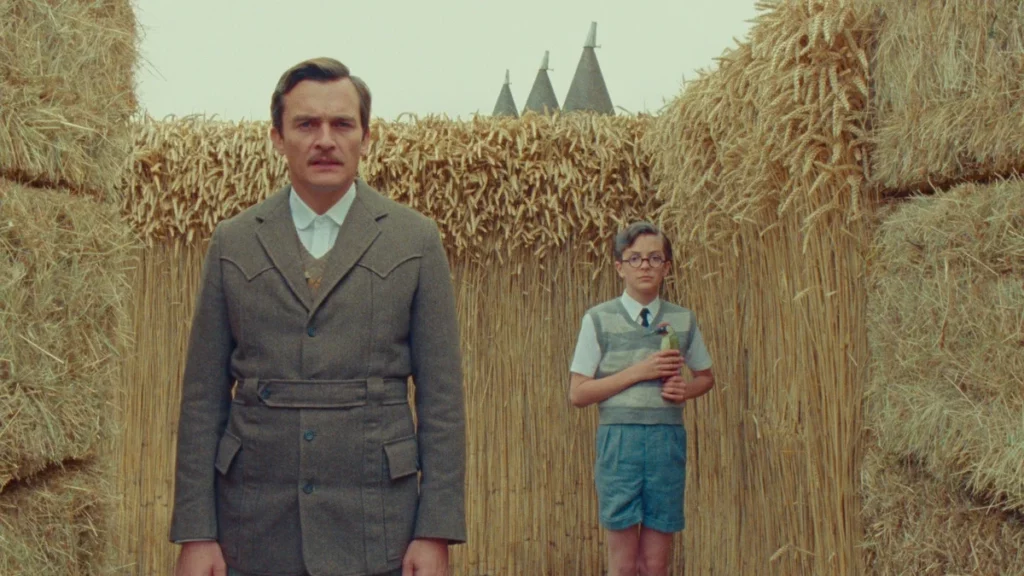
The actors are so identified with the role of narrator-demonstrator that each of them handles multiple roles perfectly, and animals appear on screen, as in any real theater, as wooden figures (the novella "The Swan"), computer models (the novella "The Rat Catcher"), or are simply emptiness in the hero's hands, which usually comes to life only in children's fantasy games. And you are unlikely to be bothered by the lack of naturalistic models when on screen Ralph Fiennes, made up as Peter Pettigrew, touches the nostalgic feelings of Harry Potter fans.
Interestingly, discussions of Wes Anderson's new creation exclusively feature the title of the first novella—"The Wonderful Story of Henry Sugar"—while the others are bracketed within the same articles. At first, this seems unfair, because the semantic context of the films is different, and from a story about distant lands and magic, the viewer easily falls bound onto the rails and obediently follows truly terrifying actions.
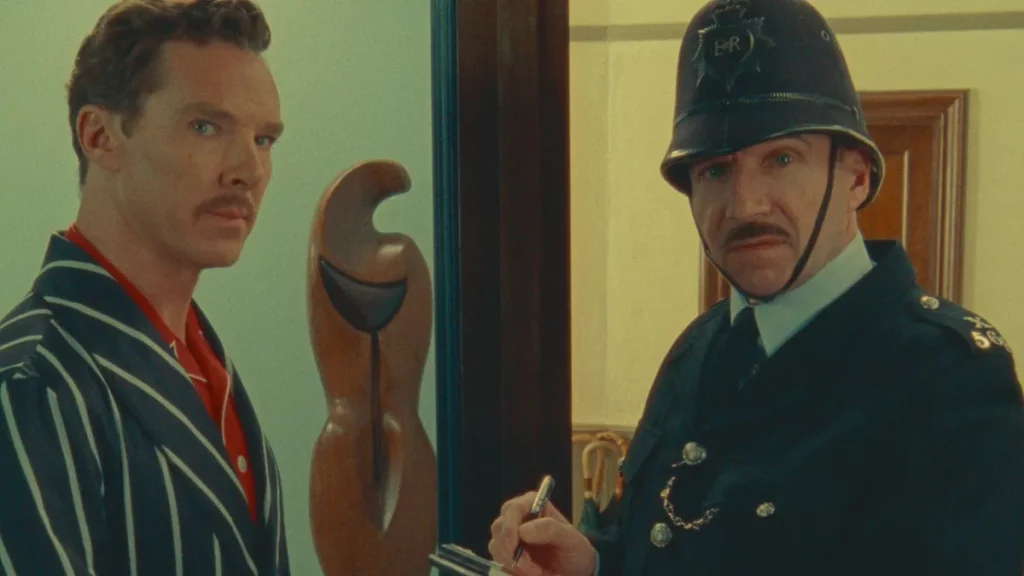
Before watching, the author of this review thought to correct the injustice and praise each work separately, but that was a mistake. Upon closer examination, you realize the short films are connected. And whatever the main idea and mood of the story (only credits separate inspiration from hopelessness), all novellas are one small fairy tale, aesthetically brilliant art about personal transformation or its steadfastness. Wes Anderson's wonderful theater. So praise to the director that his universal cinematic language managed to unite diverse stories into one mysterious journey that one wants to, and most importantly, needs to watch in one sitting!
Comments
0No comments yet.
Sign in to join the discussion.