

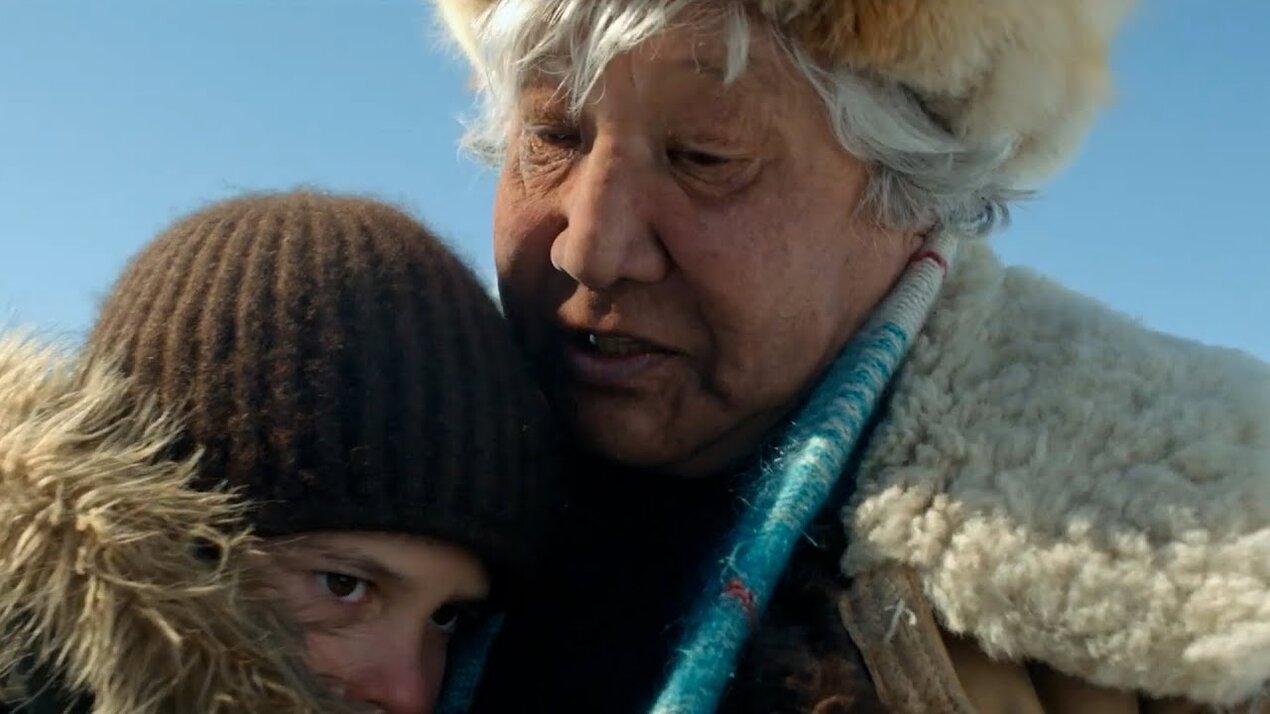
On October 19, Mikhail Raskhodnikov’s film ‘The Spirit of Baikal’ hits wide release, an almost fairy-tale parable about a father and son metaphorically lost in a snowstorm. We tell you what makes this work captivating.
According to the plot of the film ‘The Spirit of Baikal’, the boy Lyonya (Ilya Ryazanov) goes with his father David (Mose Kurtanidze) to the village to visit his grandfather (Oleg Babuev) on Lake Baikal. Not long ago, Lyonya’s family suffered a heavy loss – his mother died. The grieving father withdrew into himself and immersed himself in work, occasionally paying attention to his son, only to scold him again for not wanting to grow up and not “using his head.” Lyonya, on the other hand, is a fairly ordinary, modern child, glued to gadgets that help him escape from reality. “You can turn off your head here,” he says, picking up his phone once again.
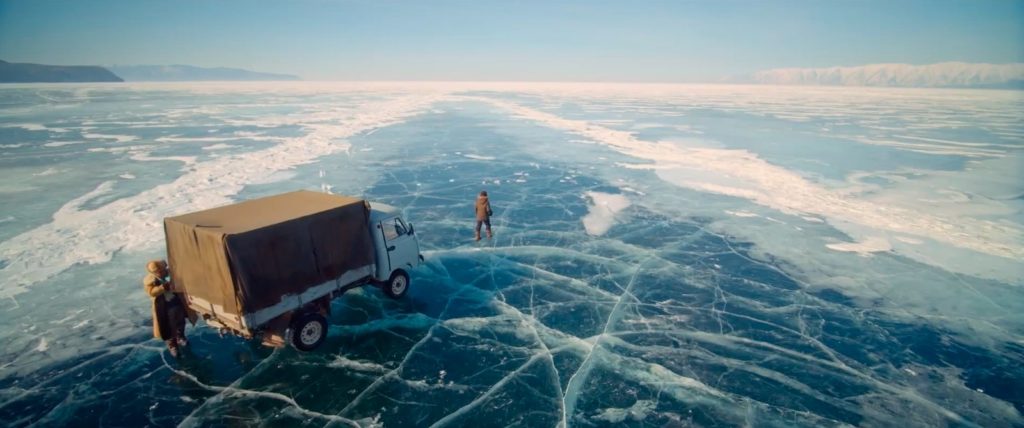
In the village, they are met by the grandfather – a cheerful old man who tenderly loves Lyonya and sees in him his own blood and familiar traits of his deceased daughter. Lyonya’s father wants to leave his son in the village for a couple of days, but then brings up a longer separation. This shocks Lyonya, and to distract his grandson from heavy thoughts, the grandfather takes him fishing on the frozen Baikal. But as soon as they set the nets, a powerful storm hits the lake. The grandfather’s old UAZ van stalls, and he decides to walk to the shore – it gives a better chance of survival. Meanwhile, the father, who hasn’t left yet, drives out to help them.
‘The Spirit of Baikal’ was directed by Mikhail Raskhodnikov, who has repeatedly addressed teenage issues (‘Elastico’), generational gaps (‘Dear Dad’), and common themes of estrangement between father and son (‘Temporary Difficulties’, ‘Not a Children’s Home’).
In ‘The Spirit of Baikal’, Raskhodnikov reinforces what he has done before, making the lost father and son search for each other in the night frost not only physically but also spiritually. The script was written by Alexander Kuzminov, who helped Raskhodnikov with ‘Elastico’, and the cinematography was handled by Semyon Amanatov, who has worked closely with Yakut directors of the new wave (‘Black Snow’, ‘The Sun Above Me Never Sets’, ‘Don’t Bury Me Without Ivan’).
It is thanks to Amanatov’s lens, already skilled at blinding winter landscapes, that ‘The Spirit of Baikal’ acquired its own visual style, magnificent shots of the freshwater lake’s nature, and whimsical camera flights over the characters’ heads, somewhat reminiscent of Pavel Pogorzhelsky’s work in ‘Midsommar’.
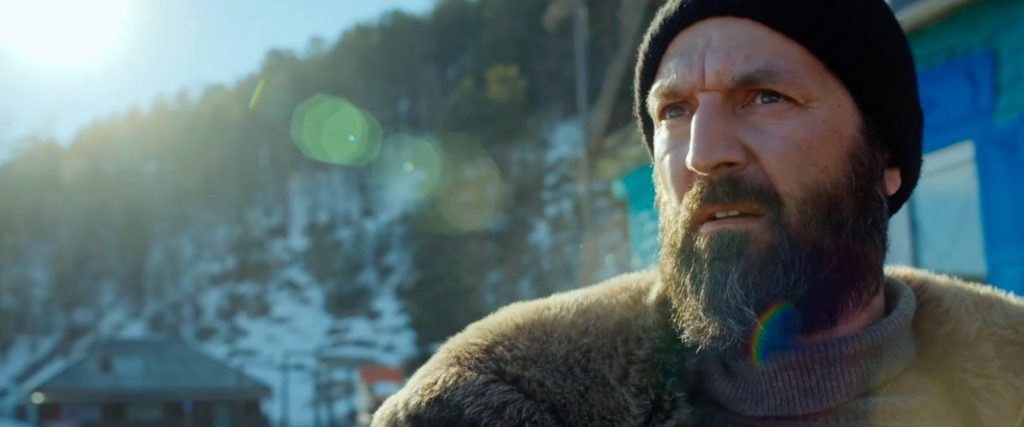
‘The Spirit of Baikal’ is completely devoid of complex subtext. The parallels between the cold of the snowstorm and the cold in the soul from the irreparable loss of a loved one are too obvious to be taken for anything else. The father desperately searches for his son, realizing that he is the only one he has left; the grandfather sincerely wishes well for both and prays to the gods for salvation; and the boy finds a baby seal and helps it get to its mother. “But I don’t have a mother,” he sobs.
The final reunification of the family, in cinematic fashion, happens with the sunrise and, oddly enough, with a simultaneous wolf attack, against which they must stick together because wolves only attack loners.
On one hand, such simplicity does not complicate viewing, despite the inclusions of local folklore and occasional magical realism. But on the other hand, the film subjects itself to a serious test of strength, sometimes completely losing its dramaturgy and literally sliding across the ice, hoping to catch onto something.
This becomes especially noticeable in the clearly drawn-out scene of searching for the boy: the characters shout helplessly into the darkness for quite a while, moving in circles and repeating the same phrases. It turned out to be something between a survival film and a family drama, but in both cases, something is still missing (most likely, runtime). And the creators of ‘The Spirit of Baikal’ offered no other plot actions during this time.
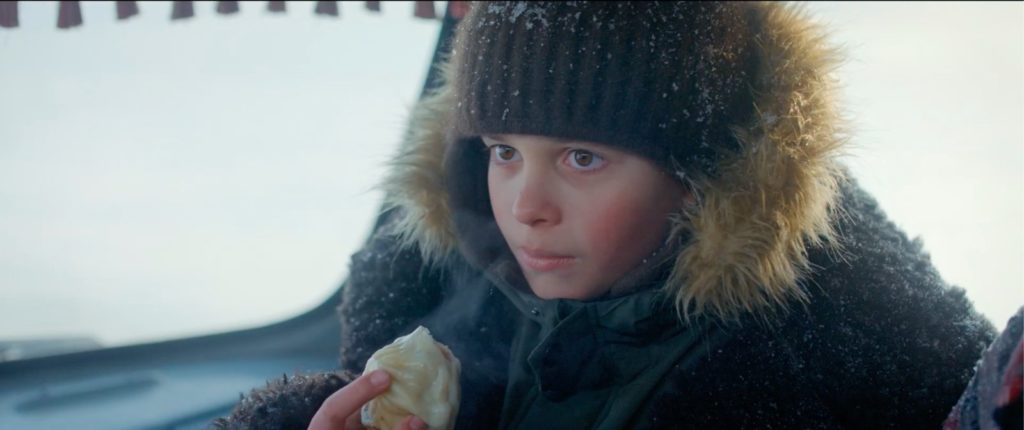
The film’s heroes become characters in a fairy tale, around whom sunbeams play on the ice hummocks, a mysterious glow appears in the sky, darkness is cut by a lonely flashlight beam, signs left on the ice warn of danger, and then help them escape from the icy captivity. Lyonya here is like the lost boy Kai from ‘The Snow Queen’, who must melt not only his own heart but also his father’s heart. There is no other way, because it is this fairy tale that always wants to see a happy ending.
Comments
0No comments yet.
Sign in to join the discussion.