
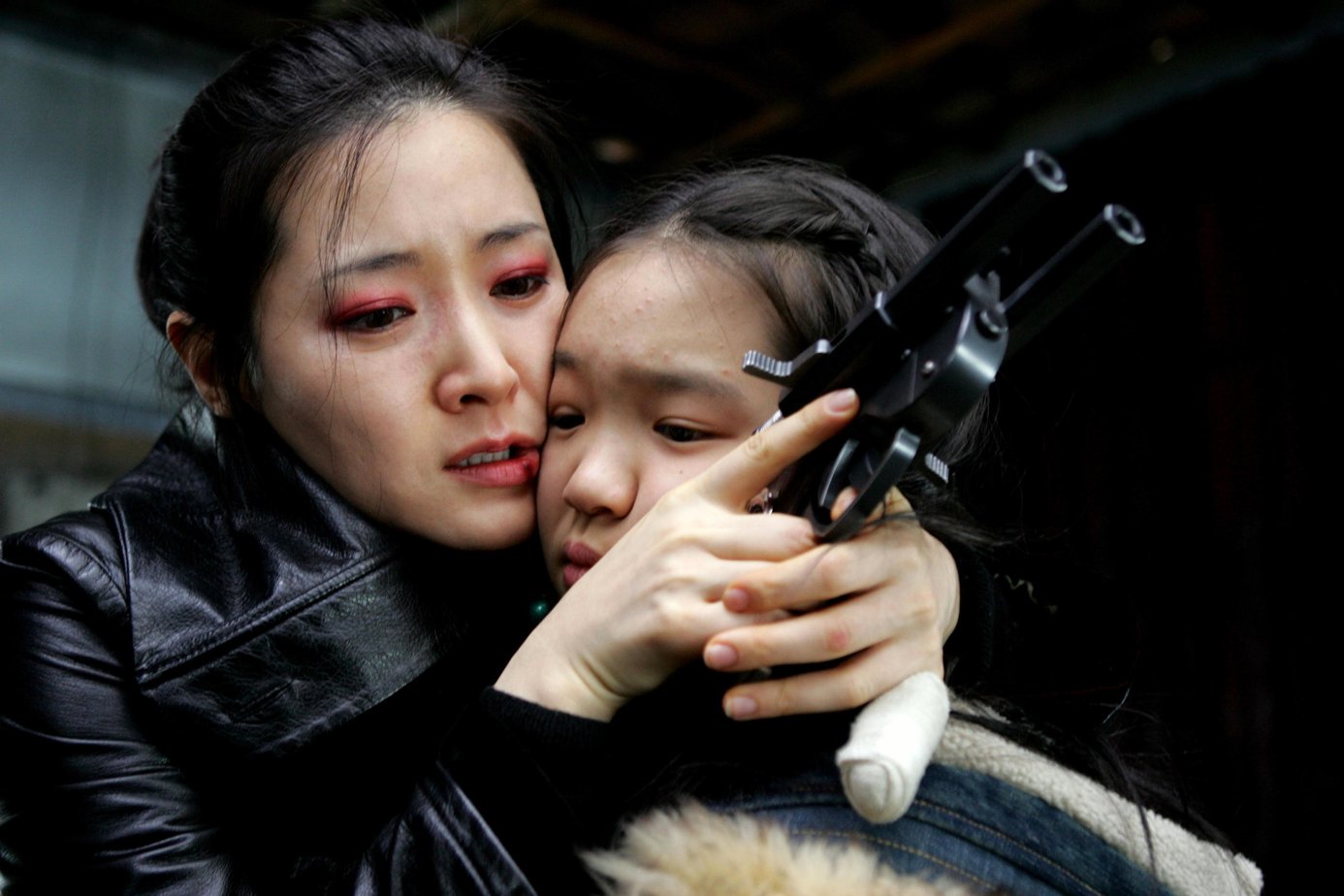
What drives a person to revenge and how far can they go in carrying out their bloody plan? The answers are in Park Chan-wook's 'revenge trilogy.'
In his trilogy – Sympathy for Lady Vengeance, Sympathy for Mr. Vengeance, and Oldboy – Park Chan-wook reflects on the nature of revenge, raising common societal issues and exposing the human core. But I will focus solely on the duology with "sympathies," as in these films the director cleverly contrasts how men and women approach revenge.
Warning: spoilers ahead
At the Intersection of Longing and Violence
The aestheticization of violence originates from the military conflicts of the 20th century, which in South Korean art became a distinctive authorial signature. Koreans call the feeling of oppression and sadness "han." At the intersection of longing and violence, most contemporary Korean directors create so-called auteurisms – vulgar auteur cinema, expressing their feelings in an unconventional way. Park Chan-wook is no exception. This is especially evident in the revenge duology, and I will explain why.
Sympathy for Mr. Vengeance – A Story of Revenge from a Man's Perspective
The dramatic beginning and comedic actions of the first half of the film do not even hint at the subsequent brutality. Ryu sells his kidney to scammers to save money for his sister's operation. Her turn is closer than ever, but he is robbed. He has to embark on a new adventure – kidnapping the child of his boss, Dong-jin.
Deaf-mute and careless, Ryu fails to watch over the kidnapped girl, who drowns in a small pond. Then the boss, going mad, decides on revenge – he has nothing left to lose. The most precious thing he had was not capital, but his child.
The film highlights the problem of child abduction driven by the scent of profit. Korea is characterized by a strong class division, so the poor sometimes have to resort to extreme measures to commit crimes. Unfortunately, many kidnappings ended in the deaths of innocent children. An example is the notorious case of the "frog boys" – five children who disappeared in the forest. The case was solved only ten years later.
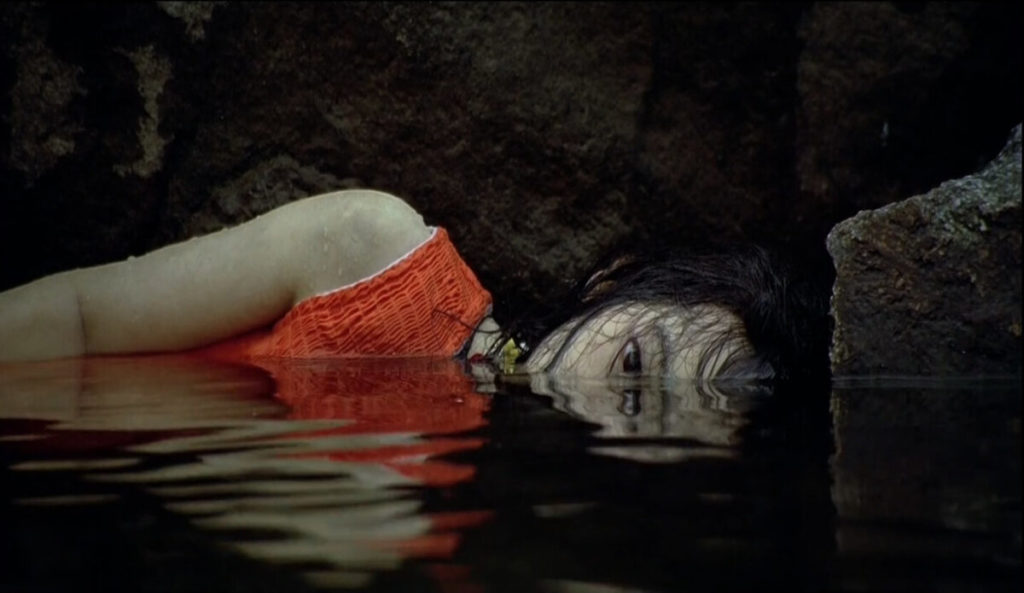
And Yeong-mi, the girlfriend of the protagonist Ryu, justifies curing poverty through the surplus money of wealthy families. Dong-jin's phrase "I lived a good life, just like everyone else" notes his honest labor, by which he earned a living without trying to take it out on the poor. But in a society where some live in abundance and others are deprived, this is not an excuse for inviolability.
Sympathy for Mr. Vengeance – A Film About Four Revenge Acts
One is carried out by the guy against the kidney traders, in the second the boss takes revenge on Ryu's girlfriend, who was the initiator of the idea, and on Ryu himself. The last revenge is directed at Dong-jin himself. In three cases, the revenge is cruel and merciless; it is evident how men get carried away and mindlessly torture their offenders, turning the dead body into mincemeat.
Our main character first tortures Ryu's girlfriend to death, and then deals with the (not so) poor guy, cutting his Achilles tendons and leaving him in the lake, which he is terrified of due to a childhood fear of drowning. But Mr. Vengeance does not leave Ryu in the bloody water for long. He dismembers the guy, packs the remains into bags, and plans to bury them in the ground.
The third revenge arrives by car – it is the followers of the anarchist group of Ryu's girlfriend. They take turns plunging sharp knives into the boss's body, leaving him to die on a deserted road.
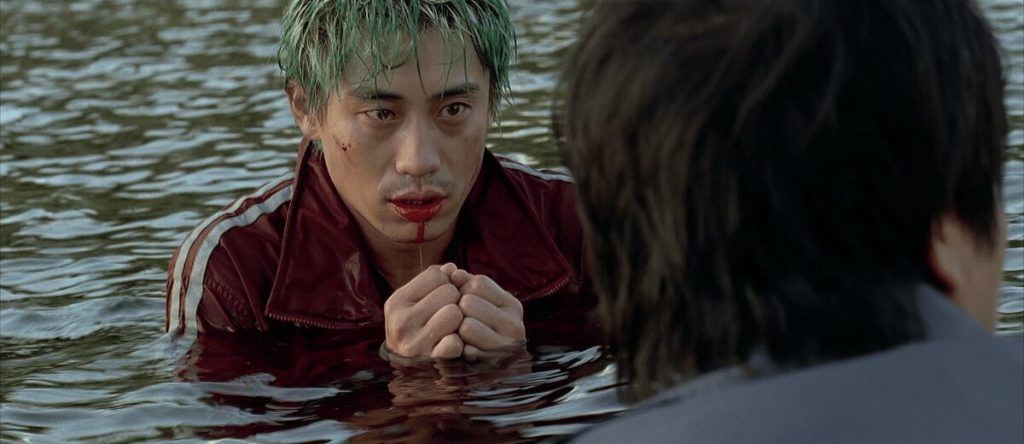
The revenge acts happen too quickly and somewhat spontaneously – it is impossible to follow a specific plan; everything spins before the astonished viewer's eyes. The chain reaction, accidentally triggered by Ryu, seems almost endless. The noir film emphasizes this repeatedly with the absence of dramatic music; instead, there is the hum of factory machines, screams, and breaking bones.
The motif of violence permeates the film: the cut-up body of Ryu's friend, his sister's suicide as a solution to many troubles, the death of the little kidnapped girl. The viewer approaches revenge through many harsh hardships of the characters, so the bloody reprisals no longer seem so shocking.
Sympathy for Lady Vengeance: What Do We Know About Female Revenge and What Is It Like?
In this film, Park Chan-wook introduces predominantly female characters, showing them from a position of strength. And he portrays female revenge from the perspective of cruel deliberation and elegance.
Geum-ja is a nineteen-year-old girl who goes to prison not by her own fault or will. Her newborn daughter is used as blackmail by her former English teacher, whose hobby was kidnapping children from wealthy families, collecting ransoms, and killing them.
In prison, she leads a righteous life: she prays and helps everyone. But her help cannot be called selfless; almost every woman who receives support from Geum-ja helps her in return, particularly in finding Teacher Baek after her release.
Geum-ja's revenge is not long in coming. Having changed her external appearance, she is ready for internal changes, for atonement for past mistakes. She wears blood-red eyeshadow and high red heels. A perfectly constructed system of revenge helps her not to get her own hands dirty in red paint.
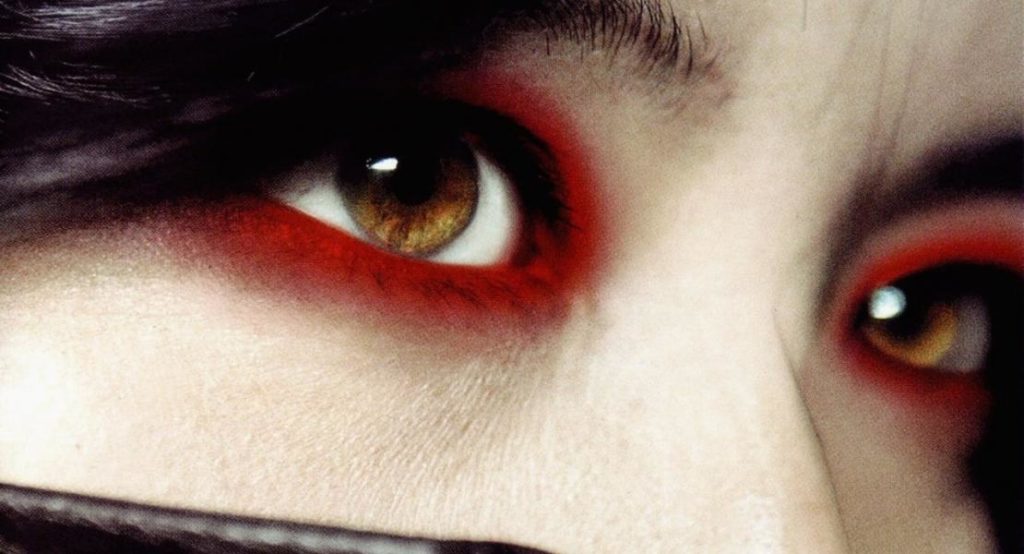
When Baek is found, thanks to her former cellmate, she takes him to an abandoned school – the starting point of revenge. Discovering tapes with recordings of child murders in his apartment, she shows them to the victims' parents. Geum-ja offers them to deal with him themselves – let Baek be a punching bag for all the grief they have endured.
Everyone sits in a line in the corridor, each with a weapon, be it an axe or scissors – a very comical scene. The first in line finds it hardest to decide on a crime for the greater good, but with each subsequent person, the atmosphere heats up; now they are not civilized people, but animals pouncing on their prey with bloodlust.
Geum-ja watches from the sidelines – her final act was a couple of shots into the already dead Baek, who is buried in a pit in the forest.
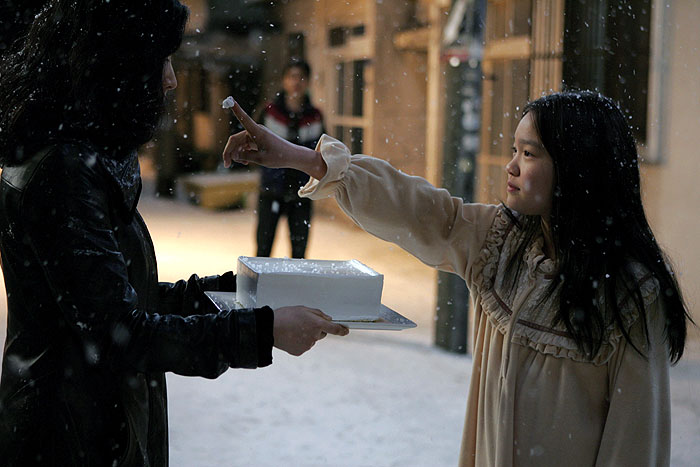
Thus, having carried out her revenge, the girl atoned for her sins of silence and inaction due to her youth. At the end of the film, she greedily eats tofu – in Korea, a symbol of purity and sinlessness, often given to those released from prison.
It can be said that female revenge turned out to be much purer and more thoughtful, while male revenge was the embodiment of the animalistic.
Initially, in the first film of the duology, Park Chan-wook wanted the colors in the film to gradually fade, turning into black and white by the finale. But in the end, he realized this in Sympathy for Lady Vengeance, where the color of the prisoner's pink cell transitioned to bright red to black – the color of dried blood – until the colors completely left the film. But Mr. Vengeance also did not do without a color scheme: from a radiant green to the same red, symbolizing revenge.
Analyzing revenge in two forms, I would probably give first place to Sympathy for Lady Vengeance for the visual explosion that Park Chan-wook created and for the aestheticization of preparation for revenge, where everything is meticulously planned. I especially highlight the editing: at the beginning of the film, there is a retelling of Geum-ja's backstory, very bright and fast cuts immediately immersing you in the context of the film, allowing the remaining half to relax in long, camera-trusted shots.
Comments
0No comments yet.
Sign in to join the discussion.