
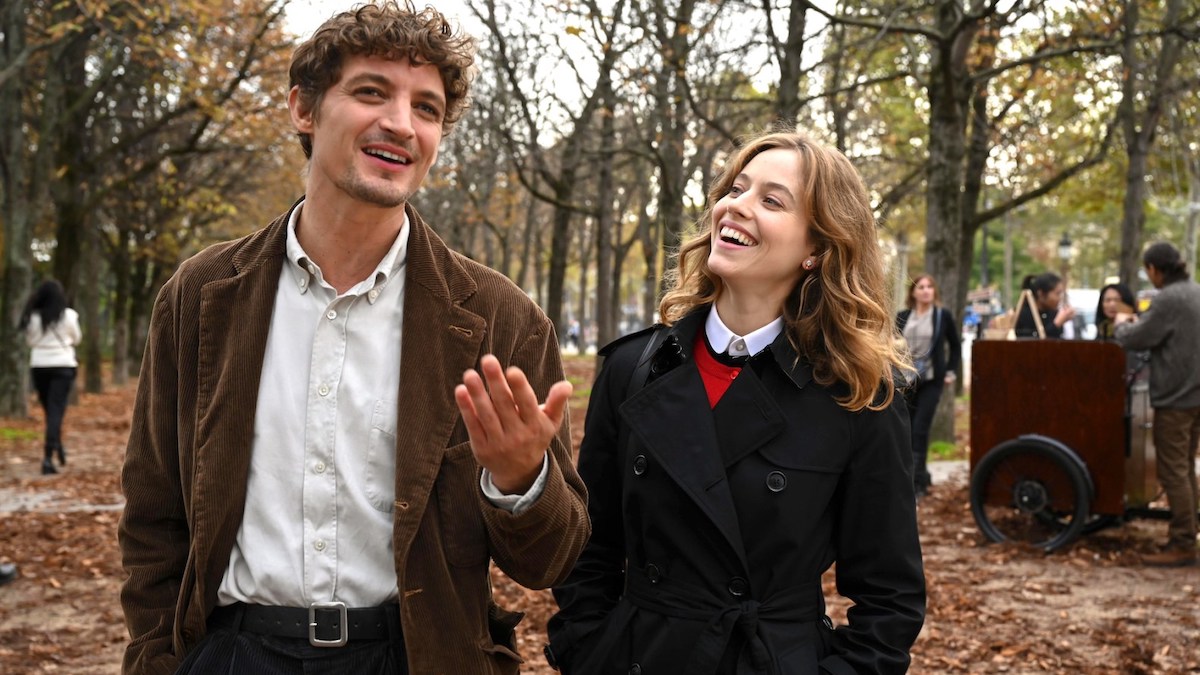
The film 'Coup de Chance', a new work by American classic Woody Allen, who for the first time in his career switched to French and speaks it quite briskly and with unexpected directness, is being released. More about the director's new detective come...
Fanny (Lou de Laâge) is married to Jean (the recently popular Melvil Poupaud) and is happy – her husband is a successful, intelligent, and cheerful man, and also a successful businessman, even if no one knows exactly what he does. Jean puts it briefly: he makes the rich even richer. Unlike many other people in late capitalism whose work has the same outcome, Jean also gets rich in the process.
However, something gnaws at Fanny, who loved the novel 'Anna Karenina' in her youth, and when she meets former classmate Alain (Niels Schneider plays a parody of an Allen-esque hero), she can't help but start seeing him. At some point, things get more complicated, and to clear the fog of bourgeois secrets, the protagonist's mother (the wonderful Valérie Lemercier) arrives in Paris – a paranoid woman who loves detective stories.
'Coup de Chance', the new, fiftieth film by Woody Allen (one must presumably understand this), is not too different from the forty-nine previous ones. It is not as great as 'Manhattan', not as funny as 'Love and Death', not as Bergmanesque as 'Husbands and Wives', and it has slightly less Dostoevsky than 'Crimes and Misdemeanors', and overall it is more like 'Scoop' than 'Match Point', but the main thing remains the same.
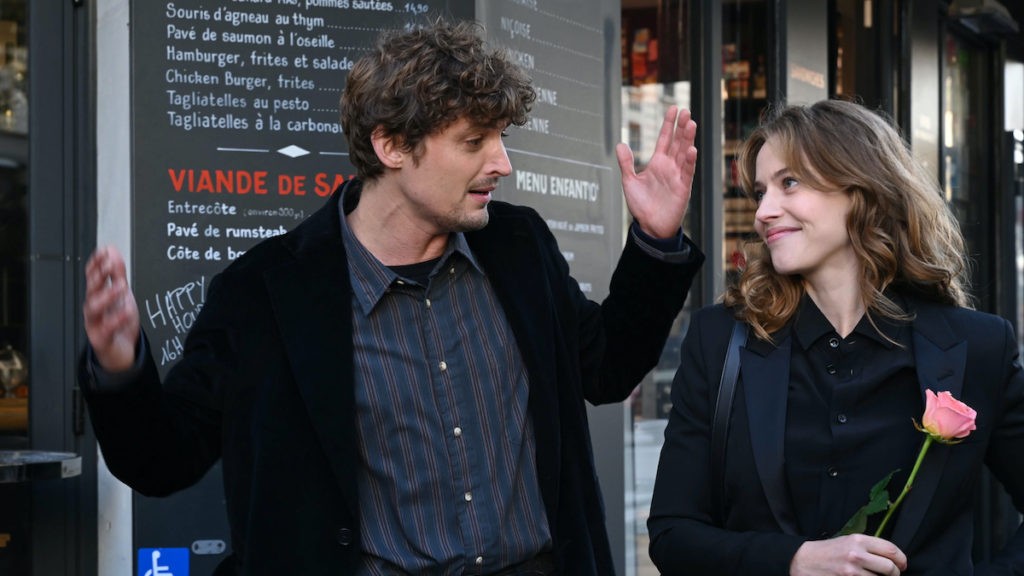
The eternal topics of not-so-fresh small talk – weather, hotels, books – are raised against the backdrop of conflicts from Allen's favorite noirs, and all this is needed to once again put a semicolon in the discussion of moral problems from Russian literature. The only difference is that when Allen started in distant 1970 (actually a bit earlier, but we take the meaningful period), noir conflicts were 20 years old, and 'Anna Karenina' was not even 100. Now plots from 80 years ago illustrate problems aged 150 years.
Is that bad? No, probably not. It's vintage, in a way. But Allen's cinema in its eternal repetition never, surprisingly, looks like vintage. This director has an amazing ability to synchronize with the times – and, for example, a film more relevant than 'Wonder Wheel', which he made at 80, is practically nonexistent now. But this talent has a downside: the quality of his films greatly depends on the quality of the times, and in this sense, it's certainly not the seventies outside.
The first forty minutes of the film, for example, are unbearable. And although one could attribute this to the author's age, one could also think in another direction: Allen has criticized the meaninglessness of eternal bourgeois conversations about the same boring things for so long (at least since 'Play It Again, Sam') that they have indeed become boring to him. Exalted discussions of poems about ice and swans, bourgeois affairs, the eternal choice between romantics and rich men, lengthy discussions of identical turtlenecks and worn-out truths – all this is deadly boring, and we have discussed the dreariness of existence for so long that it has indeed become dreary.
At the same time, the film has simply wonderful scenes – the discussion of aliens, all the moments with the mother-in-law, and of course, the husband's conspiracy – and overall, both the first half and the entire film, even if the plot sometimes sags, look and feel like a relevant, lively work. Cinematographer Vittorio Storaro, who was already an experienced professional when he shot 'The Conformist', with his fantastic love for yellow, has fun non-stop. With some swagger, he paints the space around each character differently (the husband, for example, is always surrounded by cold colors, while the lover lives in warm ones) and draws the sun even where it shouldn't be.
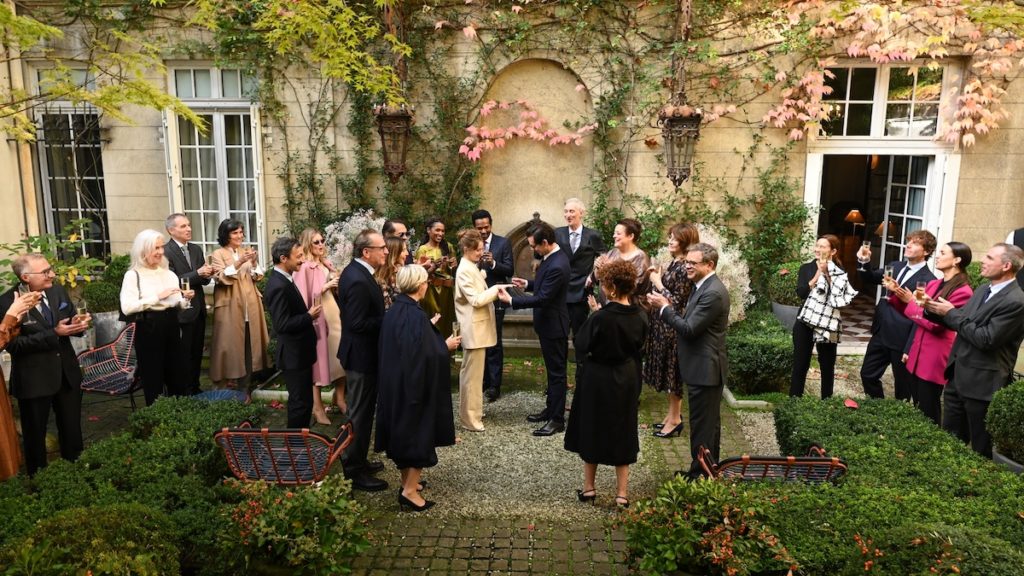
And that, if you think about it, is what Woody Allen does too – a director who all his life found dark spots in the most cheerful stories, the happiest biographies, the consciences of his impeccable bourgeois friends, and his own – he suddenly, seeing the same dark spots, notices something else. The film's antagonist childishly loves a toy train set (clearly showing a control mania, but it's unexpectedly cute), the sometimes silly protagonist touchingly makes sure her mother takes her pills, and even the unbearable lover expresses essentially correct thoughts, just with unjustified pomposity.
Probably, the absence of this pomposity in Allen himself, so frequent in his characters, allows him to remain a relevant, important author for so long. The new film, like several dozen previous ones, is dedicated to the search for the meaning of life, but this detective work is done without hysterics, without great revelations, and without being distracted by false leads that inevitably appear in various bad films.
Allen's main reference point – Ingmar Bergman – solved the same question of finding meaning through an attempt to find the divine plan and accept it, to see the route and understand it; Allen, an agnostic Jew, parodied these spiritual quests in 'Hannah and Her Sisters' and since then has quite consistently made existential detective stories in the guise of romantic comedies, where the main screenwriter was blind chance. Sometimes – literally blind, as in 'Crimes and Misdemeanors', sometimes – with a touch of ancient tragedy, as in 'Mighty Aphrodite', and most often – also cruel, as in 'Match Point'.
'Coup de Chance' does not break tradition: it is still a reflection on how to live if life is meaningless; how to accept that your fate is shaped by a set of absurd coincidences, and then you are still responsible for it. Woody Allen's characters may even have it easier – they are characters of a great author, but whose characters are we? But in the end, Allen shows – and this seems to be a first in his career – that blind chance can sometimes be happy. That life, of course, is meaningless, but not always merciless. And it's probably worth watching.
Comments
0No comments yet.
Sign in to join the discussion.