
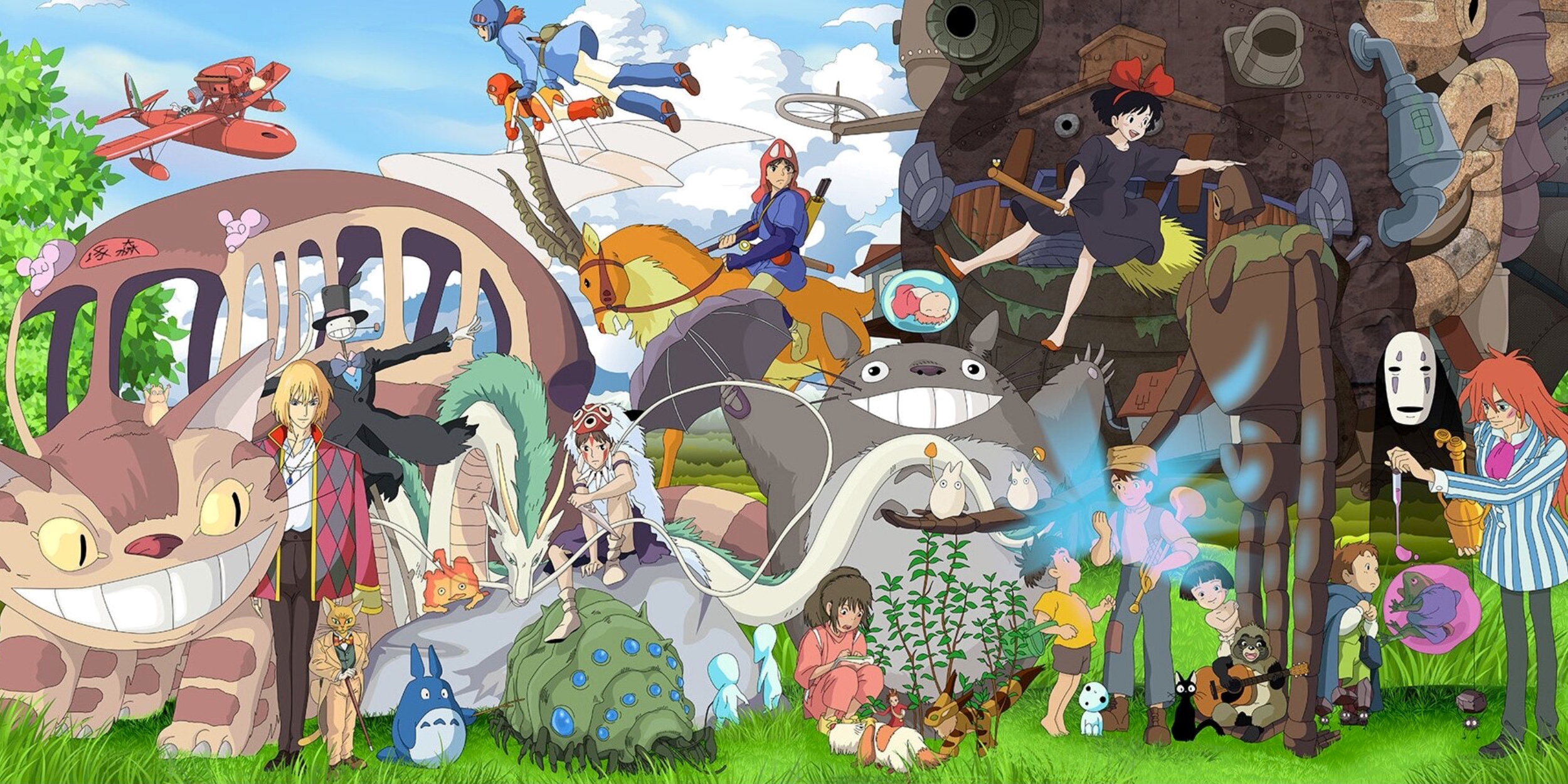
On December 7, possibly the last anime by the brilliant Hayao Miyazaki, 'The Boy and the Heron', will be released in official Russian distribution. In this regard, our editorial team decided to briefly explain why each of the master's ten films is be...
Hayao Miyazaki is a renowned Japanese animator who has managed to capture the hearts of millions of viewers with his works throughout his life. Each project is an incredible and beautiful masterpiece. It's no wonder that the only anime to win an Oscar was made by him. Ten years ago, the master released his tenth film and announced his retirement. However, rumors soon began to circulate that the genius was preparing another work, which finally saw the light of day this year.
The eleventh anime (not counting Lupin III: The Castle of Cagliostro, which is part of a larger franchise) has already screened at the Toronto film festival, where it took third place and garnered exclusively positive reviews. There, Studio Ghibli vice president Junichi Nishioka hinted that The Boy and the Heron might not be the genius's last gift to viewers. Well, we hope so. While our entire editorial team awaits the premiere, we decided to explain why Hayao Miyazaki has never had a professional misstep and why each of his works can easily become a favorite.
Nausicaä of the Valley of the Wind (1984)
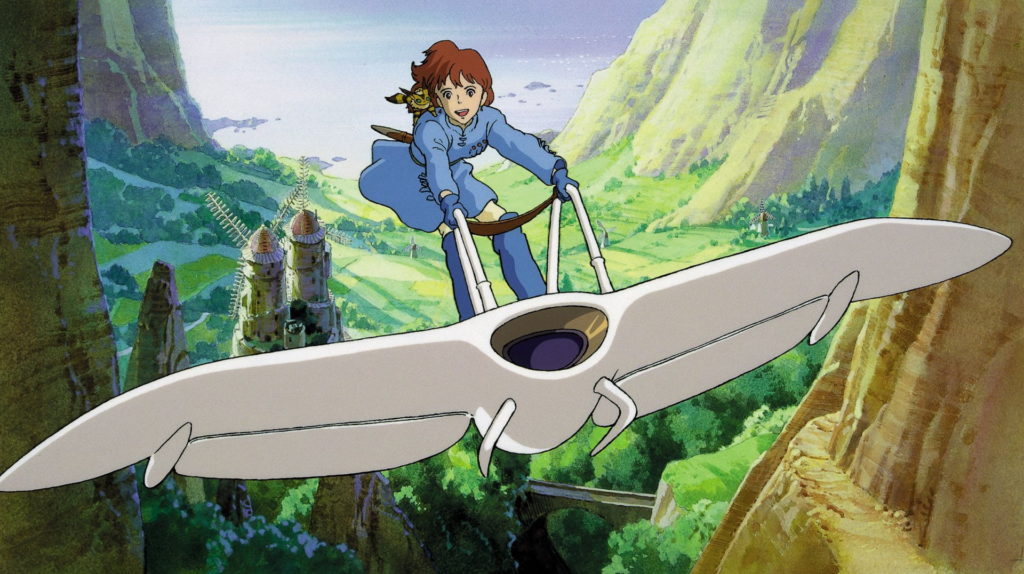
One of the themes that has stayed with Hayao Miyazaki throughout his career is ecology. It was his reflections on the destruction of the world by human hands that led to the creation of the manga Nausicaä of the Valley of the Wind, which later turned into a full-length animated film.
Sometimes the themes addressed in the film can even contradict each other. On one hand, in Nausicaä, humans are portrayed as terrible creatures who destroyed the world they lived in. On the other hand, humanity here is shown as worthy of defending its right to peaceful coexistence with nature and helping it be reborn in its new form.
Special mention should be made of the unique depiction of the post-apocalyptic world presented to us. Notice: since birds have practically ceased to exist here for a long time, people build their flying ships in the image of insects. It seems like a small detail, but what a pleasant one.
Castle in the Sky (1986)
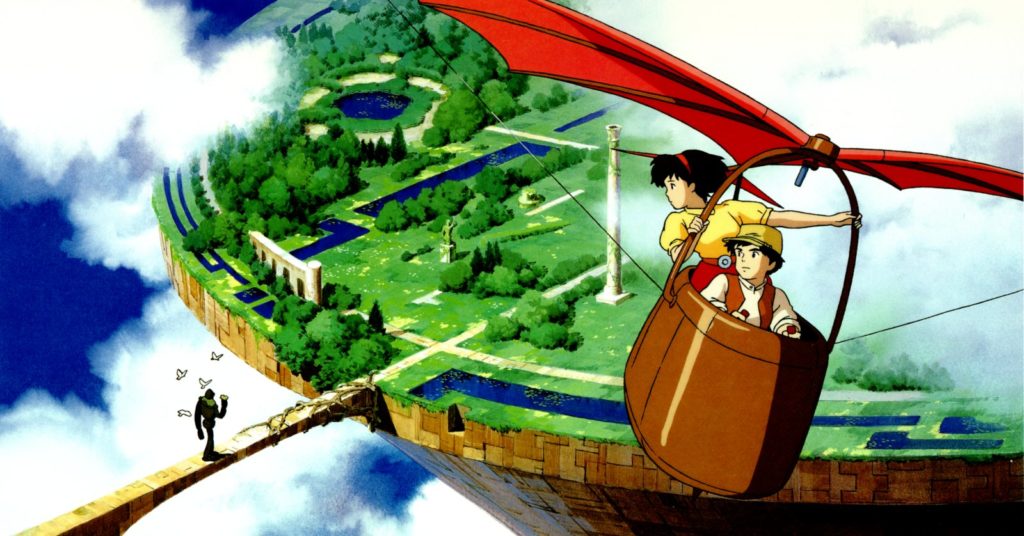
Castle in the Sky is my absolute favorite Hayao Miyazaki anime. Sure, there's the Oscar-winning Spirited Away and the much-beloved Howl's Moving Castle, but this particular film resonated with me the most.
An adventure story about the search for a mysterious floating castle, wanted by both pirates and the government. It's a true family blockbuster, akin to Indiana Jones or Star Wars. It has everything to captivate viewers of all ages: action, an interesting story, colorful characters, excellent music, and simply breathtaking visuals.
In Castle in the Sky, everything works like a well-coordinated, masterfully assembled mechanism, every part of which was made by a brilliant engineer. Here, Miyazaki found perhaps the ideal balance between majestic natural beauty and steampunk, which seems so destructive to that very nature. It's simply impossible not to fall in love with this anime. You'll want to return to it again and again, even years later, to relive this incredibly captivating adventure with the characters, full of joy, laughter, kindness, and sorrow.
My Neighbor Totoro (1988)
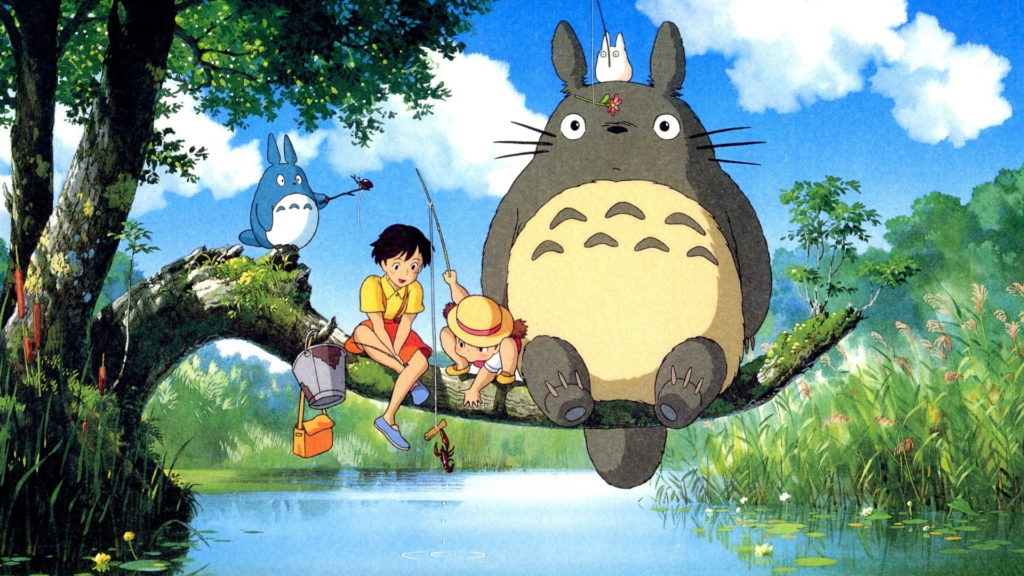
My Neighbor Totoro was released in 1988 on the same day as Isao Takahata's Grave of the Fireflies, so initially, few people noticed it. Festivals and critics primarily focused on the powerful anti-war drama, rather than the rather childish, almost conflict-free story of two girls moving into a world of fantasy. But later, Miyazaki's work was shown on television, and that's when the real Totoro boom happened, making the character so iconic that he was even placed on the Studio Ghibli logo.
The master wanted to bring this kind, meditative, and soothing story to the screen for a full ten years but couldn't find funding. In the end, the cute creature found its home, and the film became a kind of calling card for Ghibli for many years. Hayao Miyazaki showed that a film doesn't necessarily need a physical antagonist. You can make the illness of a loved one the evil, thereby raising many important themes. My Neighbor Totoro speaks to the viewer about the fear of losing loved ones, about loneliness, about parting, but it does so on a child's territory, bordering on the world of magic and fantasy, which makes it softer to perceive, but no less touching. And how can you not love Miyazaki after watching it?
By the way, if Totoro isn't enough for you, you can also find the short film Mei and the Kittenbus online, released in 2002 and shown at the Studio Ghibli Museum. Unfortunately, only a screen recording is available for viewing, but that's not such a big obstacle to immersing yourself once more in the wonderful world of Hayao Miyazaki.
Kiki's Delivery Service (1989)
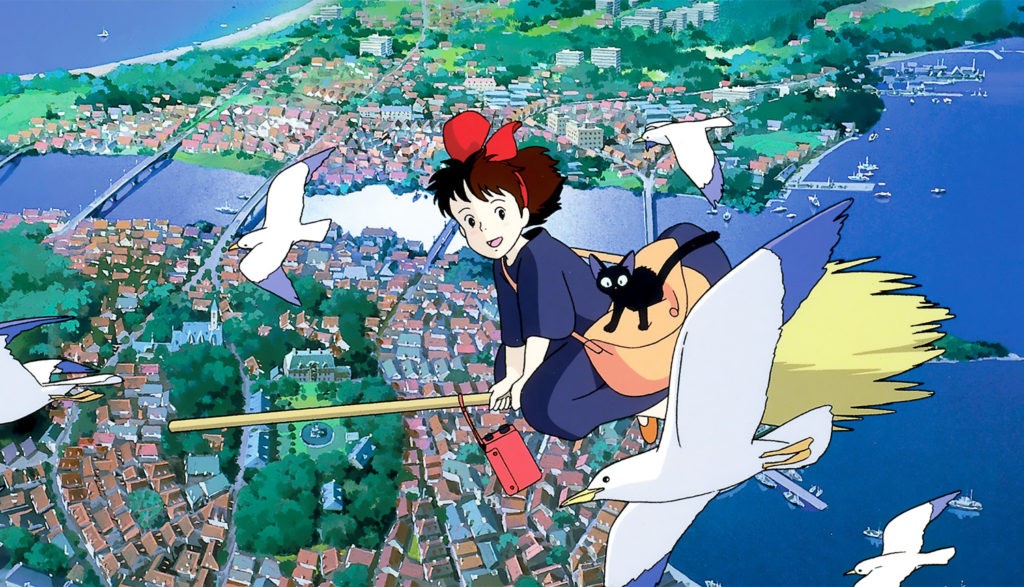
Russian viewers rarely begin their acquaintance with Miyazaki with Kiki's Delivery Service. Perhaps that's a shame. After all, of all the works by the legend of Japanese animation, Kiki's story is close to every person, regardless of their cultural background.
The adventures of the little witch undergoing a ritual separation from her hometown are based on the book Kiki's Delivery Service by Eiko Kadono. Although the film strayed quite far from the (in my opinion) saccharine original, bringing to the forefront the ambiguous conflicts and complex emotions the main character experiences.
When you watch this Miyazaki work as a teenager, Kiki's story of growing up is a familiar, inevitable stage of life. When you rewatch the film at 30 while emigrated in Lisbon (a kind of city by the sea), you feel that the themes touched upon will likely be relevant for the rest of your life. You never know when you'll have to fall in love with your work again, find a new common language with people already close to you, or simply dream of beautiful clothes.
I think this is one of the main components of Hayao Miyazaki's genius: to tell a story in such a way that it is close and interesting to the viewer in any life context.
And, of course, as always, a touch of fantasy adds depth and symbolism. Everyone will answer for themselves why they no longer understand Jiji.
Porco Rosso (1992)
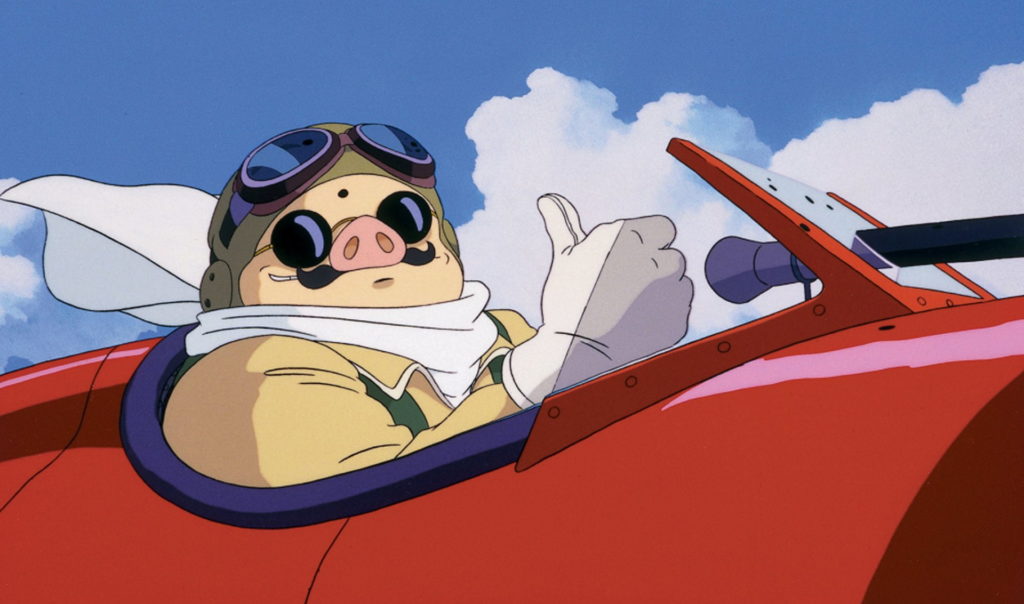
Porco Rosso can be considered Hayao Miyazaki's most unremarkably notable film, as it is not so much an expression of the director's creativity as a reflection of himself. The plot is centered on the theme of aviation, and despite Totoro being the studio's logo, Ghibli is an abbreviated name for the Italian aircraft Caproni Ca.309 Ghibli. That's why Porco Rosso can be seen partly as a tribute to his father, from whom Hayao inherited his interest in aviation.
This sincere love is conveyed on screen, as stunningly drawn aerial battles unfold in the sky, and the main character, whose name literally translates to 'Red Pig,' seems impossible to imagine without his crimson plane. Miyazaki immersed himself so deeply in this dear-to-his-heart subject that he deviated from the standard patterns of his works, making the main character an adult man whom it is quite difficult for the viewer to love. He doesn't fit into the mold of the charming characters Miyazaki usually writes for men in his other works, but that makes reading the psychological portrait of Porco Rosso, with whose appearance the director identifies both the external and internal, all the more interesting.
And the film itself (despite having a magical beginning and metaphorical moments) is much more grounded than any other work by the master. The themes of war and even love in the film are weighed down by the burden of ordinariness and realism, which cannot but make the work much more personal both for Miyazaki himself and for the viewer, who can more easily bring associations with surrounding reality into their judgment.
Princess Mononoke (1997)
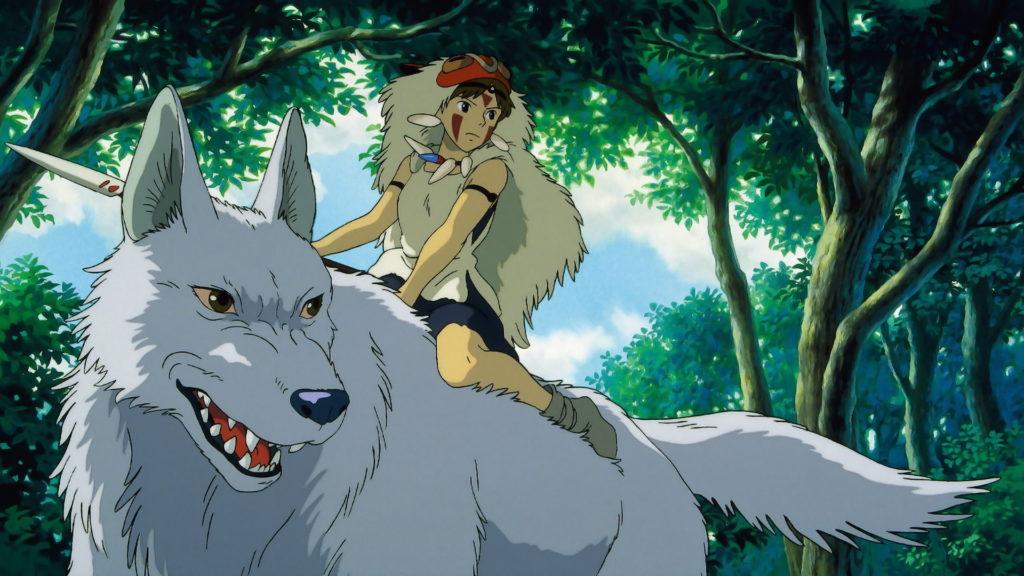
Like any very personal film, Porco Rosso was not widely acclaimed. The spirit of magic and otherworldly energy inherent in the master's previous works is what viewers revere Miyazaki for. So the animator returned to a proven formula, releasing the anime Princess Mononoke.
A true masterpiece of cinematic art, the film, without unnecessary sentimentality or lyrical introductions, plunges the viewer into the horrors of war. Miyazaki enters the field of the most important confrontation in his films — the struggle between the natural and the social — speaking without censorship. Severed arms, shot-through heads, animal killings. The period when the first firearms appeared in Japan is considered a line beyond which nature becomes especially defenseless against human need for resources, because even the forest spirit is mortal. For over two hours, the animator thoughtfully and bloodily, using the power of dialogue, color charm, and graphic depiction capable of stirring hearts with attractive or utterly repulsively harsh frames, explains that everyone is trying to find their place in this world.
And only the main character, caught between two fires, embodies the only correct balance between the clashing worlds. So too must the viewer find for themselves in this film a middle ground between good and evil, innocence and violence, alluring landscapes and the stone city. Before watching, you need to prepare for the oppressive atmosphere of the story, but remember that even in the darkest world, you can find a way to be reborn.
Spirited Away (2001)
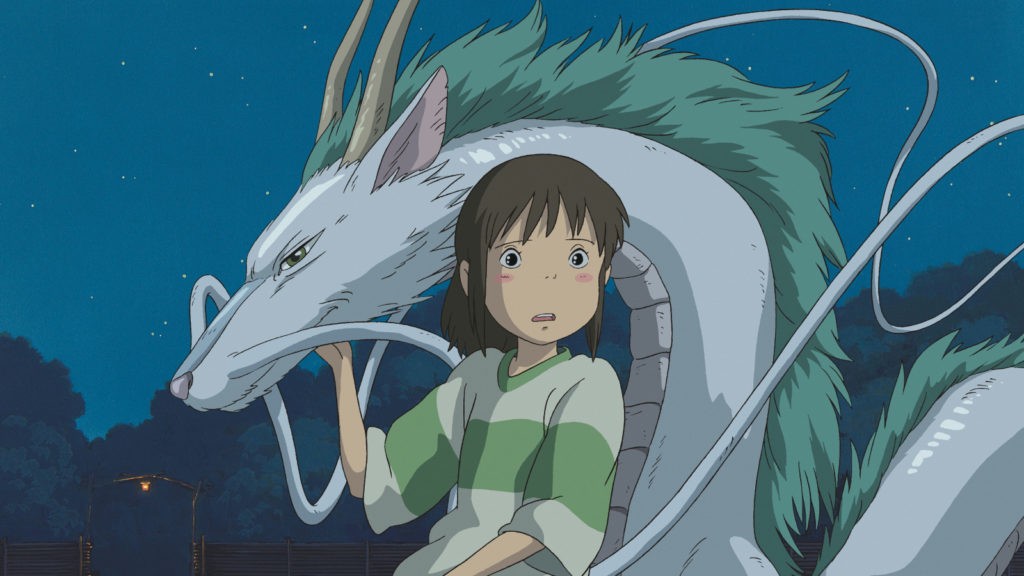
According to Hayao Miyazaki's original plan, the film was supposed to be 3 hours long. You know, I would gladly watch five or even ten hours, just to avoid leaving this world. The film's lore is so rich and diverse that you wish it were an open-world exploration computer game. Then you could travel through this world as much as you wanted, uncovering more and more new secrets and mysteries.
Environmental problems and the enmity between humans and nature are among the most frequent themes in Miyazaki's work. In Spirited Away, one of the main characters, Miyazaki gave a sad backstory: the boy Haku was a river spirit until people filled in his home for their own needs. Not to mention No-Face or the river spirits, who practically scream from the screen: 'Don't pollute the rivers!'
In addition to the environmental subtext, the director skillfully addresses how European customs have deeply infiltrated the lives of every Japanese person. The characters are dressed in European style, drive a European car, and plan to live in a European-style house. It's no coincidence that the main character's outfit and name are changed. And how can we forget the film's main message: believe in yourself and don't forget who you are.
Spirited Away is like a favorite soft toy. It got lost somewhere during a move, but your thoughts always return to it, and if you close your eyes and imagine the times you played with it, the warm feeling of comfort brings you back to childhood and reminds you that this toy is always with you.
Howl's Moving Castle (2004)
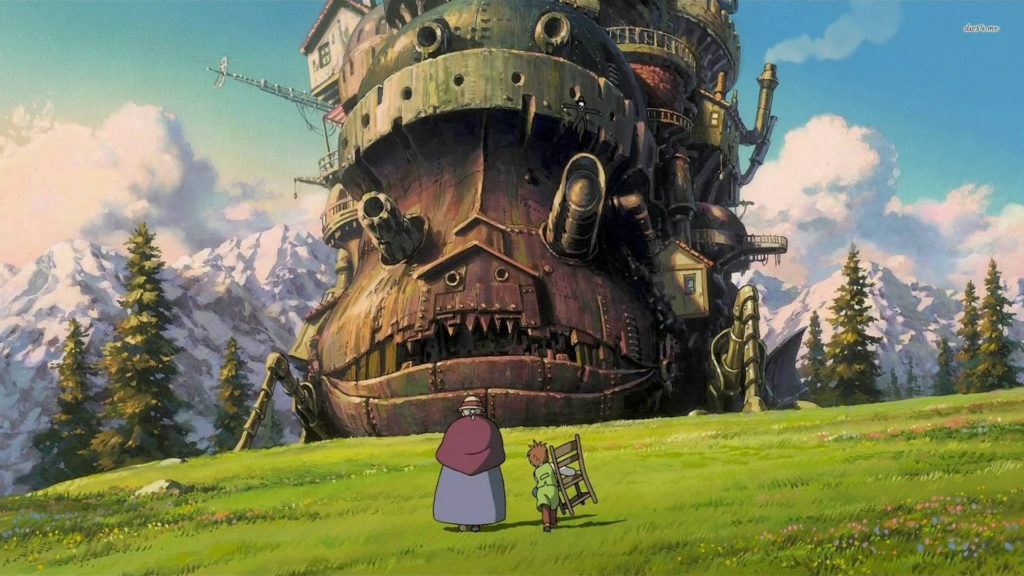
Howl's Moving Castle can be called the coziest creation of Studio Ghibli. And it's not even because the central character is an elderly woman (well, actually a young girl, but still), but because of the thoughts and methods the anime conveys.
Before us is a story about the inner experiences and complexes experienced by characters closed in on themselves and in one space. Each goes through a character arc, getting rid of various kinds of curses precisely by resolving internal conflicts. The need to leave the comfort zone, which the characters savor in their dialogues (be it an old woman's resignation or a young man's attempts to hide self-rejection), drives the plot. And Miyazaki tells us that the cover is far from a reflection of the true personality.
The image of the castle, modeled after the Russian hut on chicken legs, is a continuous walking metaphor, a point of concentration of meanings and images. Like everyone inside the castle, it itself is composed of many disparate elements (so to speak, personality traits), visually conflicting with each other, but building a huge edifice (read: personality), which is saved from destruction only by the power of the life fire.
Miyazaki gives himself free rein in the visual depiction of the story, demonstrating the richness of colorful frames, playing with time and character images. The director again touches on the theme of war, but unlike his earlier works, he barely explores it seriously, using it more as a backdrop to advance the plot and the characters' growth. Therefore, even with its weighty questions, Howl's Moving Castle is enveloped in warmth and coziness that you want to soak in with a cup of tea under a blanket, sitting by the fire.
Ponyo on the Cliff by the Sea (2008)
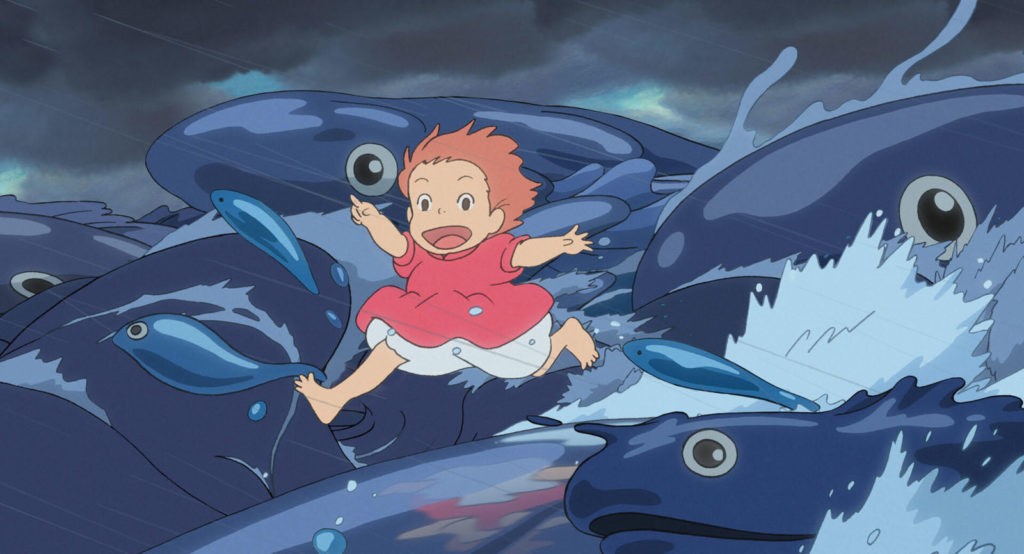
What would Disney's The Little Mermaid look like if it were drawn by the Japanese? Why imagine something when we already have a ready-made version — Ponyo on the Cliff by the Sea.
Another meditative film by the director that immerses the viewer in a very specific state. Here, everything, from the leisurely shots of cooking to the beautiful underwater world, works for the atmosphere. There's even no need to really get attached to the characters, because they primarily exist in this amazing world that the film introduces us to.
At the same time, we have a touching story about two children who are still too young to understand what love is, but already cannot live without each other. It just so happens that one of them has a very unusual origin. Some might find Ponyo on the Cliff by the Sea too childish, and I won't blame them. But is that a bad thing?
The Wind Rises (2013)
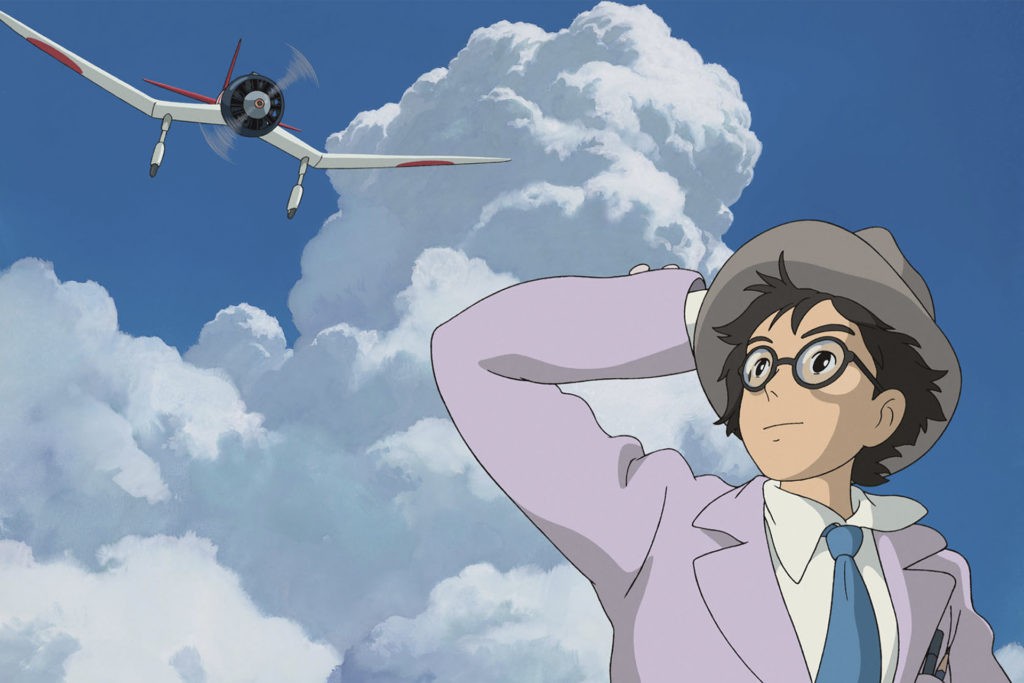
The sky had beckoned Jiro since childhood, but he was not destined to become a pilot due to poor eyesight. He found a way out — he became an aircraft designer. But what if fulfilling his dream leads to the deaths of thousands of people?
The Wind Rises is perhaps Hayao Miyazaki's most adult film. It has almost none of the fantasy elements typical of his films, yet it is a fairy tale through and through. A fairy tale about pursuing a dream, true love, and humanism, after all.
The most touching thing about the film is the vision of beauty in the context of such a dark event as war. After all, the main character sees in his work not the creation of a means for killing people, but a machine for conquering the skies and experiencing the magic of flight. Long before Christopher Nolan, the Japanese master, through the lens of a real person's story, questioned the danger of genius and did so subtly, but without fear of public condemnation.
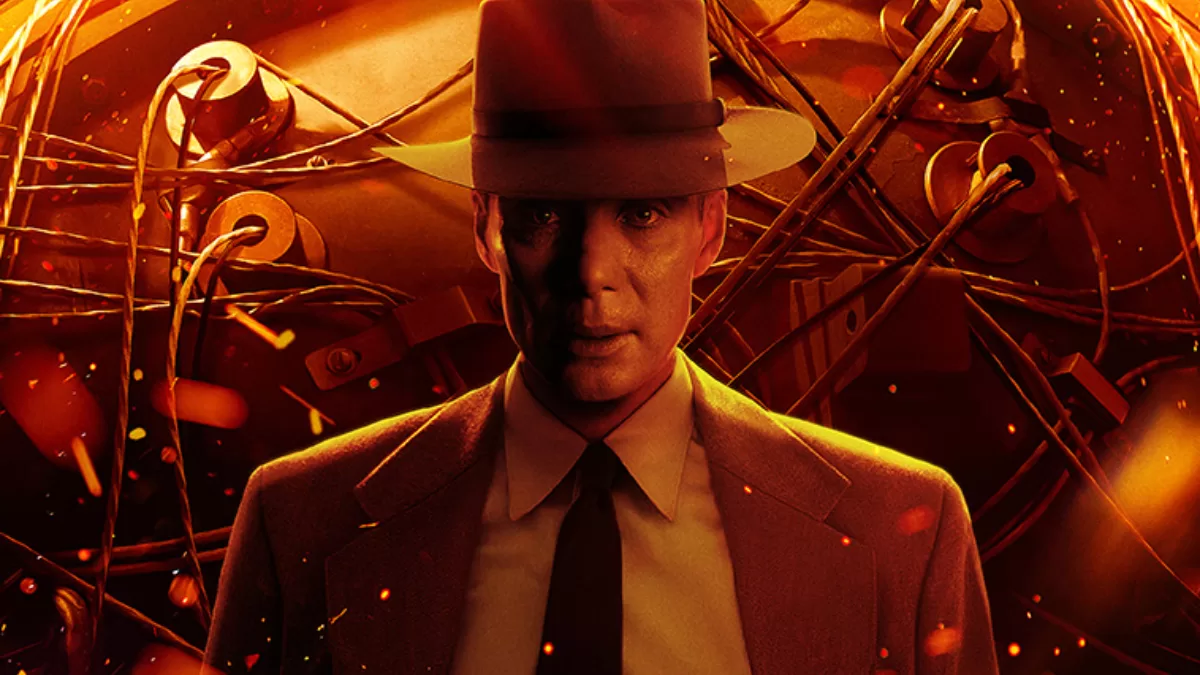
The authors of 'After the Credits' discuss the pros and cons of Nolan's deliberately adopted neutrality towards the story of Robert Oppenheimer.
Open materialIf Hayao Miyazaki had ended his career with this work, as he planned, it would have been a worthy finale to his filmography, but even without that circumstance, The Wind Rises is a great film.
By the way, subscribe to our Telegram channel 'After the Credits' (here's the link). There we post posters, trailers, and various interesting and funny news from the world of cinema.
Comments
0No comments yet.
Sign in to join the discussion.