
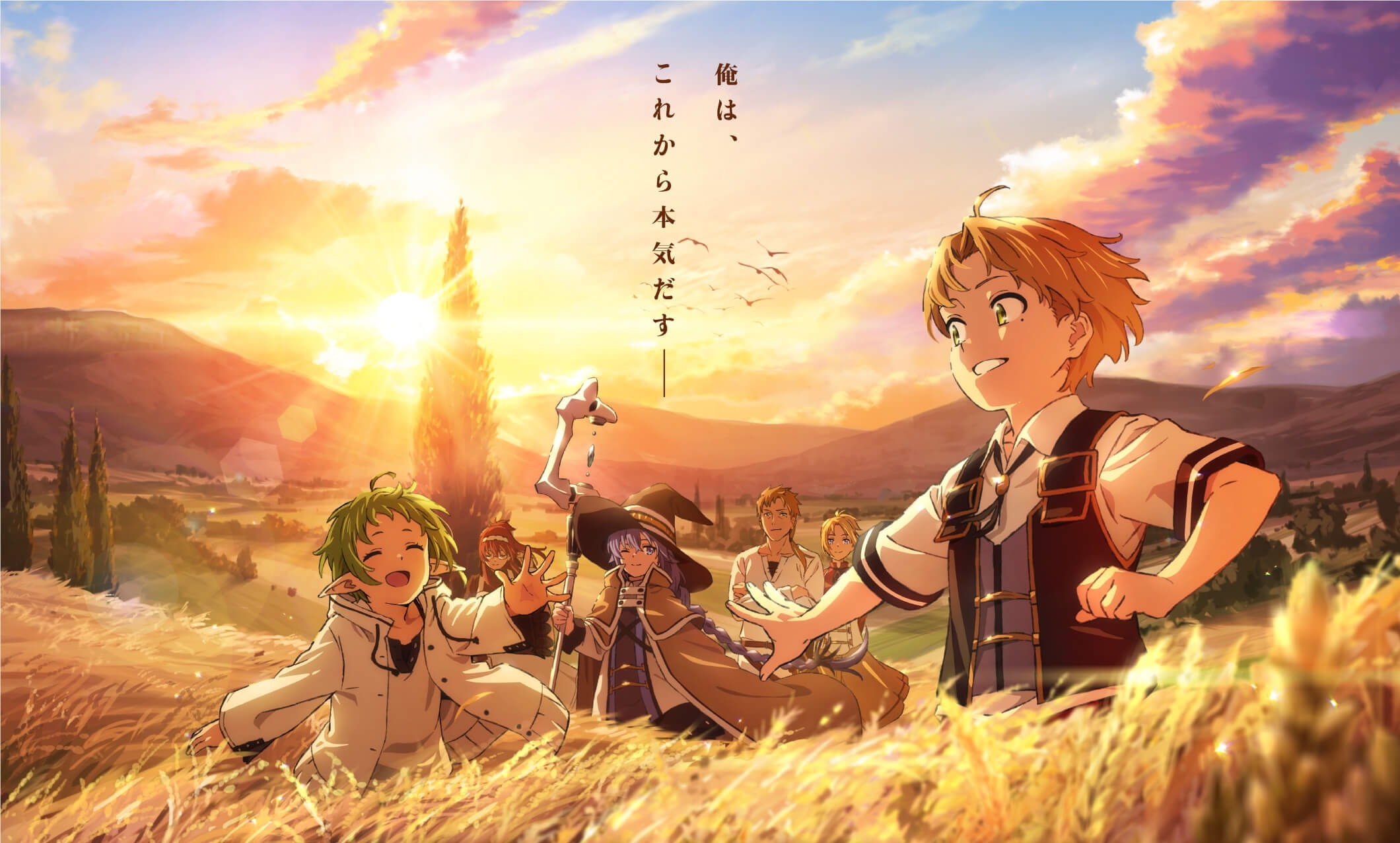
Yesterday, the last episode of the first part of the second season of the anime 'Mushoku Tensei: Jobless Reincarnation' was released. In this regard, we believe that now is the best time to tell you more about this isekai title and why it deserves at...
The premiere of the anime 'Mushoku Tensei' took place in the winter season of 2021. The title almost immediately began to stand out among its genre siblings. The fact is that the show is based on the eponymous light novel released in 2012, authored by Rifujin na Magonote. Many call the work 'the grandfather of modern isekai.'
Before we begin, we would like to urge you to subscribe to our Telegram channel 'After the Credits' (here's the link). There we post posters, trailers, and various interesting and funny news from the world of cinema.
What the Heck Is This 'Isekai'?
'Isekai' translates from Japanese as 'another world.' It is a genre of Asian stories (manga, anime, light novels, etc.) about how the main character ends up in a world foreign to them (often a fantasy one). Today, such titles are released every season, so the anime market is simply overflowing with secondary stories about transported characters, all of which are similar to each other. It's funny, but most new isekai are based precisely on 'Mushoku Tensei.'
At the same time, Rifujin na Magonote's light novel is far from being the pioneer of the genre. Back in the 1970s, Haruki Takachiho released the work 'Warrior from Another World,' where the key detail was the hero's transfer to another world to defeat evil. Then the genre quieted down for a few years, and in 1983, the anime series Yoshiyuki Tomino's 'Aura Battler Dunbine' appeared on screens. This show, of course, is more related to the then extremely popular 'mecha' genre, but nevertheless, its premise is built on the protagonist being thrown into another universe.
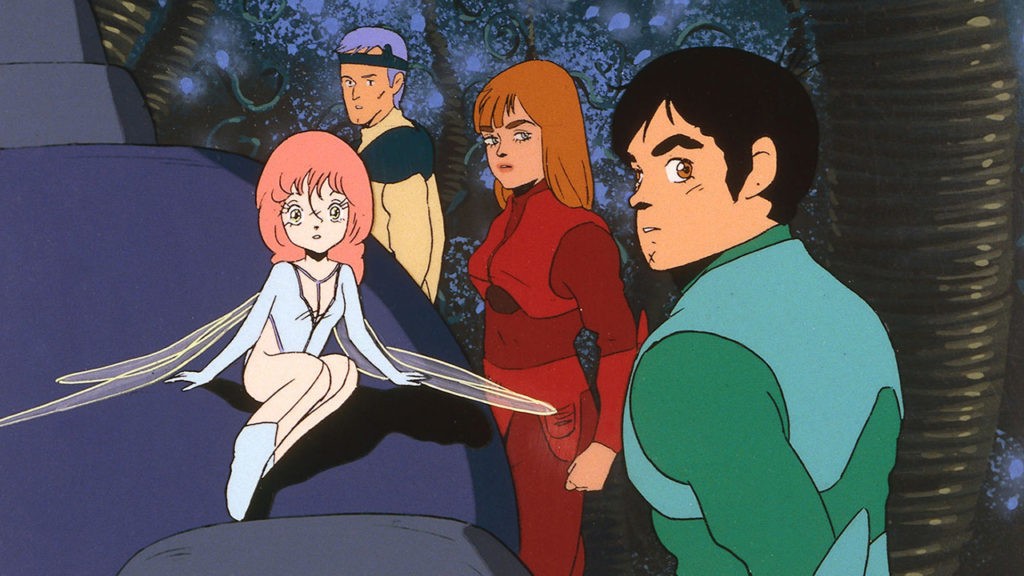
In general, isekai at that time was mostly emerging and focused mainly on the features of the new world exclusively, downplaying the hero's connection with their past life. Moreover, the goal of the transported character was often to find a way to return to their familiar world. Back then, such projects were considered ordinary fantasy titles with an unusual premise. But the years passed, creators experimented, characters occasionally moved to another world, and the standards of the genre began to be seen on small and big screens (I'm sure few people thought about it, but the Oscar-winning 'Spirited Away' can also be classified as isekai). This continued until 2012...
On December 7, possibly the last anime by the brilliant Hayao Miyazaki, 'The Boy and the Heron', will be released in official Russian distribution. In this regard, our editorial team decided to briefly tell why
Open materialIt was then, with the release of the anime 'Sword Art Online' and the light novel 'Mushoku Tensei', that the isekai bomb exploded. Thanks to this pair, many aspects and stereotypical templates of the genre were formed, without which it is very difficult to imagine a modern isekai. After the 'boom' for 11 years, almost every season, one or two (or even more) stories about transported characters are released. During this time, the main characters have become just about anything (it's like in a game: you can choose your character: from a goblin and a spider to a slime and a vending machine).
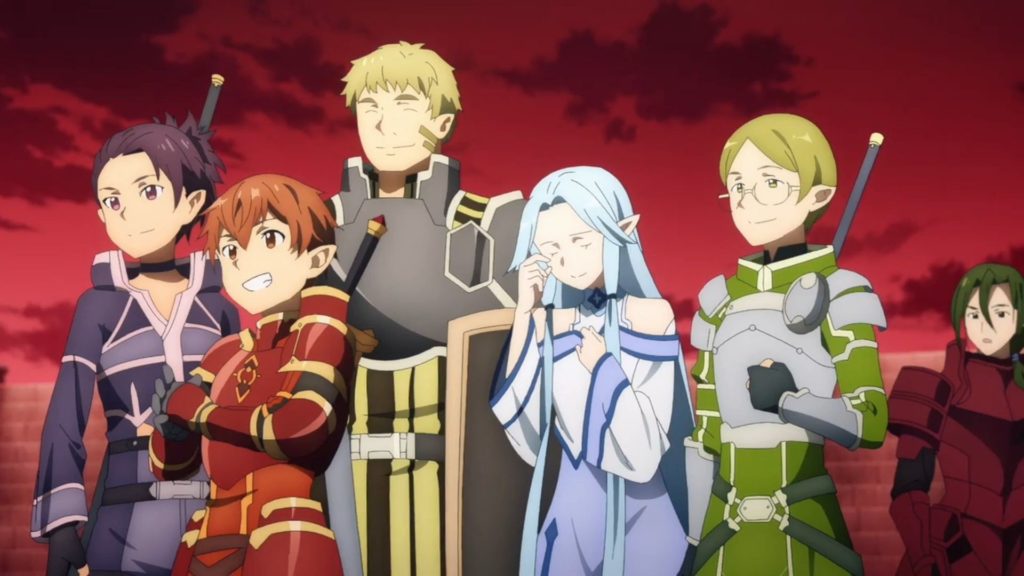
It would seem that screenwriters have been copying their plots from Rifujin na Magonote's light novel for years, but even with such an assembly-line abundance of its relatives, the anime 'Mushoku Tensei' looks like a fresh, original, and interesting title that continues to gather rave reviews from fans.
What's the Plot?
A 34-year-old virgin loser leads a reclusive lifestyle and only plays games, watches anime, and self-destructs as a person, bringing no benefit to society. One day, the fat otaku is thrown out of his rented apartment onto the street, where, wandering, he stumbles upon a group of teenagers in danger of being hit by a truck. The man decides to perform a heroic act and save the kids, but after pushing them away, he himself gets hit by the wheels and dies.
Only there was no light at the end of the tunnel, just as there was no Heaven or Hell. The fat man opens his eyes and sees two happy people in front of him, speaking an unfamiliar language. The character finds himself in the body of a baby born in another world, but with the consciousness of his past life. Now the transported character is named Rudeus Greyrat, and he has the opportunity to live his life anew, but first, he will need to learn to walk and talk again. Moreover, this world has some cool bonuses: there is magic, to which Rudeus shows a clear predisposition. However, not everything is so simple, because along with his consciousness and accumulated experience, all the accumulated complexes and psychological problems have moved into the unfamiliar world, which the guy will have to fight.
What's So Good About This 'Mushoku Tensei'?
The creation of the anime 'Mushoku Tensei' is handled by Studio Bind, which was founded in 2018 as a joint venture of two other companies (White Fox and Egg Firm). In one interview, producer Nobuhiro Osawa said that the studio was created specifically for adapting Rifujin na Magonote's light novel into an anime series, so the adaptation is being worked on by a team whose members already have experience creating isekai. Such a serious approach to work at least inspires confidence in the show, and the creators have been able to justify that confidence.
If we were to classify the project into any other genre, it would probably be primarily adventure. Although besides this, 'Mushoku Tensei' successfully combines drama, comedy, fantasy, and slice of life. The creators manage to perfectly balance and not tip over into any one side, which clearly prevents viewers from getting tired of the action happening around the characters. And the anime (and probably the light novel) relies mostly not on literature, but on computer games like MMORPGs or visual novels (primarily with an erotic slant).
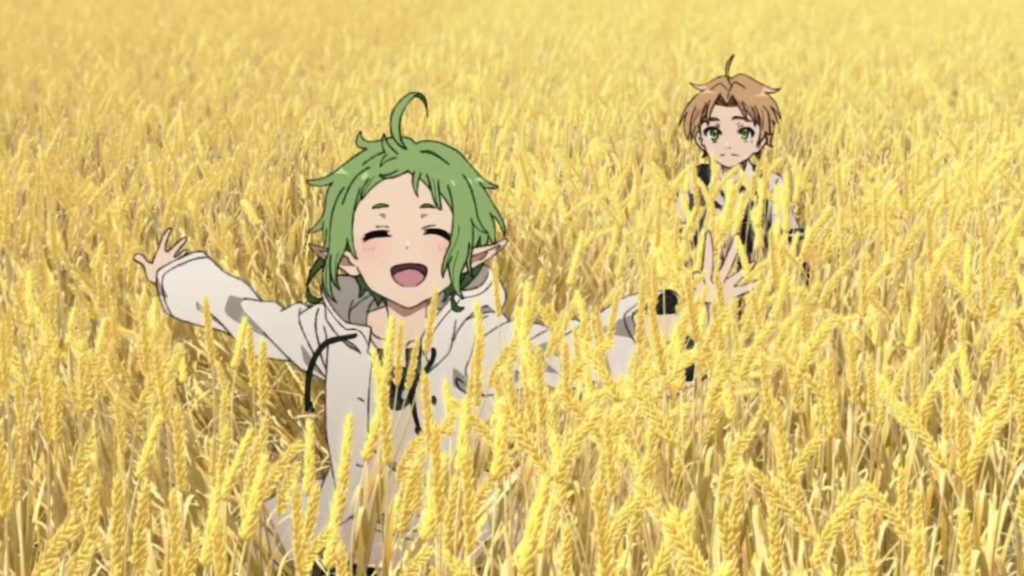
Of course, the series is not without stereotypical clichés and archetypes, but here they work perfectly for the story. Unlike most isekai, Rudeus does not end up in a world where he immediately becomes a god-emperor with a harem of beautiful girls (although the makings of polygamy, of course, are present). The character must learn, train, and overcome obstacles before achieving any goal. Yes, he is smart and endowed with life experience, but we must not forget that he is still a 34-year-old virgin who dreams of experiencing the pleasure of sex.
Rudeus is not flawless, like most isekai heroes. He has both positive and negative traits, and for the most part, the hero is rather repulsive, because he is simply a pervert obsessed with sex. Moreover, we are repeatedly made to understand that young Greyrat is far from omnipotent and is mortal. He has huge psychological problems and the strongest internal conflicts, he is afraid of many things and, in addition to all this, is consumed by lust. The guy regularly eavesdrops on his parents' moans, peeps at little (and not so little) girls, and will not miss an opportunity to touch female charms. That's the kind of protagonist we have.
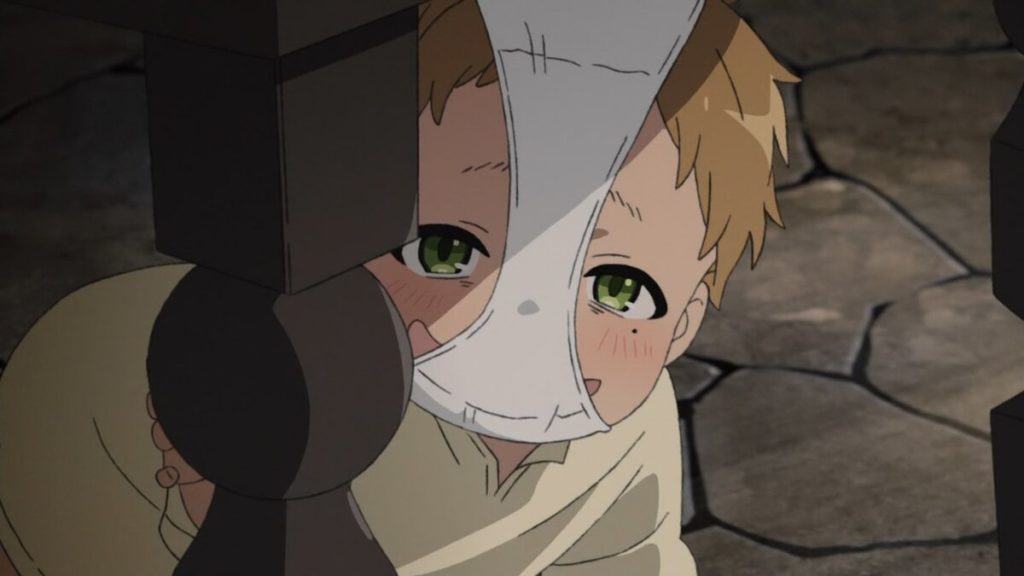
What can we say, if the character ended up in another world, stole his first teacher's panties and thought: 'Damn, you could make a religion out of this'? Lust is an integral part of the protagonist, and this 'religious' artifact will play a role in the plot more than once. In general, the series translates all this obsession into humor, but the jokes always balance on the edge of overdoing it. Although someone will definitely find a reason to be offended and accuse the show of sexualizing minors, grooming, and sexism. These claims are quite controversial, because the guy's consciousness is adult, but his body is far from matching his psychological age, so formally everything is in order (or is it?).
Only the point is not this at all. It is not necessary to approve of the character's actions and behavior, because he was intentionally created this way to show his growth over himself. Yes, he is often driven by lust and cold, selfish calculation, but over time, the hero begins to act correctly. At first out of his own benefit or under pressure from friends and family, but his actions acquire a positive hue. He saves his family from falling apart after his father's infidelity; fights back against bullies who bullied a girl for being different and threw mud at her; teaches magic to all in need; decides to help a Supard (a green-haired representative of a demonic race) lift the curse from his family, which is practically an impossible task. And these are far from all his good deeds.
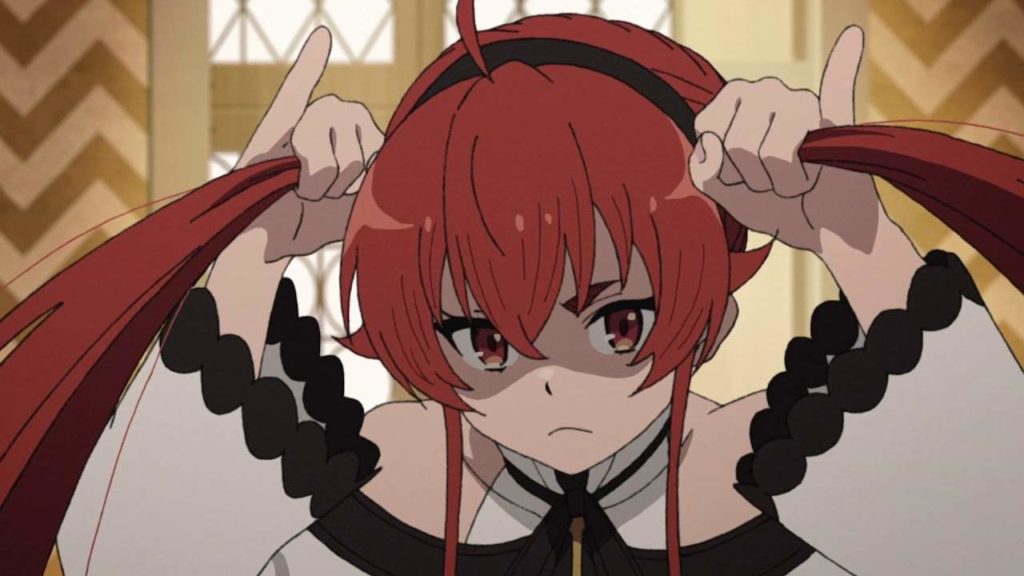
The hero evolves and develops, and thanks to him, the story moves forward and other characters progress. Rudeus often acts as a link between the world and the secondary characters. He is something like a miraculous phenomenon around which the world revolves, or a thread that weaves all events together. But at the same time, his centralization does not turn the supporting cast into cardboard figures working only for the development of the main character, since they are individuals even without the transported character.
For example, Eris — one of Rudeus's love interests — belongs to the tsundere archetype (in short: first hits, then loves). She is a spoiled and aggressive aristocrat, accustomed to demanding rather than asking. She grew up in an atmosphere of wealth and superiority over others, but meeting young Greyrat — a brilliant boy-magician who is not afraid of her (maybe just a little) and is able to protect her — triggers an irreversible process of change in the girl. As the plot progresses, Eris, in small steps, begins to show patience, respect others' opinions, and reveals herself to the viewer from a different angle (up to one very unpleasant moment when she gets a permanent ban).
The same chain can be traced with Ruijerd — the same green-haired Supard, whose race everyone in the world fears. At the time of meeting the main character, he saw in him a defenseless child, but during the journey, Rudeus helps his new friend clear his good name (something the Supard could not do for centuries) and appears in Ruijerd's eyes as a true warrior. Similar revelations happen with almost every character, which gives the title a hundred points ahead of its competitors.
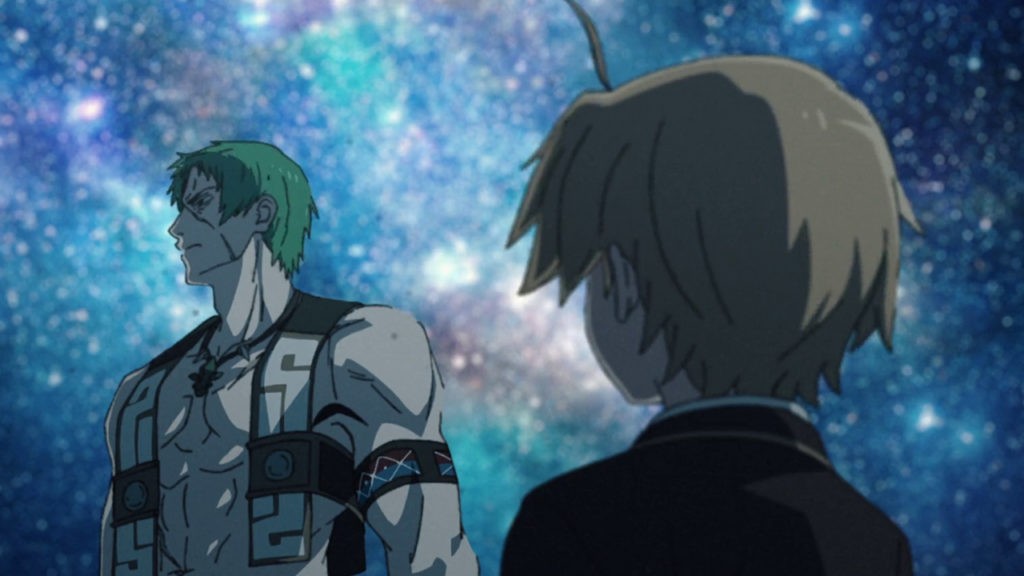
In addition, throughout the first season, characters are scattered who were either only mentioned but did not physically appear, or appeared briefly but shrouded their personalities and true motives in a veil of mystery. They add interest to 'Mushoku Tensei', as these Chekhov's guns have only been hung on the wall, but they are bound to fire in the future and have a significant impact on the development of the story.
The viewer gets involved in the series, by the way, also thanks to Rudeus. Together with the protagonist, we step by step explore the new world and immerse ourselves in this atmosphere. We are gradually introduced to the plot, characters, lore, and locations, so there is no information overload when diving into the fantasy reality. Everything is served in portions, which is very convenient for perception.
Plus, the transported character is placed in settings familiar to many, which also simplifies getting to know the world's structure. This is a classic sword and magic universe with medieval European architecture, disguised as a fairy tale. That is, in essence, nothing new at first glance, but as soon as you dig deeper, you discover bright distinctive features, original moves, and details. Something similar could be observed in , where the familiar world of magic from 'Harry Potter' over time became more and more different from the original source, but did not cease to be similar to it.
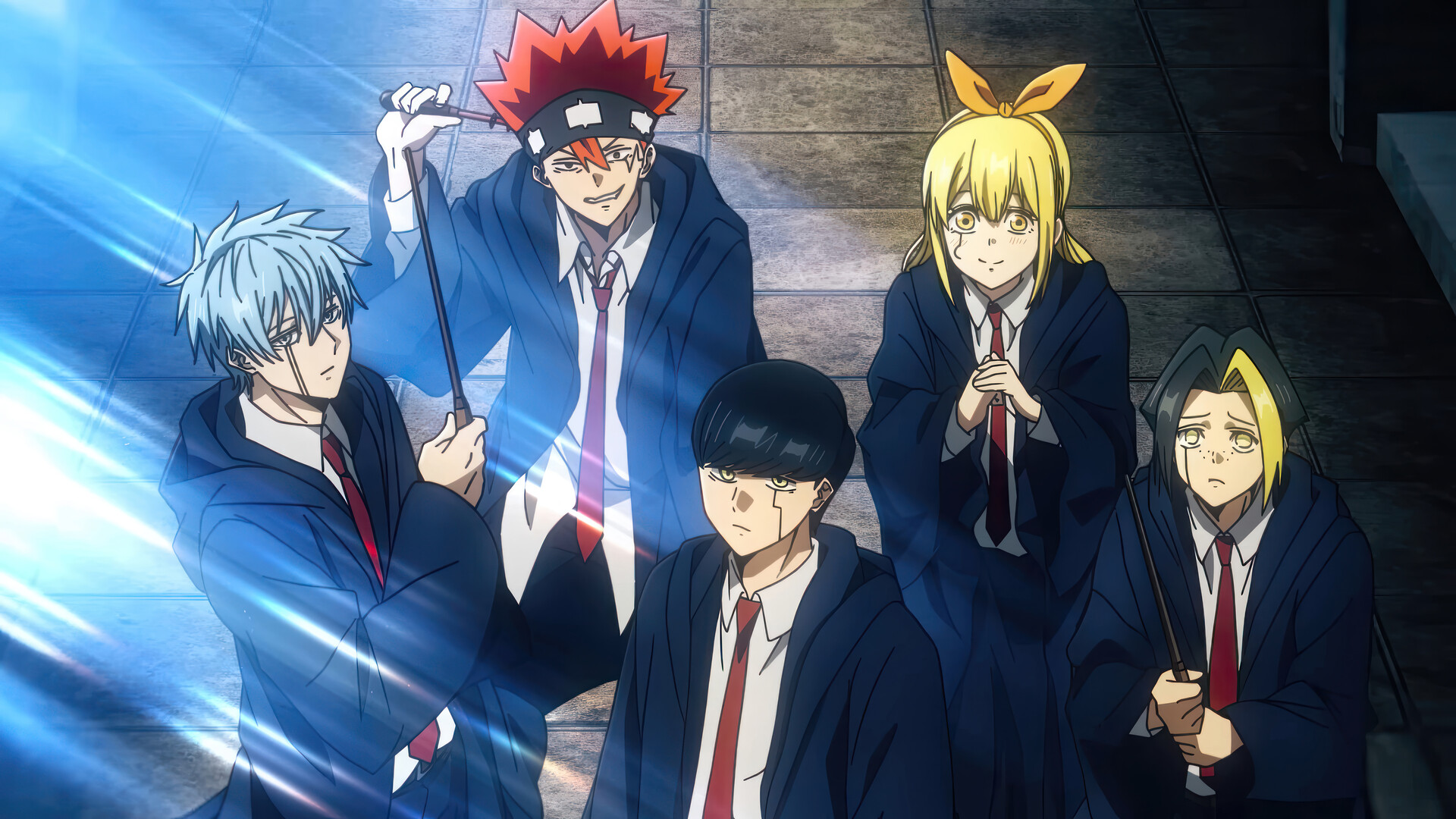
On July 1, the first season of the anime 'Mashle: Magic and Muscles' ended. The story of a naive musclehead who loves cream puffs could be an ideal option for immersing yourself in the genre for those who prefer
Open material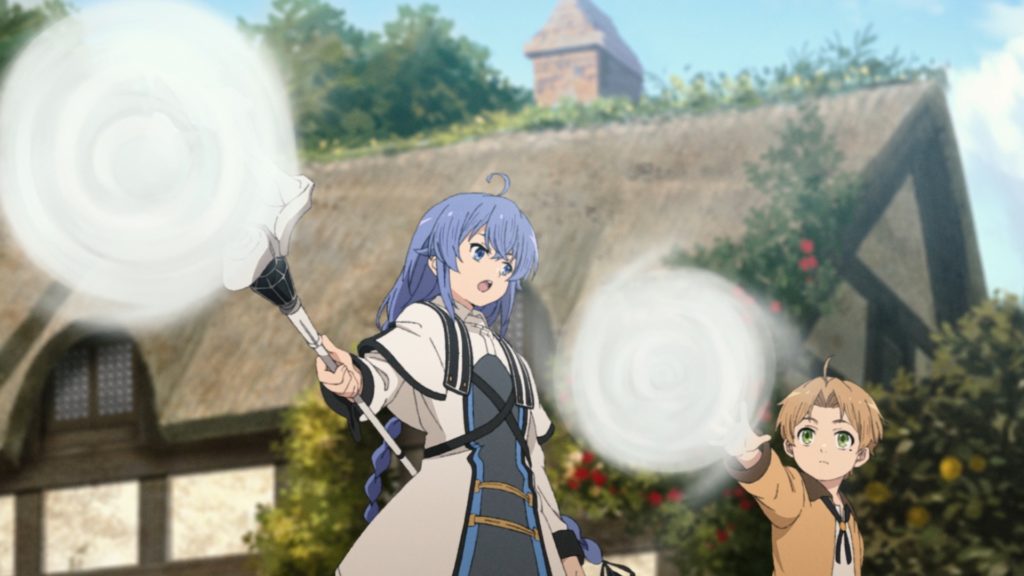
The title, by the way, is also made very high quality. The art is pleasant, and sometimes even impressively large-scale. There is no terrible 3D graphics, or it is simply unnoticeable, so there are no complaints about the visuals. You can't fault the music either, because all the melodies match the tone of the narrative. The openings are often woven into the plot of the episode and are always visually different (although in the second season, a constant one does appear). Inconsistency is also observed with the endings, because every now and then, during the final song and credits, the episode continues to play until the end of the runtime.
In the end, I would also like to note that, in contrast to its obscenity, 'Mushoku Tensei' raises a huge number of topics important for modern society. There is poaching, slavery, and racism with xenophobia. The show starts a conversation about the importance of family, the power of friendship, and the value of life, and also encourages fighting one's own shortcomings and psychological problems. Yes, Rudeus Greyrat is far from ideal and even somewhat of a negative character, but I am sure that he is only at the beginning of his heroic journey. Ahead of him lies a long and grandiose journey, full of obstacles and turning points, so in this road movie, all we have to do is watch what happens and enjoy the adventures of the protagonist, who was given a chance to start a new life in another world.
What's the Verdict?
'Mushoku Tensei: Jobless Reincarnation', although somewhat lewd and fanservicey, still stands out favorably among a bunch of its relatives. This is exactly the anime that perfectly demonstrates that isekai is not a stupid genre put on a commercial conveyor belt, but a quite serious story about growing up and a second chance at life. A story capable of raising a bunch of important relevant topics and showing the viewer that it is never too late to change your life, strive for self-development, learn something new, and become a better version of yourself. The main thing is not to get bogged down in your own consciousness and your own psychological problems, to overcome life's difficulties, to fight internal conflicts, and not to be afraid to grow up.
P.S. At the time of writing this material, the anime 'Mushoku Tensei: Jobless Reincarnation' consists of the first season, divided into two parts (11 and 12 episodes respectively), one special, and the first part of the second season, which includes 13 episodes (episode 0 + 12 main ones), so figuring out the viewing order should not be difficult.
P.P.S. In the last episode of the first season (the 23rd one) there is a post-credits scene, so don't rush to turn it off immediately.
Comments
0No comments yet.
Sign in to join the discussion.