
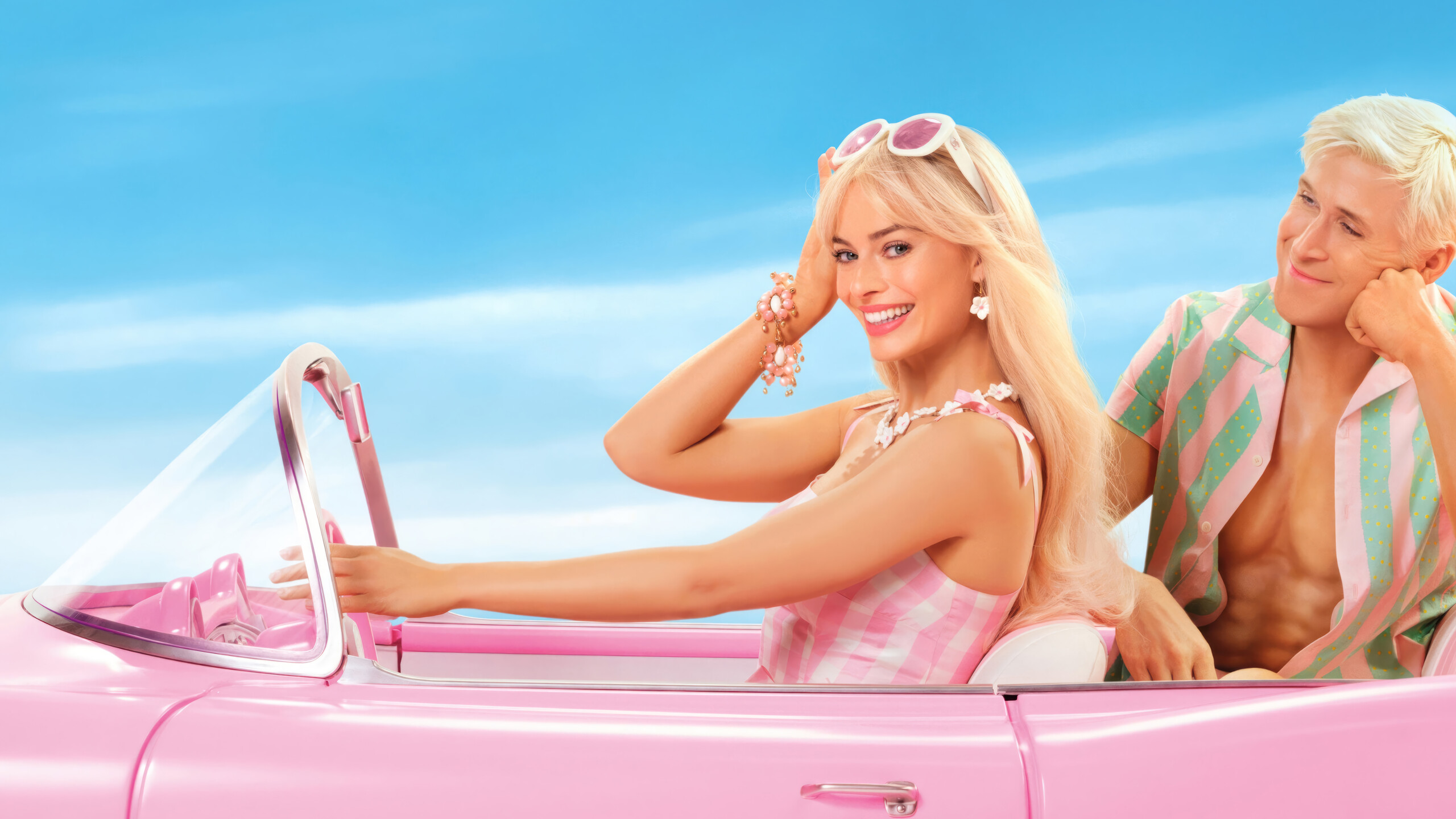
After several postponements, Warner Bros. has finally released their summer blockbuster 'Barbie' digitally, so now you can enjoy the film at home (ahem, and in theaters). We try to keep up with trends, so we watched the film too and are eager to tell...
July 21 was a real holiday in the world of cinema, as the global premieres of 'Barbie' and 'Oppenheimer' took place that day. Months before release, the internet began filling with various memes, which only fueled interest in the films. Eventually, this phenomenon was dubbed 'Barbenheimer,' and the competing movies raked in excellent box office returns (and haven't stopped yet), spoiling the earnings for the new 'Mission: Impossible' installment. 'Barbenheimer' can safely be called the cinematic event of the year, as it's unlikely anything will overshadow it.
During its theatrical run, 'Barbie' has amassed $1.4 billion, becoming the highest-grossing film in Warner Bros. history. Moreover, no female director had ever made a film with even a billion-dollar gross, but Greta Gerwig has changed that. Her film now proudly sits at #14 on the list of highest-grossing films of all time (and may climb even higher, who knows). These numbers are certainly impressive, but Warner Bros. isn't stopping there; they've already launched a promotional campaign to get the film nominated for the upcoming Oscars in all key categories. 'Barbie' is undoubtedly a hit, not just of the summer, but of the entire year. However, if you take off the rose-tinted glasses of marketing, you'll notice the film isn't as perfect as the doll herself.
What about the plot?
In Barbieland, every day is a perfect day. Barbies are in charge. They fly into space and build houses, they run the country and win all the Nobel Prizes, and they are completely convinced that thanks to them, things are just as good in the Real World, and every woman there achieves incredible heights. The dolls consider themselves feminist icons because if they can pilot a plane and sit on the highest governing bodies, then real women can too. Kens in Barbieland have far fewer rights—they serve as beautiful decorations and accessories to the women. In short, it's a utopian matriarchy with dancing, singing, and daily girls' nights.
But one fine evening, Stereotypical Barbie (Margot Robbie) starts having thoughts about death, something that never happened before. From that moment, her life begins to change. Bad breath appears, her plastic morning toast burns, her feet become flat, and—oh horror!—cellulite appears on her legs. The doll seeks help from Weird Barbie (Kate McKinnon), who survived rough play with her owner. Weird Barbie tells her about 'portals' to the Real World and the close connection between a toy and its owner. Now, Stereotypical Barbie must, using numerous changes of transportation, go to the United States, find the girl who played with her, and make everything go back to how it was.
Sounds complicated, but the fear of cellulite forces Barbie to say goodbye to a bunch of Barbies and set off. Already on the road, she finds out that Ken (Ryan Gosling), hopelessly in love with her, is hiding in the car. He is convinced that his help might be needed (you know, in case there's a beach, and he's an expert on beaches). Upon arriving in the Real World, the characters are shocked because everything is arranged differently from what the dolls imagined. Barbie is not a feminist icon, and women don't work in construction. This state of affairs is very disappointing for Stereotypical Barbie, but Ken clearly feels comfortable and hastens to study patriarchy, which, in his opinion, Barbieland needs so badly.
I'm a Barbie Girl, I love 'Dirol'
Mattel (the toy manufacturing company) had been trying to bring 'Barbie' to the cinematic world since 2009. Over 14 years, the project changed several studios, a bunch of directors, screenwriters, and lead actresses, but eventually, the rights went to Warner Bros., and the script was handled by a family duo consisting of Greta Gerwig (who also took the director's chair) and Noah Baumbach. It is they who led the film to such stunning success, although there are some questions about the script, of course.
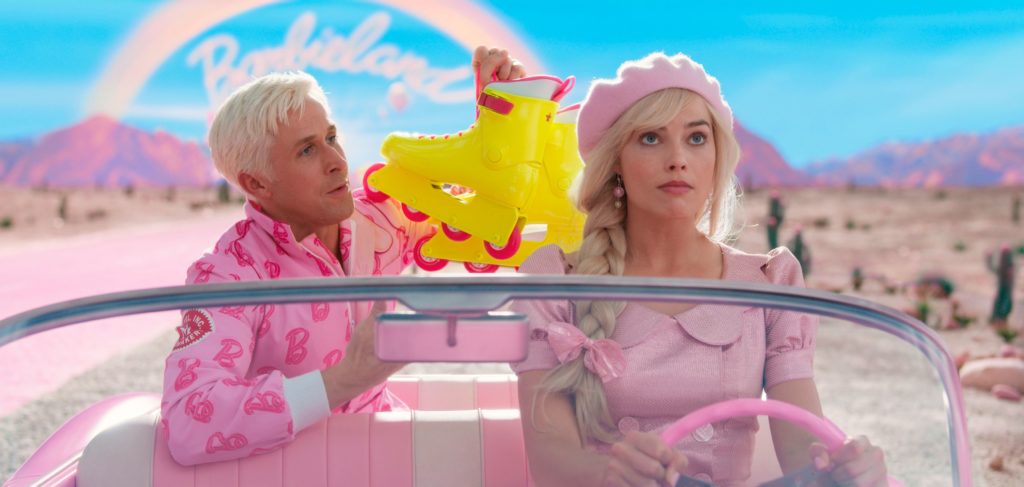
First, the film fails to properly develop Barbieland. It's completely unclear how it was formed and how it is connected to the Real World. Moreover, getting into it is not a problem at all, because you just need to roller-skate along a certain beach, and then intuitively switch to other transportation.
Second, the connection between the Barbies and their owners is explained very poorly. If absolutely every doll is linked to a real person, then Barbieland has a suspiciously small population. Plus, nothing is explained about the dolls' visions. At one point, Margot Robbie's character simply sits down at a bus stop, closes her eyes, and for some reason starts watching the memories of her owner. A very convenient ability for the plot, I must say.
Also, the side storylines in 'Barbie' are very weak. While the script manages the main plot reasonably well, the subplot isn't particularly interesting to watch. The relationship between the mother (America Ferrera) and daughter (Ariana Greenblatt), for example, is resolved with a snap of the fingers. If you look closely, you can see on screen how the girl instantly becomes more loyal and understanding simply because the script demands it.
As for the main story, it's the ending that suffers the most, seemingly borrowed from 'Pinocchio'. However, here it feels extremely forced, as the character hasn't really changed much over the course of the film. She was a flawlessly stunning Margot Robbie, and she remains one (on this note, the creators inserted a completely inappropriate meta-remark that breaks the fourth wall). Over two hours of existential crisis, nothing happened that could have turned the character's inner pink world upside down and led to such an ending, though maybe I'm underestimating cellulite.
It was an obvious fact that 'Barbie' in Greta Gerwig's eyes would turn into a feminist film, but this theme in the movie came across as crude, straightforward, and incomplete. The heroines chant formulaic slogans and portray men as idiots. There isn't a single positive male character in the film because they are all forced into caricatured sexist frames. But that's not even the point. From the queen of indie cinema, you'd expect something more subtle and witty, not a simple set of clichés.
Perhaps the director thought that the mass audience (and 'Barbie' was definitely made for a wide audience) wouldn't understand clever moves and deep creative ideas, so she had to provide everything in the most chewed-up form. It's a pity, because the project could have been an exemplary showcase of socially charged fem-movies with subtle mockery of men. However, it can't be said that the film has no positives at all, because that would be a bold-faced lie.
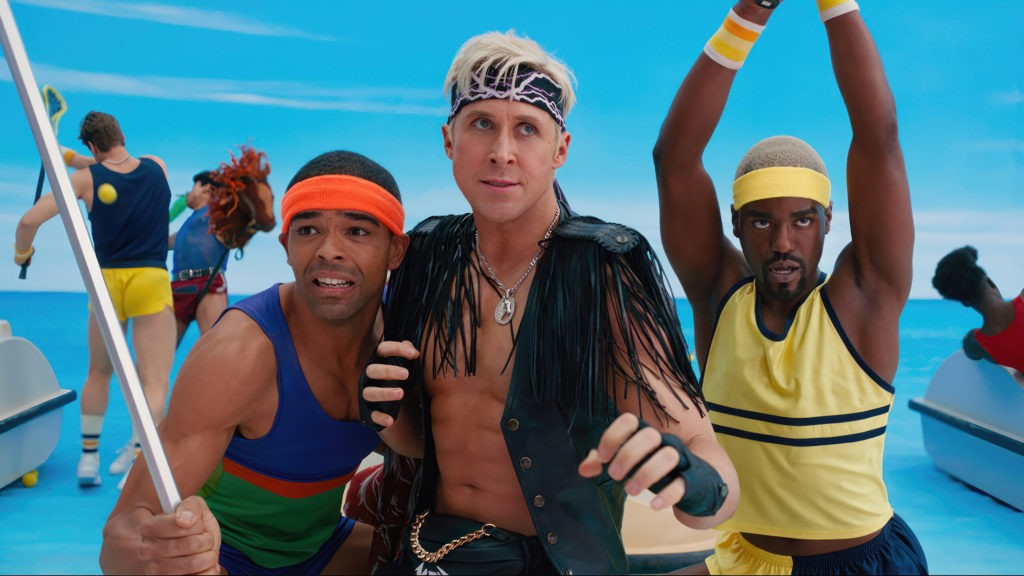
And I'm Barbie Ken, not a rocker and not a cop
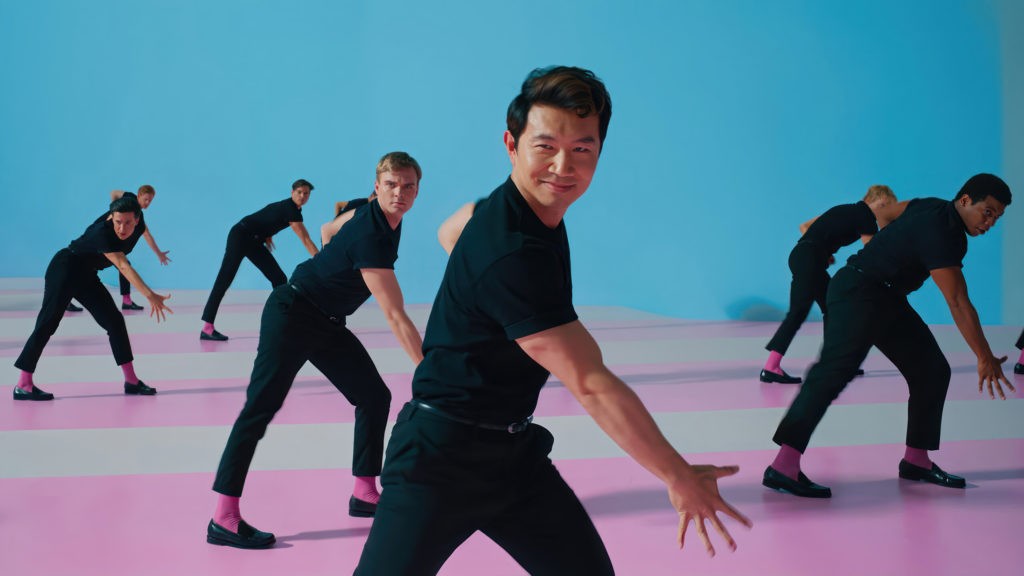
First of all, I'd like to praise all the actors who played their roles perfectly and fit wonderfully into the doll-like Barbieland. The film is a veritable hotbed of big names, too many to list. Here you'll find many people's favorite Scott Pilgrim, Michael Cera, stars of 'Sex Education' Shuti Gatwa and Emma Mackey, a superhero (Simu Liu) with a supervillain (Kingsley Ben-Adir) from Marvel, the singer Dua Lipa, and even someone resembling Tarzan (Natasha Korolyova's husband, not the book character), John Cena, makes a cameo appearance.
But naturally, the focus is on Margot Robbie and Ryan Gosling. She is the perfect Barbie, he is the perfect Ken, and there's no point arguing about that. It's an axiom, not a theorem. Any criticism of these two shouldn't even be taken seriously, because it's simply impossible to imagine better candidates for the roles. Plus, they acted brilliantly. Sometimes Gosling might overdo the irony on his character, but that doesn't matter at all because his Ken is magnificent and funny.
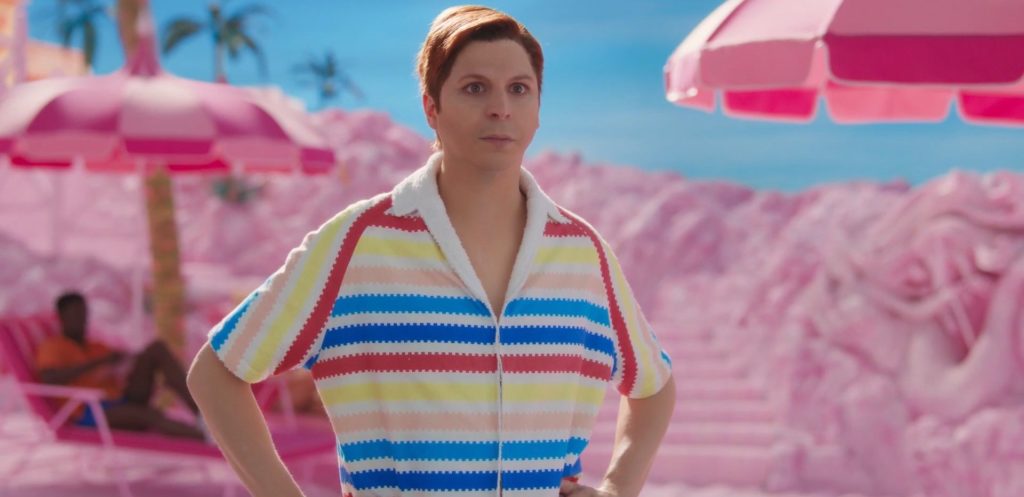
By the way, the film's humor is also in good shape, aside from the overly heavy digs at men mentioned earlier, and the very gentle and unnatural self-irony of large corporations. 'Barbie' can indeed make you laugh, and not with the dumbest humor. For instance, it was pleasantly surprising how the creators playfully adapted the scene with the pill selection from 'The Matrix'. Speaking of which, the film is full of references, which is definitely a plus. The movie even starts with a parody of Kubrick, clearly indicating that viewers are in for a rollicking comedy over the next couple of hours.
Another strong point of the film is the soundtrack, which includes energetic and memorable tracks. The headliner of the album is undoubtedly 'I'm Just Ken' performed by the dazzling Ryan Gosling. The song is a one hundred percent hit that gets stuck in your head for a long time (well, it's a good thing Gosling didn't die at the end of 'Drive', or we wouldn't be listening to such a banger now), and that's considering that the tracklist includes artists like Tame Impala, Nicki Minaj, Khalid, Billie Eilish, and Dua Lipa herself.
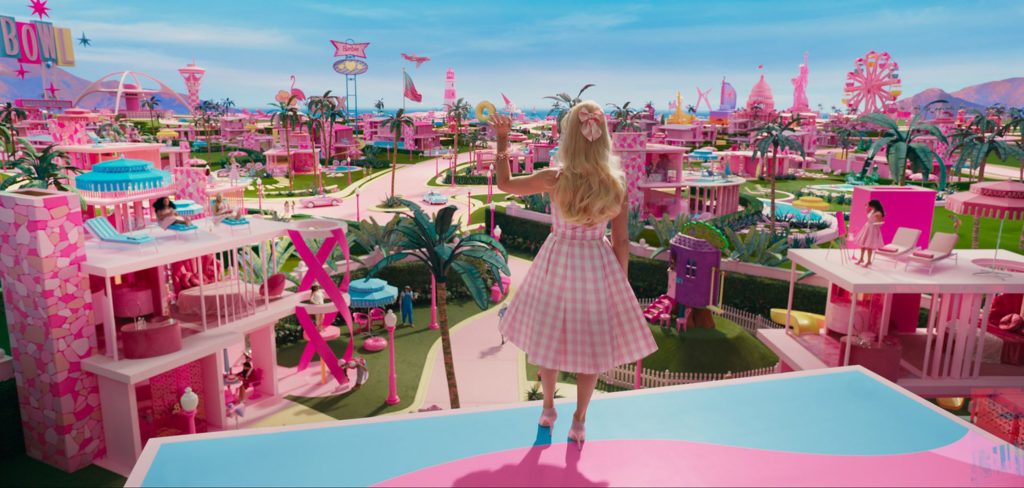
However, the main achievement of 'Barbie' is its magnificent visual style, which is impossible not to fall in love with. It's some kind of nostalgic pink madness. For such work on the sets, the film and production designer Sarah Greenwood are at least guaranteed an Oscar nomination (if not the statuette itself). This meticulous approach to recreating the world not only helps viewers believe that Barbieland is a massive plastic toy but also to understand that the doll world is stuck in the time when the first Barbie model was released, namely 1959. Therefore, Gerwig almost entirely eschewed CGI and filmed on real sets, using the cinematic possibilities of that time to perfectly convey the atmosphere of the story about dolls.
The film also has great fan service, if you can call it that. All the characters here have a real doll prototype once produced by Mattel. For example, the film features the perpetually pregnant Midge (Emerald Fennell), a Barbie with a monitor on her back and a camera in her chest (Mette Towley), Sugar Daddy Ken (Rob Brydon), and many others (during the credits, you can check out a small catalog of products).
Incidentally, the film, surprisingly, doesn't devolve into a two-hour Mattel commercial, but it does set aside a few minutes for a Chevrolet commercial during the chase scene. The cars here always drive with their logos facing the camera, so the only thing missing is for Helen Mirren, who serves as the narrator, to talk about the advantages of a particular model during that moment. What, did you think that only Russian cinemas insert ridiculous ads? No, Hollywood also knows how to make them inappropriate, as it turns out.
Finally, I want to mention another cameo by a person without whom the film 'Barbie' simply wouldn't exist. The daughter of the toy's creator Ruth Handler, Barbara Handler, who became the prototype for the first doll, appears in the movie and crosses paths with Margot Robbie's character in one of the scenes. So, in the film, the Real Barbie meets her cinematic incarnation, and trust me, it's a very touching scene.
What's the bottom line?
'Barbie' is a vivid (bright pink) example of how a marketing campaign in symbiosis with memes propelled a film to incredible success. Did the film deserve all the laurels? That's debatable. Did it turn out bad? More no than yes. Could it have been better? Absolutely.
Only one thing can be said with certainty: Warner Bros. is currently actively pocketing the profits and brainstorming how to expand the Barbieverse (or the Kenverse, whichever you prefer). Even before the premiere, there was talk of a spin-off about Ken played by Gosling (the likelihood of such a KEnematic universe appearing has significantly increased), and now we can also assume that both a sequel, a prequel, and some kind of Barbie-sequel will come out.
By the way, subscribe to our Telegram channel 'After the Credits' (here's the link). There we post posters, trailers, and various interesting and fun news from the world of cinema.
Comments
0No comments yet.
Sign in to join the discussion.