
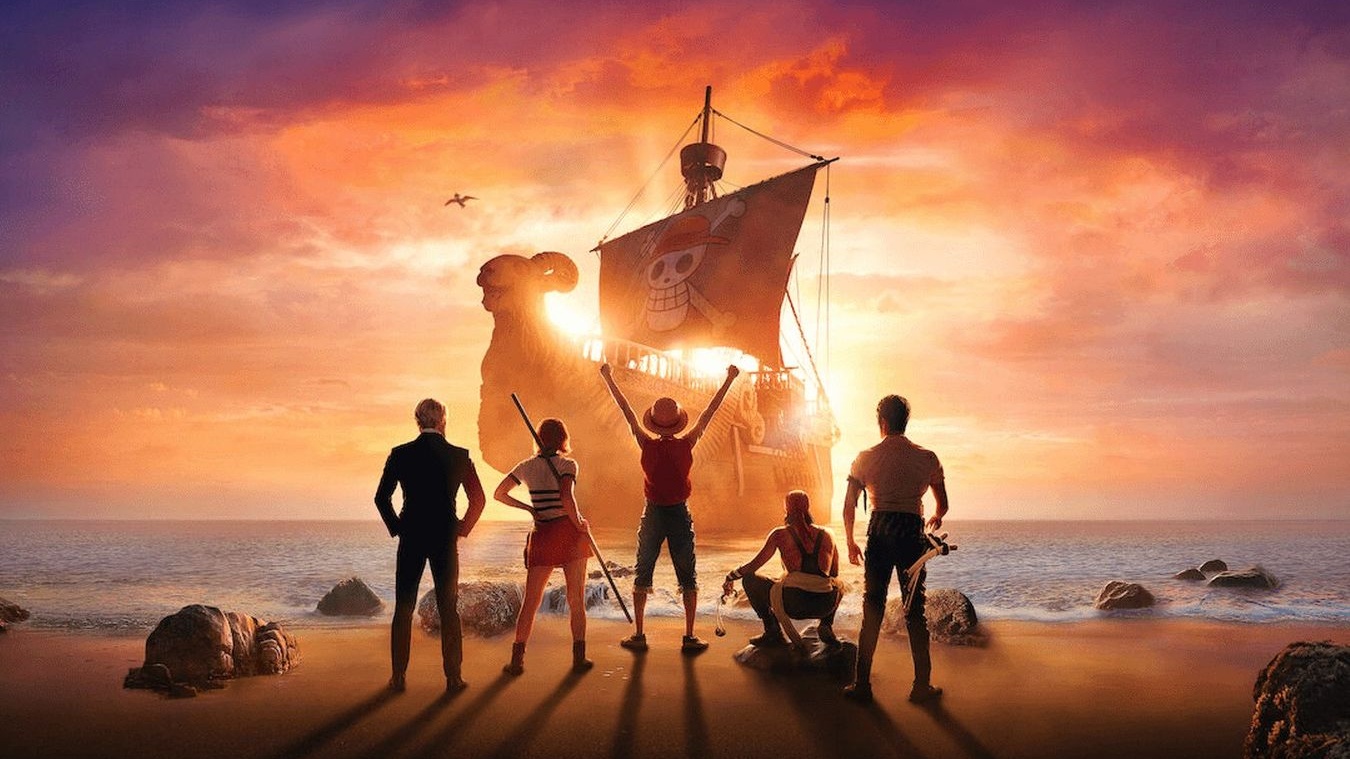
On August 31, Netflix released a live-action adaptation of Eiichiro Oda's legendary manga 'One Piece'. Fans around the world eagerly awaited the premiere of the project and kept their fingers crossed that the 'tudum' service would not ruin (as it oft...
To understand the scale of expectations for the live-action adaptation, you just need to look at the numbers. The original manga has been running for 26 years (since 1997 to the present day) and has 1091 chapters (at the time of writing). The story has spanned over 100 volumes, with sales exceeding half a billion (!!!) copies. It is the best-selling manga in history. The anime, in turn, has been running for 24 years (since 1999) and already has 1074 episodes (at the time of writing), so the 'One Piece' fandom is truly enormous. For example, the recent premieres of episodes 1071 and 1072 crashed Crunchyroll's servers for two weeks straight due to the influx of people wanting to watch the title. And this was not the first time.
Now imagine the responsibility Netflix decided to take on by taking on the adaptation. And it's not just about the colossal fan base, but also about the story, which clearly cannot be squeezed into a couple of seasons, and the scale of the world, whose atmosphere needs to be preserved. This is difficult and delicate work, where the creators had to walk a fine line to both attract newcomers and not anger the old-timers.
Given the 'tudum' platform's sad experience with anime adaptations (see 'Death Note' and 'Cowboy Bebop'), everyone had quite justified concerns. But the streamer did not give up; instead, it accepted the responsibility and, importantly, invited manga artist Eiichiro Oda to participate in creating the show. The master agreed on the condition that, as he put it, until he personally approved the result, the series would not be released. So since 'One Piece' has come out, it means Oda is satisfied. And, you know, there is plenty to be satisfied with.
What's the story?
Wealth, fame, and power. The Pirate King, Gold Roger (Michael Dorman), managed to conquer these heights... However, the Marines captured him and decided to execute him publicly in the town square of Loguetown. Before his death, someone from the crowd asked the Pirate King where he had hidden his treasure, the One Piece, to which Roger did not give a clear answer but merely called on all those who wished to find the treasure to set sail and try their luck there. Thus began the Great Pirate Era.
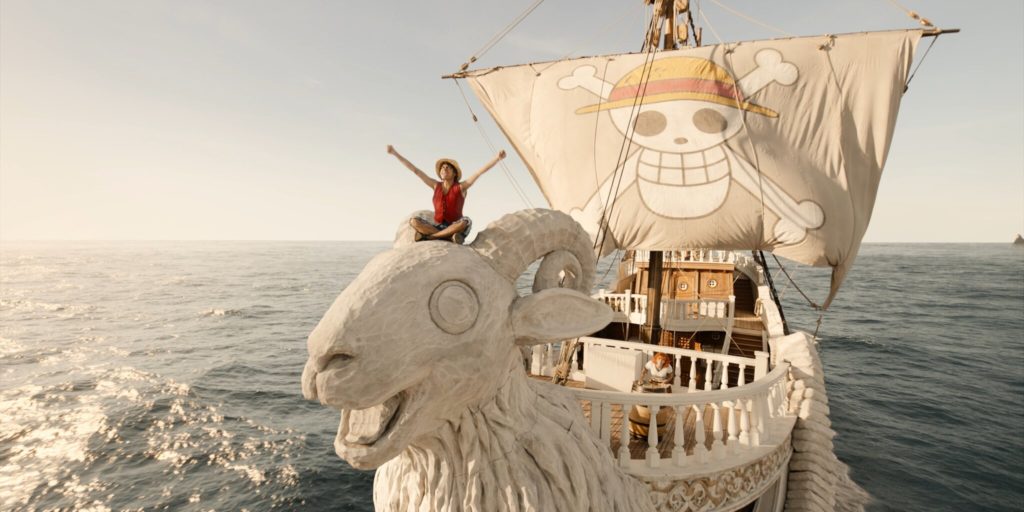
22 years later, a young boy in a straw hat named Monkey D. Luffy (Iñaki Godoy) outfits a boat and leaves his home village, confident that he will find the One Piece and become the new Pirate King. He sets course for the Grand Line (it is there, presumably, that the coveted treasure is hidden). True, the guy is all alone in a little boat and doesn't even know where to sail, but this adventurer only needs a dream; fate will provide a loyal crew, a ship, a compass, and the right map. The main thing is a fair wind and the spirit of adventure.
'One Piece' is real!
After watching 'One Piece', one can safely say that Netflix has lifted the curse of bad anime adaptations, because calling the adaptation of Eiichiro Oda's manga unsuccessful would be a stretch. It is, of course, far from ideal, but certainly not terrible ('Dragonball Evolution' is the undisputed champion in that category). The series has both pros and cons, and, to be honest, there is a lot to say about it, so you'll have to stock up on rubber-gum patience while reading.
First, I'd like to clarify that the show released by the 'tudum' streamer is a genuine adaptation. Something in the spirit of comic book movies. That is, the screenwriters had the anime and manga before their eyes—more likely the manga, judging by Sanji's (Taz Skylar, resembling Eminem) flashback and the incident with Zeff (Craig Fairbrass)—from which they took the main story, characters, their personalities, and goals, while the internal plot was simply rewritten and adjusted to fit the serial format of one season of 8 episodes. In essence, the project encompassed the first 45 episodes of the anime (even slightly more, considering the additional storyline from later events). And this decision was more than correct, because adapting 'One Piece' the way the anime does is simply physically impossible.
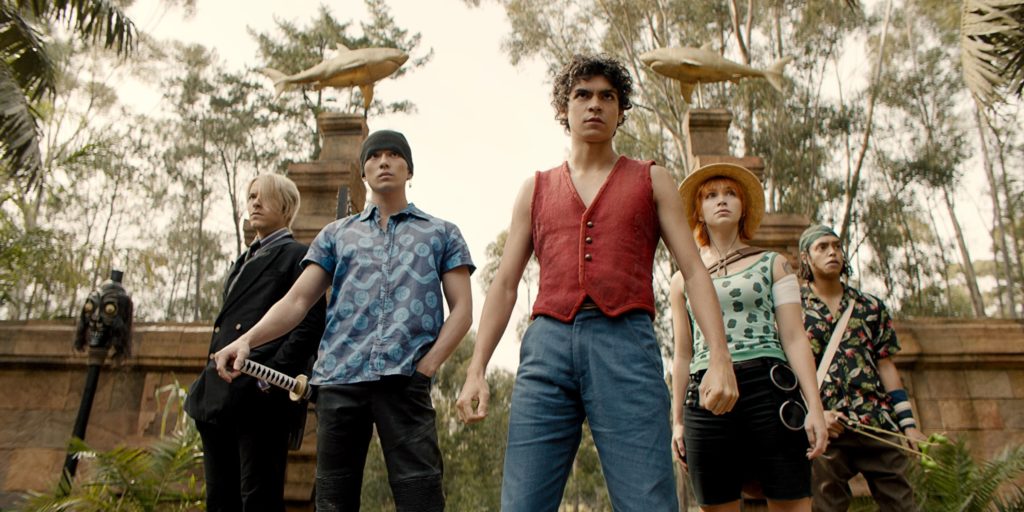
Firstly, transferring the events of a thousand episodes into a series with live actors would take an enormous amount of time. One season sometimes takes about two years to prepare, so even the youngest actors would have time to age.
Secondly, recreating such a grandiose world with all its islands, cities, and villages would require a ton of money. No, literally. The budget would have to far surpass that of . Even considering that Netflix has such resources, why would they pour practically everything into creating one show? It's simply an unprofitable venture (and even more reckless than getting into a barrel during a whirlpool).
On October 14, the first season of one of the most anticipated series of autumn, 'The Lord of the Rings: The Rings of Power', concluded on Amazon Prime Video. Did Jeff Bezos' streaming service manage to...
Open materialAnd thirdly, it's unlikely to convey the hyperbolic emotions the way the original does. All the hearts in Sanji's eyes and the angry faces of characters filling half the screen would look ridiculous. It would turn into a very strange 'The Mask', where absolutely all the characters are making faces.
It is for these main reasons that the creators made changes. The story of 'One Piece' was adapted to Hollywood standards and packed into an eight-hour narrative, so even those who know the source material by heart have a chance to be surprised. Of course, the sequence and final result do not differ from the manga and anime, but watching exactly how the heroes achieve their goal is quite interesting, because the internal plot of the arcs is almost entirely original.
However, these changes did not come without drawbacks, because to cram the events of almost fifty episodes into eight, the scissors had to be used productively, so many characters were not even shown. Simply put, where the anime spends 20 hours, the series has only 8. Oda could afford to reveal the tragic story of a random dog so that the reader would cry, while the live-action adaptation naturally abandons the story, showing the dog only for a couple of seconds. And it's fine when heroes and events that don't affect anything are sacrificed, but when a clearly defined motivation turns into nonsense, it becomes a bit frustrating.
There is one scene in 'One Piece' that clearly caught the attention of many. This is the moment when a little girl brings bounty hunter Roronoa Zoro (Mackenyu) her chocolate onigiri. The thing is, in the manga, Zoro saved this little girl, so she brought the treat to him right where he was serving his punishment, but here, Roronoa walks into a bar with a bag containing a dismembered body, and the little girl just decides to treat him to her cooking. Such a good motivation turned into a somewhat absurd and unjustified situation.
Also, due to the script (and not only) cuts, the universe itself suffered. In the manga and anime, the world of 'One Piece' is another character. It helps characters develop, demonstrates incredible beauty, and holds many secrets and mysteries. Here, due to the accelerated plot and limited resources, many locations and secondary characters were cut out. Yes, it doesn't globally affect the story, but sometimes the character development works much worse. This is especially noticeable in some flashbacks of the main five, and poor Usopp (Jacob Gibson) suffered the most, getting two short memories instead of a dramatic and touching story (and it's also a pity they didn't show the rubber idiot being carried away by a giant bird).
Probably, comparing the adaptation with the manga is not entirely correct, but it's also impossible to completely deviate from the source material. Knowing that the original has a huge world that is simply easy to draw, and seeing the closed, limited sets in the series (for the sake of budget), dissonance occurs every now and then. Ideally, of course, while watching, you should distance yourself as much as possible from the anime and manga (it will be difficult, but it's not easy for the Straw Hats to follow their dream either) and consider the project as 'One Piece' from another universe. Nevertheless, the creators left a bunch of Easter eggs for fans in the series, referencing the original and hinting at future events. Sometimes the picture even splits into canonical frames straight from the pages of the work, which looks very cool and gives the show the right mood and a sense of comic-book-ness (I would have liked even more of such moments).
Let's start looking for a crew. I want at least ten!
Speaking of 'One Piece' in terms of execution, there are some dips. Most likely, the lion's share of the budget went into building the sets (the 'Baratie' restaurant is simply a song, as is its entire arc), so the graphics are not at the level many viewers are accustomed to. You shouldn't expect special effects on par with the best of Marvel here, and this point is quite capable of alienating part of the audience who might find such visuals a bit wild.
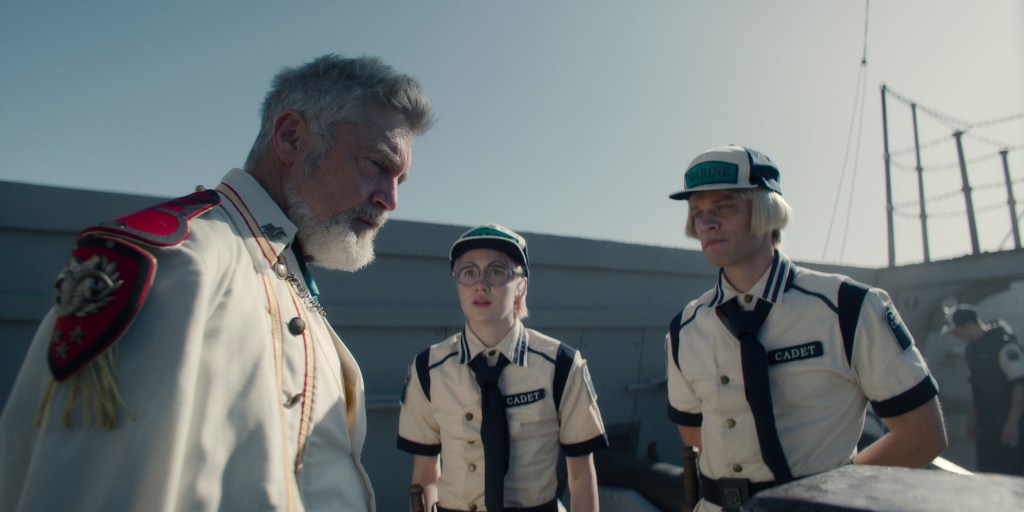
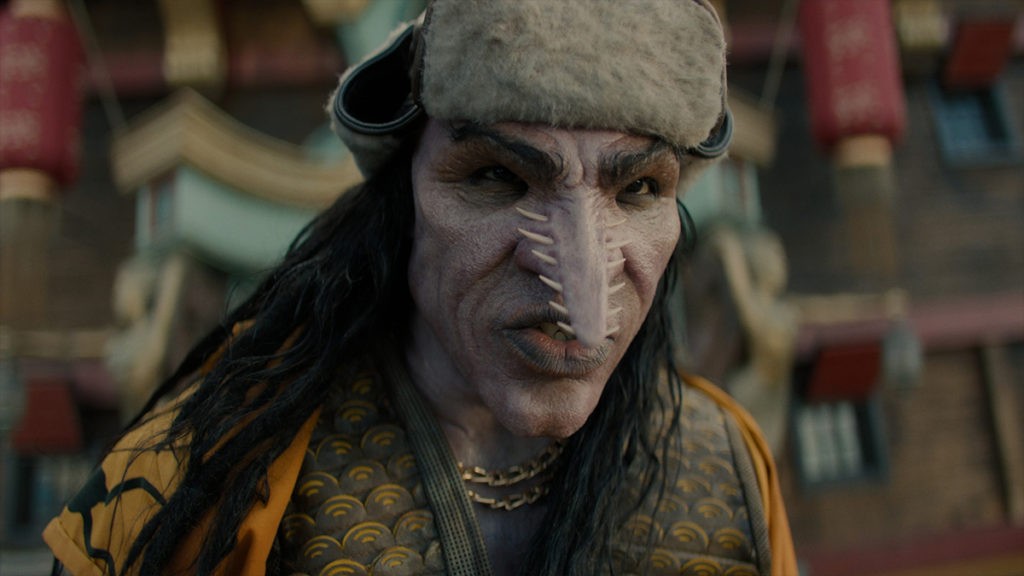
Ideally, to create unusual characters, they should have used actors in symbiosis with graphics (either through motion capture suits or with productive post-production work), because some of them look quite childish. For example, Nezumi—a Marine captain—is a man with rat whiskers and ears, but in the live-action adaptation, they simply glued on whiskers and put a cap with ears from a plush toy on his head, making him look like a children's animator or a cosplayer at a festival. The same applies to all the fish-men, who were made up with prosthetics. They look quite cringey and unnatural (one of them even resembles a painted Oleg Mongol). While watching, it can easily seem like you're watching a fan film rather than a big project from the world's most popular streaming service.
There is also a complaint about the weapon inventory. Zoro's swords, Kuro's (Alexander Maniatis) blades, Arlong's (McKinley Belcher III) saw-teeth, and other inventory look like pure props, so you don't really believe in the danger of the weapons. On top of that, the characters hardly inflict any injuries on each other in the show, which is also a shame, because their fights should be quite fierce, and the absence of wounds dispels the sense of threat. This most of all works against Luffy's opponents.
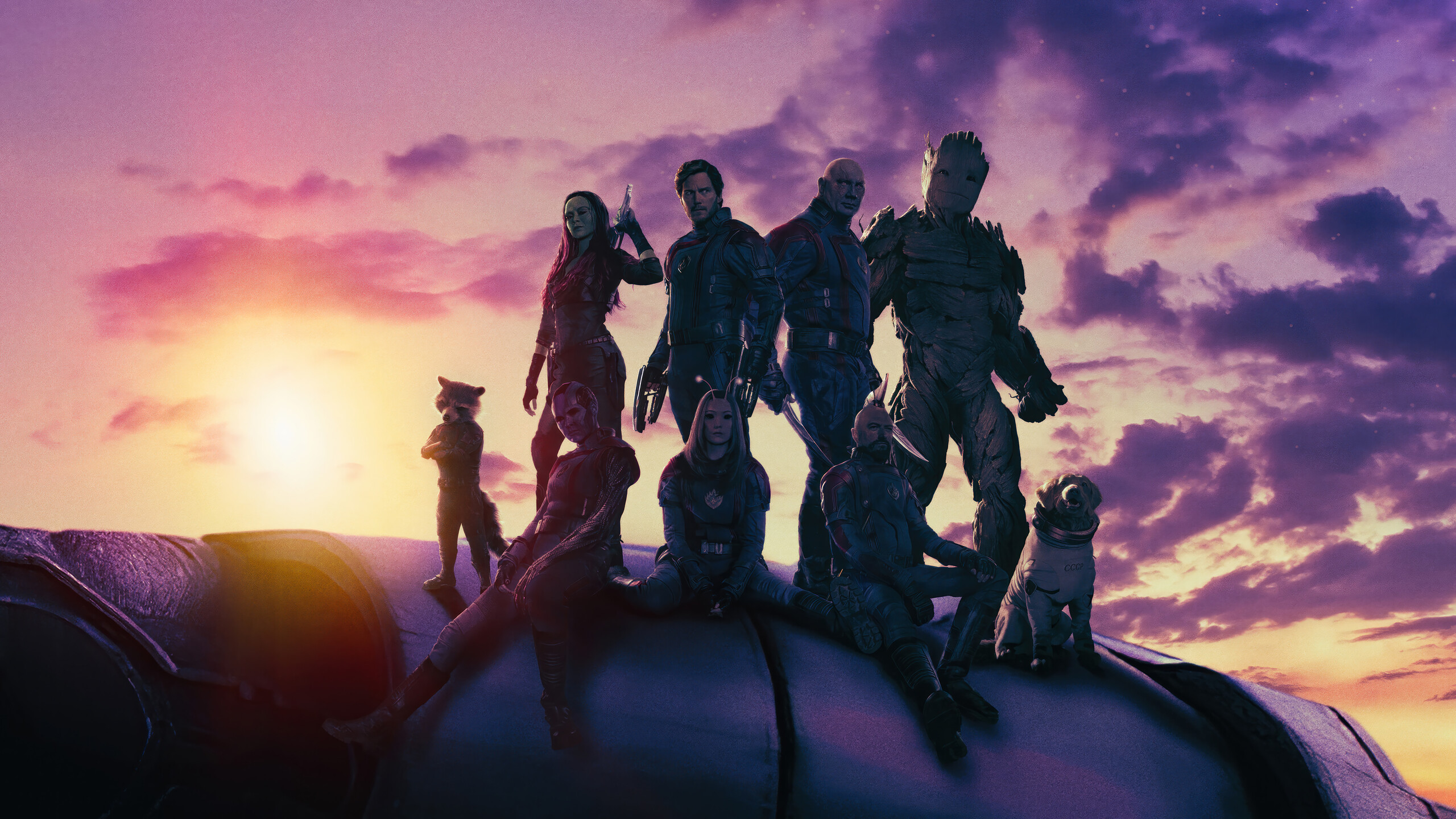
Otherwise, 'One Piece' looks quite decent, but I want to believe that the graphics will be improved in the future, as in the following seasons (given the excellent start and set records, the show will undoubtedly be renewed) there will be even more strange characters, and one of them will even join the crew, and it is precisely this one that I would like to see created with the help of graphics, similar to Rocket from . At the same time, I don't mean to say that everything in the first season is bad. No, there are excellent moments and visual ideas here, like the floating wanted posters or the different logos (which many will recognize) for each episode.
The third 'Guardians of the Galaxy' is in theaters (and in unofficial Russian ones too) — a farewell gift from James Gunn to Marvel fans before fully diving into work on the cinematic universe...
Open materialAs for the actors and their characters, there were no downsides here. That is, of course, if you don't take into account the terrible acting of the children. Almost all the younger versions of the main five look extremely unnatural. They seem not even to understand that they are starring in a big project. It feels like the children are at a costumed matinee being filmed on camera, and they themselves are on the verge of laughing in the frame and one step away from starting to make faces. To be honest, the best here is young Sanji (Christian Convery), who, by the way, for some reason hasn't lost a single pound after spending 85 hungry days on the island, but the kid at least tries, unlike some.
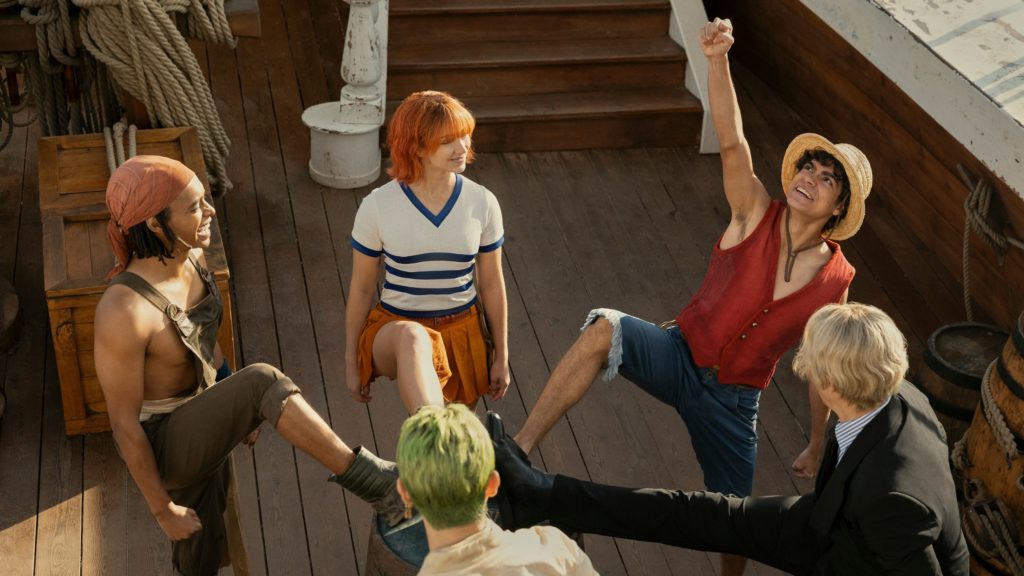
But all the other actors performed quite decently. Zoro, though, looks like an idol who escaped from BTS, went crazy, and says he cuts people, but that can be accepted. The rubber idiot Luffy is well-developed. Nami (Emily Rudd) is also good. Usopp, even though he sometimes starts a dialogue with the word 'Yo' like a true black man, but even with a bad childhood flashback, they managed to develop him. And Sanji turned out to be the most charismatic of the entire Straw Hat crew. Over 8 episodes, the creators managed to achieve the right chemistry and convey the characters' personalities, and thanks to this, watching the story becomes much more enjoyable.
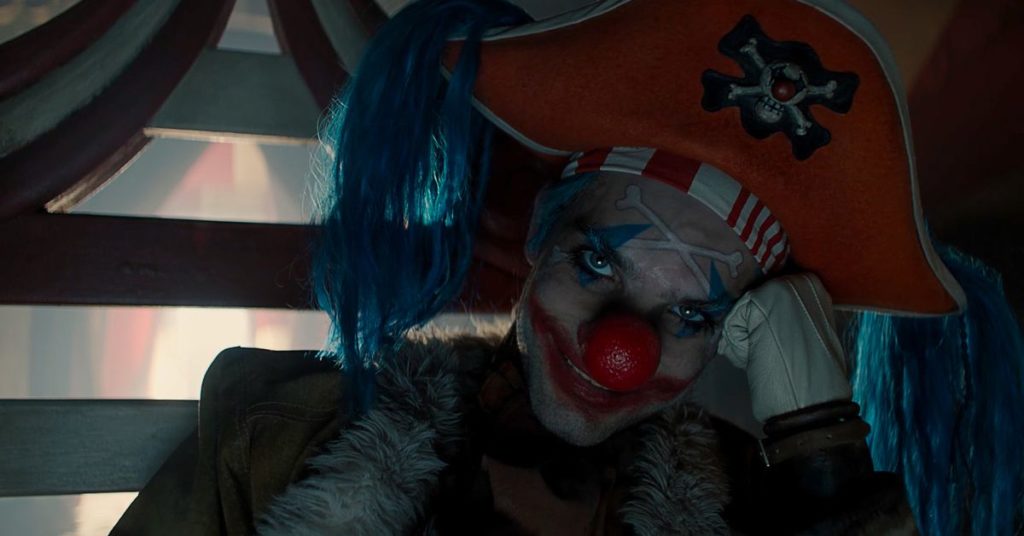
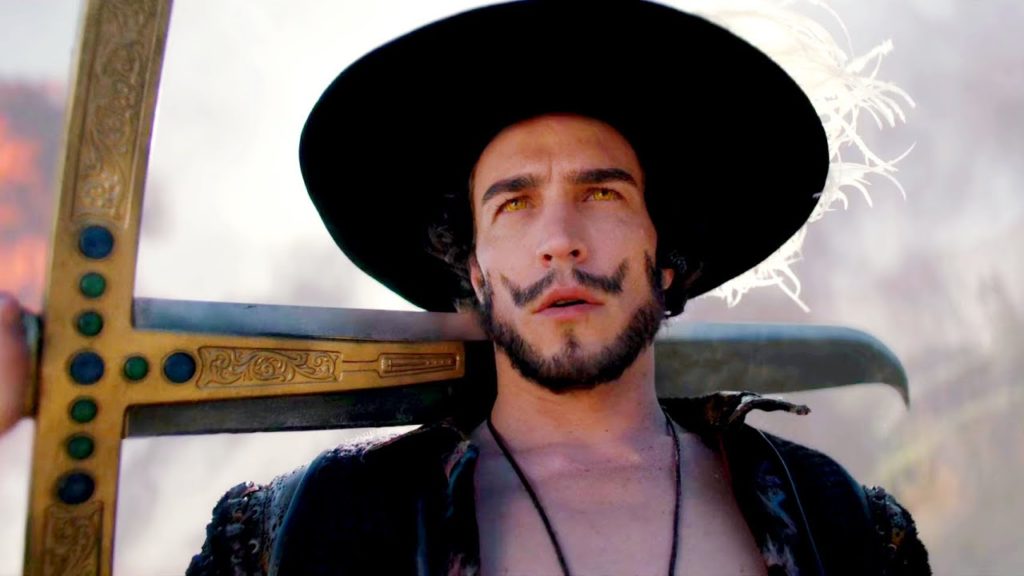
There were also bright supporting characters. Firstly, I want to highlight the duo of Koby (Morgan Davies) and Helmeppo (Aidan Scott). A decent connection developed between the guys over the season, so it was interesting to watch their development. Secondly, one cannot fail to mention one of the Shichibukai—Dracule Mihawk (Steven John Ward), who seems to have stepped straight from the pages of the manga into the series. And thirdly, the star of the show can definitely be called Buggy the Clown (Jeff Ward), who throughout the season delighted with his antics in the style of the Joker and filled all the space with his charisma as soon as he appeared on screen. He truly managed to stand out, be remembered, and leave a very pleasant impression.
The other characters, like head chef Zeff, Vice Admiral Garp (Vincent Regan), or the captain of the Red Hair Pirates, Shanks (Peter Gadiot, who in this role resembles a binge-drinking Ryan Gosling), did not stand out with anything special, so there isn't much to say about them. In their roles, they looked quite tolerable, and that's already a lot.
And finally, I'd like to talk a bit about the music. Sonya Belousova and Giona Ostinelli (apparently, the witcher's minted coins are not enough for them, and they decided to find pirate treasure) wrote excellent compositions accompanying the heroes. These soundtracks have the spirit of piracy, and besides, the composers did not forget about the fans and asked them one of the important questions: 'You wanna be my friend?' I'm sure thousands of fans answered 'We are, we are on the cruise! We are!'
What's the bottom line?
The 'One Piece' show from Netflix has definitely succeeded. It didn't come without its drawbacks, of course, and there is still work to be done, but at the moment, it is probably the best live-action adaptation of an anime and manga that exists. Naturally, it won't withstand all comparisons with the original, but there's not much point in comparing them anyway. The creators treated the source material with respect and love and tried to rewrite the events as carefully as possible, leaving the most important things unchanged. From the numerous references to future events (for example, to 'Baroque Works'), it can be understood that Netflix intends to play the long game, which gives hope for subsequent seasons, which, I remind you, are now only a matter of time. And then they might increase the budget to rid viewers of the sight of yet another Arlong.
Probably, some will think that the series is a digest or a speedrun of the 'East Blue' saga, but the events could not have been transferred any other way. The anime genre is too complex for live-action cinema. One can argue for a long time about the necessity of adapting it at all, but today it is no longer just a genre; it is a huge cultural layer that includes a sea of interesting content, an ocean of fans, and, let's be honest, an immense pile of money. And now that the 'tudum' streamer has managed to make a decent live-action adaptation, all of Hollywood (including Netflix itself) will rush into this sea to look for similar treasure. Thus begins the Great Pirate Era.
By the way, subscribe to our Telegram channel 'After the Credits' (here's the link). There we post posters, trailers, and various interesting and funny news from the world of cinema.
Comments
0No comments yet.
Sign in to join the discussion.