

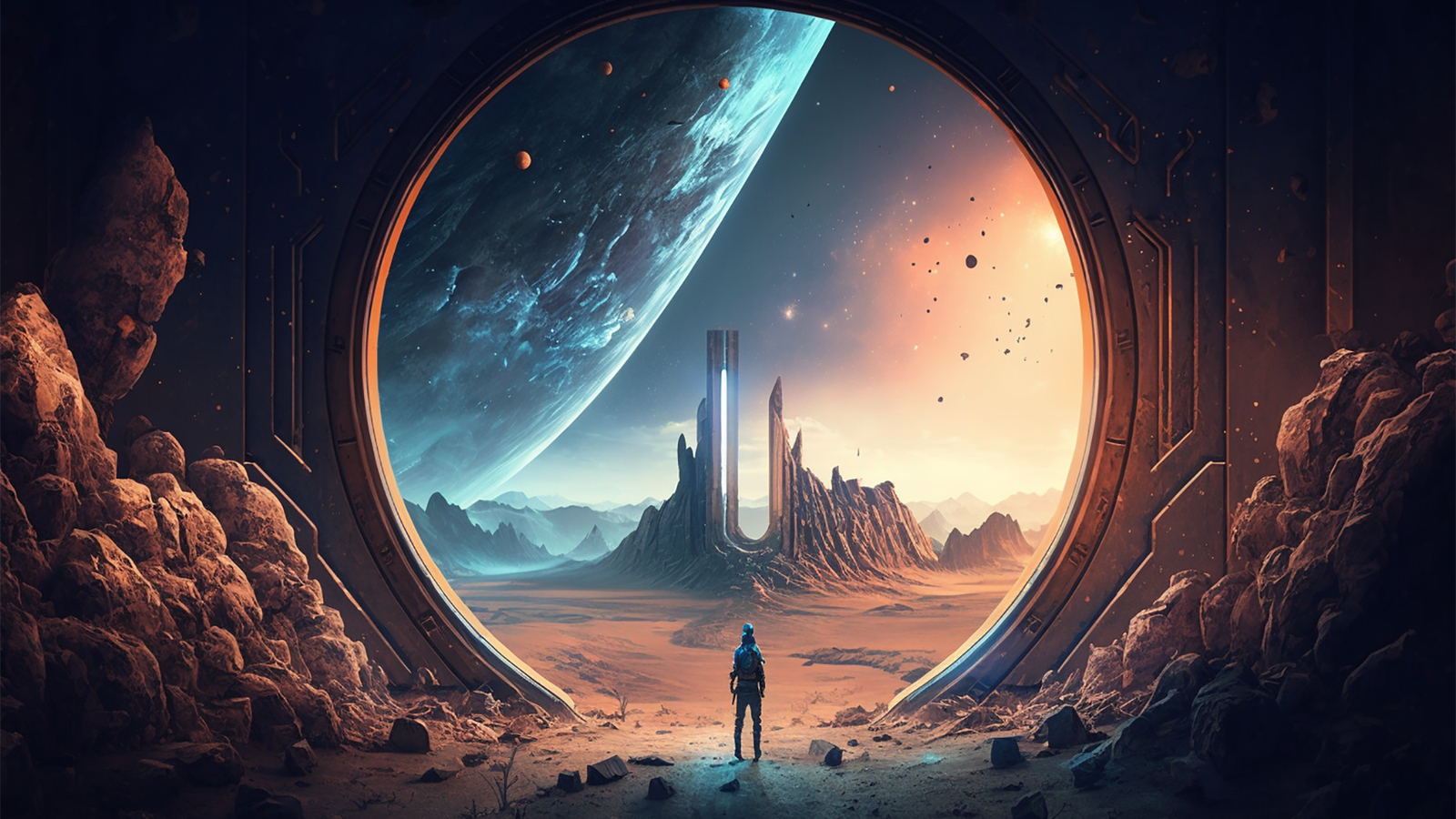
Soon, Gareth Edwards' promising sci-fi film 'The Creator' about the confrontation between man and AI is coming out. While waiting for the new release, we suggest remembering science fiction in cinema, and not only about AI.
The sci-fi genre in cinema seems to be in a period of stagnation right now. The films and series that appear often repeat (if not duplicate) ideas that were announced at the beginning of the century. This may be because human fear of scientific progress hasn't changed, and people are concerned with the same questions as before: treacherous AI, mysterious inhabitants of other planets, monsters from the depths, and the consequences of daring experiments. Or perhaps it's just not the right time to think about the prospects of the future: when the world of the present is collapsing, people tend to turn to the past for answers more often.
At the end of September, Gareth Edwards' sci-fi project The Creator about the fight against a rampant artificial intelligence is coming out. Whether the director managed to avoid genre plot clichés and make something interesting — we'll find out soon. In the meantime, let's remember what good things have already been made in this genre.
Our selection was created by two authors: Evgenia Smykova and Nadezhda Vasilyeva. In addition to dividing into foreign and domestic sci-fi, we split the films into subcategories by theme: space, zombies, aliens, and monsters from the deep. We hope our film selection will please you.
About Space
And apple trees will bloom on Mars...
Planet of Storms (1961)
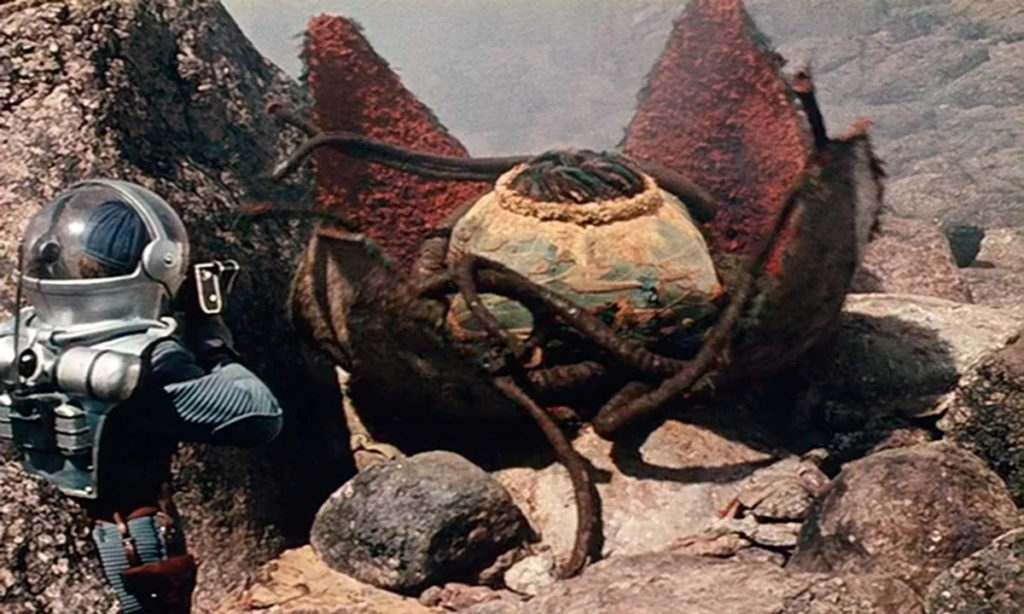
In 1961, the live-action film "Planet of Storms" about a journey to Venus was released. The first Soviet space expedition of three ships is sent to the planet. Approaching Venus, one of the ships is lost. The crews of the other two, including a foreigner and a robot "Iron John," successfully land.
The story of the film's creation is interesting. The eruption of a Venusian volcano was "molded" from dough by Pavel Klushantsev at the Lennauchfilm studio, and foreign journalists thought the director was filming real rockets at a real cosmodrome.
When during perestroika George Lucas came to Moscow, he, among other things, asked to be introduced to Pavel Klushantsev. The director said he was a master of space films, the "godfather" of the Star Wars cycle. Moreover, the Americans were so impressed by "Planet of Storms" that they arranged its illegal release twice under different titles — "Voyage to the Prehistoric Planet" and "Voyage to the Planet of Prehistoric Women." For the second version, additional footage with beautiful Amazons was even made.
And we dream not of the roar of the cosmodrome...
Interstellar (2014)
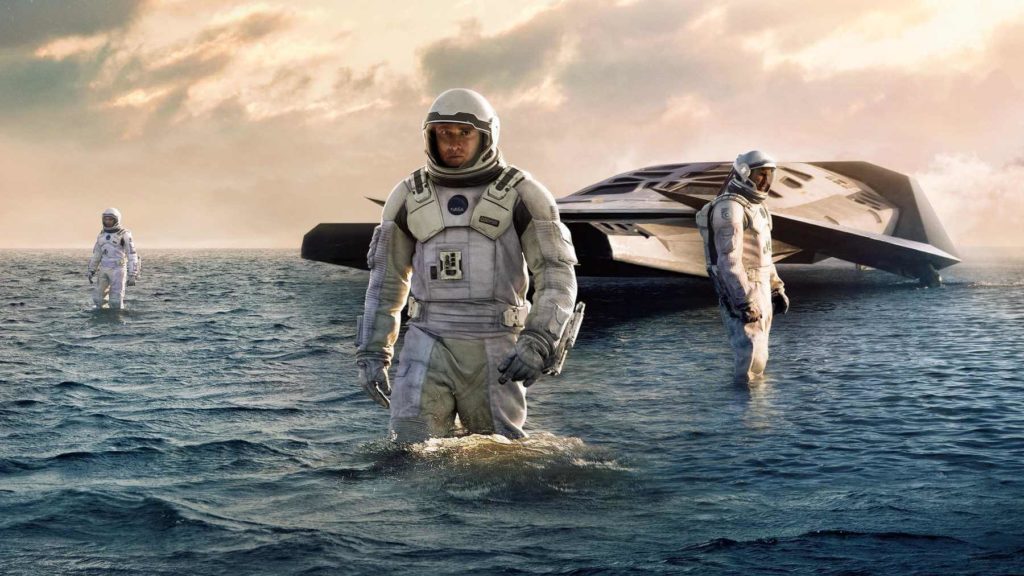
According to one of the authors of this selection, no list of science fiction in cinema can do without Christopher Nolan's "Interstellar." At least for his efforts to create not just a beautiful and deep film about people and space, but also as scientifically accurate as possible. Consultants are often invited to shoots to help tame the devil in the details, but in Nolan's case, he not only asked advice from theoretical physicist Kip Thorne, but also studied his scientific works to immerse himself in the intricacies of cosmic matter.
Initially, the film was to be directed by Steven Spielberg, who saw Will Smith as the main character. But when the director left the project in 2012, Nolan took his place on the recommendation of his brother Jonathan, with whom he wrote the script. And instead of Smith, Matthew McConaughey got to traverse space and yearn for his daughter, played by Jessica Chastain. I won't list the entire golden cast of the film, my fingers will get tired, but I'll note that not only the actors were a treasure here. The otherworldly soundtracks were written by Hans Zimmer, for which he was nominated for an Oscar, and the visual delight was created by cinematographer Hoyte van Hoytema. Nolan became so close with the latter that he later shot "Tenet" and the newly minted "Oppenheimer." One can write a lot about the incredible imagery of "Interstellar," which hypnotizes with its beauty, and much of this is due to the visual effects — for which the film won an Oscar.
"Interstellar" is a film about all of us: about those born in the wrong place and at the wrong time, about hopeless romantics and incorrigible pragmatists, about a world on the brink that can only be saved by love and faith in humanity, about loneliness and the fear of losing loved ones, about homesickness, about the impossibility of being in two places at once, which breaks the heart. And this film is also about duty and responsibility not only to oneself and those you love, but also to the future. The hooks that Nolan casts in "Interstellar" — about values and priorities in society N years from now, about a second home and playing god, about the "lost generation" — with each passing year, they feel more bitter truth than bright hope. It's not a prophecy, but a warning.
"2001: A Space Odyssey" was deliberately not included in the selection.
About Monsters from the Depths
Frankly about Soviet monsters
Sputnik (2020)
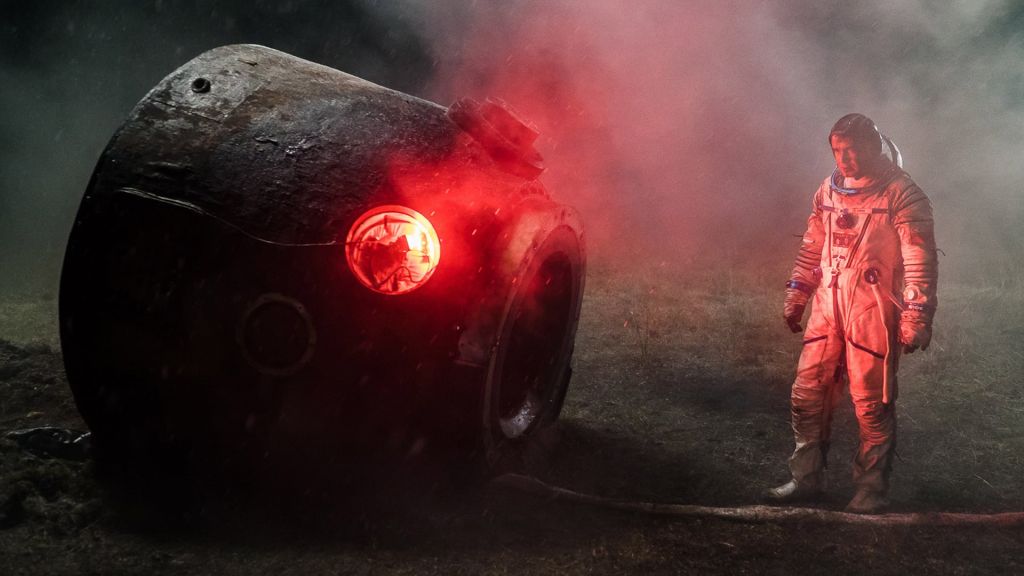
USSR, 1983. A spacecraft returns to Earth, but it is hidden from people that only one of the two cosmonauts can be considered alive. What happened on board remains a mystery, but the facts indicate that the cosmonauts encountered a new form of life. And the survivor did not return alone. Neurophysiologist Tatyana Klimova is brought to a secret military base, where cosmonaut Konstantin Veshnyakov is held under strict control and observation, to assess his condition.
A well-shot, intimate sci-fi drama about humanity. There is no division into good and bad, cowards and heroes. There are people with their weaknesses, fears, and vices. Ordinary people who find themselves in an atmosphere of science fiction. And no matter how much they try to compare this film with "Alien" or similar movies, the film is not about a bunch of people trying to escape in fear from a creepy alien beast. It's about how a person will behave when faced with an extremely unusual and terrifying situation.
After such a long time, the attention of American filmmakers was again drawn to our world of science fiction. There was a plan for a remake, as well as nominations for many film awards.
Frankly about foreign monsters
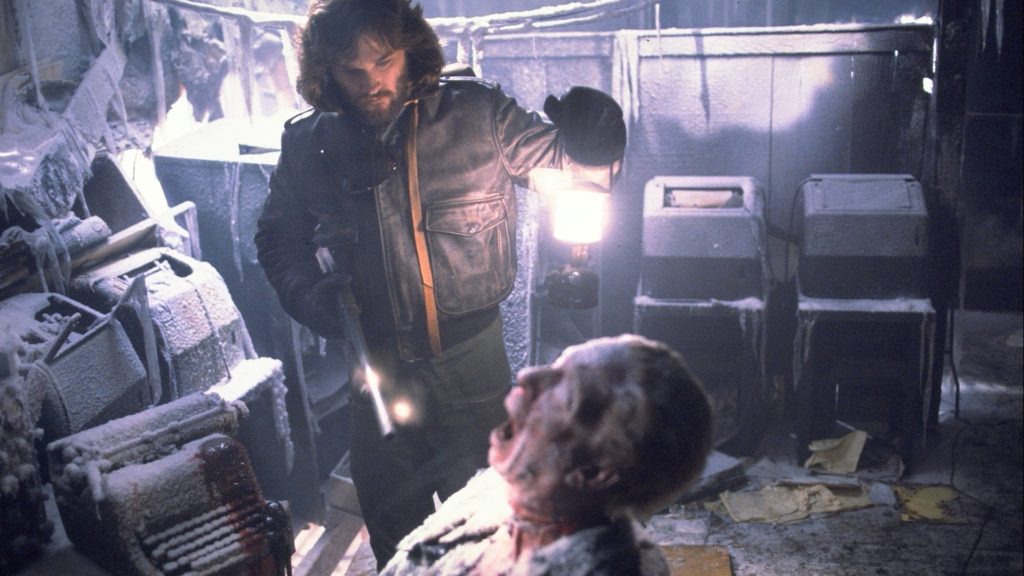
The Thing (1982)
"Trust, but verify" — says the famous proverb. And in the case of John Carpenter's films, the phrase "better not trust at all" comes to mind. The director concentrated this idea most in his "The Thing" — a remake of the 1951 film "The Thing from Another World" by Christian Nyby. Moreover, Carpenter was inspired not so much by the original as by the literary source — the novella "Who Goes There?" by John W. Campbell Jr., which made a strong impression on him in his distant childhood.
"The Thing" became the second joint project of the young Kurt Russell and Carpenter, who had just released "Escape from New York." In one film, Kurt strutted in leather clothes, and in another, he was already wrapped in jackets and hats. But no insulation saved the actors and crew from regular colds: Carpenter deliberately lowered the temperature on set, so much so that steam came out of their mouths. Even though outside the pavilion it was 40 degrees Celsius, melting the asphalt of Los Angeles.
All of the above is just a small part of the noteworthy facts about "The Thing," which bombed at the box office due to competition with Spielberg's family-friendly "E.T." Audiences wanted more goodness, not torn-apart dogs, a running severed head, and a creepy monster emerging like an Alien from a human (the animatronics and special effects are impressive even after 41 years). Even the soundtrack by Ennio Morricone didn't make them embrace the film. Only many years later, after its release on VHS, did the horror become cult, and people began endlessly discussing the numerous mysteries embedded in the film.
"Alien" was deliberately not included in the selection.
About Zombies and More
We all love to wander around lost bases
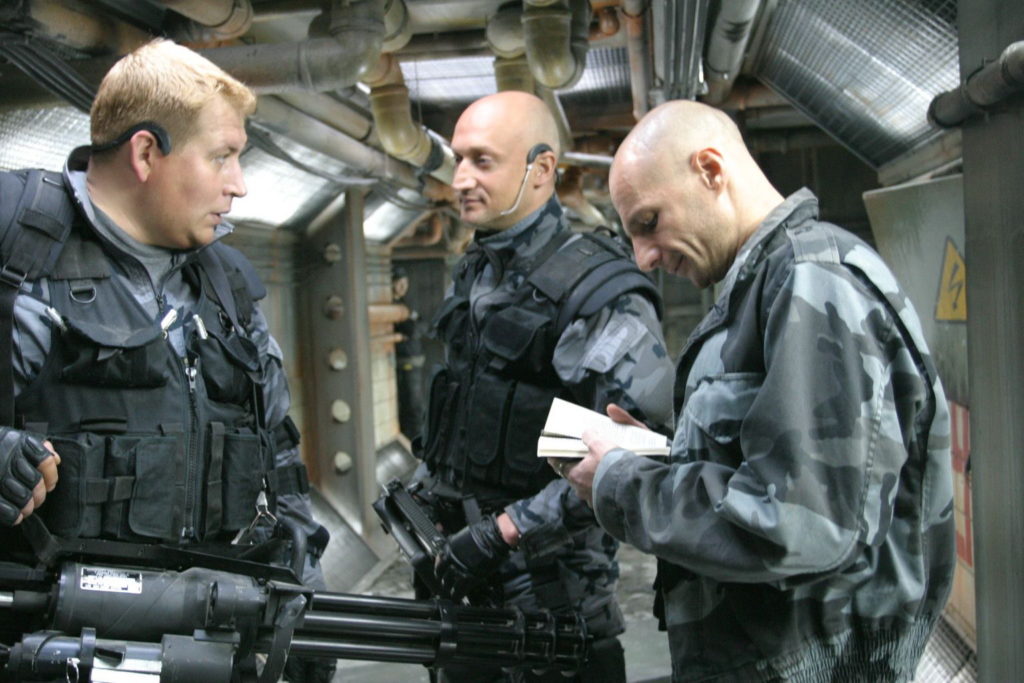
Paragraph 78. Film Two (2007)
I want to highlight specifically the second film in this dilogy. The first part is more focused on sorting out relationships, quarrels, and various similar things that are unclear for a film of this genre.
But in the second part, having already received a good dose of the virus, the heroes fall into a trap. The special forces must decide who will survive on the lost base. For an hour and a half, we watch as the heroes, playing god, decide each other's fates. The cat-and-mouse game moves to a new level, where the stakes are "life." Some duels are thrilling, while others tear hearts into small pieces.
We all love zombies
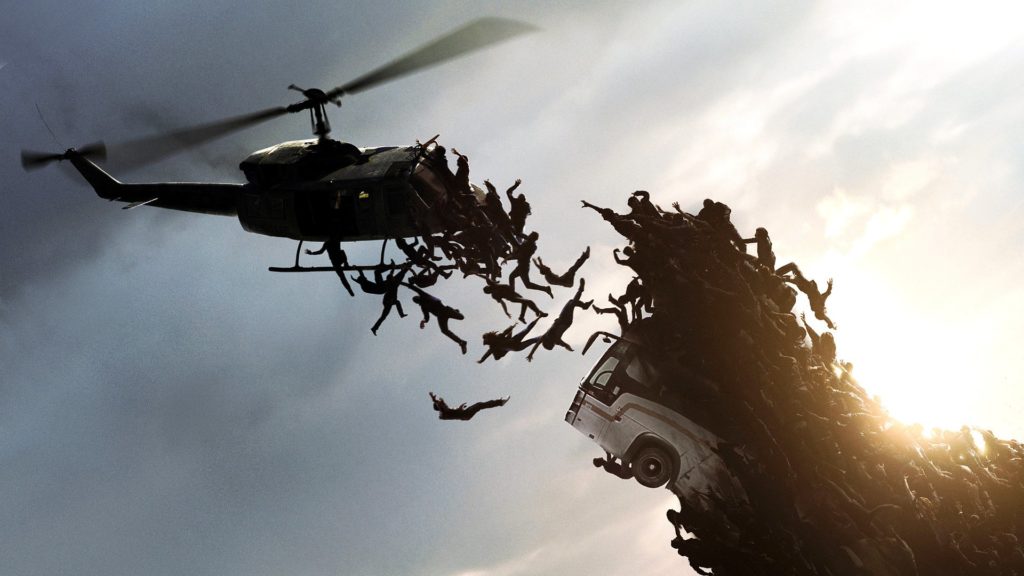
World War Z (2013)
Theories about biolabs where experiments are conducted on people — they were, are, and probably will always be popular. At least as long as there are those who believe in experiments like "infect half a continent with a virus." This was about "Resident Evil," "Contagion," "28 Days Later," "I Am Legend," "Planet Terror" — the list goes on. And it seems that in this area, there is little left to surprise. And "World War Z" confirms this thought, but still, there is something to love it for.
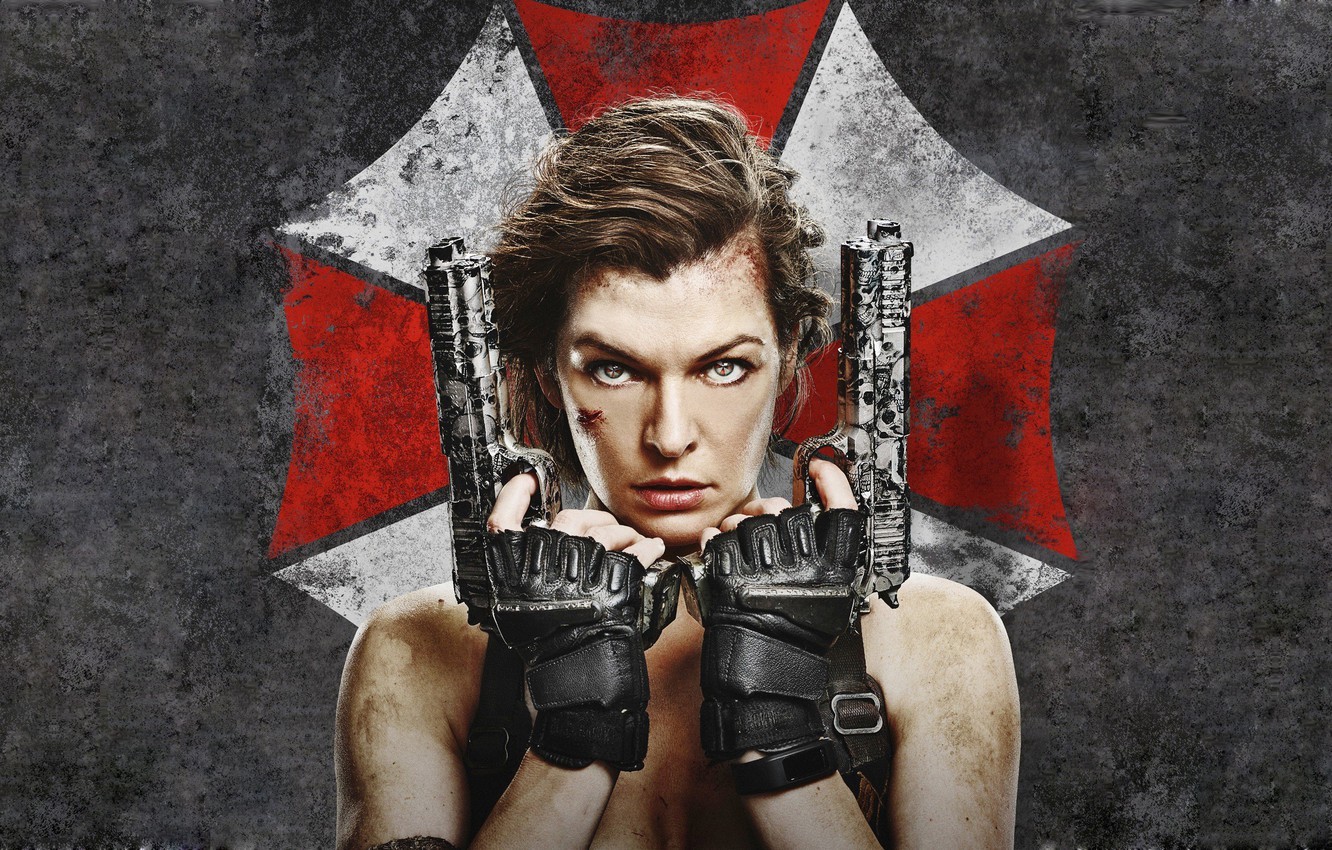
This year, the 'Resident Evil' film universe celebrates its 20th anniversary: in 2002, the first film adaptation based on the popular game Resident Evil starring Milla Jovovich was released. We remember...
Open materialThe world is again mired in walking corpses that, sparing no teeth, tear passersby to pieces (but such scenes won't be shown, because of the PG-13 rating). Scientists unite to find an antidote to their own drug, while trying not to die along the way. The plot is familiar to the point of teeth grinding.
The film is based on the novel of the same name by Max Brooks, so Brad Pitt's character logically moves from point A to point B, and viewers are shown either grandiose scenes with hordes of walkers or personal struggles for life in claustrophobic spaces. Actually, the impressive cinematography and the actor's talented performance are the two main reasons to give "World War Z" a chance. The film never aspired to be a work of art; it gives exactly what we expect from good action movies — action, scope, and scale.
Konstantin Khabensky also starred here as a Russian soldier. But you won't see him, no matter how hard you try to look at every frame. His scenes were cut from the final edit, although his name remains in the credits.
About Alien Creatures
We sail on the waves of alien broth from another planet
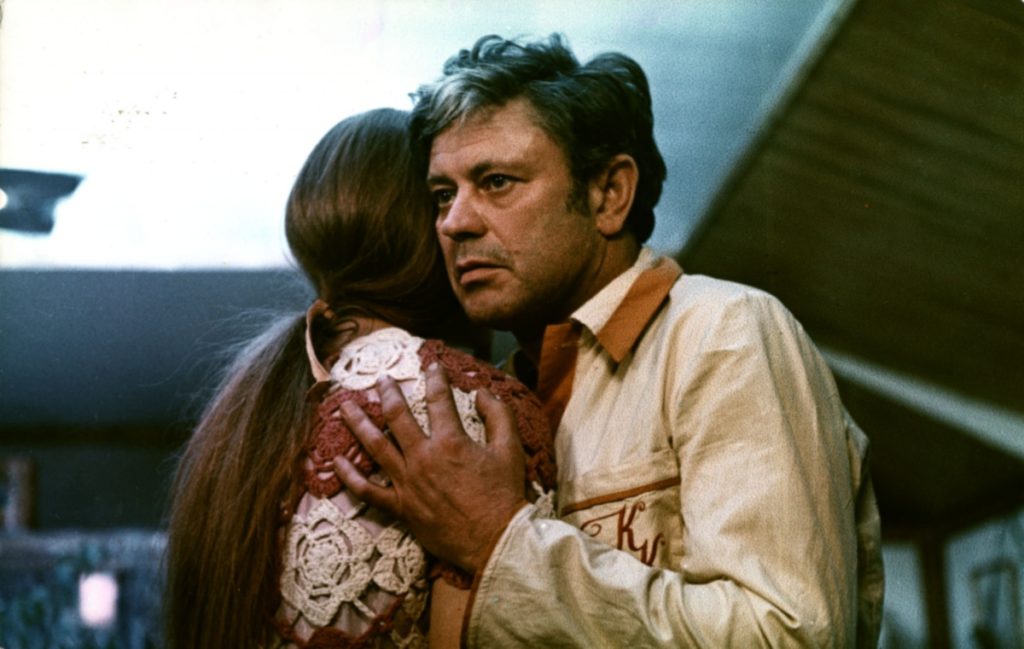
Solaris (1972)
The film "Solaris" is based on the novel of the same name by Stanisław Lem, exploring the theme of human relationships with an alien and intelligent form of life. We follow the main character who travels to the space station Solaris, where strange and inexplicable phenomena occur. The film raises questions about our ability to understand and interact with unknown realities.
The visual execution of the film is one of its most impressive elements. Slow shots, deep frames, and magnificent play with light create an atmosphere of mysticism and mystery that permeates the entire story. They reflect the inner world of the characters and their emotional state.
"Solaris" is a philosophical journey that requires active participation and self-reflection from the viewer. The film raises questions about the nature of perception, self-identification, and the incomprehensibility of the universe. It calls us to think about our place in the universe and our ability to understand and accept the unknown.
"Solaris" is a deep and unparalleled film that leaves an indelible impression on the viewer.
Aliens are shown here and there
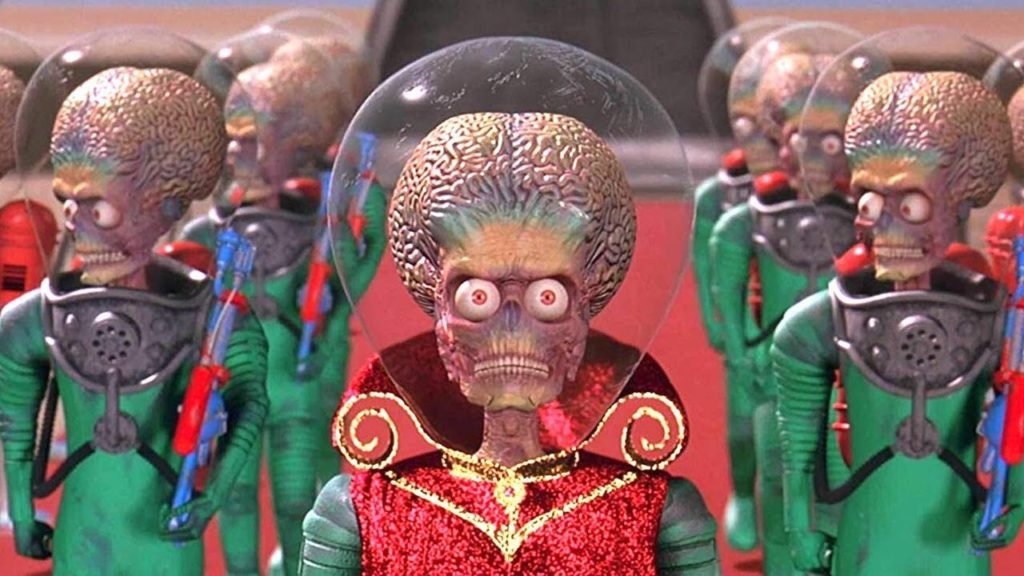
Mars Attacks! (1996)
People like to make films about aliens either from a conspiracy theory perspective, or as our extraterrestrial friends, or as cruel invaders. Tim Burton decided to use little green men as a metaphor to create a veiled and funny satire on various things. There are parodies of genre clichés of 50s-80s sci-fi cinema, mockery of American socio-political trends, jabs at Hollywood, and, of course, a lot of directorial self-irony.
Moreover, the comedic nature of the film lies not only in the plot ideas but even in the source of inspiration: Burton based it on a series of inserts from chewing gum packs from the late 50s. Many Hollywood stars whom you wouldn't expect to see in such a film wanted to join this massive mockery: Jack Nicholson, Pierce Brosnan, Michael J. Fox, Natalie Portman, Sarah Jessica Parker, Annette Bening. Perhaps only the appearance of Danny DeVito and Jack Black is not surprising; they always loved satire.
A special "dark" charm is added to the film by the "live" Martians with water pistols, not drawn on a green screen (although in "Mars Attacks!" the director used computer graphics for the first time in his cinema). The naturalism of the alien creatures gives them liveliness and creepiness, which is emphasized against the backdrop of rather sparse special effects.
Burton's "Mars Attacks!" is not so much about a possible future as about the present. And even now, 27 years later, this satire still looks relevant and bold, reminding us that some things don't change.
Comments
0No comments yet.
Sign in to join the discussion.