
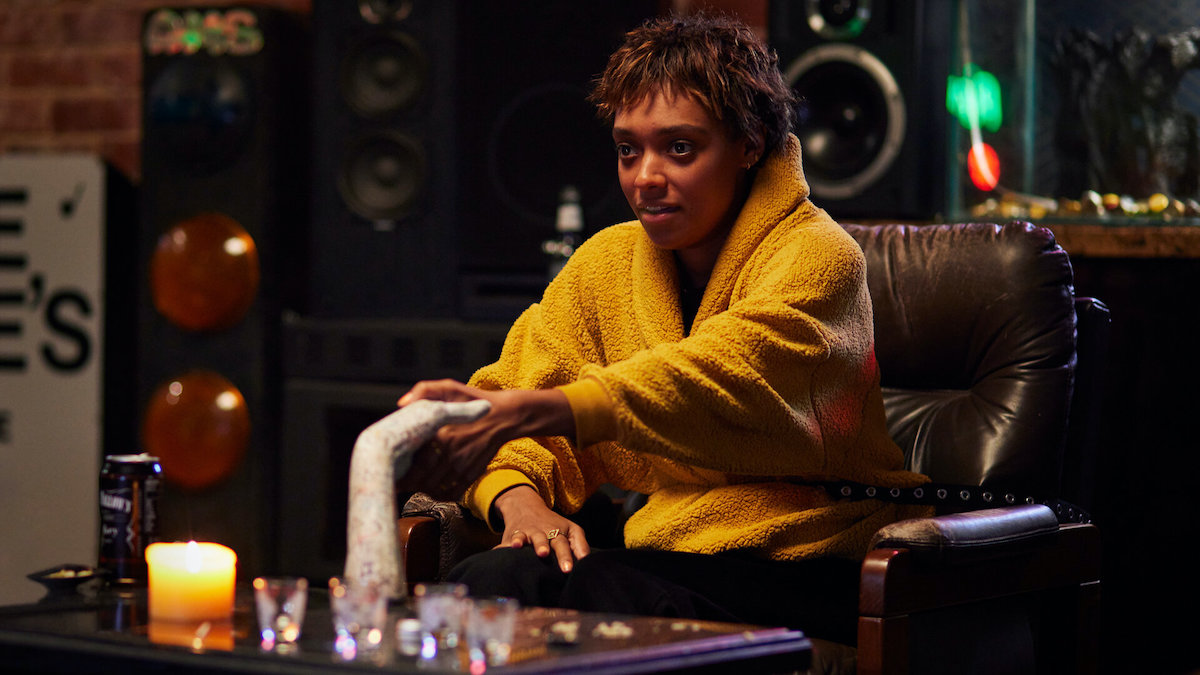
The film 'Talk to Me' has been released, a moderately engaging genre statement about not disturbing the dead. A review of the popular horror film that many (seemingly without thinking) call the best of the year.
Domestic distributors have once again delighted us not only with a trendy Western film but also with an interesting localization. The melancholic 'Talk to Me' has been transformed into a dashing, Candyman-style 'Two, Three, Demon, Come!'. This time, the distribution is handled not by 'Exponenta', so it's certainly not 'Insidious: The Last Key', but you still want to shake the translator's hand. Especially considering that there are actually no demons in the film.
This is a movie about ghosts. High school teenagers (Australian actors, by the way, actually look like teenagers, not the usual balding types) film TikTok videos of home séances. They gather at friends' houses, find volunteers to communicate with the dead, and let those volunteers shake a ceramic hand, whose origin will apparently be the subject of a sequel (already in the works) and which presumably belonged to someone not very nice. Ghosts always come, and the main thing is to ask them to 'enter' you. However, the safe time for a séance is strictly limited—no more than 90 seconds, otherwise the souls of the dead may remain forever with those who summoned them.
One day, the group of paranormal enthusiast friends is joined by their classmates—Mia (Sophie Wilde), who is depressed after her mother's death, and the sensible Jade (Alexandra Jensen, the Australian version of Thomasin McKenzie). They bring along (against Jade's will) her 11-year-old brother Riley. When Mia shakes the magic hand, she starts trembling, points at Riley, and says he belongs to the ghosts.
The best part of this setup is the hand itself, extended from nowhere, just begging to be shaken. A séance is no longer a marginal and complicated endeavor but something quite natural. In a world where lonely teenagers have no one ready to extend a hand—neither for help nor greeting—even such a hand will do.
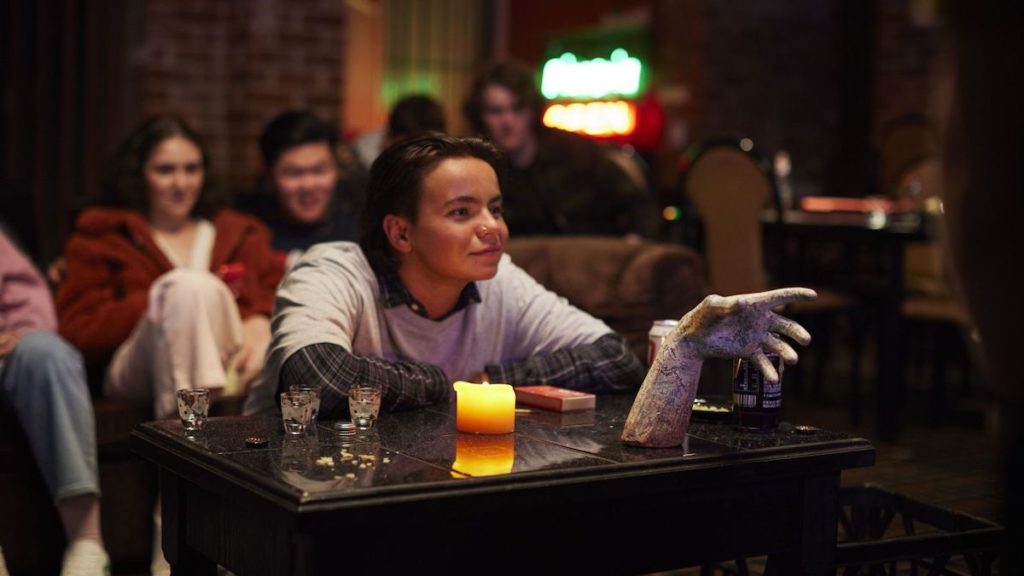
Overall, it's quite creepy, although the Philippou brothers avoid pure unmotivated horror—Mia's specific obsession with ghosts is, of course, rooted in unresolved trauma and the mystery of her mother's death. This fixation on trauma is more a nod to the post-horror era than a narrative necessity, but some have rushed to compare 'Talk to Me' to 'Hereditary' because of it. If this is Ari Aster, then 'The Hangover' is an existential drama. Though, given the circumstances, why not.
Nothing particularly eventful happens next; the teenagers continue to gather for séance parties, and this, in theory, is the main entertainment the film offers: possessed teens shake monotonously, say something meaningful, and occasionally laugh maliciously. Sometimes—and these are the best moments of the film—the séances become genuinely interesting: a ghost with a foot fetish (sucking feet!), a ghost that loves to kiss dogs passionately, and so on. It's a shame that mostly boring people are sent to hell, and the 90 seconds of renewed life they get are used in equally unoriginal ways.
This could have been an intriguing idea for a horror film, but firstly, it's been done many times before, and secondly, the authors quite diligently avoid ideas altogether. The metaphor of trying to contact ghosts as a drug addiction is the best the film offers, and while it's not a bad concept, even that is spelled out at some point, making it quite dull.
Communicating with the dead can indeed become addictive; the past is often more appealing than the future, but the film reduces it all to the banal physical euphoria of being possessed by a ghost. Attempts to develop another line—about the temptation to prefer the dead over the living—mostly fail, although there is one outstanding scene in this context: when, closer to the finale, the heroine encounters a fake father.
This scene, along with a couple of other successful finds (the hand, again), makes you believe the directors have a great future, but nothing can make you want to follow that future too closely. Although, in one respect, the Philippou brothers are probably right: séances should indeed be limited to 90 seconds. Watching novice directors diligently summon 'The Exorcist' in the interiors of teen horrors for any longer is already quite unbearable.
Comments
0No comments yet.
Sign in to join the discussion.