
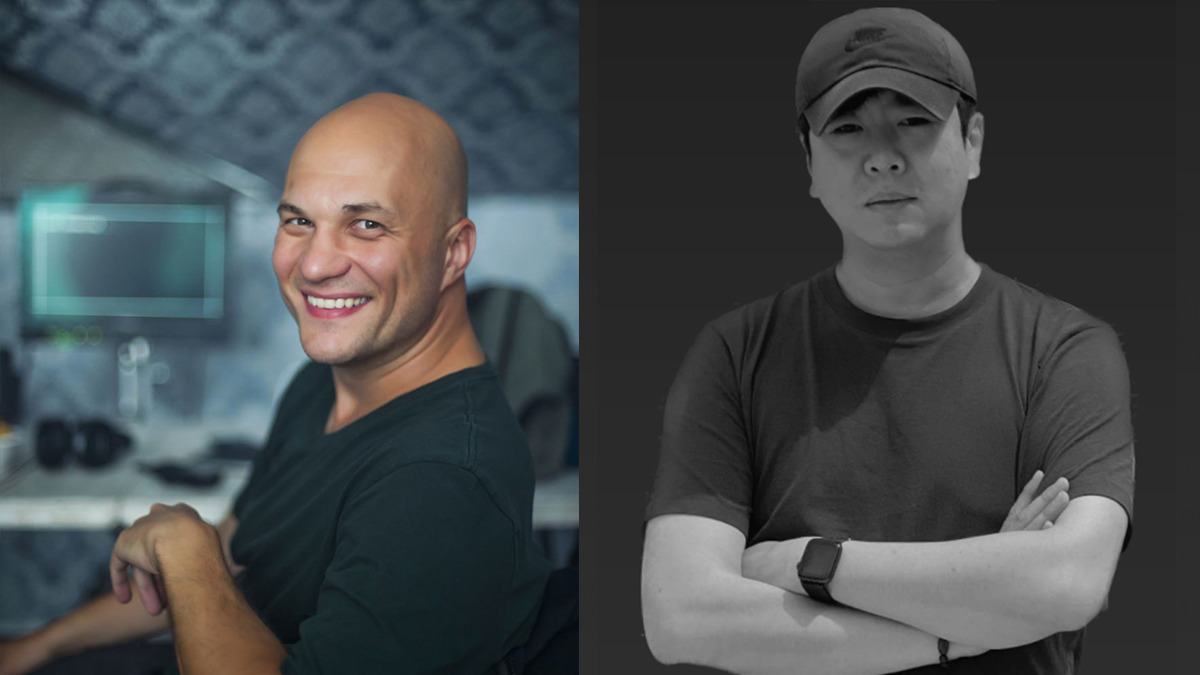
On August 5, 2023, as part of the Vyborg 2023 festival, a public discussion titled "Russia-Korea: Opportunities for Collaboration and Co-Production" took place. Of particular interest is the application of Virtual Production technology, which was presented in South Korea this spring by Yuri Yarushnikov, co-founder of XOVP studio.
Our editorial team had a unique opportunity to speak with representatives from both countries to learn about the direction in which modern cinema is moving.
We were able to get answers to our questions from Yuri Yarushnikov himself and Cho Jae-sang, a producer at Sanai Pictures, whose filmography includes such films as "The Worst of Evils" (2023), "The Hunt" (2022), "Money" (2019), and many others.
What areas of film production do you plan to focus on when working together?
Yuri Yarushnikov: Filming using virtual production technology, filming with augmented reality technologies. We would also very much like to collaborate and exchange experiences with Korean colleagues in the field of any high-tech filming.
Cho Jae-sang: I'm not sure if you mean genres or the production process itself. I note that the city's diverse architecture, beautiful canals, and dynamic history from the time of Tsarist Russia to the post-World War II era have been an endless source of inspiration. Russian and Korean production capabilities can cover any genre - historical, spy, melodrama, etc.
Could it happen that certain cultural characteristics of Korean and Russian cinema become a challenge in the process of working together? In your opinion – if so, which ones?
Cho Jae-sang: Our countries have a history of disagreements with each other due to differences in ideology, and the current international political situation does not seem favorable. I think that instead of specific cultural traits, we should try to find ways to positively improve the perception of both countries, both in the past and in the present.
Yuri Yarushnikov: First of all, it's the "difficulties of translation." But in my deep conviction, people can always understand each other and come to an agreement, provided there is a desire and mutual respect.
Have you already managed to glean or observe an area for development during your joint work?
Yuri Yarushnikov: Yes, absolutely. Immediately after our joint session, my Korean and Russian colleagues and I outlined possible avenues for cooperation. I think this will be beneficial for everyone. But most importantly, it will develop film production, introduce new tools and technical solutions.
What changes in the film and media production industry do you expect as a result of the implementation of Virtual Production in the Russian and Korean markets? Will it have an impact on the global market?
Cho Jae-sang: Virtual Production offers many opportunities, expands the scope of directing, and allows for more efficient reduction of production timelines and budget savings. Virtual production is a global trend and will continue to grow.
Yuri Yarushnikov: This technology has enormous potential. This is recognized by both Russian and Korean colleagues. And it is already having an impact on the film production process worldwide. Virtual Production is a new, unique tool for filmmakers, opening up virtually limitless possibilities. This field is developing dynamically. And, it seems to me, the very existence of such a tool can shape a new approach to film production. And, perhaps, even create new genres and directions in cinema.
What unique aspects of Russian film production might be of interest to Korean colleagues, and how could they be used in joint projects?
Yuri Yarushnikov: In my opinion, it is the unique diversity of natural and historical locations, the high level in the field of computer graphics production, and, of course, the high level of development in the field of virtual production. An important aspect for producers is the very competitive prices of Russian companies and specialists compared to similar offerings in South Korea.
Cho Jae-sang: So far, I don't know much about the unique aspects of Russian and Korean film production. I think we need to interact more to understand each other. But the Russian CG technologies that I learned about this time seem quite interesting.
In your opinion, where is the greater prospect: in leveraging the strengths of each country's production or in exchanging experiences to grow beyond oneself?
Cho Jae-sang: I think they should go hand in hand: the opportunities gained from individual experience will influence our industry in other countries, and vice versa.
Yuri Yarushnikov: It's hard to choose here. In my opinion, the greatest prospect lies in joint development using the strengths of both countries while taking into account the experience of both sides.
Comments
0No comments yet.