
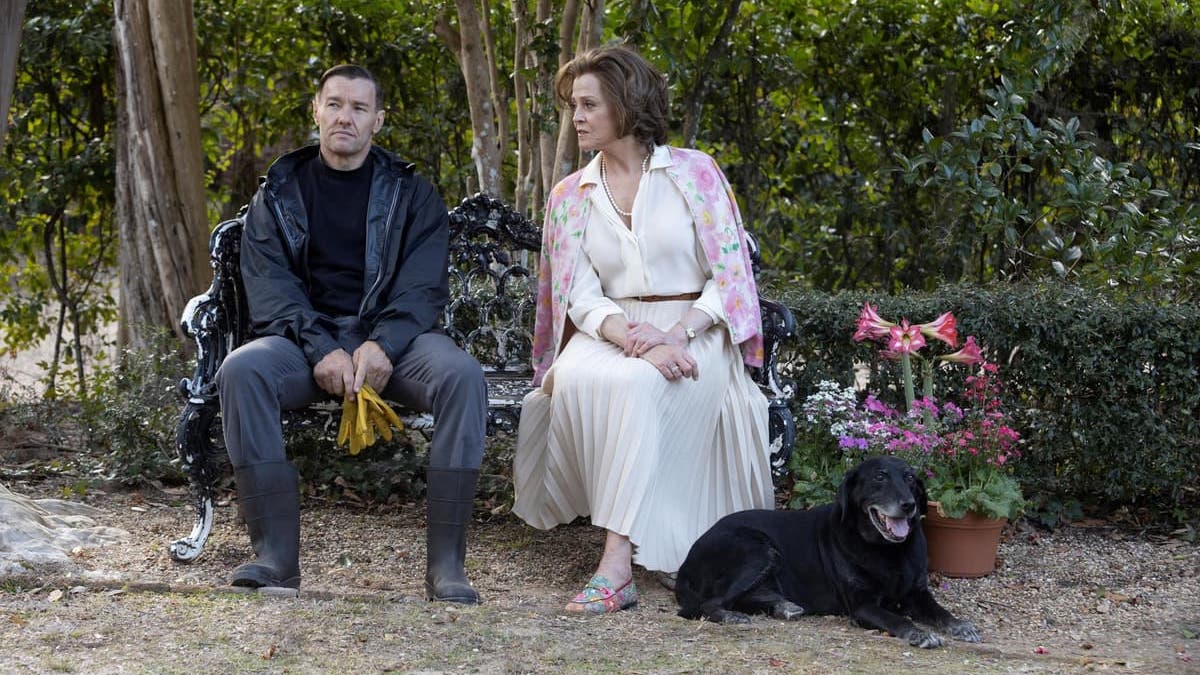
The new film by Paul Schrader, 'Master Gardener', has been released on digital platforms. In our review, we tell how the screenwriter of 'Taxi Driver' and director of the recent small hits 'The Card Counter' and 'First Reformed' once again buries the...
Paul Schrader, former film critic, great screenwriter, and major director, is 76 years old, and for 50 of them he has been writing one story — sometimes starting from the end, sometimes from the middle. The beginning of this story is rarely covered: perhaps it's somewhere in the womb; perhaps — in war (as in the case of the heroes of 'Taxi Driver' and 'The Card Counter'); perhaps — in the awareness of one's own mortality ('First Reformed'). Schrader's stories begin where peace ends, and that makes the outwardly measured 'Master Gardener' all the more surprising.
Senior gardener Narvel Roth (Australian Joel Edgerton, a terribly underrated actor) philosophizes at night about the nature of gardening, writing down his thoughts and unexpected historical facts in his diary, and by day cultivates the garden of wealthy Southern woman Norma Haverhill (Sigourney Weaver). Though he does this periodically at night as well. His daily routine is measured, his subordinates love him, and this somewhat gloomy man, exuding an even slightly frightening regularity, seems content with his life.
At some point, Sigourney Weaver tasks Narvel with teaching her great-niece gardening — where else to put her, she hasn't figured out, but she needs to be placed somewhere: niece Maya (Quintessa Swindell, she has zero chemistry with Edgerton, but she's a good actress) is an orphan, a drug addict, and without some intervention, she'll be lost. Not that Sigourney Weaver doesn't care, but she is family after all.
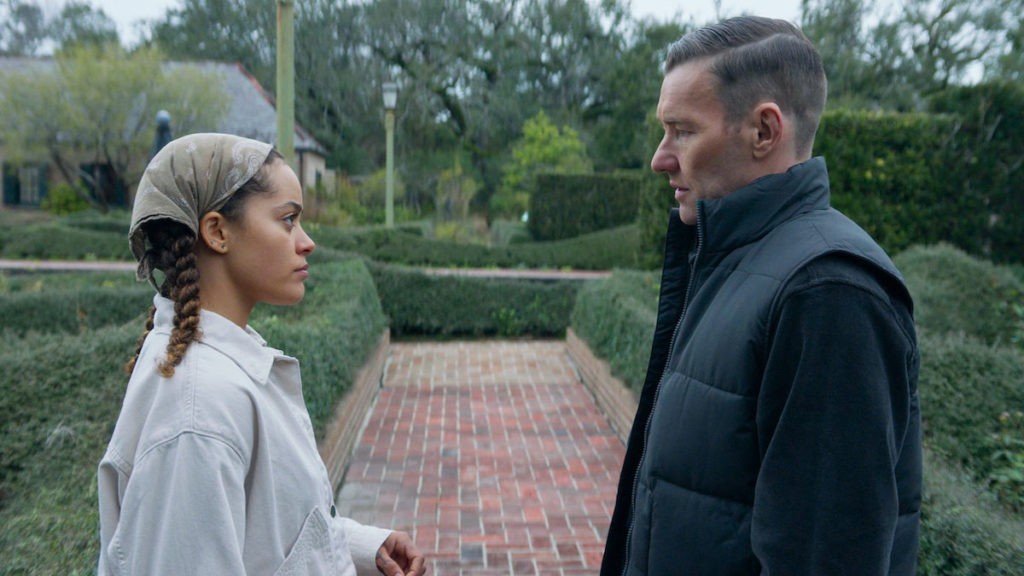
Then a classic story for such cases unfolds — the tension between Maya and Narvel becomes hard to ignore, the aunt is displeased, and Narvel himself is at a loss, and, as they say, unexpectedly so. The fact is that quiet Narvel was once a hitman for a neo-Nazi group. He renounced his beliefs, ratted out his accomplices, and his former boss (who is obviously the mastermind and somewhat resembles Dafoe's character in 'The Card Counter') recently died in prison.
And yet the past does not let the hero go — he meets once a year with a supervisor from the probation service, periodically has nightmares, and most importantly, continues to bear his tattoos (which here function a bit like shackles). And there, on his back and chest, is, as they say, a full set — with such tattoos, well-known private companies would hire him without competition.
In terms of content, in the paradise garden of this film (it's hard to resist such metaphors, and the director himself didn't particularly hold back), the passions are the same: the pain of injustice, repentance, the horror of realizing mortality, Protestant morality, an attempt to see the light at the end of a long tunnel, and the well-known directness of Schrader's heroes in a distorted, twisted world.
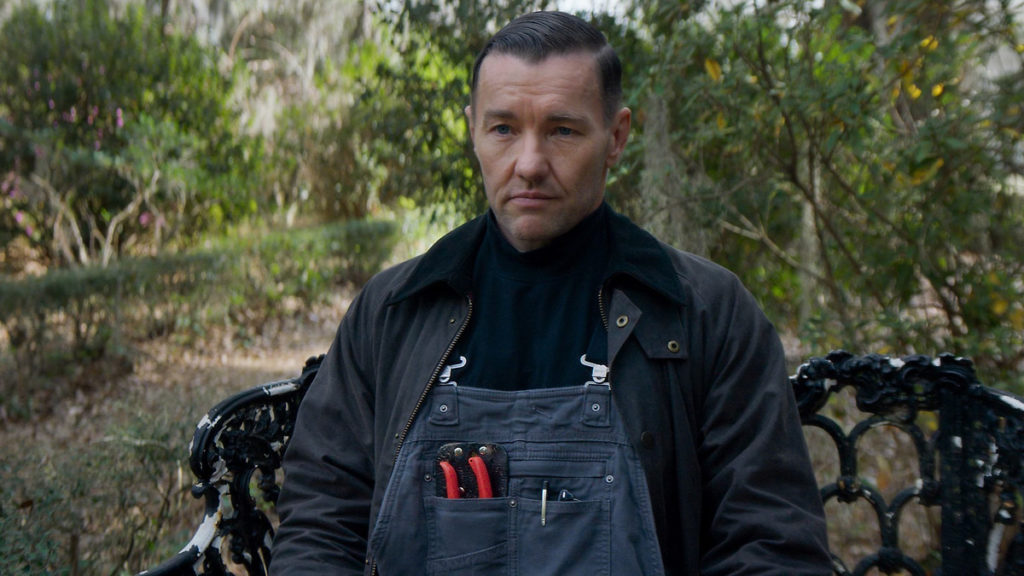
The last motif is especially important for the film. In one of the monologues, Edgerton even says that a garden is an attempt to order chaos; a manifestation of faith that plans might not fall through. This is a banal thought when retold, but a beautiful one, and in the film, it is perhaps central. Schrader is terribly interested in the attempt to discern beauty in ugliness, design in chaos, but he, of course, harbors no particular illusions, and destruction pursues his heroes with their plans and gardening. The stamp of decay is visible on everything — mysterious (like Norma's illness) and inevitable (like Narvel's need to confront his past).
In principle, such a plot is known to anyone who has seen at least one film by Schrader or Bresson's 'Pickpocket', but that's generally not a bad thing. This time, however, everything is somehow calmer. As if after the devastating 'First Reformed' and the resounding (in the best sense) 'The Card Counter', the director decided to give himself and the audience a little breather: all these floral metaphors on the verge of self-parody, beautiful gardens as scenery, rather helpless villains, and a deliberately quiet climax. As if nothing had happened.
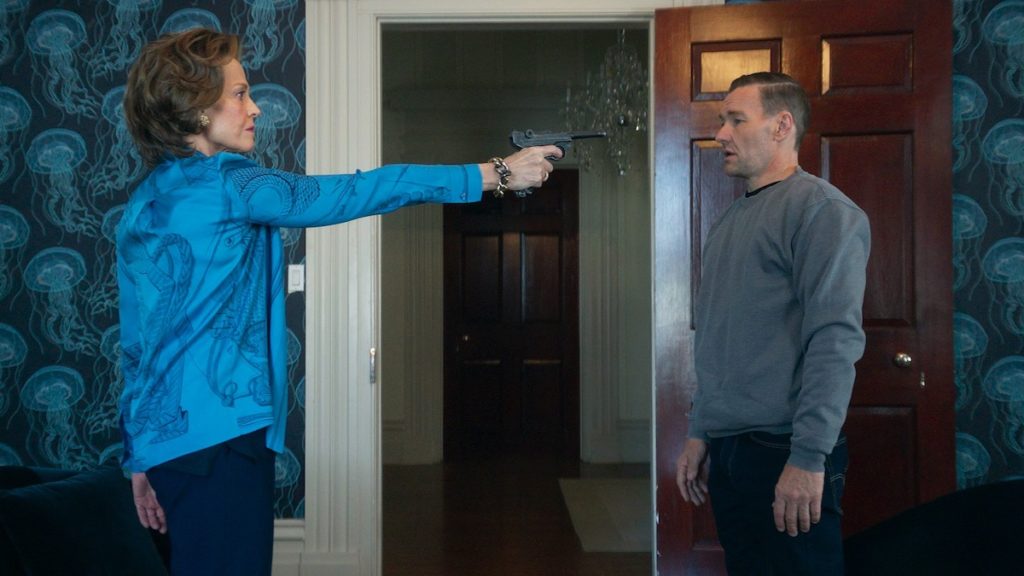
Having long buried others' dreams and his own hopes, Schrader now suddenly decided to plant a flowerbed on this unkempt grave. This is the first film by the master after which one wants to say that this is not yet existentialism, these are just the flowers, and at the same time the first time something like this is said not as a reproach. Yes, indeed, just flowers. And even if there were only them, it would still be worth watching.
At the same time, 'Master Gardener' is more relevant and accurate than most much brighter films. After all, in the broadest sense, it is about how to live if you were once on the wrong side of history; what to do if your neighbor turned out to be a fascist; how to look to the future if the past leaves not only traces but also wounds (and Narvel's tattoos practically bleed for clarity).
White Power supporters and Black people, executioners and victims — everyone needs not just to share one country (and this, in general, is not only an American problem), but also to build it, and from today's perspective, this seems simply impossible. So one cannot help but be glad that at least once a film by a great director, a living classic, promises not only retribution but also redemption.
Comments
0No comments yet.
Sign in to join the discussion.