
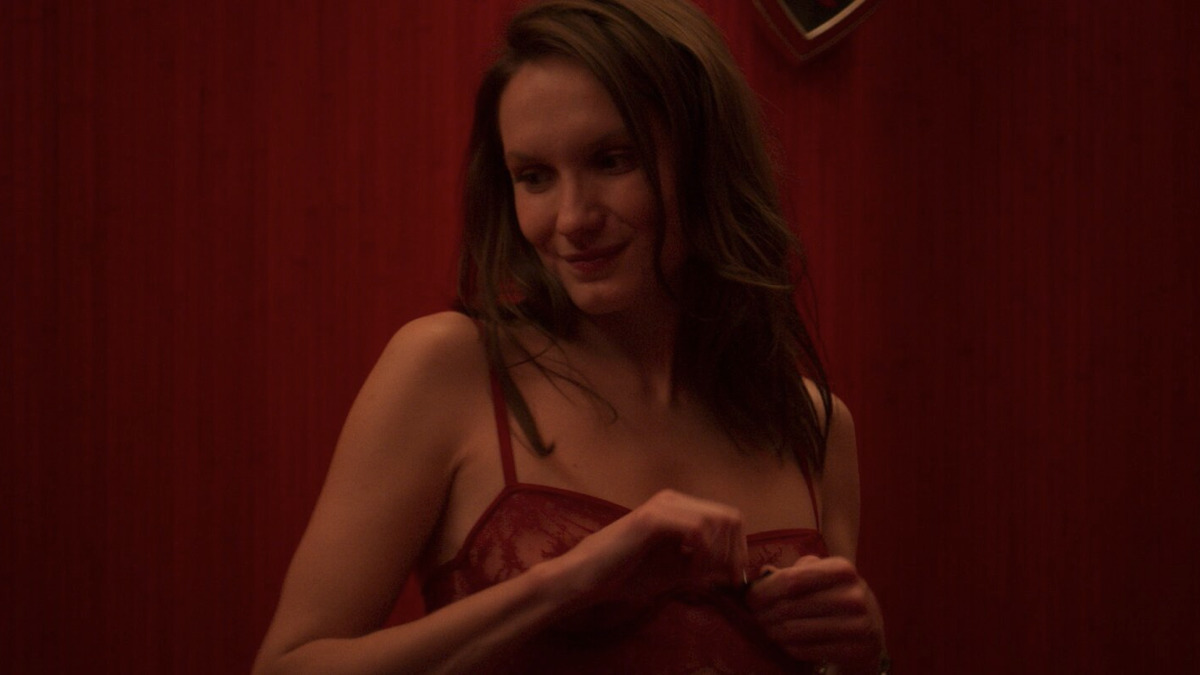
The French erotic drama 'The House of Pleasures' is being released, about a writer who gets a job at a brothel to gather material for a new novel. Why this is not so much erotica as a sociological sketch—in our review.
Emma, a young writer who has just finished her second novel, moves to Berlin with her sister and starts working on her third. It will be about brothel workers, about whom much has been written and all of it, of course, untrue. To get to the bottom of things—whether prostitution or herself—Emma gets a job at a brothel (they are legalized in Germany). A broad-minded girl, she sees nothing wrong with it, unlike her sister and her lover—a married writer who stayed in Paris.
Emma initially works at a simpler, cheaper brothel, but with such material, you can't write a novel—her colleagues don't trust her, and clients occasionally prefer cocaine over her. So she gets a job at a high-end brothel—'The House'—which gives the film its original title. There, in a space that combines rooms for client meetings, closed off from any natural light, and a beautifully lit kitchen and lounge area, Emma (under the pseudonym Justine) works, chats with her new friends, and constantly writes in her diary.
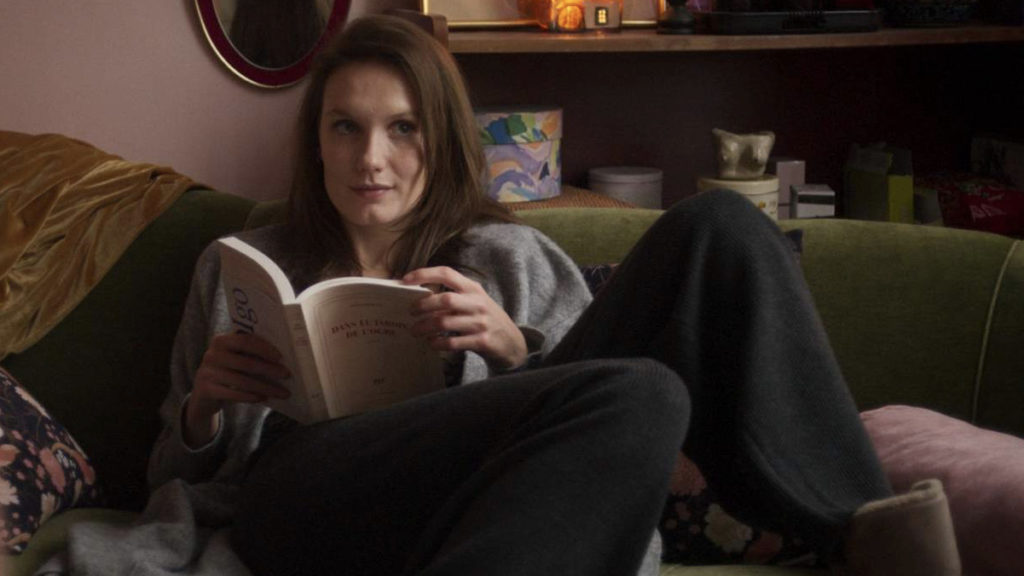
And there is plenty to write about: an aging prostitute recalls her youth and how she chose this career path; another worker toils at a Stakhanovite pace due to her family's financial struggles; and yet another colleague earns the most because she is a dominatrix, in high demand. These engaging kitchen dialogues—the most interesting part of the film—are occasionally interrupted by sex scenes with clients, which, due to the neon lighting, oddly resemble hookah rap music videos, though sometimes shot with wit.
One more paragraph in this style would suffice to summarize 'The House of Pleasures' to the end, but there is no particular point—like any autofiction (and this is an adaptation of Emma Becker's autofiction novel), the film begins where the author wants and ends where the viewer desires.
One might see in this film a romanticization of brothels—Emma is nearly raped a couple of times, and her colleagues suffer trying to piece together the fragments of their lives—but that doesn't stop anyone from seeing a romanticization of brothels. And when has it ever? Still, it's important to say: prostitution is presented in the novel as a matter of choice that deserves respect. This is not always the case in reality: coercion into prostitution, exploitation of child labor, deception into this business—all of this exists and is certainly worth describing. But writer Becker and director Annissa Bonnefont choose a different perspective, and even within it, they do not shy away from reality—several difficult-to-watch scenes are present in 'The House'.
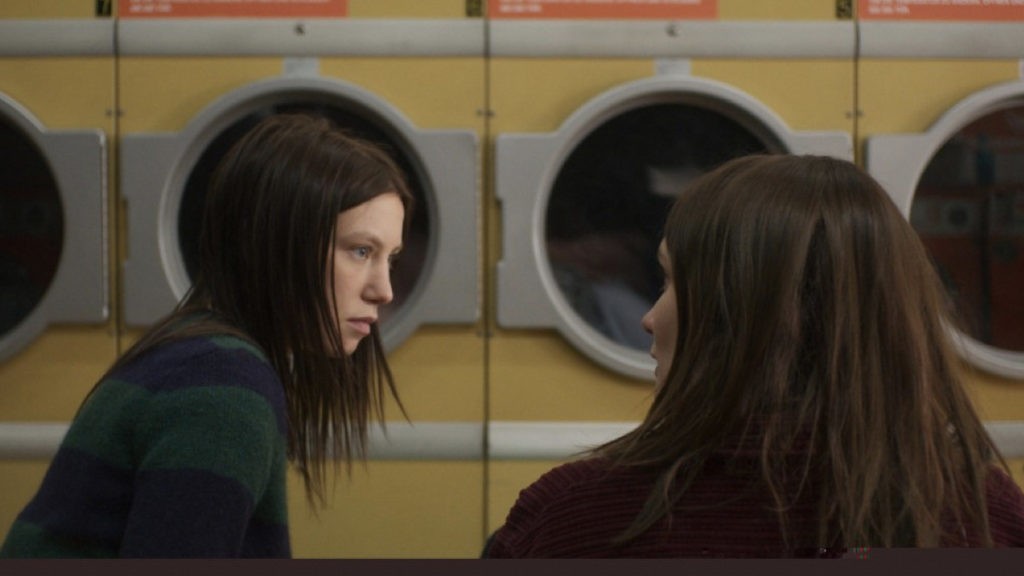
'The House of Pleasures' can also be interpreted as a sociological sketch of how, through participant observation (studying a community from within; a sociological method), one can easily become involved to the point of merging. Emma is an eternal observer, but also a participant. Her colleagues, her family, herself in the end—no one can draw the line where the novel ends and life begins.
However, one should probably see something else in this film. Above all, it is a story about how a girl suffered and endured something significant. About how a person can turn their life not just into a performance (that would be too prosaic, perhaps), but into material for a grand narrative, a serious novel. From a life devoid of meaning and a story lacking any particular moral, it may be possible to extract something important, and that is, of course, quite comforting.
The thing is, Emma's voiceover narration extracts, to put it mildly, not the most original thoughts, and somewhere in the last third, it becomes decidedly unclear whether she has anything to say at all. On the other hand, what is there to say? Those who don't know that a brothel is the best metaphor for late capitalism don't go to such films, and for the rest of us, everything is clear without words.
Comments
0No comments yet.