

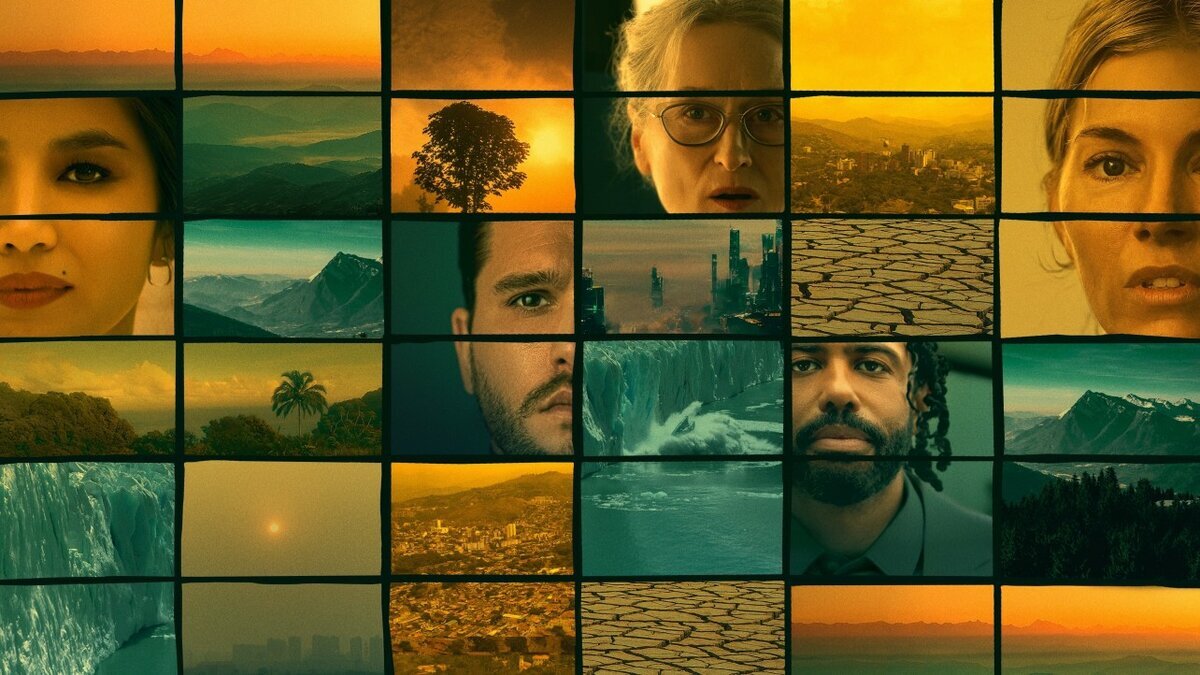
For over 20 years now, Roland Emmerich has been destroying Earth in the most impressive ways possible. Perhaps his film 'The Day After Tomorrow' way back in 2004 inspired the creators of the new Apple TV+ project 'Extrapolations'. And as a result, in...
Apple TV+ has released one of the streaming service's most expensive projects dedicated to the climate crisis. 'Extrapolations' is an anthology series of 8 episodes spanning 33 years, telling us what future may await if we don't start paying attention to the changing climate on Earth.
Everyone started talking about the series 'Extrapolations' as soon as they learned that the project had a truly golden cast, almost like in Wes Anderson's films:
- Kit Harington;
- Sienna Miller;
- Matthew Rhys;
- Marion Cotillard;
- Forest Whitaker;
- Meryl Streep;
- Tobey Maguire;
- Eiza González;
- Edward Norton;
- Gemma Chan;
- Keri Russell.
Of course, such actors had to be paid accordingly, but on the other hand, thanks to this name-dropping, the project received a lot of attention. And as a result, public expectations were high, which, alas, played a bad trick on the series.
Showrunner Scott Z. Burns ('Contagion') did not want to entertain the viewer; he wanted to make them think, to draw mass attention to the topic of global warming. But watching 8 episodes of quasi-documentary cinema about how the world is dying due to humanity's inability to give up things unimportant for life is hardly something anyone would want. Therefore, he and the film crew had to find a balance between the seriousness of the facts and an engaging presentation, which did not always work out.
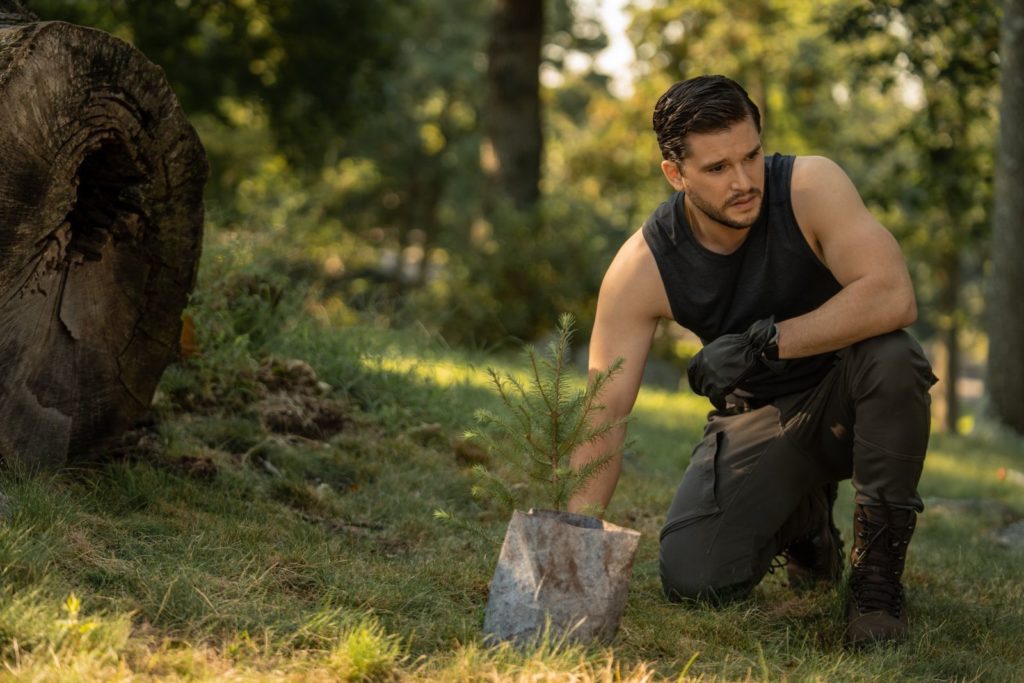
Opinions on 'Extrapolations' among the audience are divided: some are impressed by the scale of events and the depth of analysis of what is happening, while others criticize the series for its didacticism and soullessness. The creators of 'Extrapolations' clearly conducted impressive research, gathered a whole bouquet of existing thoughts and ideas from various fields of science, and presented a future world that is actually not so far from us. After all, the events of the second episode already take place in 2046, which is just some 23 years away – millennials and zoomers will be able to compare the fictional cinematic world with reality. By the way, many of the stated theories about the climate crisis were analyzed in detail by journalist David Wallace-Wells in his book 'The Uninhabitable Earth: Life After Warming'.
'Extrapolations' is an anthology where each episode examines a separate story. But at the same time, there is a main idea here – the climate crisis – running like a red thread through the entire project. In addition, the collective image of the villain in the form of a billionaire businessman was also used from the first to the last episode.
The series examines the impact of global warming on literally all spheres of life on the planet: from environmental and political to social on a societal scale and down to the personal tragedies of specific characters. And this approach is reflected in the overall development of the project. The focus in the stories gradually shifts, moving from the general to the specific — almost like Sherlock Holmes, if he were concerned about climate issues.
At first, we are indeed given a lot of didactic and theoretical material, bombarded with concepts, theories, and scientific facts. But the deeper the series goes into analysis, the more human the face of 'Extrapolations' becomes.
In essence, the unspoken Rubicon between the didactic and the personal becomes episode 4, where the global situation is closely intertwined with the personal stories of the characters. We are shown events after which there is no turning back, and humanity has to live with the choice that the minority made.
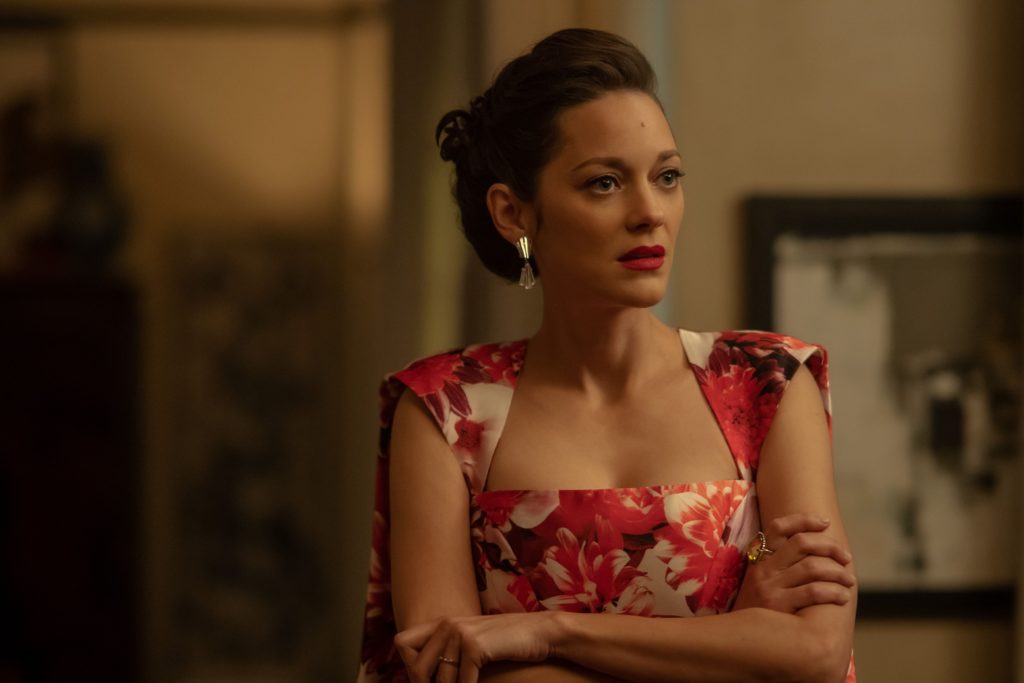
And this, by the way, raises one of the main problems of modern (and not only) society: the majority is forced to accept the decisions of the minority. Because of this, many think that their single voice won't change anything. Therefore, from episodes 5 to 8, the creators persistently try to convince us that everyone's position matters. Yes, you may not save the entire planet, you may not revive what has already died, but in your hands are your life and the lives of your loved ones, and you should not devalue this just because the significance of this contribution is not on a global scale.
That is why, personally, I disagree with the position that the series is a moralizing critique of capitalism, a sterile guide to global warming where everything is uncompromisingly divided into black and white. This is a flaw at the beginning, but on the other hand, it is unavoidable: the first episodes show the exposition and set the rules of the game for the world of 'Extrapolations'.
But then, more gray areas appear in the episodes, inextricably linked to the human factor: emotional turmoil, misunderstanding, missed opportunities, hypocrisy, selfishness, regret, and remorse. And the climate crisis becomes the background — the reason why personal tragedies occur, but not the main cause. And this allowed the authors of the anthology to shoot episodes in different genres: there is a road movie, an action film, a drama, a disaster film, a detective story, and a melodrama.
Sometimes you wonder, if the world outside weren't falling apart, would the characters be able to talk more sincerely about personal and important things? Probably not. And this adds extra weight to the theme of the natural disaster: the creators reflect not only on the consequences on a planetary scale but also talk about how it affects the worldview of a single ordinary person. After all, after 2022, we all remember that periods of crisis reveal people in different ways. And the final episode seems to unite these two vectors, bringing everything to a common denominator — one person can still change something for future generations.
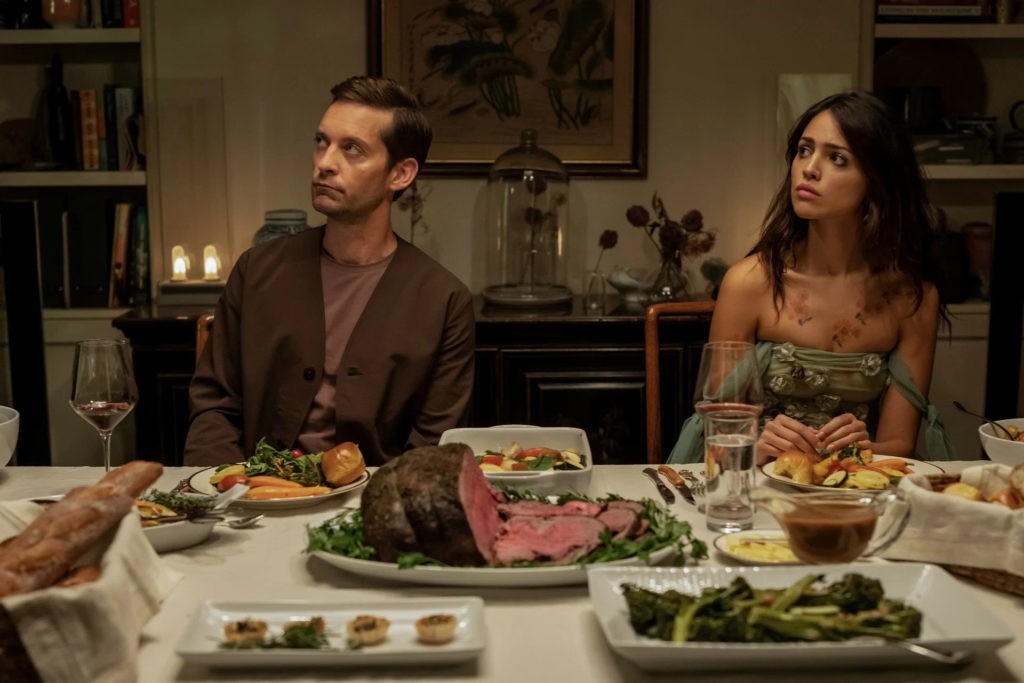
This leads to another equally important theme in the series — the consequences of our actions. The authors wanted to show how destructive the 'après moi, le déluge' attitude can be. At the same time, the 'payback' for decisions made can be different: someone loses their memory, loved ones, dreams of the future, while someone, on the contrary, finds a family in this chaos, discovers themselves, and decides what is truly important to them. There are always two sides to the coin, there is always a chance to change something.
One can argue long and hard about how successfully or not showrunner Scott Z. Burns managed to talk about global warming without putting viewers to sleep. But on one point, everyone agrees — this is a very beautiful project. The picture quality here is top-notch. It is very impressive how detailed the almost flooded New York and Miami, the suffocating Mumbai, and the disappearing London are shown. Not to mention the futuristic interiors, high technologies (uploading consciousness to the cloud, reviving flora and fauna from DNA), and the creation of that future world, in the reality of which it is not so hard to believe.

'Extrapolations' is a controversial and far from perfect project. At times, the series sags in plot dynamics, and in some places, it really explains the laws of a world on the brink of disaster and the causes of all troubles too bluntly and didactically. But if you give the anthology a chance and don't give up after the first four episodes, you can see interesting reflections on human nature.
In the end, you realize that the series about the climate apocalypse is imbued with optimism and hope for a better future. These stories probably won't teach us to protect nature, care for the planet, and think about the fate of the whole world, but maybe they will at least help us appreciate that carefree past we had in a world without smartphones, the people around us, and simply be kinder — to ourselves, to others, and to the planet itself.
Comments
0No comments yet.
Sign in to join the discussion.