

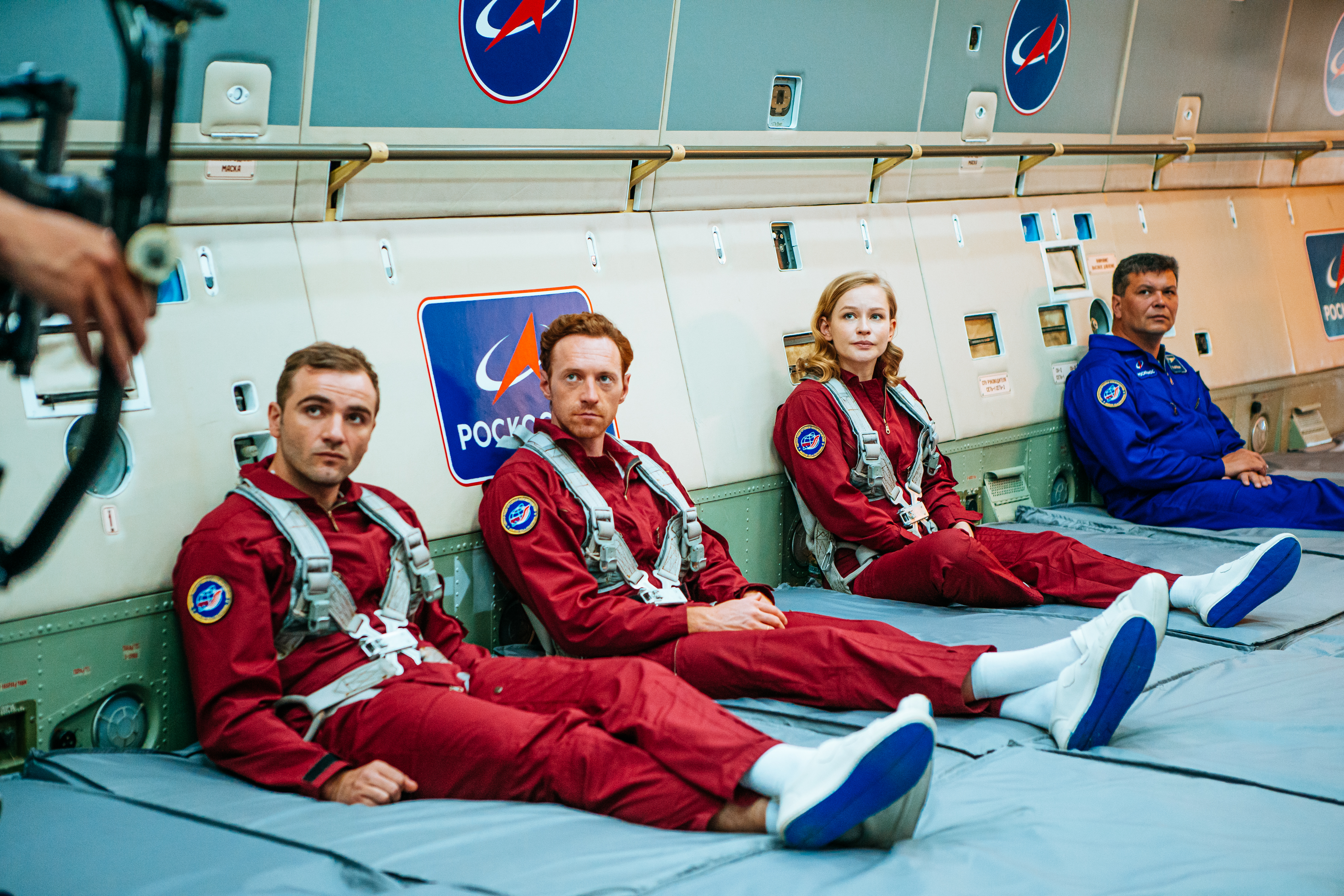
The most anticipated and talked-about premiere of Russian cinema — the film 'The Challenge' — has hit the screens. The first film shot aboard the ISS, with real cosmonauts and in zero gravity. Many beautiful words, but is the film itself worthy of th...
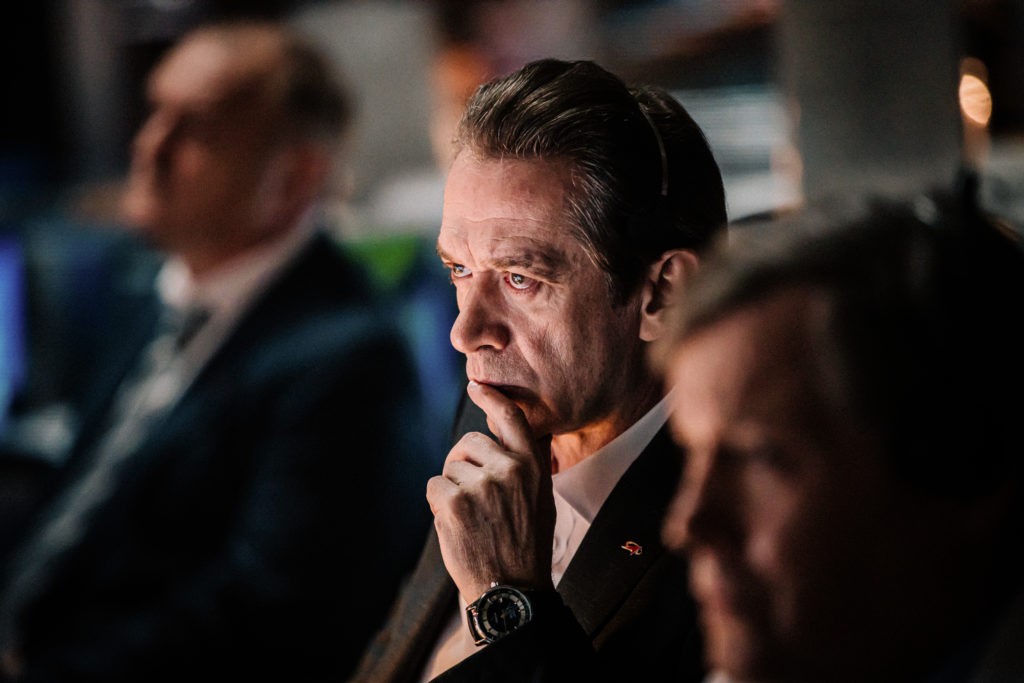
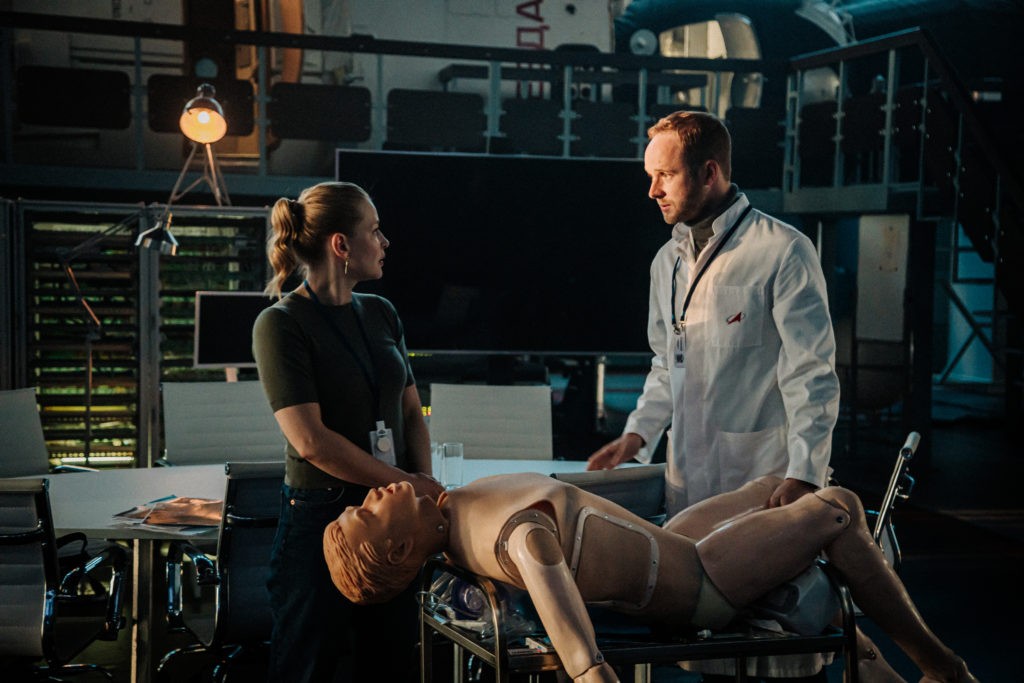
During a spacewalk, one of the ISS cosmonauts sustains a serious injury. Sending him back to Earth is impossible; he would die en route. Despite the risks and unforeseen circumstances, flight director Volin (Vladimir Mashkov) decides to send a surgeon, Evgenia Belyaeva (Yulia Peresild), into space to save the cosmonaut. But before she can join the space rescue crew, she, along with her fellow doctors (including Milos Bikovic), will have to prove her professional competence and face various challenges on Earth.
The long-awaited large-scale project by Klim Shipenko, 'The Challenge,' has finally been released in Russian theaters, with a vast number of participants involved in its creation (just look at the list of the film's sponsors). It is the first film in cinema history to be shot in real space aboard the ISS. Let's figure out whether this movie justified the invested funds and efforts. And what exactly did that first film in space turn out to be?
A Bit of Background
The history of 'The Challenge' is controversial, as it is not just a movie. The film is inextricably linked to the fates of the people actually involved in space exploration. It's no secret that cosmonauts are individuals who have dedicated their entire lives to the idea of studying outer space. To find themselves 350 km above Earth (where the ISS is located), they have to spend most of their lives proving to everyone that they are fit for flight not only intellectually but also physically. And then patiently wait for their turn on a crew.
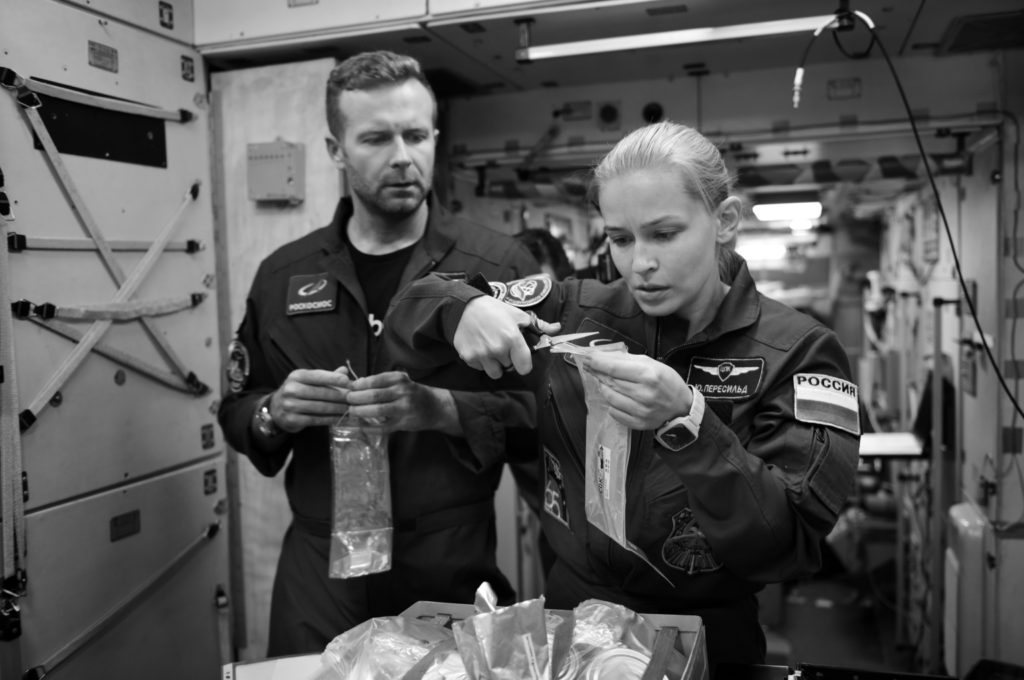
The film 'The Challenge' was shot with sponsorship from Roscosmos, meaning it was partially funded by the state budget, and crucially, within the framework of the federal space program for flights to the ISS with a previously agreed flight plan. For the sake of filming on the international station, seats on the Soyuz were allocated for Klim Shipenko and Yulia Peresild. This inevitably led to changes in the life and work prospects of one Russian cosmonaut, Andrey Babkin, who had been preparing for the flight of his life for 10 years (he was removed from the flight and is unlikely to ever fly again due to his age). Furthermore, the filming extended the stay on the ISS for those researchers already on the station (since Soyuz capsules are not made of rubber).
No one will ever explain to us why it was impossible to find another way to have one's cake and eat it too. And as much as one might not want to compare, it is inevitable: another equally ambitious project by Tom Cruise, which also aims to be filmed in space, is planned to be funded through private investment. This means the NASA astronauts will fly, as will the bulletproof actor himself.
Another sore point for 'The Challenge' is its pre-release marketing campaign. It would seem that a large-scale film with a huge budget (over 1 billion rubles) — why not prepare high-quality promos and teasers? The answer is also lost in the daily hustle. In the first trailer, we could only guess what the film would be about, as the clip was essentially devoid of content.
And the posters themselves, unfortunately, also failed to generate the proper excitement. At the very least, a question arose: is 'The Challenge' a film only about Peresild's character? Couldn't it have been made with lower costs on Earth then? One involuntarily draws a comparison to another sensational space blockbuster — Christopher Nolan's 'Interstellar'. It had a truly stellar cast (Matthew McConaughey, Anne Hathaway, Matt Damon, Jessica Chastain, Timothée Chalamet), but on the main posters, we see more of space than the actors themselves.
And as for the rumors and intrigues concerning the 'lost' footage and Yulia Peresild's 'problems' aboard the station — I don't even want to recall them. If this was part of a marketing campaign to attract interest, then it's a pity. If it was speculation from ill-wishers that leaked to the masses, then it's also a pity.
Therefore, even before the film's premiere, despite the honor and prestige bestowed by the words 'the first film shot in space,' there were already questions about the project. So, what did the film ultimately turn out to be?
'The Challenge' is Issued
In short, Klim Shipenko's 'The Challenge' is a film about anything but space. The film clearly feels the influence of the action-drama 'Gravity' with Sandra Bullock and the more melancholic 'Proxima' with Eva Green. However, in 'The Challenge,' space is not an active character, as it was in other films. Here, it is simply a backdrop against which the characters resolve personal dramas, cope with tragedies, and find love. The situation is further exacerbated by the weak rhythm of the plot development, stretching the runtime to two and a half hours.
The problem is that 'The Challenge' was positioned more as a film about a person's struggle for life in inhuman conditions. Essentially, a confrontation between man and space. Perhaps this is a gap in marketing, but as a result, it played a cruel trick on the film; expectations were not met. And in the end, we have a film that is at times a melodrama, at times a production drama about medics, at times a psychological drama, and sometimes an absurdist comedy (this is in the very finale).
This is further compounded by the film's atmosphere, which cannot seem to decide what it wants to be — a comedy, an action blockbuster, or a melodrama. The abundance of jokes, and far from the wittiest ones, is too much, which does not add charm but rather tires the viewer. And it does nothing to save the slow pace of the plot development.
Another weak point of the film is the multitude of plotlines that are left hanging without any coherent explanation. How did the heroine cope with her personal tragedy, and why is she still suffering? How can one be cured of alcoholism in a week (and was there alcoholism and why)? What connects the main characters? Finally, why did Yulia Peresild's character fly into space? There is a great lack of a more intelligible explanation than the phrase 'she's just cool.'
Another cruel joke due to the marketing campaign is the inflated expectations regarding the depiction of space. It is clear that cinema has its own genre conventions, and under this pretext, one can turn a blind eye to many things. But excuse me, how can a cosmonaut allow themselves to toss an alcohol wipe on the ISS, which will then drift through the station's modules in zero gravity? Or Peresild's character, who tosses around jackets and medical instruments on the station. Of course, the scene where an instrument floats near her face is impressive, but if you are claiming to make the first film in cinema history shot in space, then please, at least adhere to the norms of plausibility. Otherwise, viewers might think that such behavior is acceptable on the ISS.
Furthermore, I personally have a big question — why is Yulia Peresild's character on the ISS always with her hair down. Firstly, it's inconvenient. And female cosmonauts/astronauts usually tie it back in a ponytail (look at footage of Anna Kikina). Secondly, the flying mane of hair around her face does not particularly enhance the character's image visually. After all, this could have been shown in a few shots to emphasize weightlessness, but not all the time.
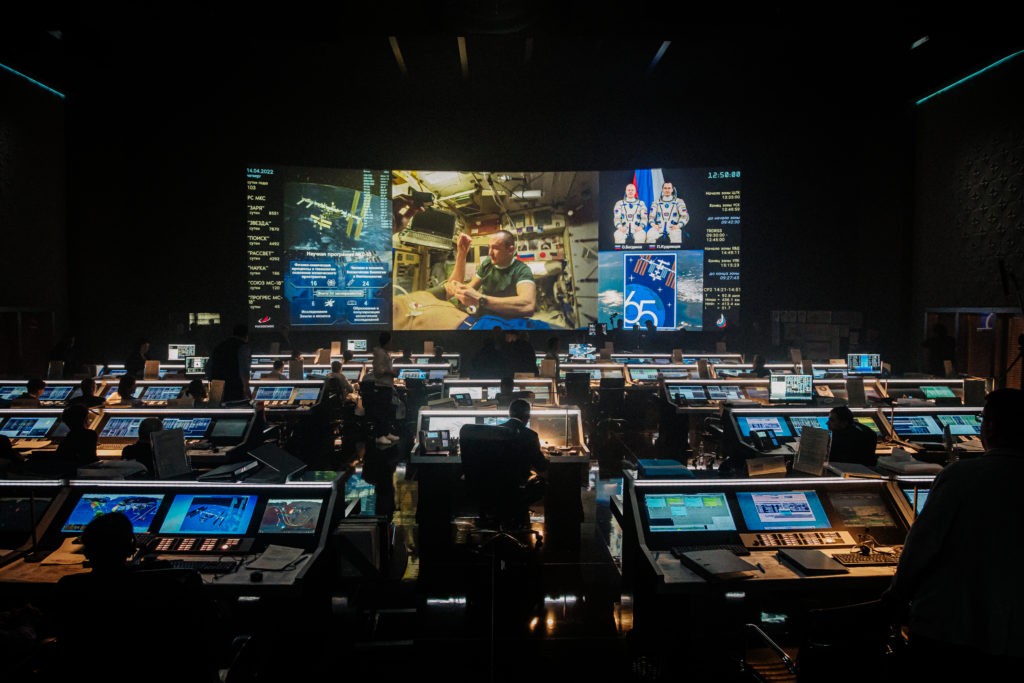
My personal special 'love' is the product placement in 'The Challenge.' I understand that the project was very expensive, and money was literally collected from all over the country. Fine, Tinkoff Bank sponsored you, but why show the absurdity of the heroine sending money from her Tinkoff card to her mother on Earth? Or Megafon helped you, but why so clumsily insert a line that only Megafon has reception at Roscosmos? And then there's Konstantin Ernst, who, in the style of Marvel's Stan Lee, also decided to leave his mark on the film not only through sponsorship but also by mentioning his name. Why couldn't it have been done more smoothly and naturally — the question hangs in the air.
Perhaps the most minor complaint is about the musical accompaniment of 'The Challenge.' Throughout the film, until the moment they started playing Soviet songs, I couldn't shake the feeling that the composer, Sergey Cheremisinov, who wrote the music, was inspired by Hans Zimmer. And that's fine, but at times it felt like he wasn't just inspired but also borrowed pieces from his soundtracks. Why couldn't something be composed that is imbued with Russian melodiousness? Why was it necessary to insert Soviet songs? The Soviet legacy, undoubtedly, must be remembered, but many films have already been made about it (with corresponding music). For a change, they could have asked Anton Belyaev from Therr Maitz; he would have written an excellent track. Or at least made a quality remix of the song 'My Echo.'
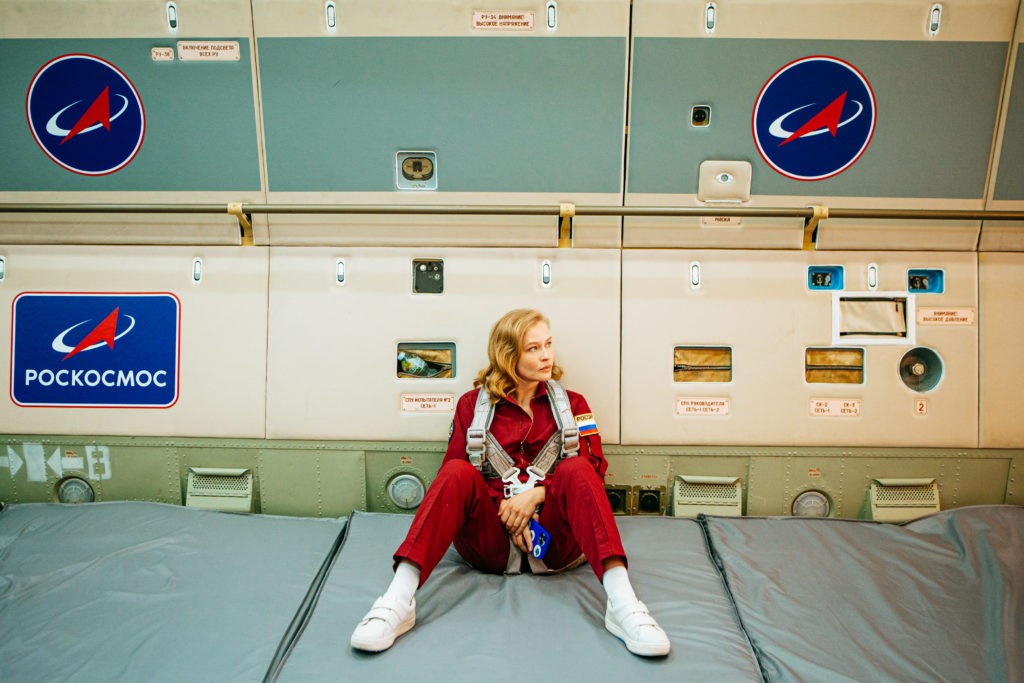
Is There Anything Good?
All of this sounds as if there is nothing good at all in Klim Shipenko's film. In fact, there is. First of all, it must be said that the film is beautifully shot and with love. Particularly many interesting angles were made during the filming on the ISS, where Shipenko acted as both director and cinematographer. Therefore, visually, the film is made with high quality and is attractive; the eye is pleased.
Moreover, since the filming took place aboard the real international station, and not a prototype created on Earth, the viewer is shown the interior of the Russian segment (of course, they were not allowed into the territory of others, except for the most beautiful place with a large-scale 360-degree panorama). Such a detailed tour is rarely seen (unless you are a fan of Roscosmos and NASA broadcasts, where crew members often show and tell how they live). It was also interesting to observe the preparation of the characters at the training center, where they were measured, tested, and spun on a centrifuge.
The main merit of 'The Challenge,' perhaps, is the popularization of space and the heroes who are currently on duty on the ISS and continue to push the boundaries of outer space. Tsiolkovsky, Korolev, Leonov, Gagarin, Tereshkova — the list of Soviet pioneers and scientists can be long, and everyone knows them. At the same time, few people know the names of those who risk their lives now, who continue the work of the Soviet dreamers. Therefore, one can especially rejoice for the Russian cosmonauts who also tried their hand at acting — Anton Shkaplerov, Oleg Novitsky, and Pyotr Dubrov — their names will now definitely be known to everyone.
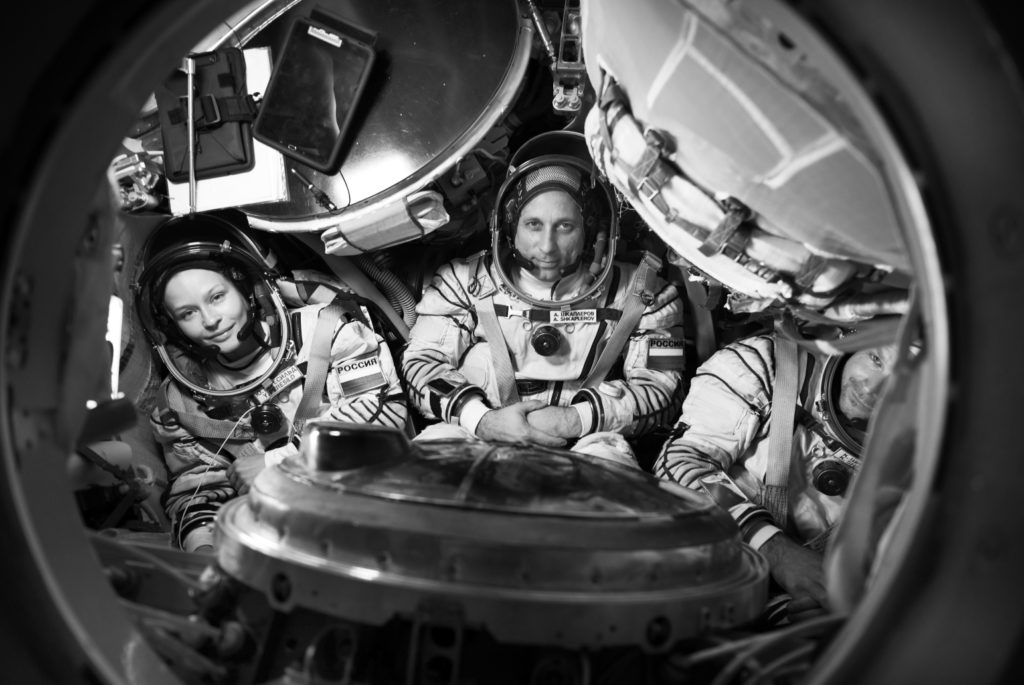
Unfortunately, the last 20 minutes or so negate all the positive aspects of the film. The story becomes too grounded, dulled, forgetting about the harshness of outer space, and everything narrows down to a rather banal (if not disappointing) final scene, where space is mentioned in passing, like a third wheel. And the film ends in the style of an ordinary love drama.
Over the course of two and a half hours, heartfelt, even in some sense philosophical, conversations flash between the film's characters. Among other things, they discuss the eternal question — why do people strive for space when they cannot even solve their problems on Earth? Upon leaving the theater, a similar question involuntarily arises — why was it necessary to fly into space to shoot a melodrama? Of course, the answer to this question is clear, because now we have become the first in the space film race. The Russian film industry has made a breakthrough by presenting a real experiment — an unforgettable cinematic experience (viewers in the hall even photographed the screen with views of space). And yet, the thought that 'The Challenge' could have become something more than just a beautiful set of shots from the ISS and a popularizer of space for the masses does not leave my head.
Comments
0No comments yet.
Sign in to join the discussion.