

In theaters is the film 'The Curse: The Consecration', which many will likely miss due to translation difficulties, although it is a decent and not boring movie about how ghosts are lonely too. More details in our review.
Director Christopher Smith hasn't given the world many great films, but his filmography does include the decent movie 'Black Death', which, I assume, is remembered by regular TV-3 viewers and fans of Sean Bean (and who isn't, and who isn't), and overall, the man knows how to direct with a certain elegance, which, while not uncommon for directors of studio horrors, is a quality that is appealing. Similarly – not too shocking, but elegantly – 'The Curse: The Consecration' is filmed, where the camera periodically retreats into a mirror, the same events are replayed from different interesting angles, and the Scottish mountains appear, just like in the best years, as a place both alluring and infernal.
The plot in this sense rather catches up to Smith's directorial ambitions than matches them. After a classic setup: a moderately tired-of-life ophthalmologist Grace (Jena Malone, an actress from various good films and our beloved series 'Too Old to Die Young') loses her brother, a priest, with whom she, naturally, hadn't spoken in a long time but wanted to, and she sets off for a distant ancient Catholic monastery where he died under mysterious circumstances. There, in an atmosphere of creepiness that is familiar, almost native to those who often watch films with the word 'curse' in the title, strange things begin to happen to Grace: visions, fainting, ghosts.
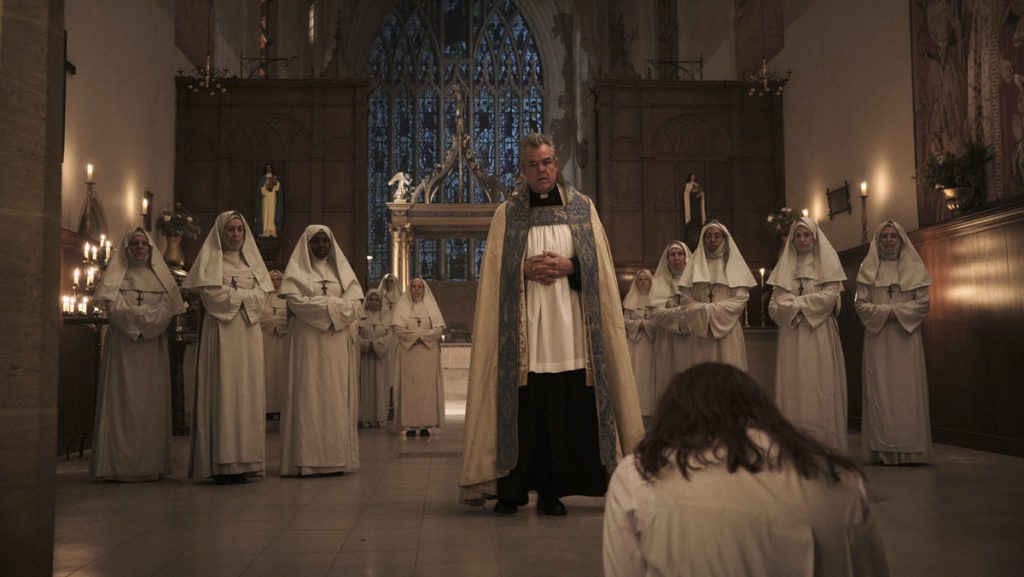
Against this backdrop, the mother superior (a wonderful, by the way, role for Janet Suzman, who here reminds one of Judi Dench) looks at her with strange malice, a woman who loves Christ, while Grace, by her own admission, does not love him very much. The other nuns treat Grace warily, and only the holy father (Ian Pirie, no revelations but a good role) seems to want to help Grace – both with investigating her brother's death and with finding herself.
These two processes quickly become one: to understand why her brother died, she needs to find what he was looking for (an ancient church relic) and possibly found, and for that, as always with the search for religious relics (recall at least the great film 'Indiana Jones and the Last Crusade'), she needs to understand herself. But one can understand such things about oneself that make life no longer worth living. Grace is haunted by memories of her difficult childhood, of how the devil, literally, came into the world; of how something was wrong with everyone around her. Or was something wrong with Grace herself?
A coherent discussion of the film is, of course, hindered by the fear of spoilers, but its main theme is, undoubtedly, life after realization. How to live knowing that the source of your life's problems is within yourself? How to live knowing that as a person you are not very good?
The film's script offers a view of a person's fate from the perspective of moral determinism (born evil, die evil), so the protagonist's narrative path turns out to be one continuous paradox: how can evil exist if it perceives itself as good? Can one change their place in a picture of a fully predetermined world? What can a person do? And what can be done with a person? Interesting, overall.
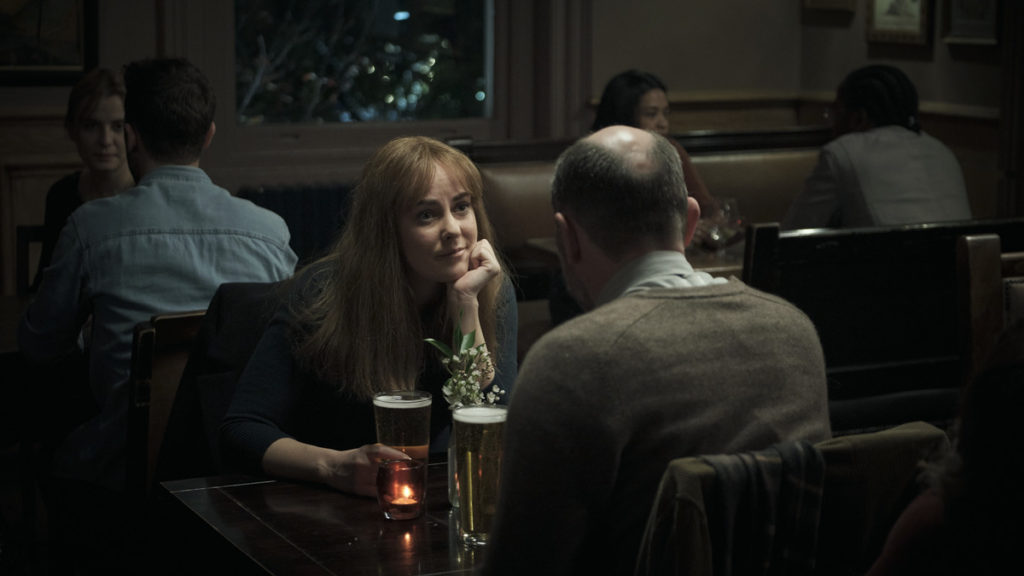
Moreover, this is not the most innovative or bold, nor the most outstanding film to spend an evening with, but it is an honest piece of work and a solid B-movie. Monastery, Scotland, dark past, murky future, and all of this to confirm the main idea of horror films in recent years: being a ghost is, first and foremost, very lonely. Something along these lines, but significantly more intelligent, was done by Lowery in 'A Ghost Story' and by Oz Perkins in the terrifyingly beautiful 'I Am the Pretty Thing That Lives in the House'.
It's clear that the experiments of the first director and the poetry of the second are not what director Christopher Smith excels at, but his film doesn't try to reinvent these, in their own way, outstanding films (although Perkins' film seems to have been liked by three and a half viewers, but it is an extremely atmospheric work and pure poetry), but rather translates their ideas onto the tracks of studio horror. Strangely enough, it turns out interesting: even if this is not so much a film as a ghost of a film, a dashed-line parable about how not everything that seems evil is evil, it is exactly the kind of movie that makes you remember Roger Corman and shed a tear with pleasure.
However, despite the convoluted detective line and the complexity of existential questions, the main mystery of the film is, of course, its title. While one can still come to terms with the word 'curse', what exactly 'consecration' refers to is, frankly, not entirely clear, but don't look a gift horse in the mouth. And for domestic distribution in its current state, a B-movie about how to live if you are a world evil is, of course, a real gift.
Comments
0No comments yet.
Sign in to join the discussion.