
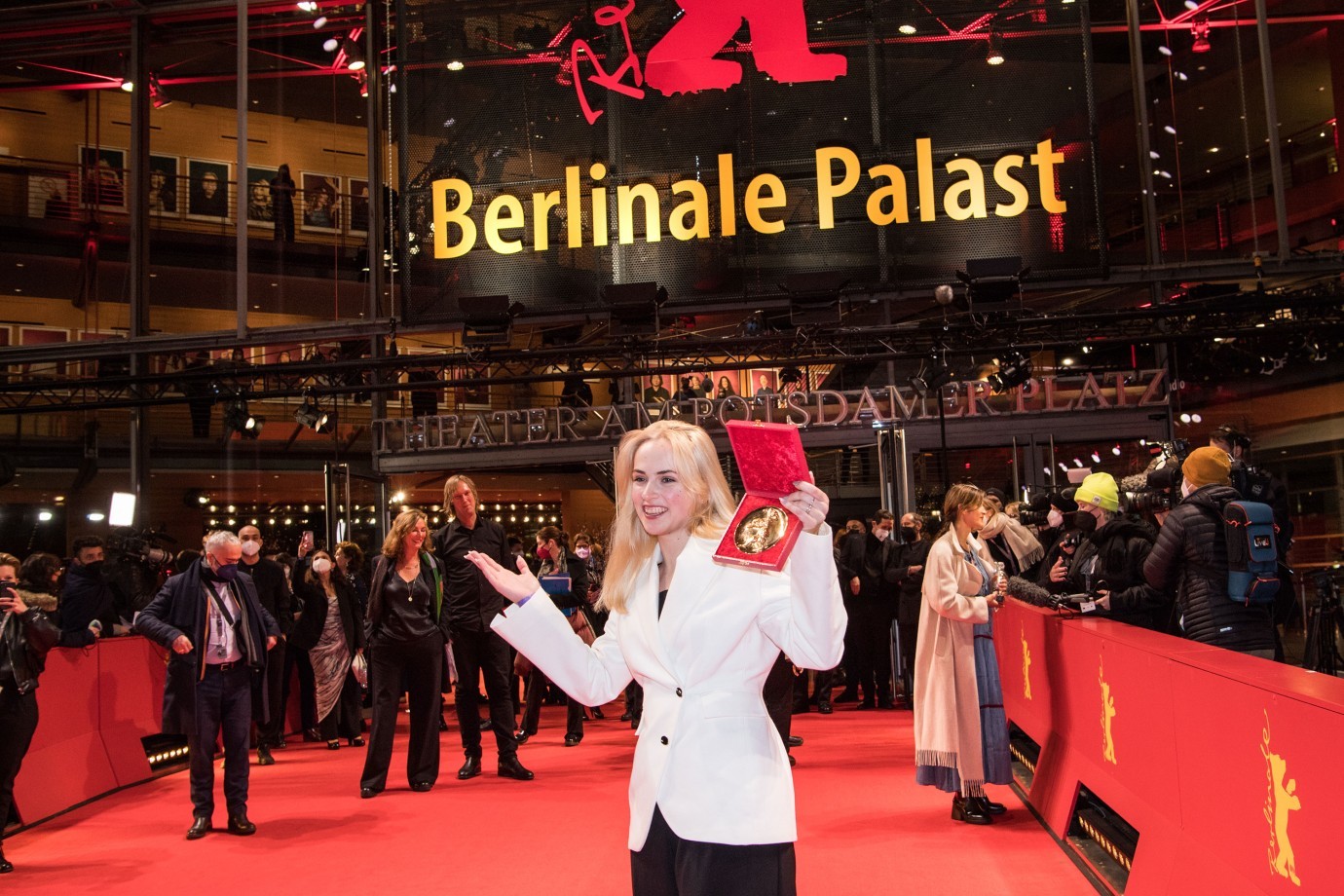
For filmmakers, festival life is not just an exciting event, but a whole separate sphere for creativity and networking. Anastasia Weber, laureate of the 72nd Berlinale and winner of the Golden Bear for Best Short Film, told us in detail about her fes...
Nastya Weber and I studied at the Institute of Cinema and Television: I majored in TV directing, and she in screenwriting. For the past 6 years, I've been following how Nastya has been shaping her directorial vision, shooting cool stuff, and achieving significant success. Watching this is both fascinating and motivating. We chatted with Nastya about how to start making films, why you should submit to festivals at all, and what exactly “Trap” is.

Ellina: The last time we met in person, I knew you as a screenwriting student at KiT. But for the last six years, I've been watching your success in directing. Why did you decide to change professions?
Anastasia: You and I remember perfectly well what KiT was like back when we studied there. My classmates and I felt disconnected from any practical work, and of course, we wanted to develop.
After graduating, I realized that okay, now I have an idea of how to write a script, and I have a diploma feature film. But where to go? How to move forward – I had absolutely no idea. So I decided to continue studying.
And that year, the St. Petersburg School of New Cinema (SPbShNK) was opening, founded by the founders of the Moscow ShNK. I enrolled there in directing. I didn't see the point in going back to screenwriting; I wanted to learn something that would upgrade me.
In the summer, we went to a film intensive in Tbilisi led by Ilya Tomashevich. We were messing around and shooting there – that's when I started to understand that I was becoming a director.
In my second year, we shot the short film “Io Syndrome” in two days, and on the third day we screened it. It was unusual; it integrated a performance: towards the end of the film, the main character walked into the audience, took his girlfriend, and left, while the audience continued watching the film. We filmed that moment and included it in the festival version.

While working on “Io Syndrome,” I realized that I love street casting. I walked around Prosvet (Prospekt Prosveshcheniya in St. Petersburg - editor's note), among the panel buildings, watching the local guys and girls.
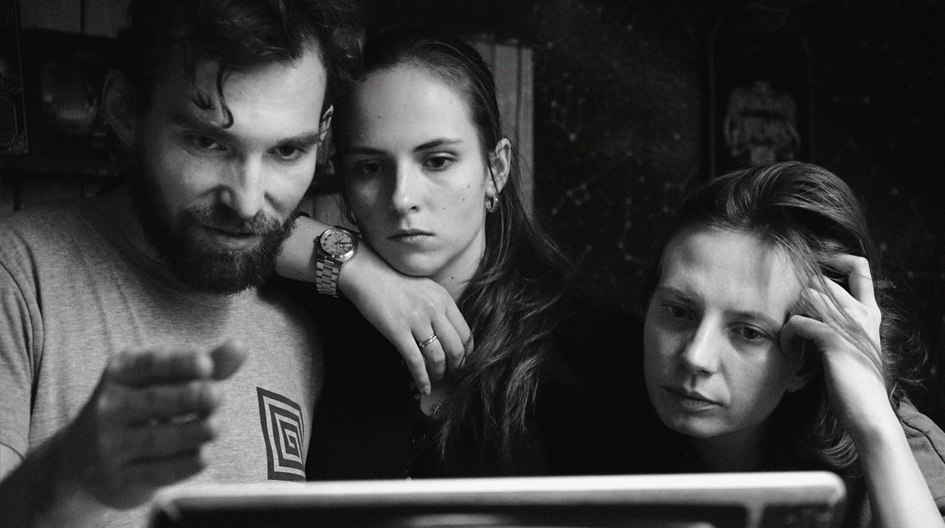
A year later, “Io Syndrome” made it to the Oberhausen festival. We even won two prizes there – that was our first festival experience.
The Oberhausen Festival is the main event in the world of short films. It has been held annually at the end of April since 1954 in the German city of Oberhausen.
The festival plays a major role in the development of German and European cinema. At the eighth festival in 1962, the Oberhausen Manifesto was written, which marked the beginning of New German Cinema.
The event is extremely friendly to emerging directors – filmmakers such as Miloš Forman, Věra Chytilová, Roman Polanski, and Martin Scorsese made their debuts here.
The committee reviews about 7,000 submissions each year, and around 500 films are typically accepted into the program.
At the center of the film is not a hero, not a story, but a feeling. I call this feeling “Trap.”
E: You won the Golden Bear with your debut short film “Trap”. When did you start working on it?
A: In parallel with the Oberhausen festival. “Trap,” you know, became the platform where I encountered all the mistakes that a novice director can make.
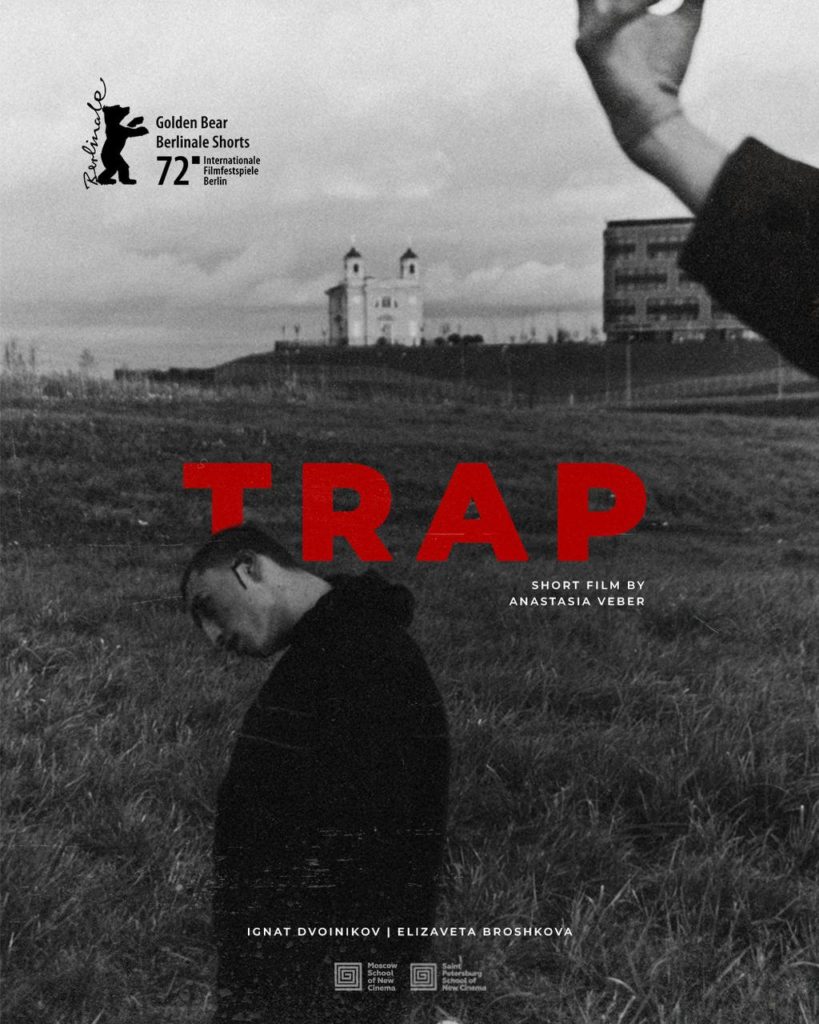
“Trap” is a 20-minute fiction film that is narratively unusual. Essentially, it's a kaleidoscope of the lives of young guys and girls on the outskirts of St. Petersburg. At the center is not a hero, not a story, but a feeling.
And I call this very feeling “Trap” – it's a state where you feel like you should have died long ago, but for some reason, you're still alive. You live between extreme situations, and at the same time, you're constantly on a wild adrenaline rush.
The essence of this state is that from constant survival, you ultimately extract your own truth and strength. It's a super paradoxical phenomenon that, it seemed to me, well conveys the lifestyle of my non-professional actors.
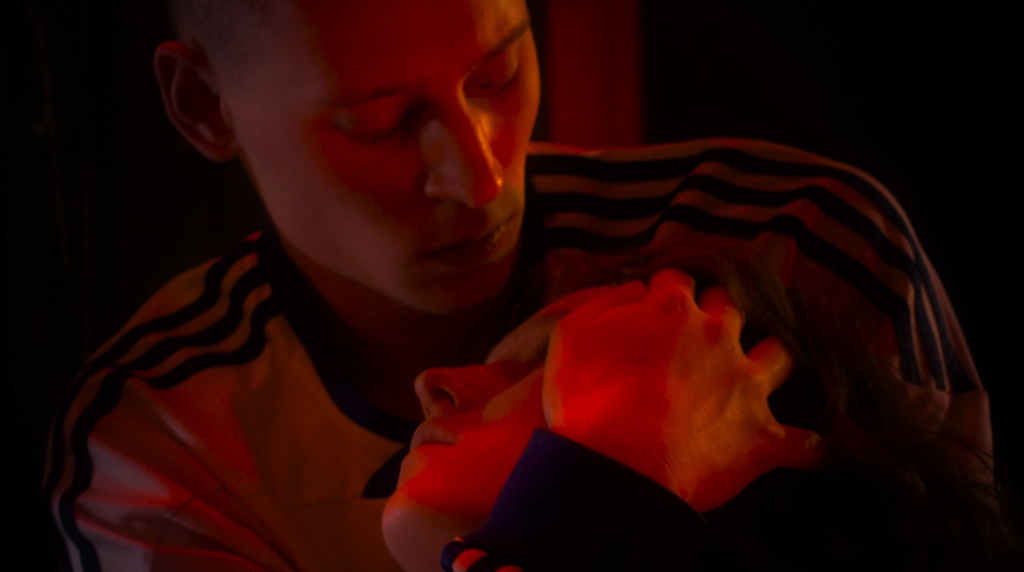
At the end of the film, there is a big performative scene where a fight escalates into something more significant.
E: How did you decide to submit “Trap” to the Berlinale? And in general, how did you choose what was right for this particular film? There are a huge number of festivals, many of them very niche, and the Berlin one is one of the biggest, so it was a bold move.
A: In the film industry, there is a separate field – festival promotion of a film. You hire an agent or an agency; they usually have a strategy for promoting your film.
But when we talk about independent cinema, about projects by newcomers: the strategy is usually this – you submit wherever you can.
When I finished the film, I gave it for promotion to “Eastwood” (a film promotion agency for film festivals – editor's note), and my director's agent joined the team. At first, we kind of overlooked the Berlinale and sent all the documents on the last day.

It was quite expensive. Submissions to film festivals cost money, which you pay yourself, as does the promotion. But I regret nothing – it was worth it.
The Berlinale is one of the three major European film festivals. It has been held annually since 1951, invariably in the German capital.
Unlike its counterparts, the Cannes and Venice festivals, the Berlinale is considered the most audience-friendly event – anyone can come and buy a ticket, and over two weeks, watch the entire festival program.
It is also believed that the Berlinale is the largest of the niche festivals. The competition program more often features representatives of arthouse cinema whose films address acute social and geopolitical issues.
The main prize is the Golden Bear – awarded for the best film. The Silver Bear is awarded to individual film professionals and the short film that takes the conditional second place.
The Berlin festival was the first to refuse to divide acting awards by gender – today, prizes can be won for Best Leading Role and Best Supporting Role.
At the 73rd edition of the festival, the film “The Cage Is Looking for a Bird” by Russian director of Chechen origin Malika Musaeva and the documentary “Eastern Front” by directors Vitaly Mansky and Evgeny Titorenko were featured.
E: How does the awards ceremony go? Did they tell you in advance that you had won?
A: No, I didn't know anything. The main thing is to be fully ready a few hours before the red carpet. All participants are divided into categories. I was among the short film competition participants – 21 films were competing. They put us all in two minivans and drove us to Potsdamer Platz, to the Berlinale Palast, where the awards ceremony takes place. The entire square in front of the Palast is covered with a red carpet. You walk along it, enter the hall, and then the awards ceremony happens.
It was very nerve-wracking. It was bright and flashy – I wouldn't say it was a pleasant experience, to be honest. Huge stress.
Then, with your award, you go out to 15 photographers who endlessly snap pictures of you.

You approach making a film like a little worm that wants to learn the truth about this world.
E: For many of us, festivals are more about arthouse cinema. Can it be said that by actively participating in festivals, you have defined yourself as an arthouse director?
A: Listen, no, not exactly. When you're a student and you're studying, you don't feel like a director at all, let alone an arthouse one. I would approach this question from a different angle.
For me, cinema is about research and experimentation. That is, you approach making a film not as a creator who needs to make something fundamentally important, but rather as a curious little worm who is interested in everything, cares about everything, and wants to learn the truth about this world.
The fact that I got into the Berlinale is mostly just luck. We didn't know anyone there; we sent a general folder on the last day. And the Berlinale itself didn't change me – I didn't get a big head, my approach to directing didn't become different.
E: What did winning the Berlinale give you?
A: Well, look, I won, and after that, I had a simply top-notch week: I received a ton of offers from agencies and production companies. But then [military actions on the territory of Ukraine] started, and all my dialogues ended. Everyone was at a loss and didn't want to take me on for work, which is generally quite understandable and clear.
Originally – after the Berlinale, you have a better chance of selling your film for a high price to streaming services. If you have a feature film in development, there will be production companies that want to develop it with you. Your authority increases significantly, and so do your chances of getting work as a director and funding for future projects. So, the Golden Bear is super top. But it's hard for me to tell you about all the perks because in my case, the victory was nullified by [military actions on the territory of Ukraine].
E: Where can “Trap” be viewed?
A: Online – nowhere yet. It has already screened at 30 festivals; in April, we have a festival in Busan. Sometimes screenings happen in St. Petersburg and Moscow, but you have to keep an eye out. Otherwise, I hope to upload it to online platforms in the foreseeable future, and then you'll be able to watch it.
E: Don't you have the feeling that the average viewer doesn't really like or know how to watch short films?
A: I think that short films are more of a transitional form for a director, a ticket to feature films. You could say it's a separate genre.
In Europe, it is well received; there are separate streaming services where you can watch short films. The state and foundations sponsor film production in various ways, and film schools also allocate budgets and equipment. So here, short films are not as disadvantaged as in Russia.
But we also have services that promote short films specifically, for example, Pilgrim.
E: Technologies are developing, videographers are emerging who often shoot interesting things but keep them on YouTube or Vimeo because they think their work is not worthy of festivals. What do you think, are they right?
A: Before “Trap,” I had the experience of going to Oberhausen; our teacher watched “Io Syndrome” and said, “Submit it.” And so with the second film, the question didn't even arise for me – I already knew that festivals are super cool, they give out free beer, and there are a lot of great people there who understand you without needing many words. They are your people – with similar problems and views.
Sometimes small festivals can be more profitable in terms of cash prizes than big ones because, for example, the Berlinale is great: it gives publicity to your film. But there is no cash prize at all. Whereas Instant 36, which accepts films shot in two days, has a main prize of two thousand euros. You need to research this; there are excellent sites like Film Freeway where you can register, upload your film, and submit applications.
Another trick: you can write to festivals directly and ask for waivers – explain your situation, like, I'm a director of Russian independent cinema (if you're from Russia), I can't afford the submission fee, please give me a waiver. Or describe your specific situation. Festivals often meet you halfway – they give out free promo codes.
Until a film has an audience, it doesn't happen.
And with this experience, I will say confidently that at least submitting your films is necessary. Showing what you have is necessary. It's not about the paradigm of success and failure: cinema must be shown. Until a film has an audience, until you hear feedback, until you simply see it on the screen (which is what it's created for, after all) – it doesn't happen.
Every film will find its festival and its audience – I guarantee it.
Comments
0No comments yet.
Sign in to join the discussion.