
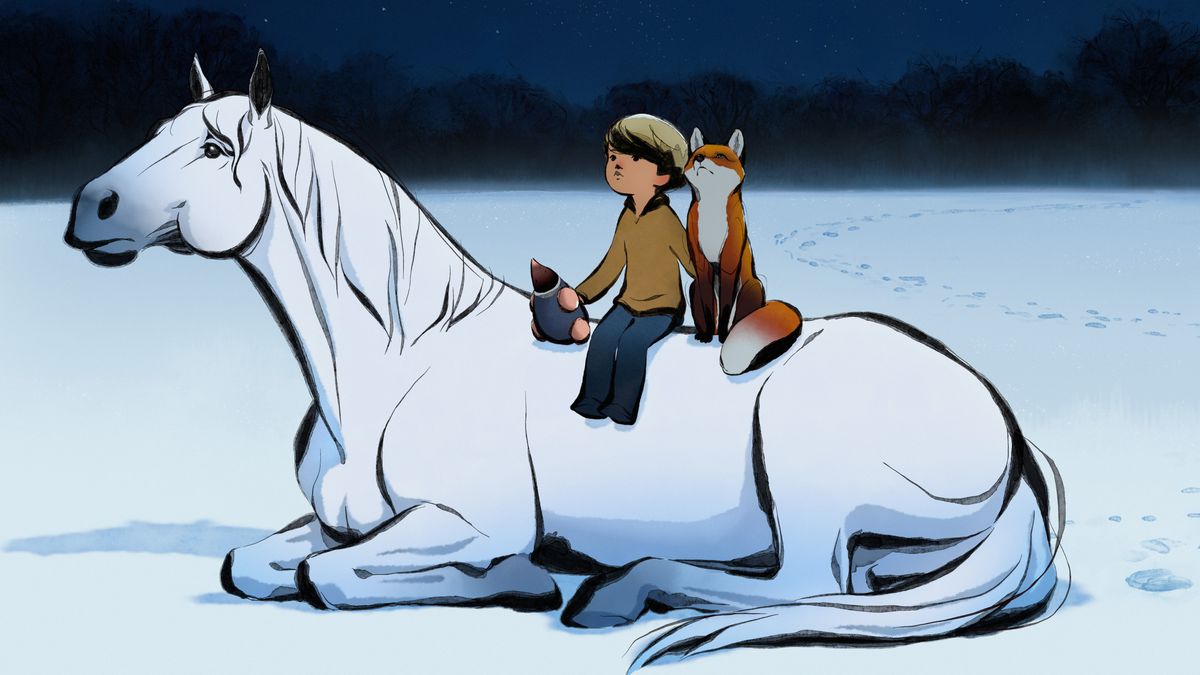
The animated hit “The Boy, the Mole, the Fox and the Horse” is not what it seems. We explain why it’s better not to show this film to children.
At the recent Academy Awards ceremony, the Oscar for Best Animated Short Film went to Peter Baynton and Charlie Mackesy’s “The Boy, the Mole, the Fox and the Horse” – an adaptation of the eponymous dialogue picture book by Charlie Mackesy, published in 2019. A non-fiction bestseller, a masterpiece of animation art, praised by critics. Why is this profound message for the ages nothing more than a meaningless illustration that children should not be shown?
An Artist, Not a Writer
Everyone has a talent. And Charlie Mackesy has one too – drawing charmingly. His style is built on smooth lines and curves, soothes with gentle shades, shows sketches in the finished drawing, and overall strongly resembles the visuals of “Wolfwalkers” by Tomm Moore (whose adaptation was also released on Apple TV+). And if “The Boy, the Mole, the Fox and the Horse” were an album of paintings, the critics’ delight would be beyond doubt. But Mackesy also tried his hand at writing, though he is clearly lacking talent in that area. It turns out that to impress the modern reader and viewer, it is enough to create an incoherent collection of quotes, like those that fill social media groups. But is it all so illogical? Let’s find out.
Questions for the Adult Audience
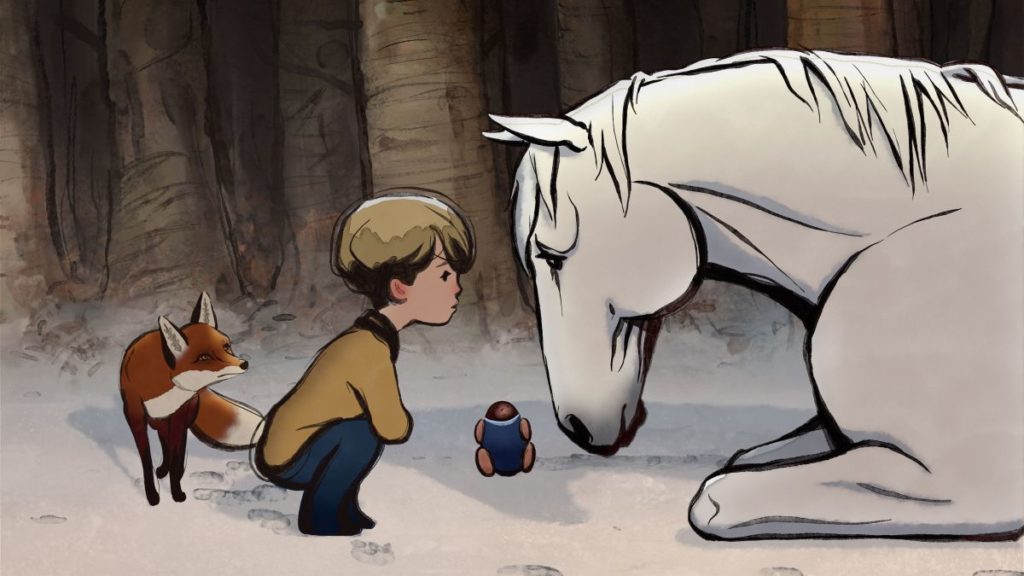
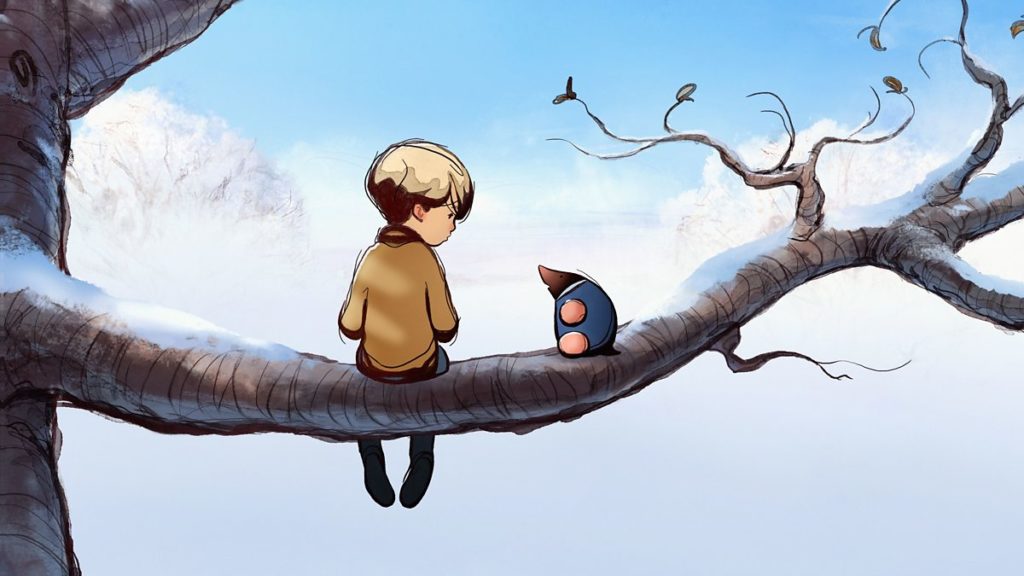
A little boy in the middle of a snowy field meets a mole. The child is lost, and the mole decides to help him return to people. They head to the river, spend the night together in a tree, and generally behave like a poor copy of the Little Prince and the Fox. And if Saint-Exupéry’s work is initially far from realism, Mackesy makes it clear that the boy is quite real and looking for a very real home, so a reasonable question arises in an adult’s mind: “How hasn’t this child, dressed in just a sweater and pants in winter, frozen to death yet?!”
Let’s assume that all external attributes are conditional, as are all direct and indirect signs of the presence of nearby people whom, for some reason, none of the animals have ever seen, and focus on the dialogues of anonymous quote-mongers. After all, children need to take something away from the work they’ve watched. But the dialogues are the main pain point of the animated film “The Boy, the Mole, the Fox and the Horse.”
In Search of Logic
In the preface to the literary source, the author says the book can be read from any point. And that is the absolute truth!
Imagine an average group on a popular social network, filled with quotes about life that are unrelated to each other: pick any one. The same goes for the animated film – no logical bridges are built between the fragments of conclusions.
And it’s not that the quotes are bad. The viewer is “taught” to be kinder, to stop being afraid, to forgive themselves, and not to give up. But this must be done simply because a character suddenly said so. Did you think the teaching was based on learning a lesson from actions? Not at all! Mackesy thought it was enough to just toss out a phrase, like a dice in a game, without explaining what led to the problem or how to solve it. And what is an adult supposed to say to a child after this, when even a mature mind can’t find cause-and-effect relationships in what’s happening?
Reflections on Home
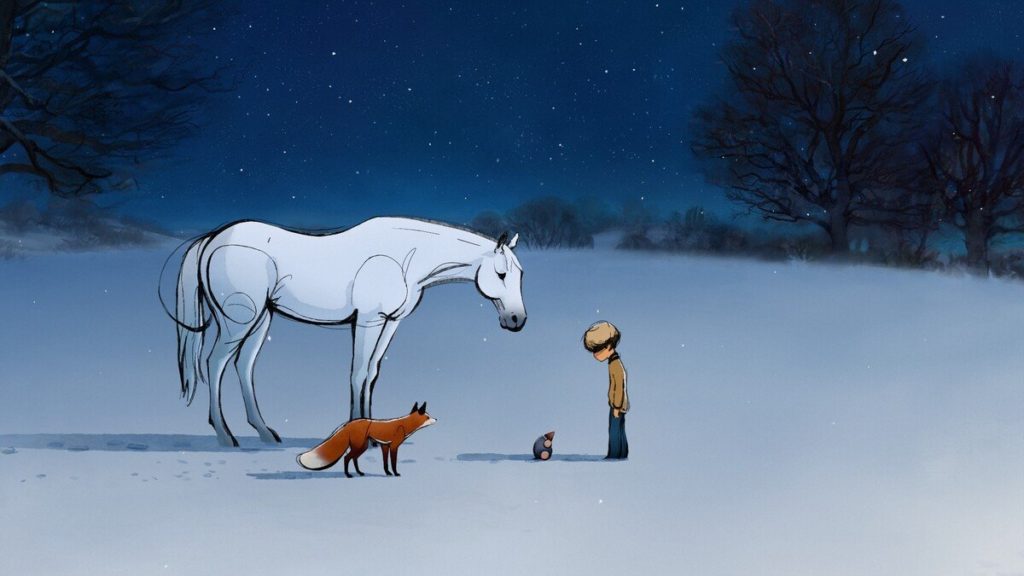
And so the group trudges through a heavily snow-covered field in a storm (yes, don’t ask), bombarding the viewer with inspiration for nearly half an hour, until the denouement arrives, which completely confuses. The child refuses to go to the village because “home is not necessarily a place” and stays with the animals in the forest!
An adult in real life does eventually find people who become close to them. But in a child’s life, the primary people are their parents, whom the author erases from the work. Why instill wrong values in a child from the start? And how do you then explain to them that what was shown is fantasy, multiplied by modern agendas?
Don’t Go Down This Road, Viewer
– How much further do we have to go?
– But look how far we’ve already come.
Modern self-help books and films have come a long way, changing their approach to shaping a person’s personality. But there are roads it’s better not to take. And this work is one of them.
Comments
0No comments yet.
Sign in to join the discussion.