
St. Petersburg is a city that breathes visual art. And it would be surprising if it did not have its own unique film studios, where masters work, studying life through the prism of moving images. One such studio is Lendoc. Let's dive into the history...
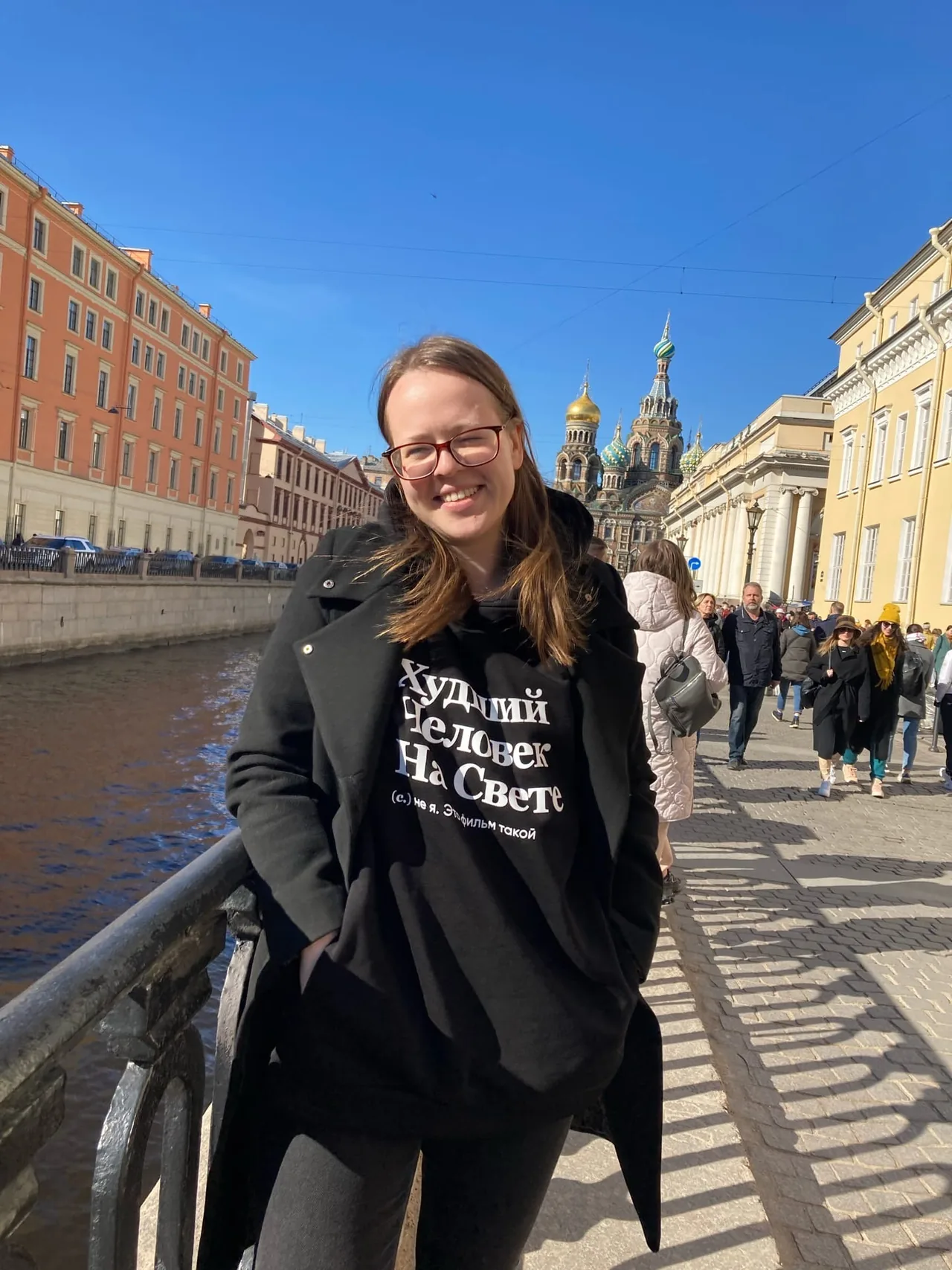
Every year, with the start of the summer season, sightseeing boats begin to cruise along the Kryukov Canal Embankment. At the right moment, passengers are asked to look at a gray building — the Polovtsov Mansion — which now houses the Open Film Studio Lendoc. Symbolically, the film studio is located literally next to the stages of the Mariinsky Theatre — like brother and sister.
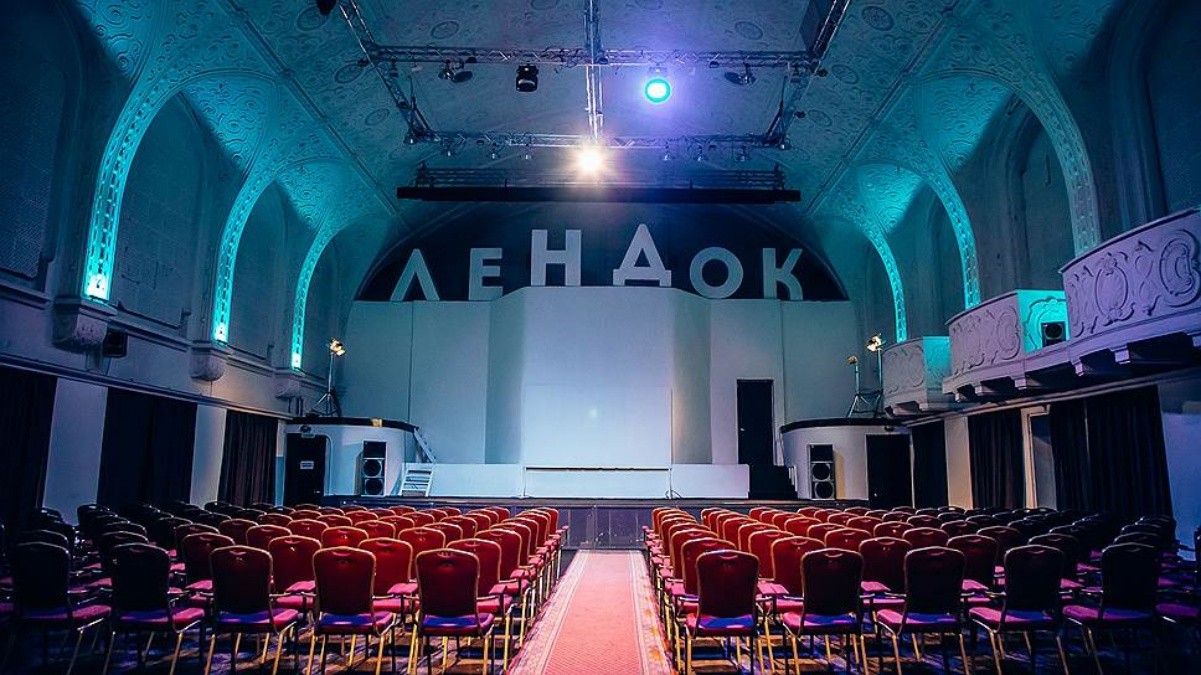
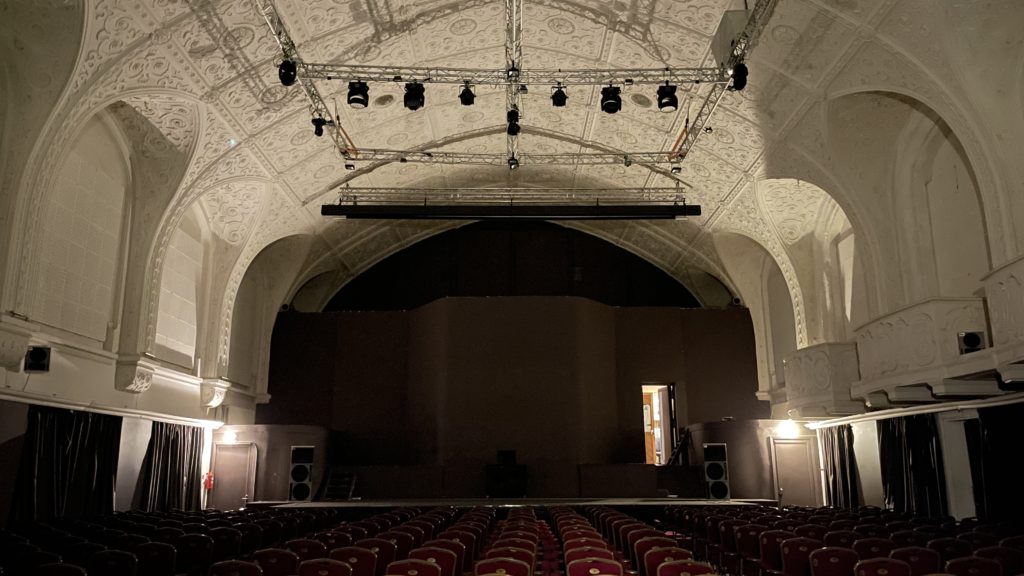
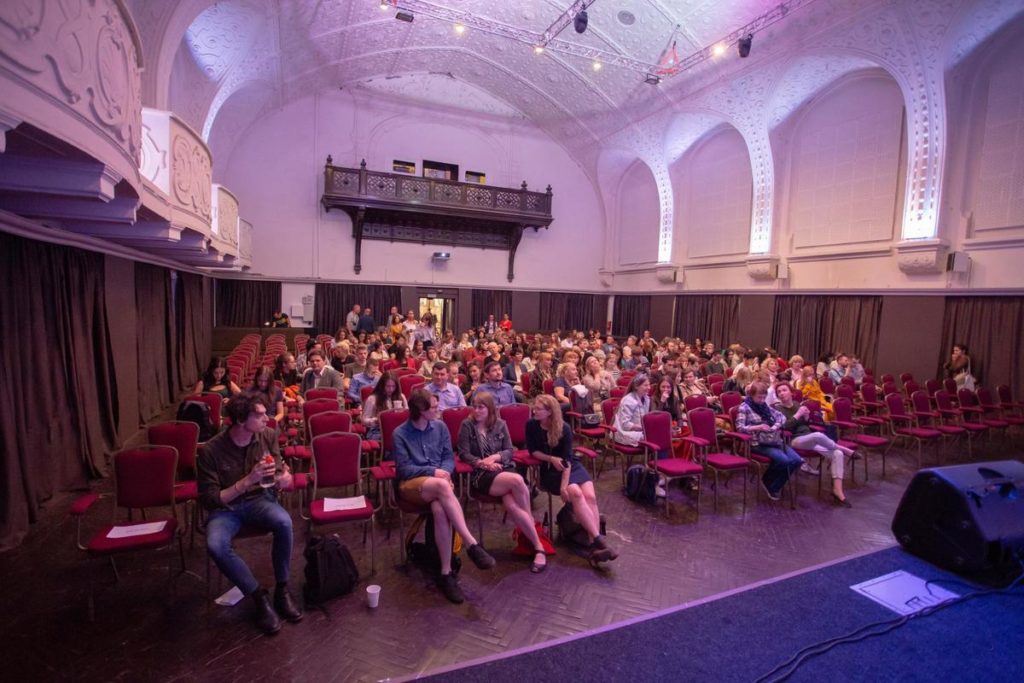
Lendoc has been at this address since 1946. The building itself was built between 1887 and 1891, designed by architect M.E. Mesmakher, and before the studio, it housed various tenants: an elite club for the high nobility, officers' meetings, and gatherings of young aristocrats. At one time, the White Hall (now used for screenings) even hosted horse training sessions and receptions for high-ranking guests.
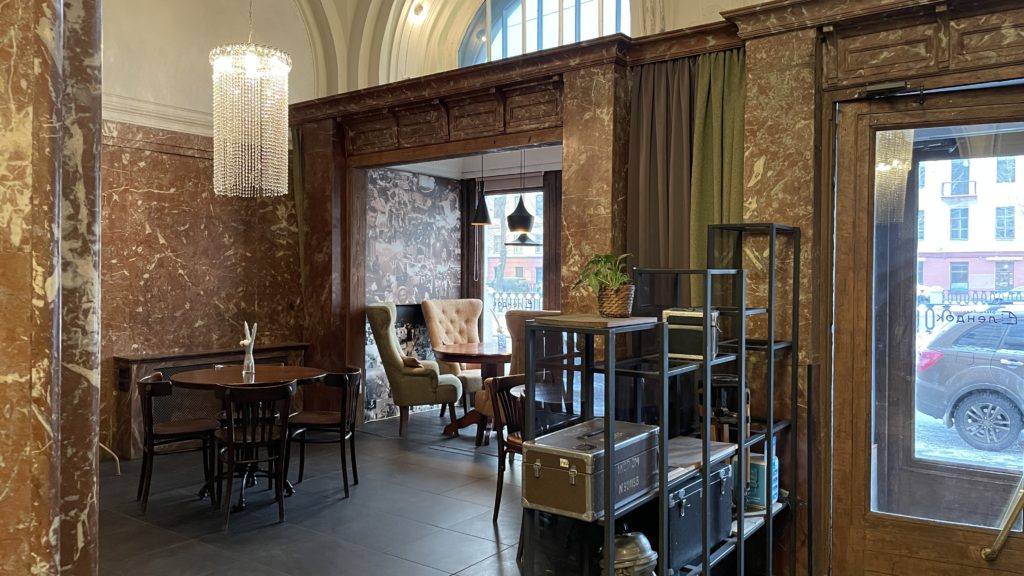
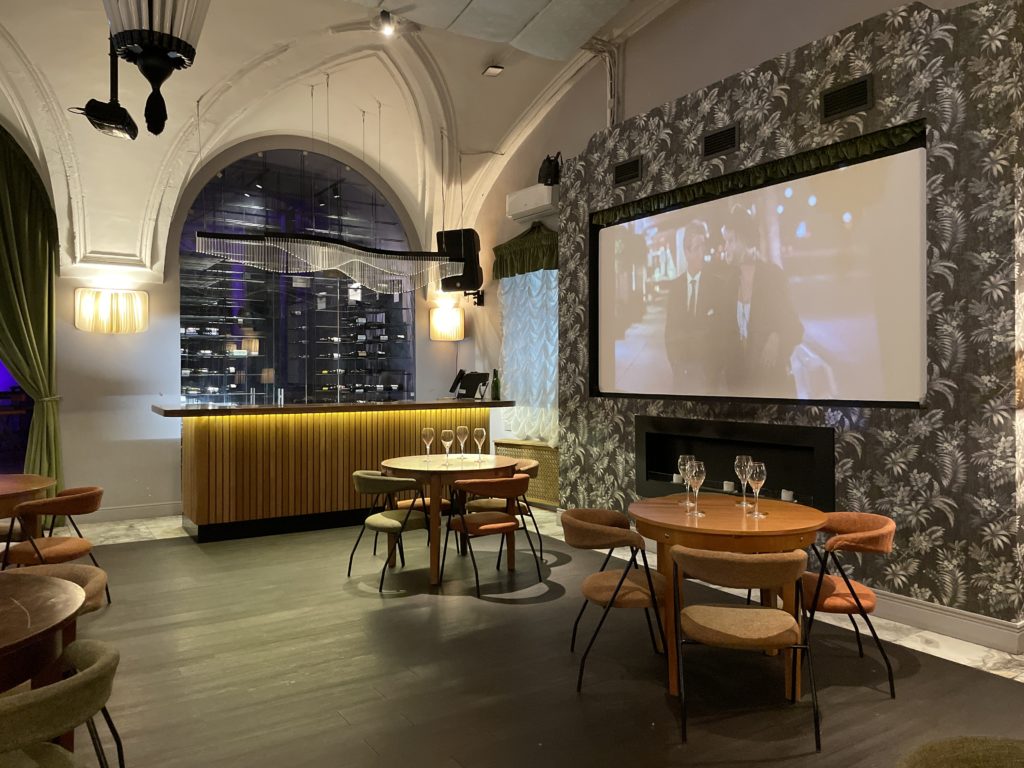
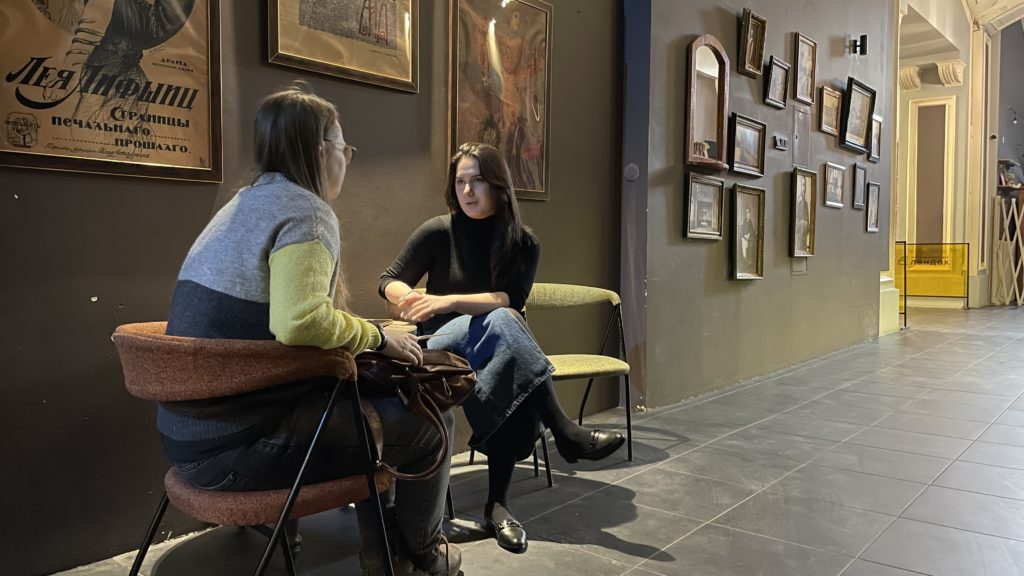
You feel the rich and eventful history of the mansion as soon as you enter and climb the small staircase — not a royal one, but still. High ceilings, stucco molding, marble walls, and arched ceilings coexist with vintage film cameras, photographs, a trendy restaurant, and posters of films from different eras. A place where the atmosphere of antiquity merges with modernity, where art invites you to get acquainted right at the entrance. In our case, the tour through the pages of Lendoc's history was led by studio PR specialist Marine Vardanyan.
How It All Began
Entering the Open Film Studio Lendoc (Leningrad Studio of Documentary Films), you feel like you are in a place steeped in cinema. Within the walls of one of the oldest and largest documentary film studios, you lose touch with reality and immerse yourself in another world created by the imagination of directors.
Unofficially, Lendoc was founded in 1918 and at that time was part of the Petrograd Film Committee. Later, it became a newsreel department at the Sevzapkino film factory. The studio's founding date is generally considered to be 1932, when it transformed from a newsreel department into the Leningrad Newsreel Studio.
Its employees continued to work and film events during the Great Patriotic War: in military units of the Leningrad and Volkhov Fronts, on warships of the Baltic Fleet, and in partisan detachments. During the war, directors such as Anatoly Pogorely and Evgeny Shapiro worked at the studio.
Thanks to the studio's efforts, the first feature-length film about the siege, Leningrad in the Struggle (dir. Roman Karmen, Nikolai Komarevtsev, Valery Solovtsov, and Efim Uchitel, 1942), was created. Lenkinokhronika turned out to be the only functioning frontline film studio during the war years and regularly released the Leningrad Newsreel, which covered major city events, the life of factories and plants, and the culture and daily life of ordinary residents. The studio also created short films and instructional films, for example, on extinguishing incendiary mixtures or how to plant a vegetable garden.
In total, the studio shot over 50,000 units of newsreel footage. And by the way, ordinary residents who were interested in filmmaking and wanted to learn more about it could also turn to the staff of Lenkinokhronika for help in creating films. For example, an amateur film by O. Raspopov, a teacher at Leningrad University who was passionate about mountaineering, titled To Lake Sarez, was created this way. Unfortunately, these documentary footage are no longer in Lendoc's personal film archive.
All our film was carefully stored at the studio, in the film museum and audio archive. But then, according to the law, all films made before 2012 had to be transferred to the State Film Fund. Everything released after 2012 is not the same historical monument as those films shot before that year. We now store more modern films, — Marine explained.
In 1968, Lenkinokhronika, already residing in the Polovtsov Mansion, was renamed the Leningrad Studio of Documentary Films (LSDF). LSDF documentarians continued to follow the ideas of the founders and always sought to reflect reality with its unflattering moments and difficulties, which sometimes displeased the Soviet authorities.
Therefore, some films from that time were shown to the public only several years after their release. For example, Alexander Sokurov's film And Nothing More (The Allies) and Our Mother is a Hero by Nikolai Obukhovich. Over the years of its work, many cult films were released here, including: Leningrad in the Struggle, The Mannerheim Line, People of Good Will, City on the Neva, The Feat of Leningrad, and Look at the Face.
Film studio employees worked not only in the Soviet Union but also abroad. For example, directors Irina Kalinina and Mikhail Litvyakov shot This Restless Student Body on university campuses in the USA, France, West Germany, and the UK. Filmmakers from LSDF also made films not only about the consequences of the war and the social situation in the country and the world but also on more specific topics, such as promoting blood donation — Return to Life (dir. Dolores Khmelnitskaya, 1980), which was awarded a silver medal at the Red Cross Film Festival in Varna.
After the collapse of the USSR, the film industry in Russia found itself in a crisis and was going through difficult times. The number of films produced by the studio decreased: for example, in 1993 and 1994, only 9 films were released each year.
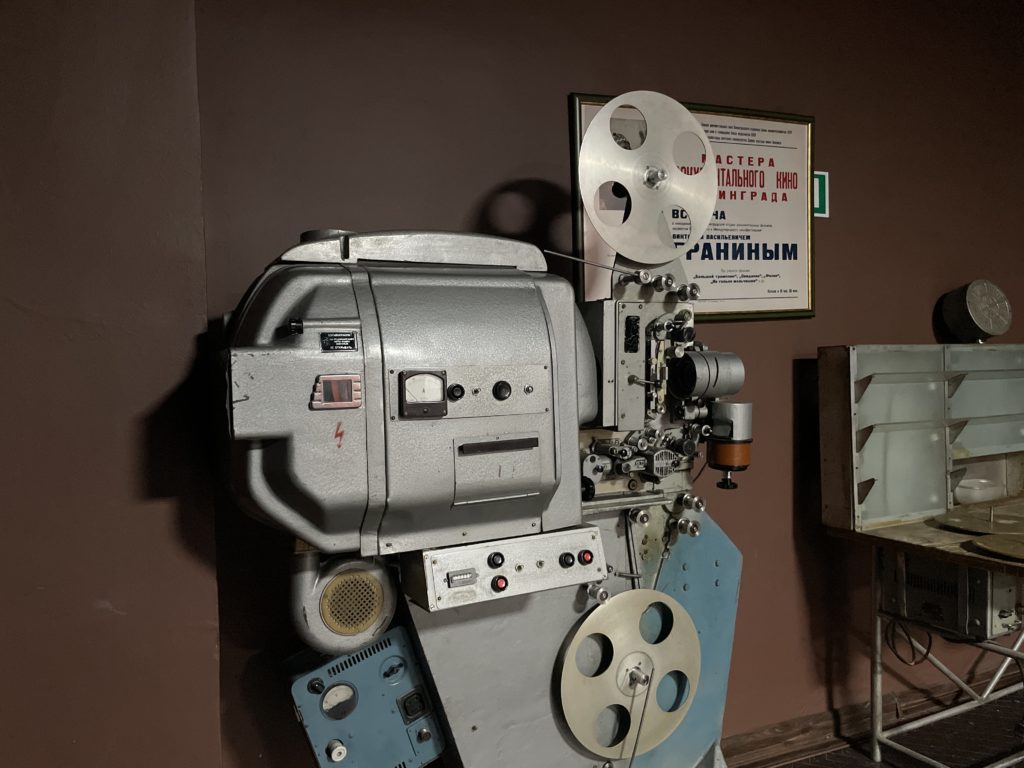
In the 1990s, it was very sad at LSDF — films were hardly made, there was no demand for documentaries. And the main feat of the studio's employees during that period was that they managed to preserve kilometers of film shot over all the years. Documentary footage that captured history.
This is a real treasure, preserved and will be kept here, on the Kryukov Canal, — historian Lev Lurie wrote about that time.
In the difficult 1990s, work at the studio still continued, albeit not entirely documentary. For example, the debut album Pulya (Bullet) by the band Leningrad was recorded at Lendoc in 1998.
With the arrival of the 2000s, the situation at the film studio began to improve, and more and more films began to emerge from under its wing. And since 2013, the film studio has completely transformed into a multifunctional art space, which continues to develop successfully to this day.
Open for the Love of Cinema
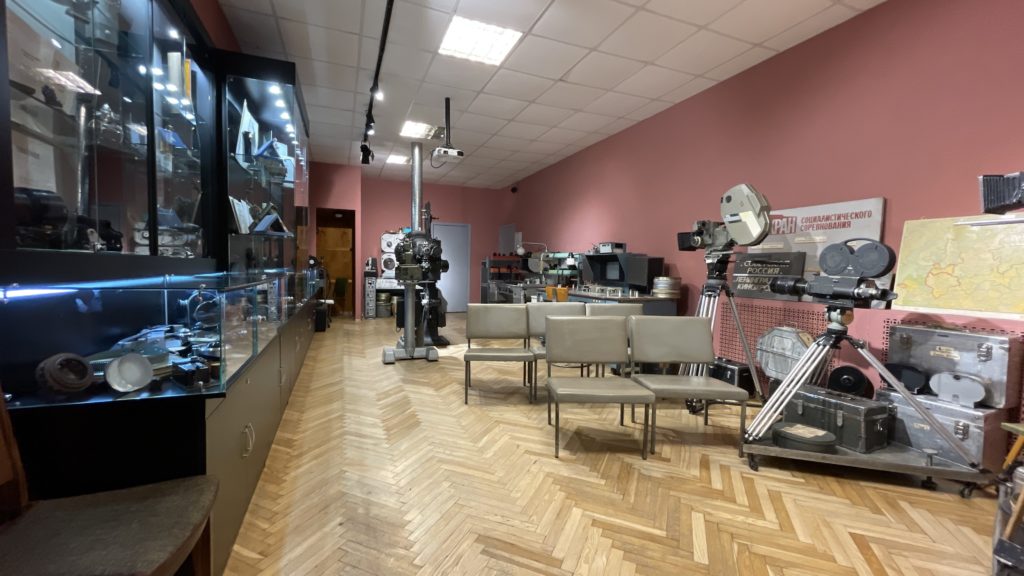
Over the years that Lendoc has been based in the Polovtsov Mansion, since 1946, the studio has undergone many changes. And the building itself, which became the home of the film studio, has also changed internally. For example, there is a restaurant on the first floor, and at the entrance, a kind of open museum where you can see previously used equipment at any time.
Of course, it didn't all look like this before [referring to the interior — ed.]. The studio changes its appearance depending on the time. Now the full name of the film studio is the Open Film Studio Lendoc, which has been in use since 2012. Before that, the studio was called by different names, including Lenkinokhronika, Leningrad Studio of Documentary Films, etc.
All the walls and facades look as they originally did. The Polovtsov Mansion is an old building that housed many things before the film studio, and its heritage has been preserved. For our part, we come up with and show, first of all, love and respect for history. We have preserved all historical monuments, — Marine said.
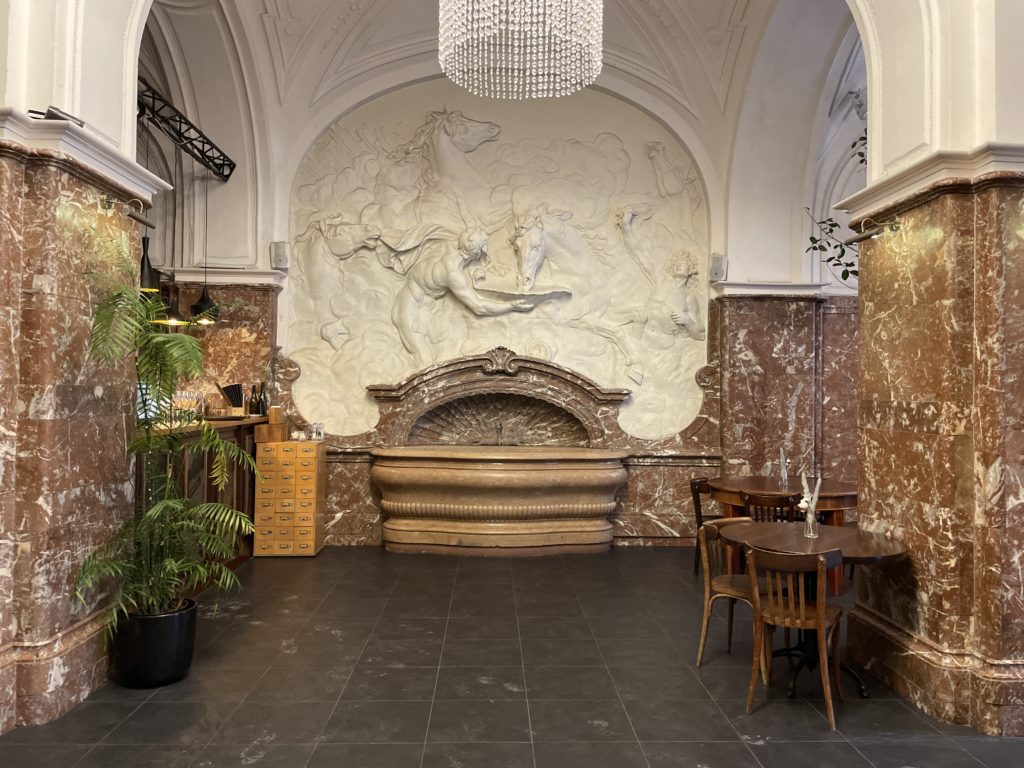
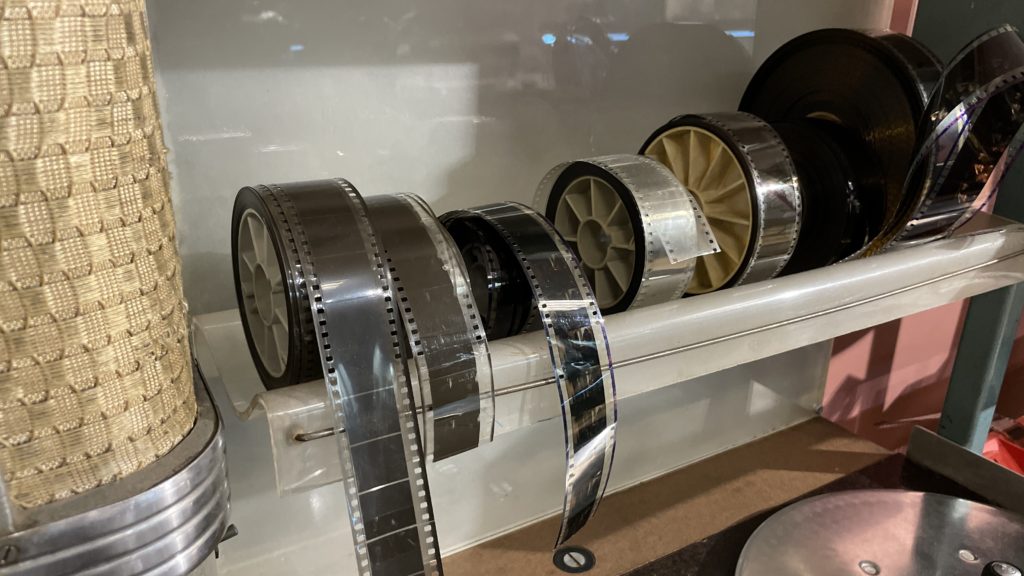
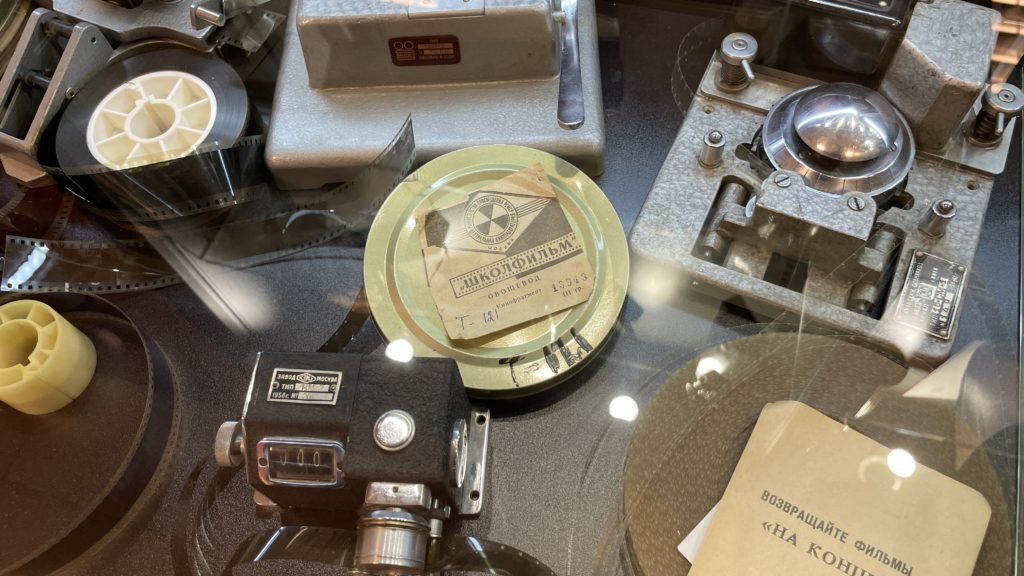
Despite the fact that the current film archive of the studio only contains films from 2012 onwards, Lendoc carefully preserves another legacy of past years — equipment. Some cameras can be seen right from the entrance to the studio, where the restaurant is located.
In addition, Lendoc has a separate small museum where you can see old films, equipment, and numerous awards that films made at the studio have received.
To study the exhibits, learn their history, and perhaps even touch some of them (if allowed), you need to sign up for a tour. Anyone can join.
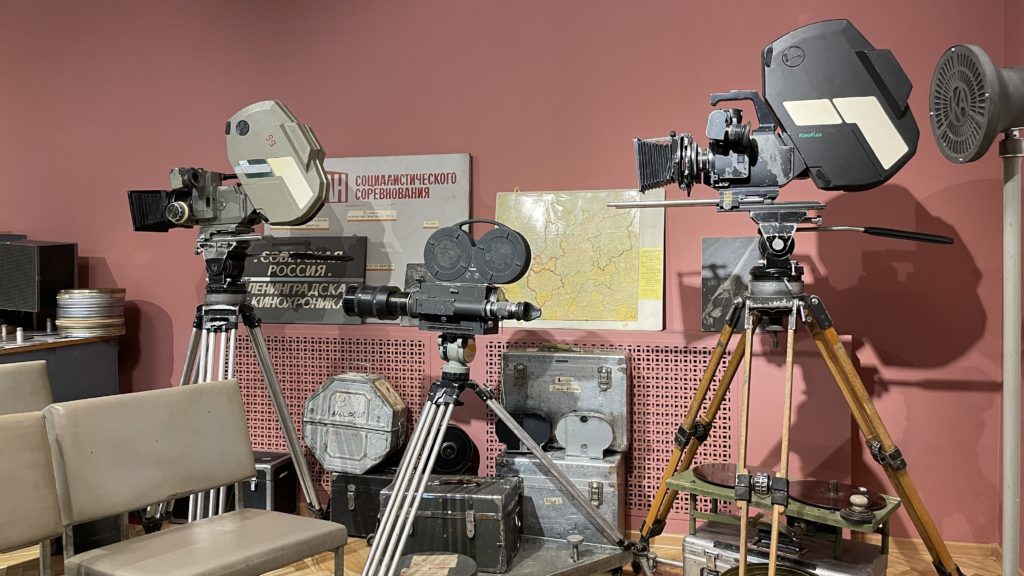
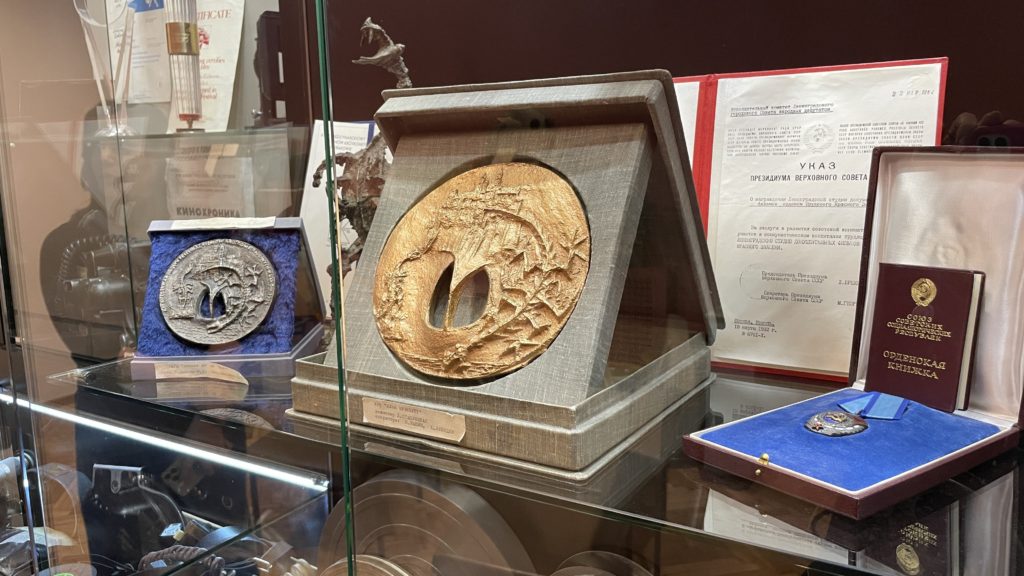
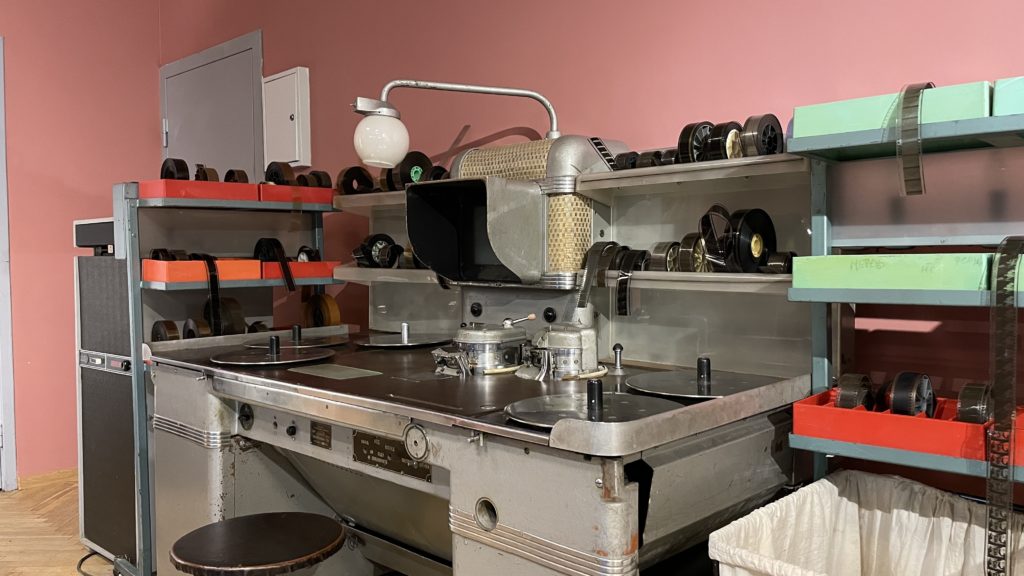
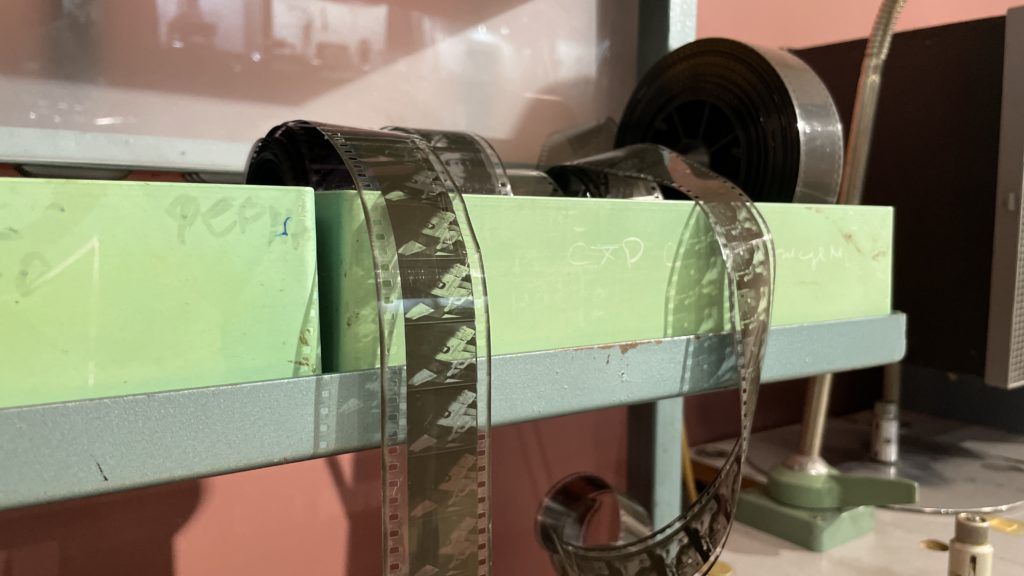
You can not only look at the analog equipment but also work with it. If necessary, the film studio can provide equipment far removed from its modern digital counterparts for filming. Directors collaborating with Lendoc have a wide choice of equipment for their work.
It all depends on the tasks of a specific project and the work of a particular director. We don't have permanent directors as such, but there are directors who often film with us. There are new filmmakers whom we bring in for one project or another. It all depends on the activity and working methods of the specific person, the cameraman, and the entire team. If a director wishes, they can request analog equipment.
Cinema is, first and foremost, the people who create it and put their soul into it. The human capital of Lendoc is invaluable. Within the walls of the famous studio, directors such as Efim Uchitel, Pavel Kogan, Mikhail Averbakh, Mikhail Litvyakov, Nikolai Obukhovich, and Alexander Sokurov have worked.
But Lendoc is every person who helps continue the work of those who started it at the beginning of the 20th century, preserve the history of the place, care for it, and help it develop. So, what kind of people make up the Lendoc team?
We have a very diverse team: in terms of age and preferences. First of all, of course, a love for cinema is needed. This concept is broad; everyone may have different tastes, but people who love cinema, it seems to me, are generally distinguished by their approach to work. Even if it's not a creative specialty, not directly related to the creation and production of cinema. Still, they are creative people.
At Lendoc, we are interested in the approach of such people to work, the person's desire to help improve the film studio's activities. So the primary trait of those who work at the film studio is a love for cinematography.
Lendoc employees want to share their love for cinema with others. And this desire is evident in the current name of the film studio.
Ever since we started calling ourselves the Open Film Studio Lendoc, we are often asked why such a name — an open film studio. I always answer this question by saying that we are open to new proposals, people, ideas, and to creating joint cinema.
We want to create a platform where complete strangers can share their work, ideas, create something new together, discuss cinema, and have a pleasant time. Why not make an open space? I have another question — why not? — Marine shared.
Lendoc supports the modern cultural trend of forming special places, art spaces, where people can relax and at the same time learn something new. And naturally, the studio chose its native field — cinematography — as its mission. We want to form a center of love for cinematography, Marine noted.
Lendoc's desire to share its love and knowledge of cinema turned out to be so strong that the film studio also opened full-fledged training in film professions. Here, professionals in their field, working within the studio's walls, share their experience to interest talented people from the Northern capital in the intricacies of film production, and perhaps captivate them so much that they become future specialists of Lendoc and beyond. This was the original goal of the film school — to share their love and knowledge with others, Marine emphasized.
And it seems the film studio is successfully achieving its goal, as former students of its film school often become real actors/directors/screenwriters for whom cinema becomes not just a hobby but an important part of life.
For example, one of Lendoc's graduates, Alexander Grinev, is currently working on his own film Remember My Name. And this happens repeatedly, Marine clarified. People come to the film school with different goals and desires, but some of them later immerse themselves headlong into the film business and production.
Create and Show with Soul
Now the film studio has turned into an art space — a place of attraction and rapprochement for cinephiles, but before it was only a studio where documentary films reflecting real life were made. Four Lendoc films made it into the list of the best documentary films created over 100 years of world cinema: Look at the Face by Pavel Kogan, The Summer of Maria Voynova (Maria) and Soviet Elegy by Alexander Sokurov, and Our Mother is a Hero by Nikolai Obukhovich.
How does project pitching happen now, in a completely different period of Lendoc's development? Is it possible to shoot fiction films there?
I wouldn't say that the documentary genre is our priority. Since we bear the name of the Leningrad Documentary Film Studio, our history includes mostly documentary films. But we are not limited to just that.
Speaking about project pitching, we have separate categories for both documentary and fiction films. Therefore, neither direction is left neglected. We are simply always in search of something new. Last year, for example, we managed to attract CIS countries to the pitch.
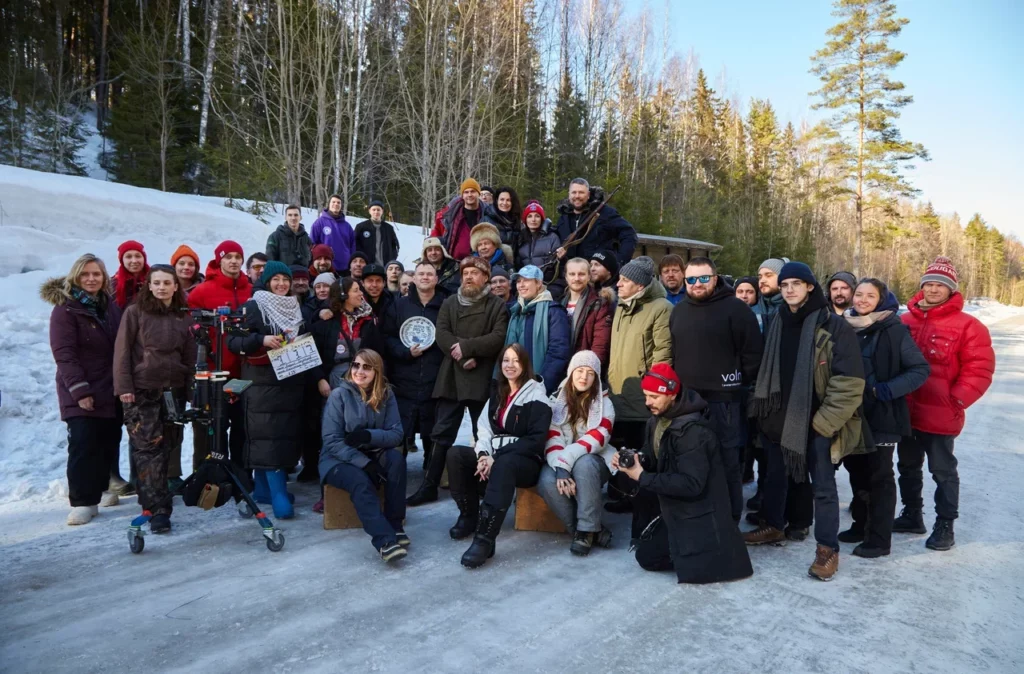
For example, this year we will begin filming the fiction film Gold of Umaltа. This is a very interesting project that, I think, will attract a lot of attention from the country as a whole, and possibly neighboring countries. Filming began on March 17.
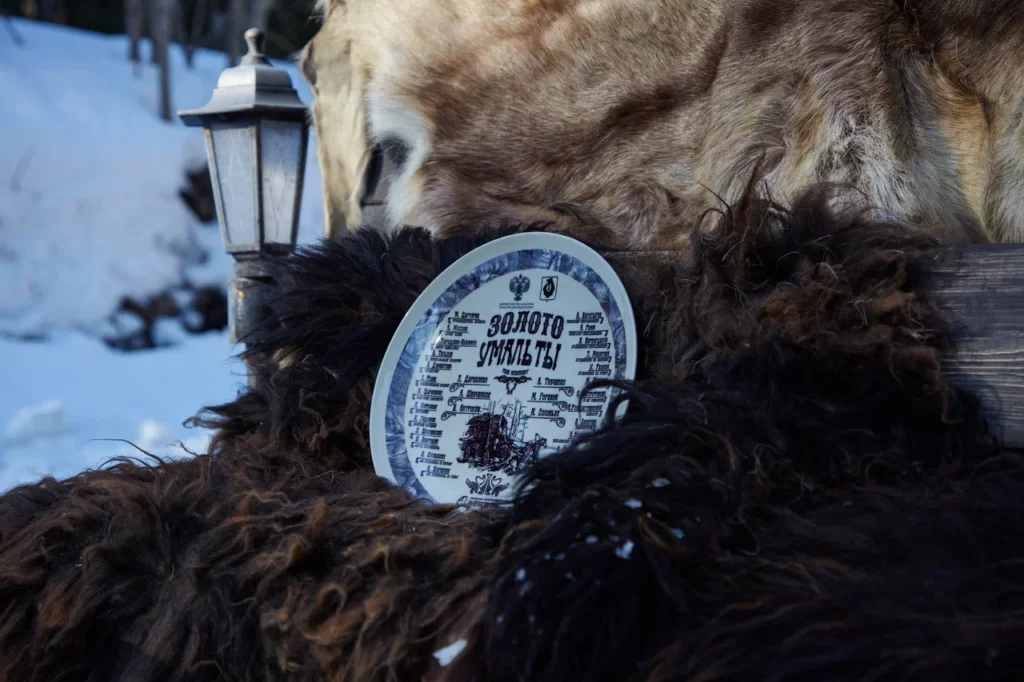
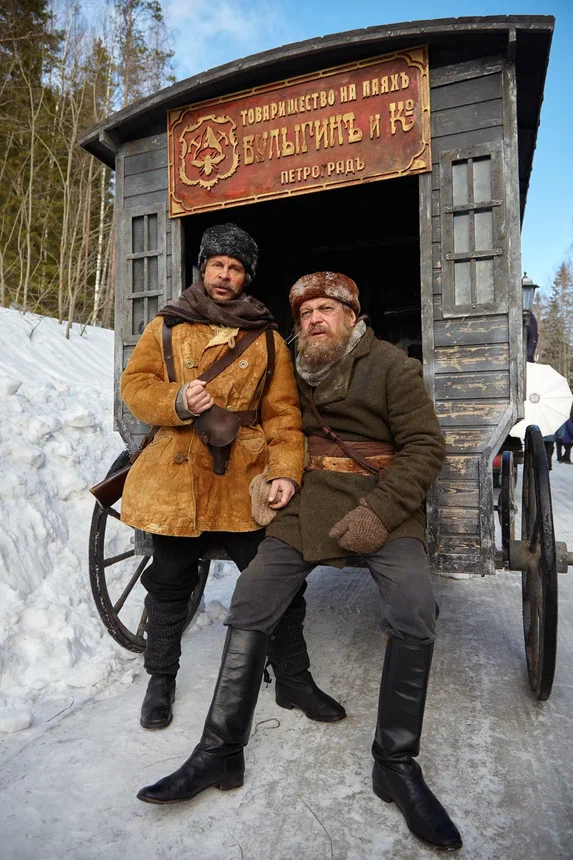
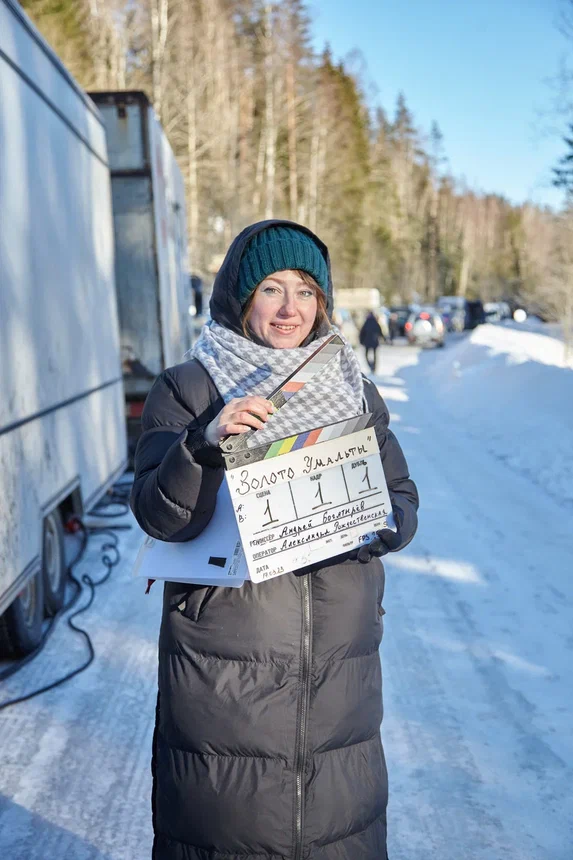
Marine noted that when selecting projects at Lendoc, they primarily start from the idea. In addition, the studio is particularly interested in a currently not very widespread area of film production — co-production. And Lendoc intends to popularize it in the future.
Of course, films from our, including St. Petersburg, directors about Russian history and Russian production in general — it is always present and will be at Lendoc. It's just that now we are trying to create this new direction of co-production and attract more to the production of jointly created films. But this does not mean that one of the other areas will suffer.
Co-production, that is, the creation of films with the participation of several countries, is one of the priority tasks of the film studio. Lendoc wants to occupy this niche, pay more attention to it both in film art and film production, and attract directors and film industry figures in general to create joint films with several countries. This will allow expanding audiences and entering new markets. And in general, the unification of cultures of different countries on the big screen looks quite interesting, Marine believes.
The film studio already has some experience in co-production. Thanks to cooperation with Uzbekistan, Lendoc released a jointly shot film The Taste of the Sun. And this is not the only country with which close contact has been established.
We have close cooperation with Uzbekistan. We also actively cooperate with Tajikistan, Belarus, which actively participates in our festivals and conferences. To a greater extent, of course, we manage to cooperate with the CIS countries.
However, it doesn't end with the countries that were formerly part of the Soviet Union. This year, Lendoc intends to expand the geography of its international film festival of Russian and neighboring countries' cinema, LEFF (Lendoc Film Festival), and attract cooperation from countries near and far abroad. All this will make the festival more promising and attractive. The studio is always happy to welcome countries that have a desire to enter the Russian market and start cooperation.
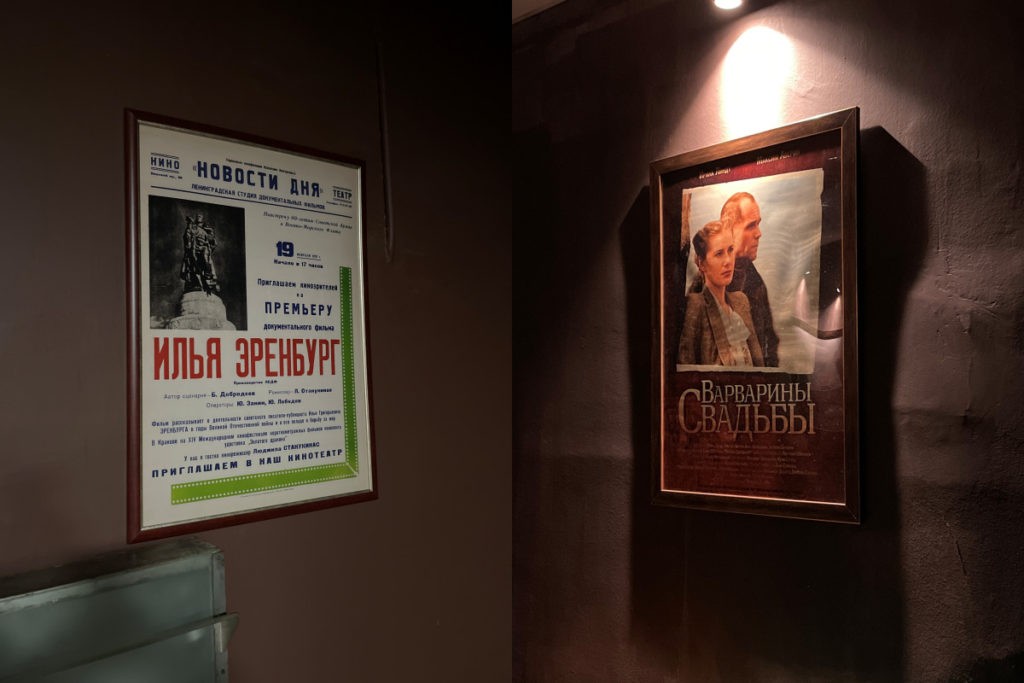
The film studio also serves as a platform for screening films, not only those projects in which it participated but also external ones. By what parameters does Lendoc select films for screening?
First of all, it must be said that the main difference between the Lendoc cinema and others is that screenings are one-time events. Any film is shown to the audience only once and is not repeated. Predominantly, the film studio holds its screenings in the evening so that as many people as possible can attend. As for the selection itself, the emphasis is on auteur cinema that would be interesting and captivating for the viewer.
In my subjective opinion, any film can be discussed if a person knows how to do it interestingly. And if the film as a whole is well-made.
Speaking about the selection of films, we [Lendoc] mainly try to show auteur cinema, but we also have exceptions. The main thing here is to have films that you want to discuss. We want to do screenings with discussions more often and are looking for films that leave some kind of aftertaste in the viewer, a desire to talk about it.
And it's not like the film has to be from Russia. Our program shows that we screen films from different countries, cover the international film market, and show new auteur releases. Sometimes we do retrospectives of directors, hold cultural days, showing cinema of a specific country, and additionally organize entertainment events, — Marine explained.
What Will Tomorrow Bring?
Since 1932, Lendoc has experienced both ups and downs. But despite everything, work has always been in full swing within the walls of the film studio. Now, having turned into an art space open to everyone, Lendoc's plans and goals have become much larger and more ambitious than before.
We always try to come up with something new. To attract viewers in a new way, because there are more competitors, viewers' needs change, and we try to keep up with the times, — Marine noted.
The film studio experienced particular growth over the last 10 years. And Marine spoke in more detail about these changes: about the film school, filming, and screenings:
Since 2012, one of the best film schools in St. Petersburg with professional teachers has been operating as a new development. The peculiarity of our film school is that 80% of the courses consist of practice. Less theory, more practice. Our film school is known, in particular, for attracting both children and adults to learn film professions. We have film camps and educational master classes. Both adults and children can participate.
Speaking about production, projects are changing. There are not as many opportunities to film [now] as there were before. Why there are fewer of them is especially understandable over the last three years [the pandemic — ed.].
According to Marine, Lendoc does not have any permanent theme that the studio is always ready to film. For example, this year, two projects about the Siege of Leningrad are being filmed simultaneously — The Siege Stage and one about siege doctors. There may not be a common theme at Lendoc, but there is a favorite character — St. Petersburg. Its history receives special attention. For example, the studio previously released a film about the Leningrad club Dynamo. We still bear the name of a documentary studio and try to cover such important milestones of the city, Marine emphasized.
Speaking about film screenings, we are now trying to pay attention to special screenings. We attract speakers to them, moving away from ordinary film sessions where a person just comes to watch a movie. We try to interest the viewer with some master classes, invited guests, so that the person wants to stay and talk more about the topic raised in a particular film.
In 2023, the studio plans to film interesting projects (not all of them have been announced yet), and will also continue to develop the format of special screenings and expand the boundaries of its LEFF festival. Among the main production goals is the already mentioned fiction project Gold of Umaltа, filming of which began on March 17 and will take place in St. Petersburg and Khabarovsk.
As for the festival, it is scheduled to take place from August 25 to 29, 2023. Lendoc intends to hold an international conference of heads of film studios from CIS countries as part of the event to discuss joint production. There will also be a traditional pitch, where the studio hopes to find interesting ideas and projects.
We want the festival to become a hallmark, perhaps of the city and the country as a whole. Co-production is a good niche in the film industry, and we want to attract more attention to it, — Marine shared her opinion.
The Lendoc film studio intends to continue working in different directions to firmly establish its status as a place of attraction for cinephiles. But at the same time, be open to everyone who wants to get closer to the world of cinema. Not only to create but also to educate, to nurture a new generation of filmmakers who will shape the trends of the future film industry. And of course, the studio will continue to film, to delight audiences with its films as often as possible.
Comments
0No comments yet.
Sign in to join the discussion.