
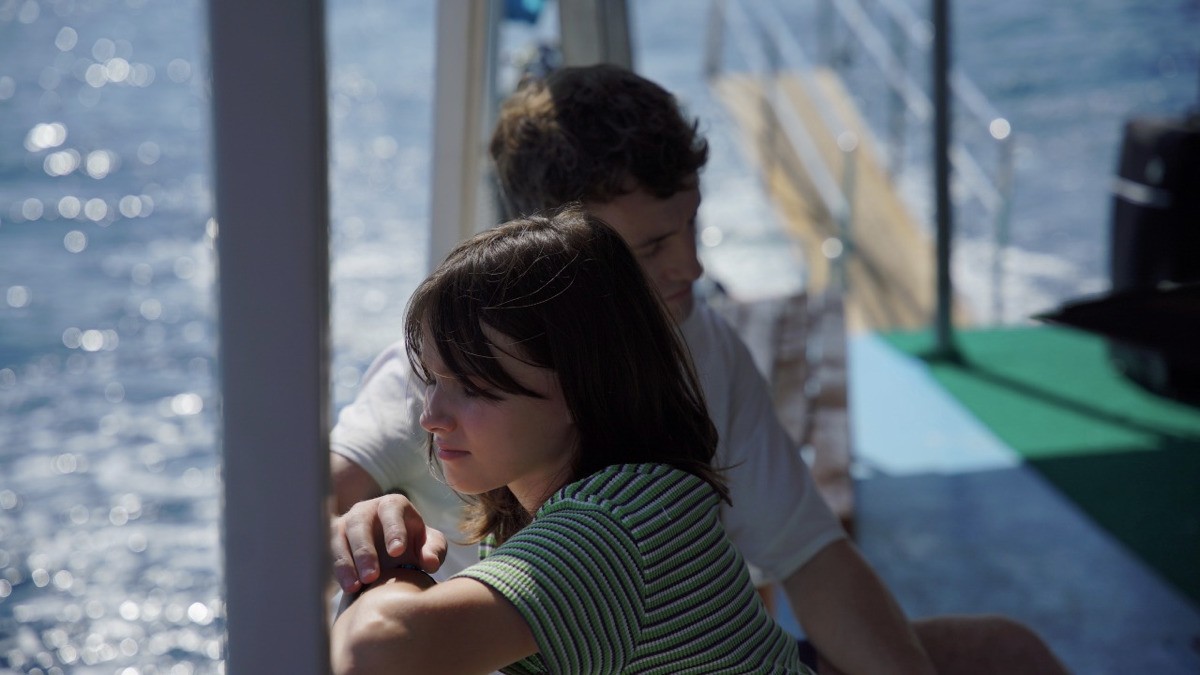
'Aftersun,' a tender and sad film about a single holiday of a father and daughter, has been released. One of the best films of 2023—in our review.
11-year-old Sophie (Frankie Corio, brilliant) is on holiday in Turkey with her young father Calum (Paul Mescal, who earned both an Oscar nomination and the award itself), who seems to be under thirty. They are happy, having fun the way many probably did in Turkey: sun loungers, animators with Macarena, a children's pool, dreams of an all-inclusive package.
The joy of these cozy vignettes in 'Aftersun' remains almost unclouded until the very end—yes, the father sometimes has an extra beer, sometimes sadly withdraws; yes, Sophie is too happy to see him every time to think about how often she actually sees him—but the idyll between father and daughter seems cloudless, and until a certain point, it seems endless.
The father applies sunscreen to his daughter's back. The girl plays pool with a group of teenagers. A stranger pays for Sophie at an arcade machine. A couple of days later, they meet again. Father and daughter dive into the sea. Calum meditates. 'Aftersun' is a kaleidoscope of sad memories of happy days, whose plot follows the memory of an older Sophie, who rewatches videos from that holiday and, now the same age as her father, sees not happiness but tragedy, not just a melancholic adult but a person at the end of their rope.
At some point, the holiday ends, and childhood ends with a sad rhyme—closer to the finale, the action doesn't change much: the same amusements, the same small joys, but it's obvious that there are problems in this paradise. Calum withdraws more and more, cries in the dark, jumps into the sea at night, something is increasingly gnawing at him. But while he can't understand what's wrong with the world, his 11-year-old daughter can't understand what's wrong with her father.
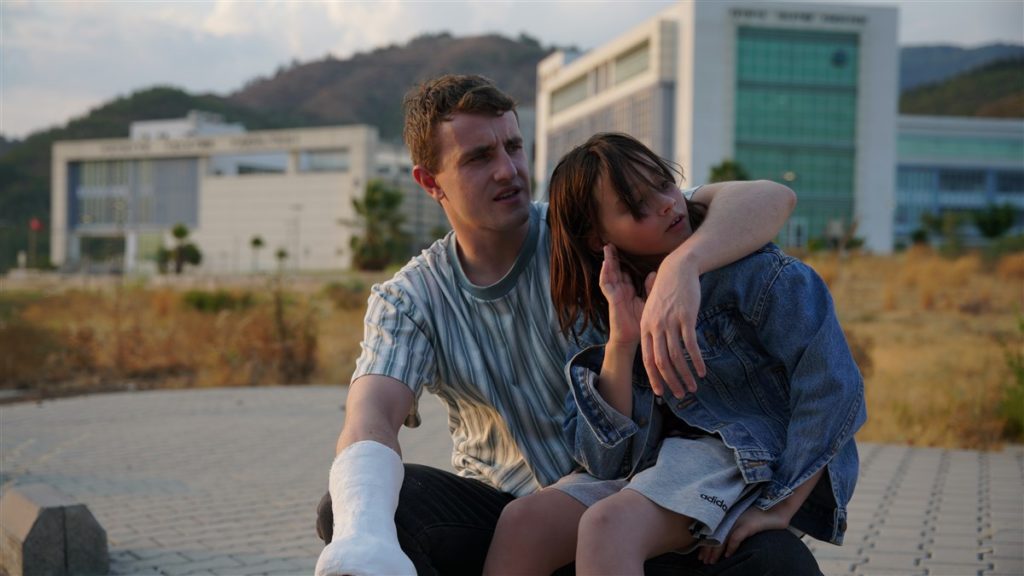
Composed of plotless fragments, focusing on details, and sometimes capturing reality with broad strokes, 'Aftersun' is the debut feature film by Scottish director Charlotte Wells, and that is perhaps the most astonishing thing. Even if she never makes another film, she will be remembered for this one—it is an exemplary debut, undoubtedly, but made with the skill and confidence of a very experienced filmmaker.
Paul Mescal will also be remembered for this film, where he outdoes himself from 'Normal People' and is generally our hero, an icon, father of the year (Pedro Pascal is father of the decade, so there's no competition). He doesn't even seem to be acting, but simply existing in the frame, so natural and organic are his small mannerisms, sad awkwardness, and overly long glances. You might even think it's all one big home video from someone's real family archive.
And indeed: the director is not afraid to take the position of little Sophie with the camera, who runs after her father and asks him about his childhood (difficult), doesn't know when to turn off the recording, or how to properly adjust the focus. And the viewer finds themselves as the grown-up Sophie—together with her, we review the archival videos, we, like her, feel that something is wrong here, we no longer experience the happy time but nostalgically long for it.
'Aftersun' most resembles an impressionistic sketch: the big is reflected in the small, the most important is found in insignificant things, an entire life somehow fits into two hours, the sky is elegantly edited into a pool. Moreover, Wells' symbolic constructions are generally clear: the camera as a metaphor for memory, water that does not cleanse, the contrast between inner longing and external well-being.
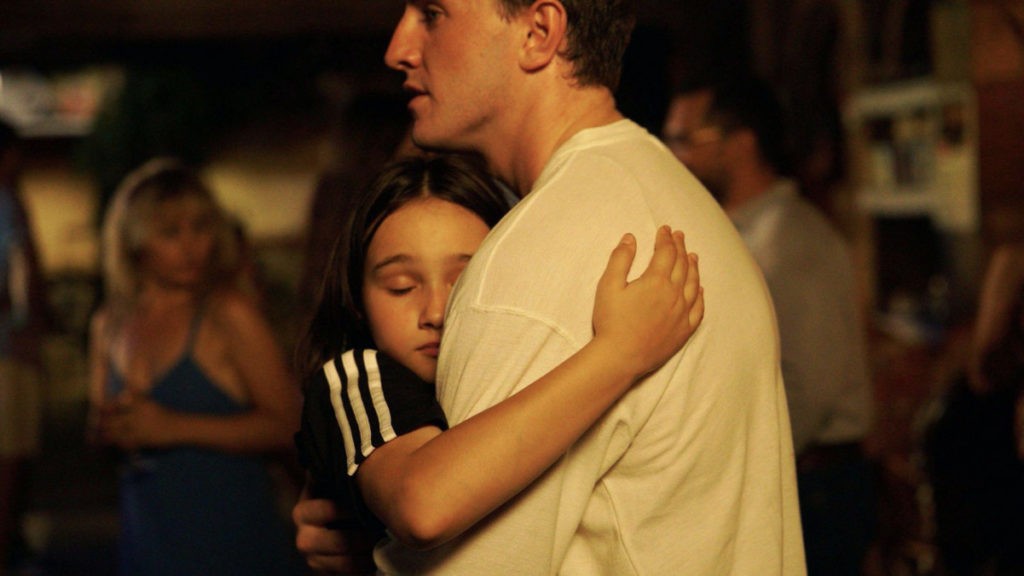
What matters is not that all the elements of this film are individually clear and, let's face it, not very original, but how the director combines them, mixing the familiar and the surprising, the funny and the sad, the joyful and the repulsive. The bad and the good are so mixed here that you can't separate them—and the sun-drenched holiday scenes are periodically interrupted by shots of a strange disco in the dark (which becomes somewhat clearer in the finale), whose artificial light contrasts with the sunlight as if the song 'Losing My Religion,' which Sophie sings at karaoke (an unbearably sad scene), were interspersed with inserts from 'Girl, Dance.'
Moreover, the very structure of the film—the alternation of imprecise memories (some obviously autobiographical), video camera recordings, non-verbalizable sensations—should, in theory, make it not very interesting for an outside viewer.
It's like looking through someone else's family archive—you can, of course, get some pleasure, but it's mostly awkward and unclear. But when watching 'Aftersun,' this barrier between the viewer and the narrative strangely does not arise. The film's narrative modesty and lack of pretensions to universal morality, its focus on everyday details that are only understandable to the characters themselves—all this makes 'Aftersun' a completely unique but intuitively understandable film for everyone.
Interestingly, Wells' film inadvertently fits into a series of last year's (worldwide, 'Aftersun' was released in 2022) tragedies about Europeans and Americans on holiday, like Franco's 'Sundown' and Gyllenhaal's 'The Lost Daughter.' All three films are dedicated to the theme of escape, escapism, the impossibility of returning home, the impossibility of reconciling with the past, but it is Wells' film that is simultaneously the most naive and the most mature. As a serious work, the film is not afraid to be disliked, not afraid to embarrass; as a small story, it is not afraid to be sincere, awkward, tender.

Netflix has released the drama 'The Lost Daughter,' which won the Best Screenplay award at the Venice Film Festival. Is the award deserved, and is it worth watching?
Open material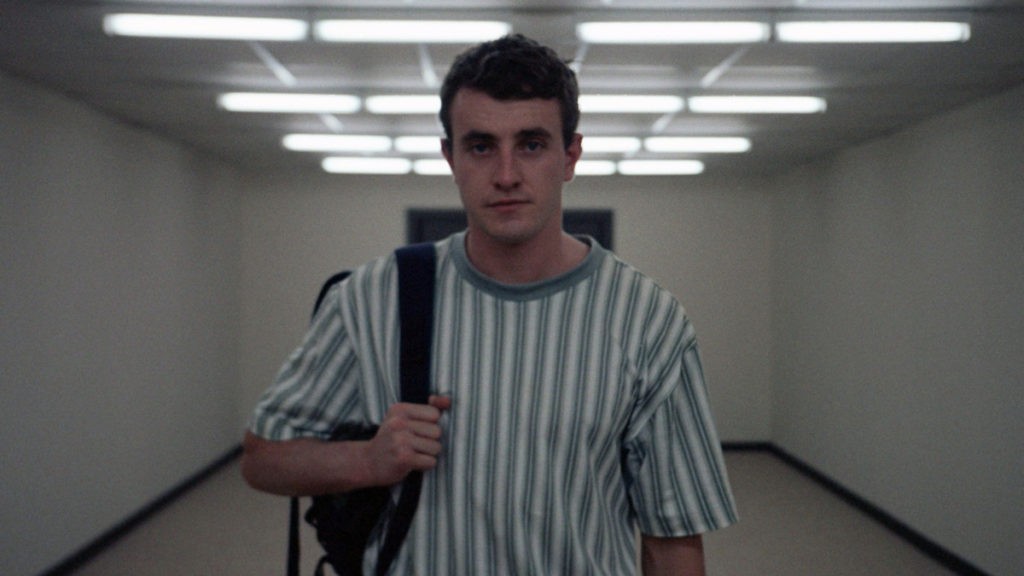
Writing about such films means going through clichés, hoping to find at least some truth in them, enough to convey what it was all about, why a movie about a father methodically applying sunscreen to his daughter's back is not just a holiday melodrama, not a weekend film. It is indeed not a film about a holiday, but about what? I think—about the fact that when sad and lost people sing 'Losing My Religion' at karaoke, it is primarily somehow frightening, unbearably sad. But, of course, 'Aftersun' is also about how good it once was to relax by the sea; about a beloved, vanished father; about life, about childhood, about memory, about how everything is forgotten, but some things are impossible to forget.
This is a great European novel, retold through the means of a small independent film; a melancholic story about how, when time passes, it never returns, and with it, those we love and those who loved us never return. But no one, as trite as it sounds, ever truly leaves; nothing disappears without a trace. Through old videos, an old wound, an old song, an extra pint of beer, a faded memory—the father remains with Sophie, as does the eternal question: when will the pain pass?
Comments
0No comments yet.
Sign in to join the discussion.