

In theaters now is a film with a silly title, seemingly from the golden age of rom-coms, “What’s Love Got to Do with It?”. About its unexpected merits and predictable shortcomings — in our review.
Looking at the title of this film, it’s hard to forget what era we live in. Not in the sense that times are tough, but that people go to the movies as couples on gender-themed holidays and somehow pretend that in the darkness of the cinema they really need all these films. So it’s all the more surprising to find that “What’s Love Got to Do with It?” turns out to be not stupid at all — certainly not groundbreaking, but curious and, in a good way, old-fashioned.
The main character is a British documentary filmmaker Zoe (Lily James), smart but slightly bewildered, who knows what she should want but doesn’t understand why she needs it. She makes grim films about social issues, constantly visits her mom, and can’t find a boyfriend, narrating her dating woes as fairy tales with depressing endings (light postmodernism, since James herself played Cinderella not so long ago). Meanwhile, Muslim Kazim (Shazad Latif), the son of her mom’s friend living next door and Zoe’s childhood friend, despairs of finding a partner and asks his parents to arrange his marriage. The practice of such arranged marriages, as the film shows, is widespread not only among aristocratic families but also in the Muslim world.
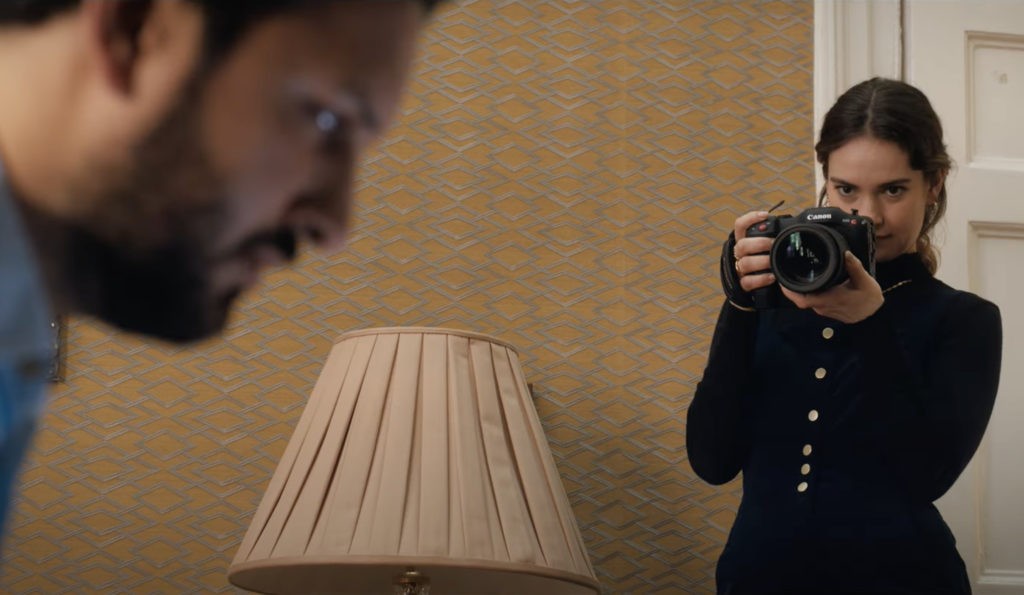
Zoe is shocked that her otherwise modern and progressive friend has chosen to arrange his life in what she sees as an archaic way, bypassing the Western concept of romantic love. Against this backdrop, unable to think of a better idea, she pitches a film about arranged marriages in the modern world (her more socially acute ideas were rejected). And so this rom-com on an unconventional theme begins. For the next hour and a half, Kazim will try to squeeze his already Western identity into some constraints of the Muslim world, while Zoe will try to understand what’s going on — with her friend, with the world, with herself.
For nearly two hours, not that much actually happens: Kazim talks on camera about what it’s like to be a Muslim; Emma Thompson as Zoe’s mother dreams of grandchildren, a better life, and mutual understanding with her daughter; Zoe’s best friend tries to figure out her marriage; at some point everyone starts getting married, divorced, crying and hugging — in short, doing what people usually do in such films. But watching it is, surprisingly, engaging — largely thanks to the direction of Shekhar Kapur, a veteran filmmaker who once made a name for himself with “Elizabeth” starring Cate Blanchett. His confident direction exudes a monumentality completely absent from, say, Netflix rom-coms. Even an argument between two millennials about things long obvious to everyone except rom-com characters is at times as satisfying as a good fight, and the scenes in Pakistan are positively captivating.
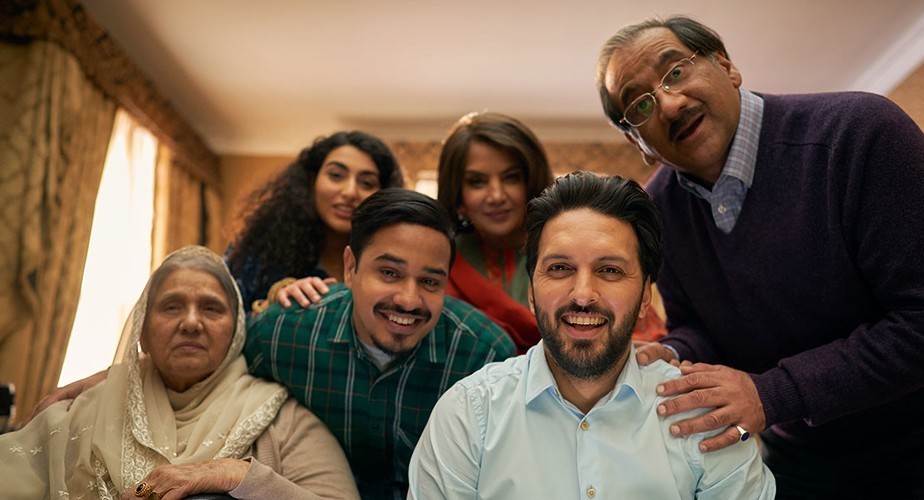
And the very concept of an old-fashioned rom-com about people falling in love and not knowing what to do with it feels almost like a revelation in our time. Nowadays, romantic relationships are more often depicted in horrors than comedies, so watching two fairly attractive people make small mistakes, sweetly repent, and just live for two hours is, of course, breathtaking. Not least because of the actors: Lily James plays brightly but without overacting; Shazad Latif didn’t particularly impress Western critics, but that’s mainly because his chemistry with James isn’t very obvious or even noticeable at times. But it’s not about them; it’s about the wonderful supporting cast: Emma Thompson, Shabana Azmi, Jeff Mirza, Pakiza Baig (it’s the debut of 82-year-old Baig as the protagonist’s grandmother, and the most touching part of the film) — against such a backdrop, anyone would fade.
The film’s greatest joys are centered around the older generation: Azmi as Kazim’s mother worries about her son, wants him to be closer to his roots while being himself; Mirza gets a few punchlines toward the end; and what Emma Thompson does isn’t entirely clear, but she does it wonderfully. She dances at a Muslim wedding in appropriate attire (you have to see it), breaches decorum, embarrasses people, reproduces Orientalist stereotypes, and harasses Lily James about children and personal life. Most importantly, she confirms the hypothesis that a film where some outstanding British actress plays a slightly unsettled woman with colonialist views can’t be bad.
For those seeking new ideas or any ideas at all in films, “What’s Love Got to Do with It?” offers little to grasp: most conflicts are resolved with a blissful smile, the simple moral is spelled out somewhere in the middle. But it’s an interesting film in that classic rom-coms valued breaking tradition — rejecting class contradictions and cultural prejudices (a president could fall for a maid; if your religious family stands in the way of your love, you can run away, and so on). Now the main problem is not to overthrow traditions but to reconcile them with modernity.
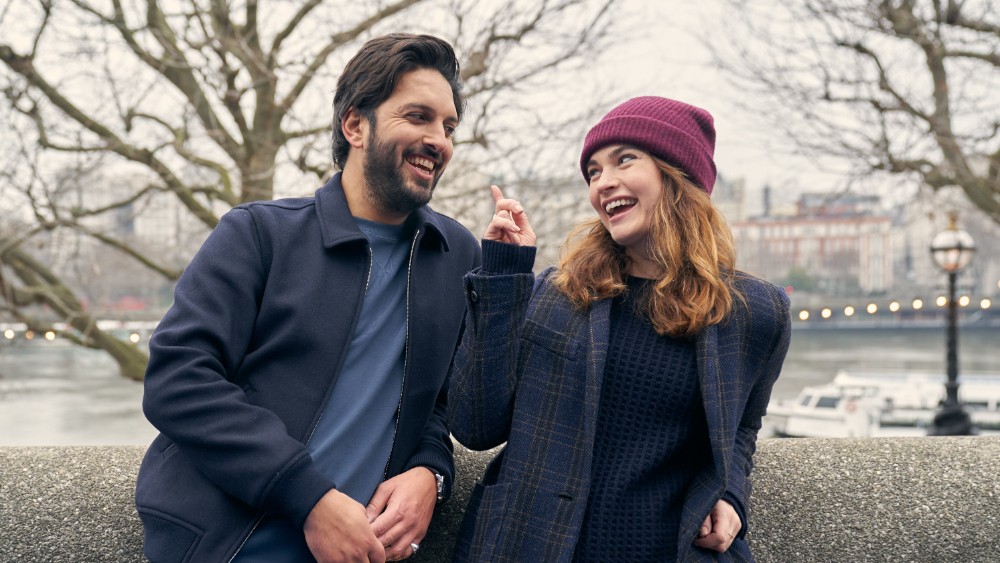
Indeed, a film where the entire Muslim story is thrown away for the sake of Lily James’s eyes would look monstrous in any release. Now, the critique of assisted marriages (about which James’s character jokes that “assisted” primarily refers to suicide) is complemented by irony toward the Western model of relationships: Zoe’s love life is a source of occasional laughs and general melancholy, and after all, someone picks your partner for you anyway — either your mom or Tinder. And how late-capitalist algorithms are better than the institution of reputation in Islam, probably no one can say.
So in the end, arranged marriages are not rejected but rather somewhat set aside: everyone is happy both in and out of them, and besides, all marriages — arranged or not — as the mothers of the heroes interestingly note, are some arranged by God. It’s unclear which God exactly, but the heroes don’t dwell on it, and neither should we. Actually, it’s a bit strange that a rom-com ends with a reflection on God, and in the context of the finale, you want to hug not the girlfriend but, say, the grandmother. But why not — it’s beautifully shot, James is good, Thompson is a riot, overall — wonderful.
Comments
0No comments yet.