

Pyotr Todorovsky's film 'A Healthy Person' is being released. About why you shouldn't miss this existential tragedy in the guise of a social drama—in our review.
Popular TV host Egor (Nikita Efremov) has it all: an understanding wife, a beloved daughter, a new apartment in a developing neighborhood, and a prestigious job at Match TV. But one night, he hears what sounds like a woman being beaten or killed in the courtyard. Although his wife Maya (Irina Starshenbaum) urges him to just go back to sleep, he goes outside and saves her. Egor is a hero; everyone at work admires him, and the girl hugs her savior. But the next day, on his way home from work, he sees her dead.
This death, which he couldn't (and couldn't) prevent a second time, either breaks or changes something in Egor. Prompted by his wife, who is tired of her husband's existential crisis, he decides to take up volunteering. He joins LizaAlert, performs in a cheburek costume at a children's oncology ward, and tries to be a good person.
But does he remain healthy? The main friction in the film is between virtue and mental health, between the culturally important admiration for good deeds and the fact that people who completely dedicate themselves to them are occasionally considered saints, but more often, crazy. When a happy Egor, having found a person during a search operation, calls his wife and breathlessly recounts the simple story of another good deed (heard a scream, ran, fell, saw), Starshenbaum's exhausted voice says: "You're great, Egor." There's no irony in this, but there's no happiness either—it's hard to live with a great person, and it's hard to be a great person. And is it necessary?
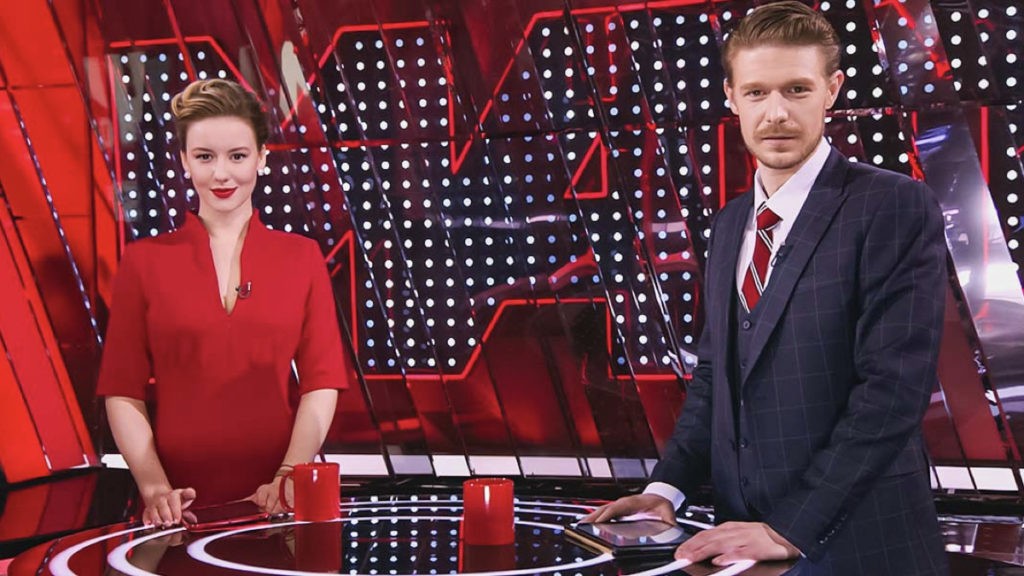
The film doesn't aim to impress with external gloss or technical perfection, because it's not a monument to Todorovsky's directorial ambitions (although in recent years it's become customary here to make exactly such monuments instead of films—if not "Citadel," then "Petropolis"), but rather a curious study of life in modern Russia. The director probably doesn't have clear answers, but he does have several quite insightful questions, and in conditions where half the answers are discredited and the other half discredit—that's actually quite a lot.
"A Healthy Person" is indeed simple and even unpretentious in many respects: the cinematography is probably deliberately unobtrusive (except for the surreal window scene, which is properly intricate); the dialogues are written vividly and seem to be roughly how people actually talk, but they also don't amaze with excessive refinement. The situation is somewhat different with the nuanced, thoughtful performances by Efremov, Starshenbaum, and Tkachuk in the role of Egor's boss—if there were nothing else in the film, watching these actors would still be a great joy.
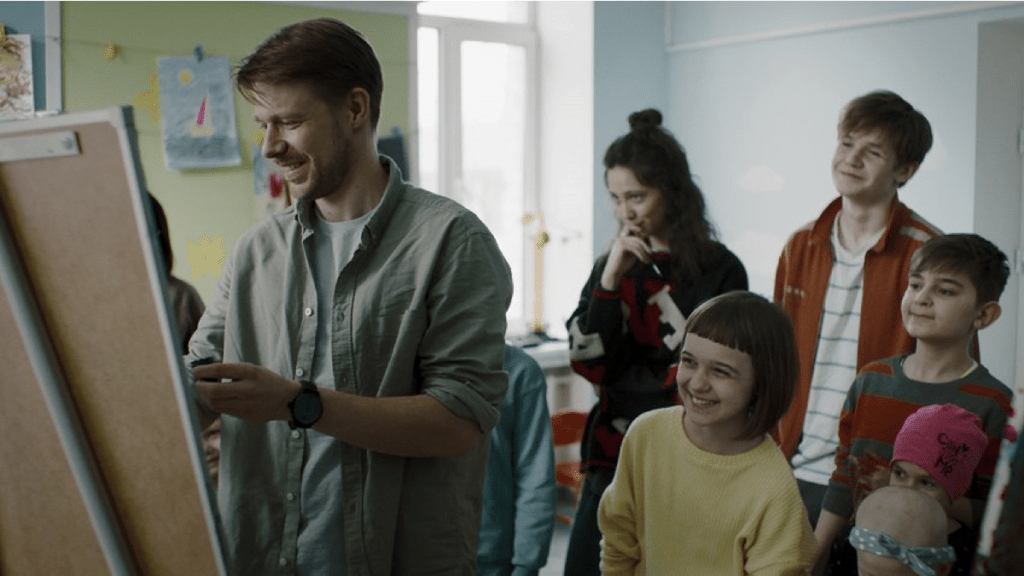
Irina Starshenbaum is mesmerizing in the role of a loving and empathetic woman who wants but cannot understand her husband: how can you care for other people's children and not your own? How can you trade your life for others'? And it's hard not to understand her—she clearly married an ambitious and moderately selfish person, not Francis of Assisi. Tkachuk, as usual, plays a morally ambiguous character—a sarcastic, slightly two-faced man who laughs at displays of kindness but seems to envy them.
But, of course, at the center of the film shines Nikita Efremov, an actor who, although it's already become somewhat cliché to say, like his father and grandfather, is not afraid to play complex, truly deep roles of confused, lost people. It's clear that a film with Efremov in a cheburek costume cannot be bad by definition, but there is so much more here besides this (admittedly wonderful) costume.
At its best moments, "A Healthy Person" seems like a strange counterpart to the Norwegian drama "The Worst Person in the World" (one of the [best films of 2022])—the odyssey of a man in his thirties searching for himself unexpectedly brings to mind a similar odyssey of the Scandinavian girl Julie, also mired in problems of self-determination and egoism. He strives to be the best person in the world, she fears being the worst, but both of them (probably not by Todorovsky's design, but it can perhaps be interpreted this way) turn out to be healthy people. Because a healthy person in an unhealthy society is a confused one, someone who seeks themselves and cannot find themselves.

Tom Cruise's grand return as Maverick, new hits from Spielberg and Anderson—these and much more in our list of the 10 best films of 2022.
Open material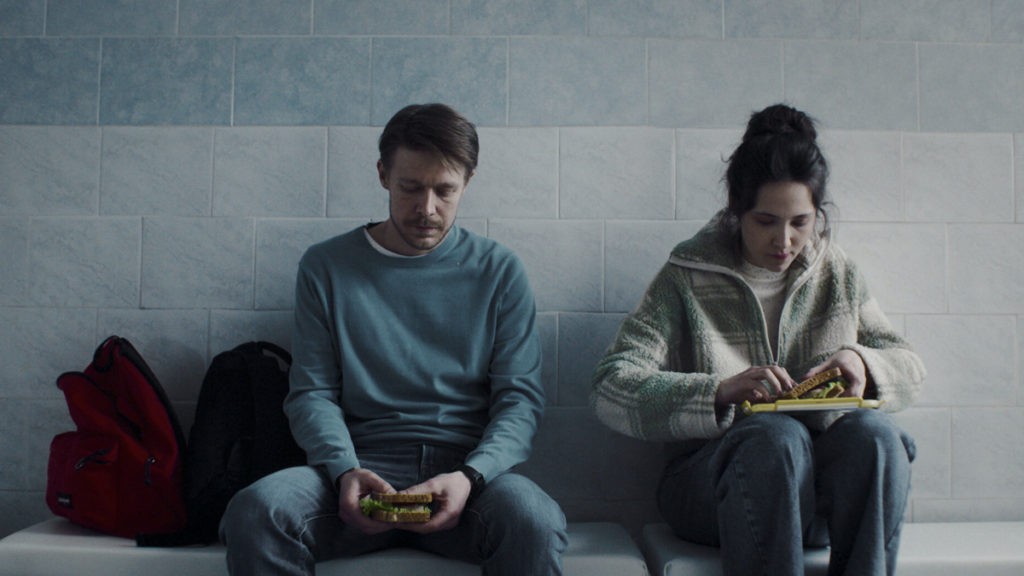
Efremov's hero, striving to help almost everyone—from a terminally ill boy with whom he strikes up a surprisingly sad, ghostly friendship, to missing people—ends up lost himself. He can find a lost child, he can find money for an operation, he can even find some degree of understanding from his wife, but he cannot find himself. There is a cruel irony in this—a lost person helps LizaAlert—but there is also room for a serious statement, even if the statement itself is not so easy to discern.
"A Healthy Person" is a film about inner emptiness against a backdrop of outer emptiness, about the frontier of the soul, whose abandoned landscape mirrors the external disarray of space. Egor wanders through the forest shouting names, stumbles through abandoned buildings, tries to hold himself together at the sight of children doomed to endure what not every adult can. The forest, the ruins, the hospital, the dacha with an uncertain future, the courtyard that promised to be well-maintained but turned out not to be—as in an old film by director Jarmusch, the horror of external abandonment screams of internal abandonment, but as in any honest Russian film, while being a metaphor, this horror does not cease to be the truth.
Comments
0No comments yet.
Sign in to join the discussion.