
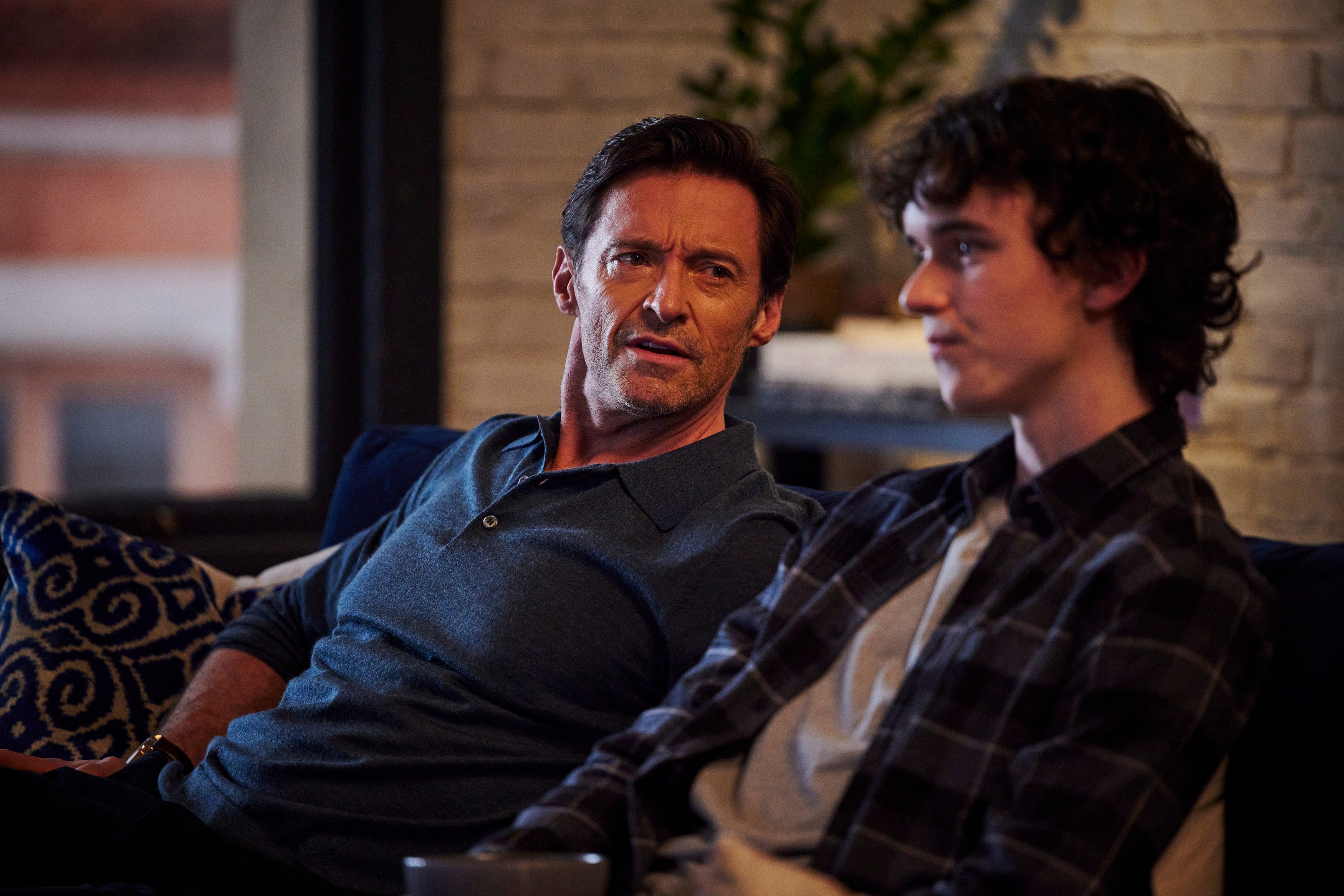
The film 'The Son', a family drama starring Hugh Jackman, Laura Dern, and Anthony Hopkins, is being released. About why director Zeller's film cannot be saved even by these wonderful actors – in our review.
'The Son' is the second film by Florian Zeller and the second part of his planned trilogy of film adaptations of his own plays. He could have stopped after 'The Father' (a film mixing, in strange proportions, the brilliant acting of Anthony Hopkins and a somewhat trite script), but in a few years we'll also get 'The Mother'. Despite the title, the film's main character is still the father – Peter, played by Hugh Jackman, a New York lawyer of indeterminate specialization with political ambitions, who left his wife and teenage son for a mistress (Vanessa Kirby, pushed to the background), who has just given birth to his second son at the film's start.
Everything would be fine, but at some point, Peter's ex-wife (Laura Dern, unusually subdued) appears at the doorstep of his spacious apartment and asks him to talk to their son. The gloomy teenager Nicholas (Zen McGrath) isn't going to school, doesn't answer questions, pushes his mother away, and generally wants to live with his father. Peter moves Nicholas in, takes him to a psychologist, finds him a new school, and tries with all his might to believe everything is normal. But anyone who has seen two or more films in their life understands that something is wrong with Nicholas.
He himself is confused in his statements – he lies to his father that a girl dumped him; he shouts at him that his parents' divorce cut him in half; he tells the psychologist he's bored with his peers (a trendy trope, by the way. The same thing happens in the charming series 'In Treatment', but more elegantly, oddly enough) and says a lot of things, but little is clear. The film's central moment – Nicholas's story about the pain inside him – is touching despite its theatricality. It's an important thought and a relatable feeling; living is generally quite painful, and even the abstractness of this pain in the hero is more of an advantage here – not vagueness, but universality.
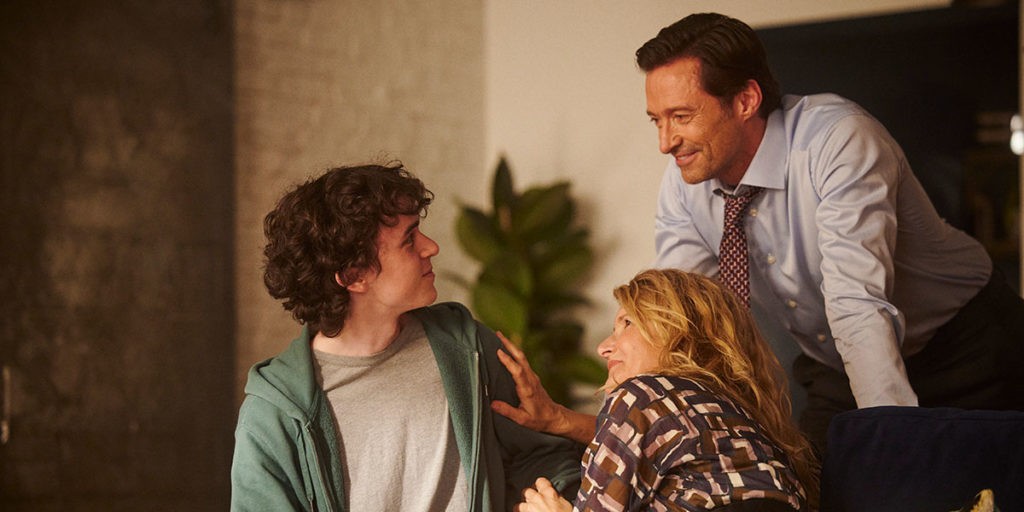
True, Zeller quickly shifts Nicholas's lostness from an existential plane to a psychiatric one, and, as with 'The Father', the elegance of this device is questionable. Two hours of observing a hero in deep depression, who has no personal qualities written beyond this diagnosis, is a trial even for those with the healthiest and strongest psyche.
The film's problem, oddly enough, is not the direction – it's competently shot, and the acting is very good (although a significant portion of scenes with Hugh Jackman at work are shot with the elegance of stock images for the query 'office worker') – but in what, in Zeller's case, is rightfully considered the main course: the script. It's not that it's completely bad, but it's probably not entirely realistic and is extremely literature-centric. It's probably foolish to ask a celebrated European playwright where he saw teenagers saying 'I feel like I've been cut in half' and good books with titles like 'Death Can Wait', but honestly, one wants to ask.
At the same time, the situations the characters find themselves in are terrible; their tragedies are understandable and even universal: Laura Dern's character still loves her ex-husband; Vanessa Kirby's character is forced to explain herself to the teenager whose father she took from the family; and Peter, already a mature man, has never overcome the trauma of his father's indifference. An extremely successful scene of a generational dialogue – Hugh Jackman as the son and Anthony Hopkins as the father – is a benefit performance for the 85-year-old actor with a speech about the West being rotten. He is perhaps the only one who deserves 53 rounds of applause even for such a speech. But no one else.
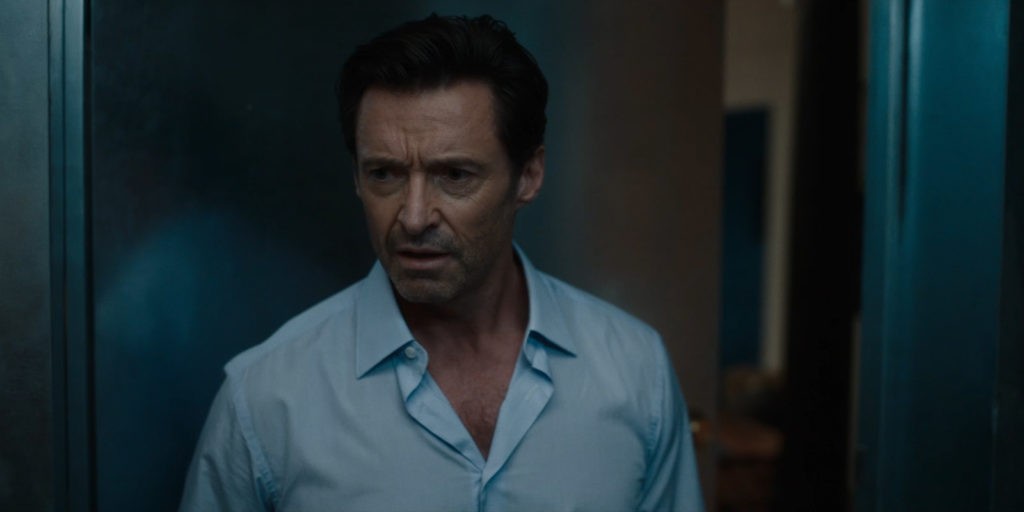
However, for all its potential, Zeller's film desperately lacks elegance. It seems to have everything, but even the best discoveries of 'The Son' are undermined by inappropriate pathos, strange moralizing, or a complete lack of humor. And the excessive visual references to classics, obvious manipulativeness, and predictability of the plot (the shocking finale is guessed around the thirtieth minute) certainly don't help matters, to put it mildly. At some point, it seems that 'The Son' is the first film shot in space – this story unfolds in such an airless space, and Hugh Jackman, not Tom Cruise, is the first Hollywood symbol of masculinity to play out a drama in a total vacuum, and what is especially sad – in an emotional vacuum.
In a sense, 'The Son' resembles a sad film adaptation of the meme 'Are ya winning, son?' But this meme is sad enough on its own, and in some variations, it even reflects the film's plot, so the need for two hours of trauma porn and the titanic efforts of actors Jackman and Dern is, generally speaking, not entirely clear. It's clear, of course, that we will all die, that there is no happiness; from the finale, it's even clear that director Zeller watched the film 'Brazil', but why all the shouting is decidedly unclear.
Yet, there is in the film, albeit excessive and vulgarized, a sincere longing for what could have been and what is no more, for missed opportunities, unspoken words, a sadness from the powerlessness to help those you love. Perhaps it is about this longing for what didn't work out that cinema should be telling us in the release of February 23, 2023. Even if this very cinema didn't quite work out either.
Comments
0No comments yet.
Sign in to join the discussion.