
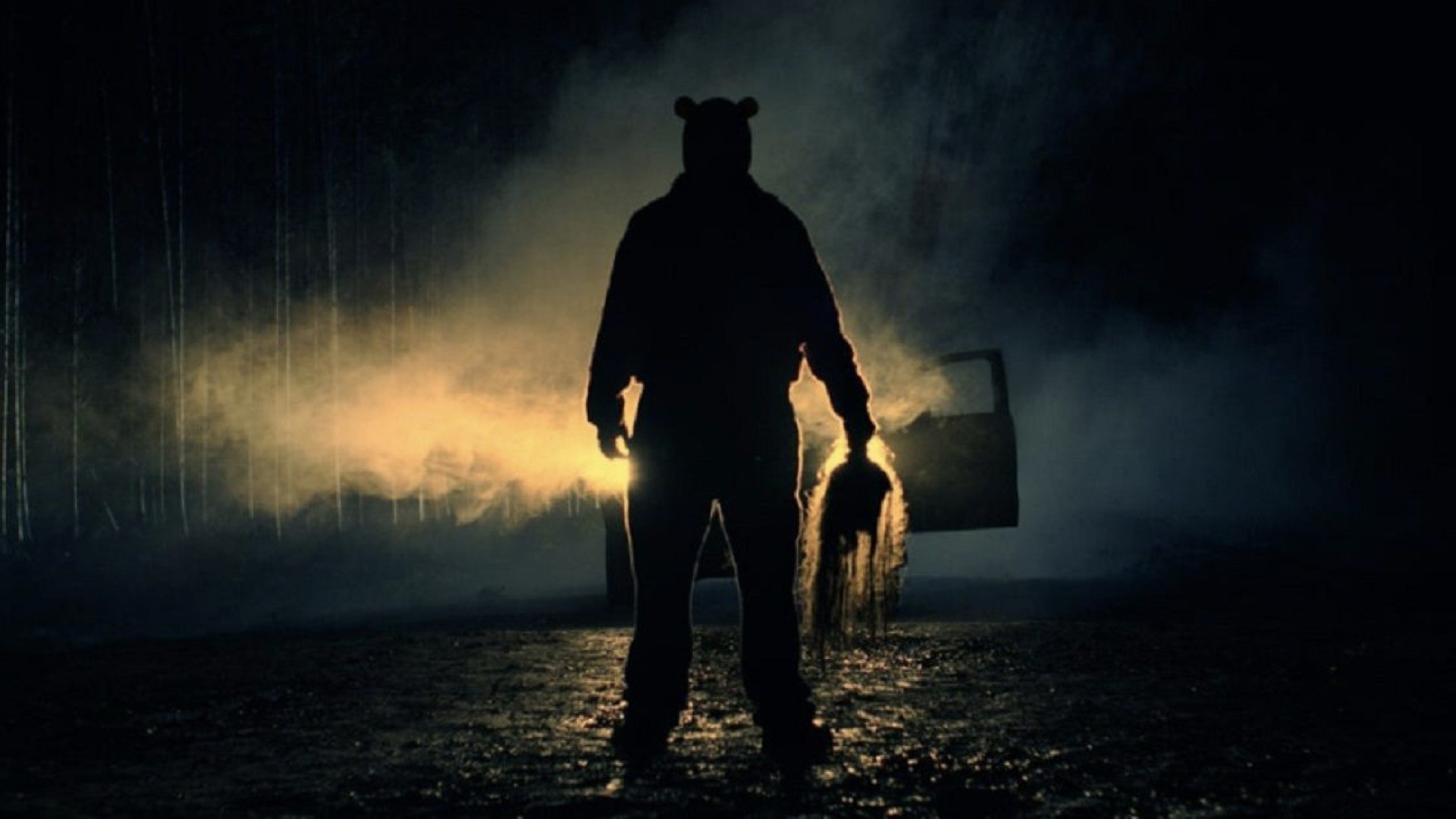
The film 'Winnie-the-Pooh: Blood and Honey' has been released – a micro-budget curiosity, a trash slasher featuring characters from Alan Milne's books, which makes you desperately want to sleep and after which sleeping becomes somewhat more difficult...
Exclusive rights of Disney to the characters from Alan Milne's books have expired, so now anyone can make movies about Winnie-the-Pooh, but the first to seize the opportunity was director and producer of low-grade, low-budget trash Rhys Frake-Waterfield, who made 'Winnie-the-Pooh: Blood and Honey,' a film, fittingly, in his style. It didn't turn out as intriguing as we all hoped, unfortunately, but there's still something to watch and even something to look away from.
The film begins with an animated prologue – likely its best part – which tells how young Christopher Robin met unusual creatures in the Hundred Acre Wood – small hybrids of humans and animals (namely, Winnie-the-Pooh and all his friends) – with whom he became friends and spent his entire childhood. But childhood ended, Christopher grew up and left for college, and the hybrids remained in the forest. To survive the winter, unable to properly find food, they ate one of their own – the donkey (poor Eeyore).
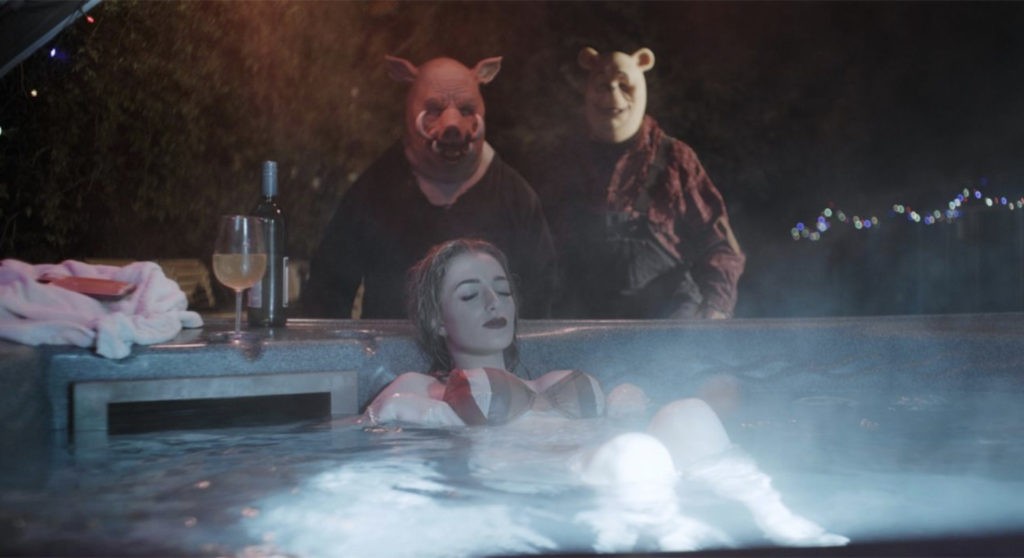
The donkey was killed, hopes were shattered, dreams were apparently left to die. The main tragedy in this particular forest was that the bear named Winnie does not hibernate in winter, and the bearish conformism based on sucking his paw is inaccessible to him. He and Piglet (an infernal human-boar in whom it's hard to recognize the cute Piglet) continued to live in the forest, but harbored a grudge, fell into resentment, and, due to their size (something like an artist) and characteristic farmer costumes, became indistinguishable from the average rednecks in American horror movies about the backwoods. Except their heads aren't human, but again – due to the budget, it constantly seems that Winnie and Piglet's faces are masks.
Some films ruined the potential of a franchise, others became the final point in a series – we've compiled failed films from well-known and popular movie series for you.
Open material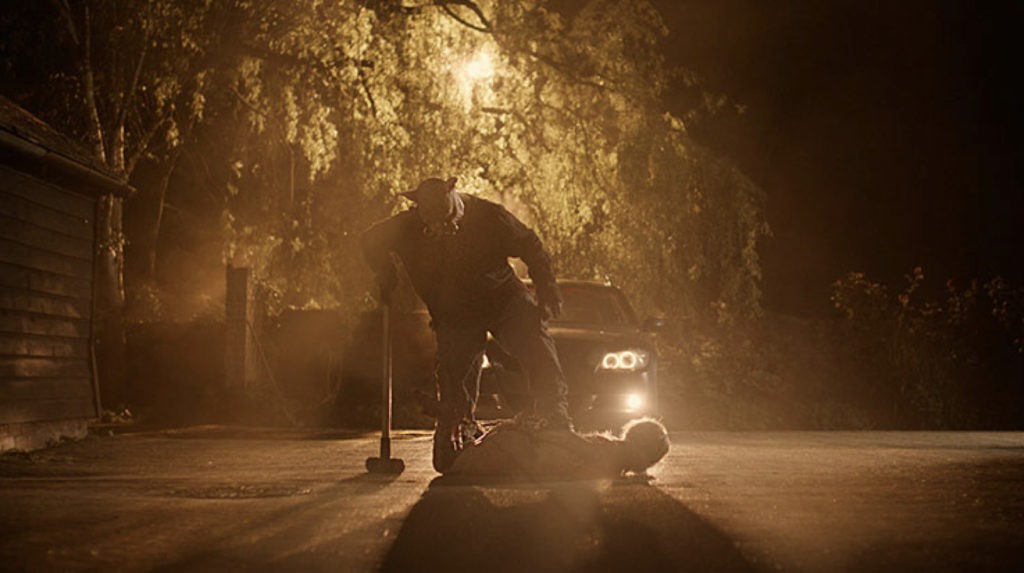
For the remainder of its runtime, 'Winnie-the-Pooh: Blood and Honey' wanders through the three pines of classic American slasher cinema, referencing such great, no exaggeration, films as 'The Texas Chain Saw Massacre,' 'Friday the 13th Part VII' (look closely at the storyline with the girl late for a party that is not meant to be), 'The Hills Have Eyes,' and 'Wrong Turn,' naturally, without coming an inch closer to their artistic merits. Within the first fifteen minutes, 'Winnie-the-Pooh: Blood and Honey' squanders the credit it was given for its brilliant concept, and then steadily rolls from bad cinema toward the monstrous.
The entire film, Winnie and Piglet kill dim-witted girls, and they kill brutally (running them over with a car, for example), but terribly unimaginatively – what's scary isn't what's happening on screen, but how bad it all is. However, when the animal hybrids kill a girl in a slaughterhouse, there is some idea in that, even an intriguing one. It's executed terribly, though. In general, all the ideas of director Frake-Waterfield repeat the fate of the book's Winnie-the-Pooh and cannot escape the dark burrow outward, toward spring. They remain half-realized and half-stuck in a dubious timelessness, which also prompts some thoughts – for example, that Frake-Waterfield could have spent his share of the film's earnings on film school.
The story itself – about someone who left the forest and those left behind deciding to take revenge; about how Christopher Robin joined civilization while his once best friends sit in the forest dreaming of killing him because, how dare he, in short – evokes certain thoughts. But of the two options – that the director is hinting at modern European politics and that a downed pilot simply sees parachutes everywhere – the second, naturally, seems more likely, although some parallels – for example, Piglet's passion for killing his victims with a sledgehammer – are alarming.
The duo of Piglet and the sledgehammer, by the way, is arguably the main entertainment of the film, which mostly makes you want to doze off, because due to the lack of budget and a general crisis of creativity, the director missed other wonderful opportunities. We didn't see, for example (and we really wanted to), how Winnie-the-Pooh gets stuck in a burrow and, within the genre, to get out, smashes something, or how the giant maniac-hybrid hangs over a tree in the form of a little cloud and shouts something like: 'Piglet, bring the gun.'
For a film with Winnie-the-Pooh in the title, there is unforgivably little of the iconic bear cub here, and he seems deliberately very poorly filmed. It's not about the terrible costume, but that the director apparently doesn't quite understand that for something to be visible, the frame sometimes needs light, so you'll have to strain your eyes.
But what's it all for in the end? Almost any nightmare inspired by this film (and if you're impressionable, even the synopsis will suffice) will almost certainly be more interesting than the film itself, and that is probably the verdict. Although, if you think about it, that's not such a big problem for a trash horror – such films are remembered for their high concepts, and here it's quite something (otherwise, reviews wouldn't be written about this film; its trash brethren, for example, are outside the field of critical attention). And even if the film 'Winnie-the-Pooh: Blood and Honey' faces audience oblivion, there's still no need to despair – it has every chance of ending up in some new book by Alexander Pavlov.
And yet, it's probably hard not to feel something for a film in which a grown-up but seemingly not matured Christopher Robin brings his young wife into a dark forest to introduce her to his imaginary, obviously, friends. It would be funny, but the friends turn out to be real, childhood problems seem to always be with us, and in the end, Christopher screams in the face of the terrifying man-bear: 'Winnie, what happened to you?' And to us? And to you?
So after watching, all that's left is to quietly pray that the director watches the film adaptation of Milne's books by Khitruk – God knows (though He, of all people, would be better off not seeing any of this) – Soviet animation can give Frake-Waterfield many wonderful ideas for a sequel, which we will, of course, be waiting for, especially since it's already being made; there are, after all, no other options.
Comments
0No comments yet.
Sign in to join the discussion.