
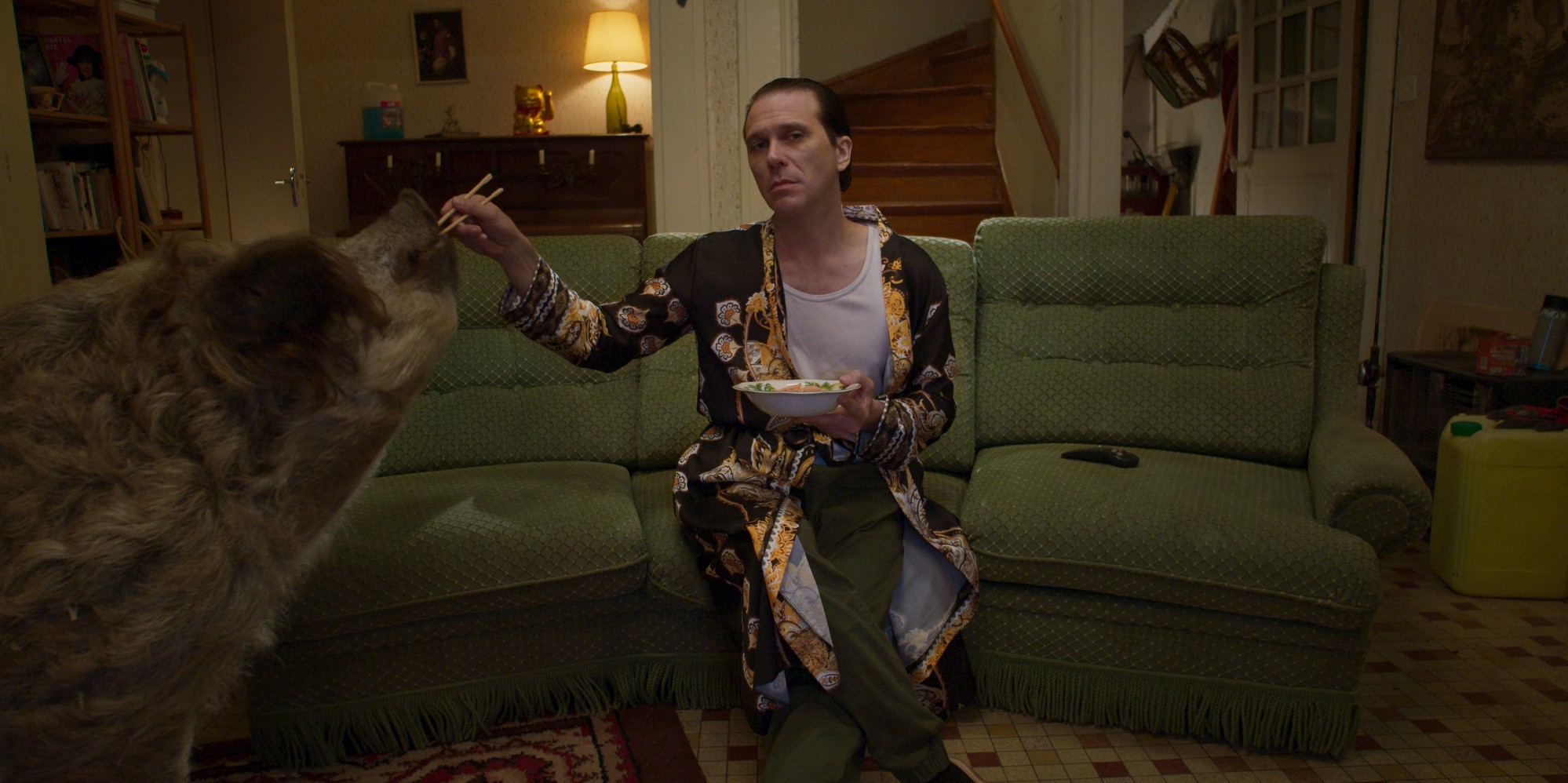
Red oranges – oranges sanguines – are considered a sweet alternative to the usual orange ones, but Jean-Christophe Meurisse in the film 'Bloody Oranges' does not intend to please the viewer. His torture is more sophisticated than the violence against...
A debt-ridden married couple, a tax-evading minister, a teenage girl overturning gender norms – the characters of the film 'Bloody Oranges' exist on the verge of hysteria. Desperate pensioners enter a dance contest to solve their money problems; a hypocritical official seeks to cut benefits and cover up his financial fraud, while giving interviews about family values and not shying away from sex parties; a modest girl, against her lawyer's advice, strives to tell the court the truth about her vendetta.
It may seem that each of them is to some extent a victim of the system, but as soon as the twilight hour of monsters arrives, when 'the old world is dying, and the new one struggles to be born,' we discover the true faces of the heroes, disfigured by vanity, cynicism, and selfishness.
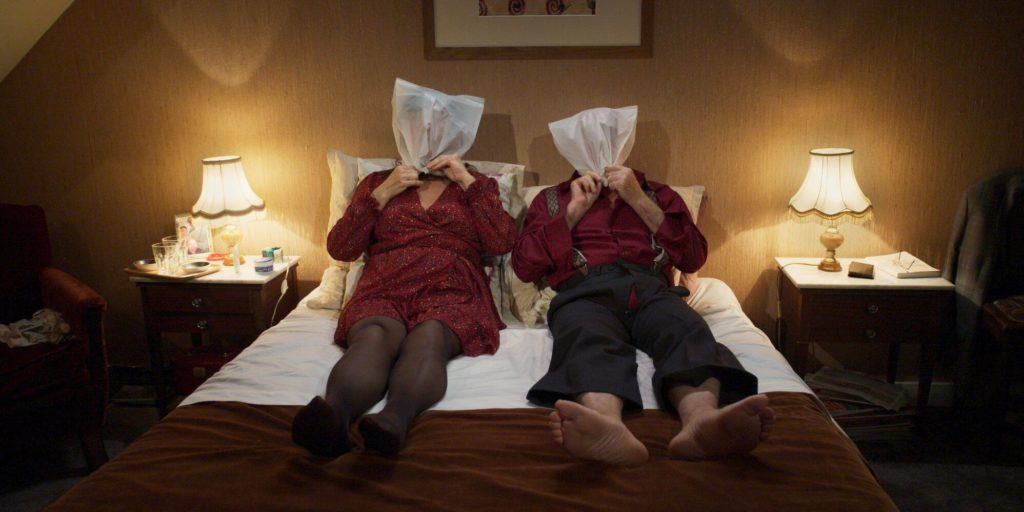
After an epiphanic transition, cruelty – internal, hidden, invisible – defiantly spills out. Thus, the subtle tension of the first half of the film sharply escalates in the second: before us is not just a black comedy, but the black essence of society, presented in a grim yet convincing light.
With some allowances, comparisons of the fateful night events in 'Bloody Oranges' to the absurdist works of Quentin Dupieux and the penchant for violence and social futurology of Michael Haneke are quite applicable here, but the greatest influence on Meurisse seems to be 'Wild Tales' by Damián Szifron. Meurisse, following Szifron's template, explores the dark side of human nature and reflects on the moral squalor of society through the arcs of his perverted characters. It turned out not as elegant as in the Argentine-Spanish black comedy – the decision to intersect and run the novellas in parallel instead of sequentially leads to uneven jumps and deprives the film of integrity – but no less insane.
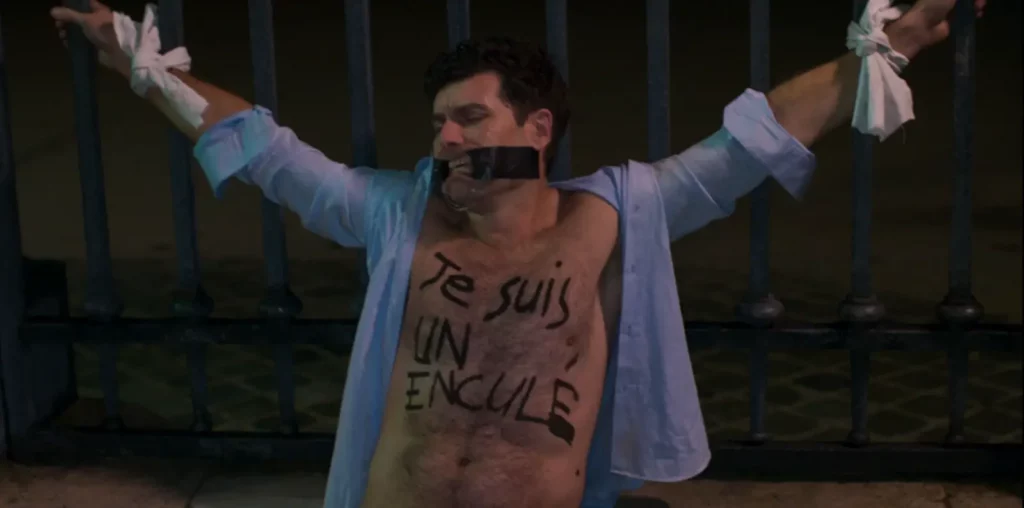
In his second feature film, Meurisse is not afraid to mix genres: from social commentary with an allegorical depiction of the problems of modern France through outright satire on the mechanisms of power, he moves to shocking outbursts of violence referencing exploitation cinema, and then in one motion lays bare the wounds of liberal politics through reflections on capitalism, national identity, social classification and stratification, corporate speculation, misogyny, and indifference.
Some will dismiss 'Bloody Oranges' as a defiantly self-satisfied example of 'extreme' cinema and accuse it of showing off, others will point to a predictable formula and note the superficiality of the plot, and some will be displeased by the direct provocation and hasty ending, but it is impossible to reproach Meurisse for a lack of emotionality.
Like obsessive thoughts, you replay scenes from the film over and over in your head, trying to calm the raging horror caused by the egoists of this world, to whom you yourself belong. In short, just what is needed for the Cannes Midnight Screenings program. Let there be darkness!
Comments
0No comments yet.
Sign in to join the discussion.