
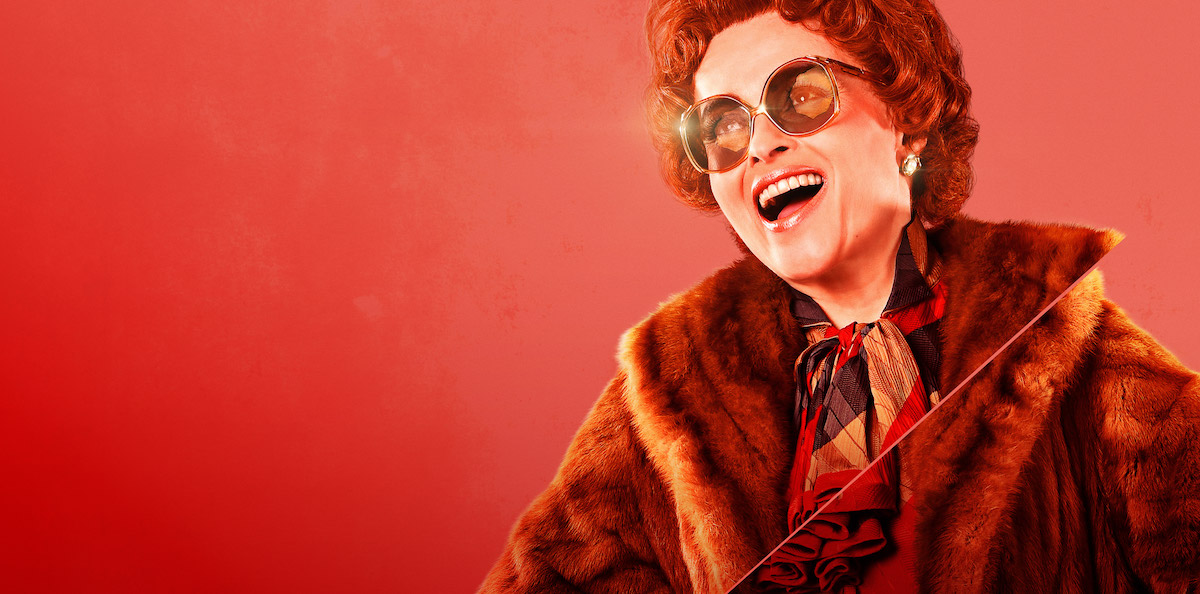
On February 2, ITVX rather modestly premiered the three-part mini-series "Nolly" with Helena Bonham Carter as British TV star of the 60s and 70s Noele Gordon, who played in the soap opera "Crossroads" for almost 20 years. We tell you why the story of...
The soap opera Crossroads aired on ATV from 1964 to 1988. During this period, over 4,500 (!!!) episodes were produced. The series was very cheap to produce, but despite poor reviews, it attracted a huge audience of 15 million viewers. Actress Noele Gordon (known to friends simply as Nolly) starred in it from the very beginning for 18 years. What interesting story could be told about a person who devoted her entire career (and nearly a third of her life) to a dubious soap opera? Yet this short three-part series contains much more than a typical biographical story of an abruptly fired actress.
What's the Plot?
1938. A young beauty (Sylvia Present) enters a studio and sits on a chair; she is filmed by a television camera and congratulated on becoming the first woman on color television. The girl's name is Noele Gordon, but her friends call her Nolly.
1975. Filming of a Crossroads episode is underway, in which Meg Mortimer (the main role in Miss Gordon's career) gets married, and ten thousand fans have gathered outside the church to see the star. Producer Jack Barton (Con O'Neill) is displeased because the onlookers interfere with the filming process and appear in the frame, but Nolly (Helena Bonham Carter) sees no problem with the crowd, as these people came out in cold, windy weather solely out of love for her and the series. On the contrary, one should be glad that Crossroads has so many fans.
1981. The aging star of Crossroads arrives for a rehearsal of another episode but is delayed by an autograph session and chatting with fans at the entrance. At the same time, a new black actress named Poppy (Bethany Antonia) arrives, whose mother assures her that she will represent all black people on television. The entire crew trembles before Nolly and listens to every instruction. The TV diva even has her own chair, which no one else is allowed to sit on, as it has belonged to her for 18 years. Miss Gordon directs the process, rewrites the script on the fly, and gives instructions to the entire cast. This clearly displeases Jack Barton, but he does not engage in open argument.
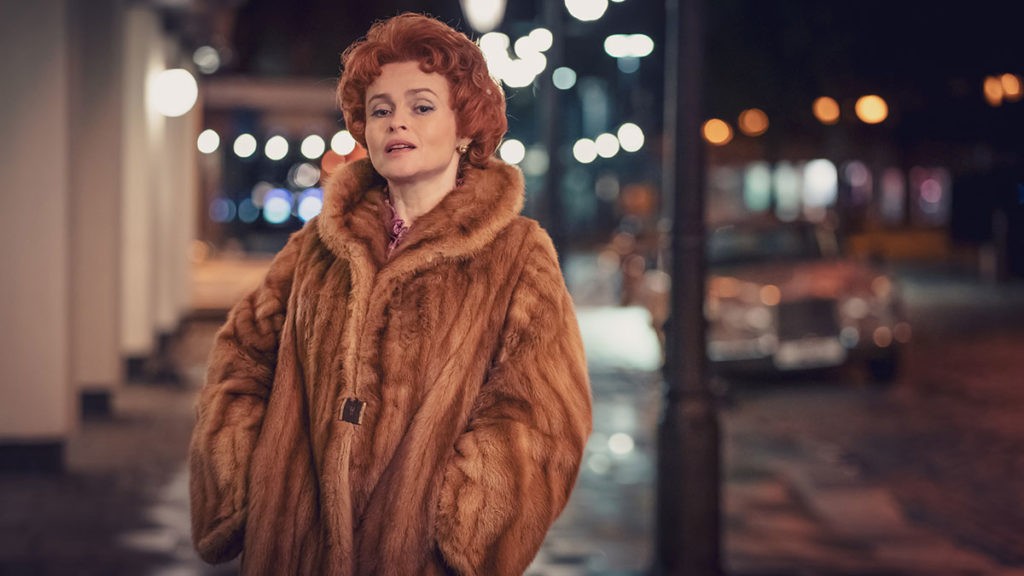
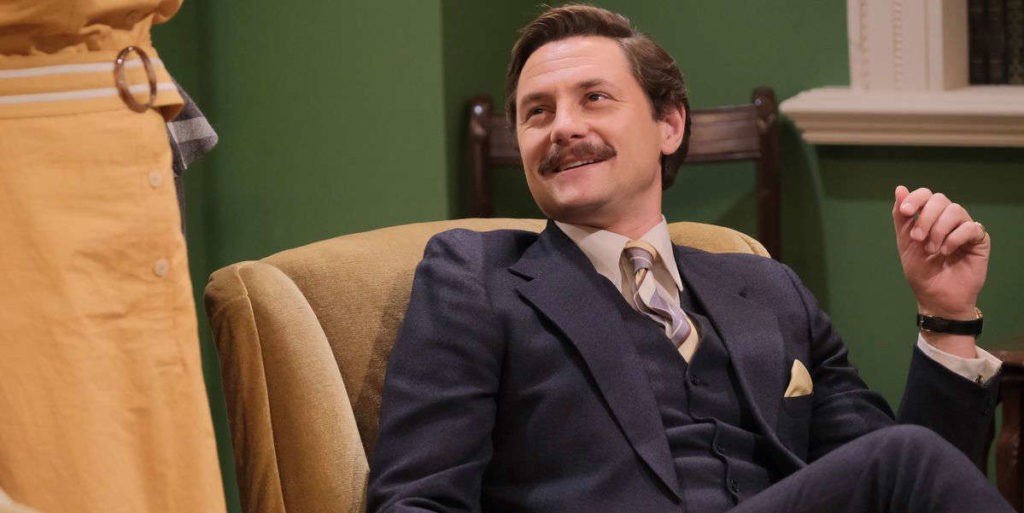
And when the star learns over the phone that she has been fired, she does not even believe her agent's words, thinking she has been given a vacation. Her colleagues Tony Adams (Augustus Prew), Jane Rossington (Antonia Bernath), Susan Hanson (Chloe Harris), and others also cannot believe the dismissal. The woman is not used to begging, so she has no choice but to accept the fact and, playing out the remaining months, live on, wondering why it happened and how the story of her character, Meg Mortimer, will end.
Crossroads of Seven Paths
Noele Gordon is indeed considered the first woman on color television, but her achievements do not end there. The star of Crossroads also became the first woman to interview British Prime Minister Harold Macmillan. In the project by Peter Hoar (one of the directors of the series "The Last of Us") and Russell T. Davies, Helena Bonham Carter's character appears as a strong and independent personality. "Nolly" is a feminist manifesto that one does not have to be a talented world-famous celebrity to become a symbol of women's unity. She has a character she is not afraid to show, she is loved, and people listen to her. That is quite enough.
Noele Gordon worked on a soap opera for 18 years. And she truly worked rather than just acted. The production process is completely different from what actors tell us about today. Working on a 5/2 schedule, Nolly went to rehearsals and filming every day, but she was suddenly fired, informed that she had only a little time left to play. Everything according to factory and enterprise rules: after being laid off, she still had to work for some time before leaving. Surprisingly, the woman did not twist the situation in her favor and tell the press that she left on her own because she found a better project. The star of Crossroads went to the journalists and told the truth. After so many years of labor, despite the love of fans, she was simply thrown out without explanation.
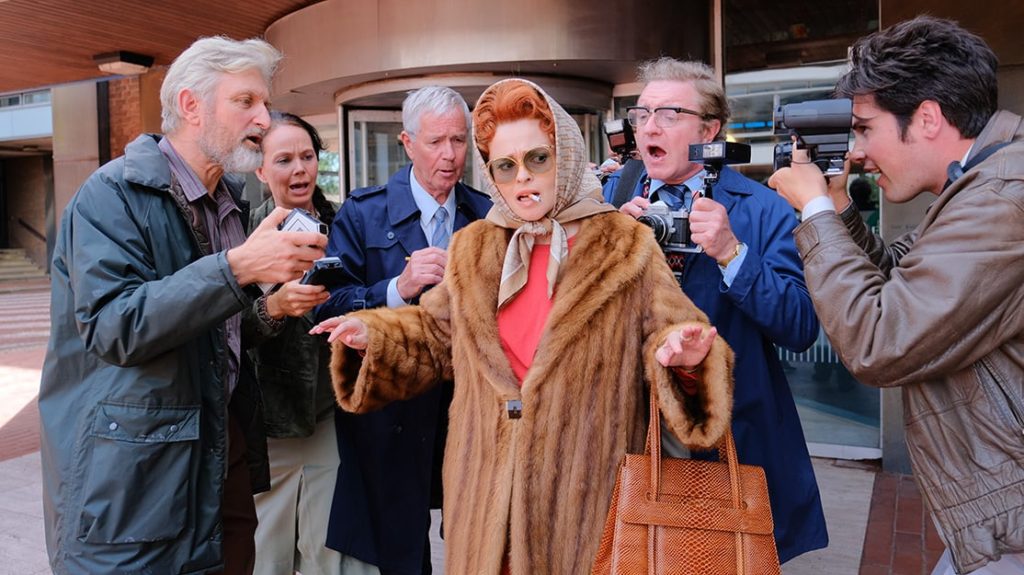
Helena Bonham Carter looks magnificent in the role. The beloved crazy Bellatrix Lestrange from appears as a wise, witty, slightly arrogant and bitchy TV star. There is real chemistry between her and Augustus Prew on screen, so when this pair is in the frame, you can't take your eyes off the screen. And overall, the three episodes fly by unnoticed. The conversational drama absorbs and captivates with its story, which, at first glance, is unlikely to be of great interest.

The third part of materials about the Harry Potter universe. We talk about four films directed by David Yates and conclude the narrative about the main films of the saga.
Open materialNolly evokes empathy; the viewer, together with her, wants to find out the reason for the unfair act by the management. How can this be? The woman gave many years of her life to the project, and they don't even want to say goodbye to her properly. Yes, she is a little vain and to some extent enjoys her position, but she also understands that being fired is practically a death sentence for her future career. The bitter realization that she will never star in a major project does not allow her to clearly imagine what to do after the last day of filming.
Noele Gordon long ago accepted herself and her fate as a mediocre actress, giving herself entirely to Crossroads. She values her fans (most of whom are women), communicates with them daily, and rarely refuses an autograph or a simple conversation. Unflattering reviews about the series often came her way (mostly from men), but she fought back and defended her own honor, the honor of the project, and the honor of millions of women. Why are soap operas worse than football? Women relax this way, but why is their relaxation not comparable to men's gatherings in pubs?
This rather average series united many people who were waiting for new episodes, so the unfair and sudden dismissal of Nolly caused a public outcry. There was no end to calls and letters, and protesters even gathered on the street. Such strong unanimous love from the audience for the actress is certainly worth something.
Made of Spit and Sticks
As mentioned earlier, Crossroads was very cheap to produce, and the filming process resembled ordinary work with a fixed schedule rather than creativity. The series shows viewers how episodes were made: the same sets for years, the illusion of a fire using a "fireplace" placed directly in front of the camera, a trip to another location as a holiday for the crew, weekly distribution of scripts, a clearly defined episode duration of 19.5 minutes, and stretching the missing runtime in case of force majeure during filming by using a phone call and improvisation.
Imagine experiencing all this for 18 years and thousands of episodes. What outside projects could there be? It is no wonder that when Nolly was notified of her dismissal and everyone found out, the topic became a daily discussion. One day during a break from filming, the actors started talking about it again, and the cameraman simply began recording, seeing it as the best episode in the show's history. Live emotions were perfectly woven into the plot, although there was no such scene in the script.
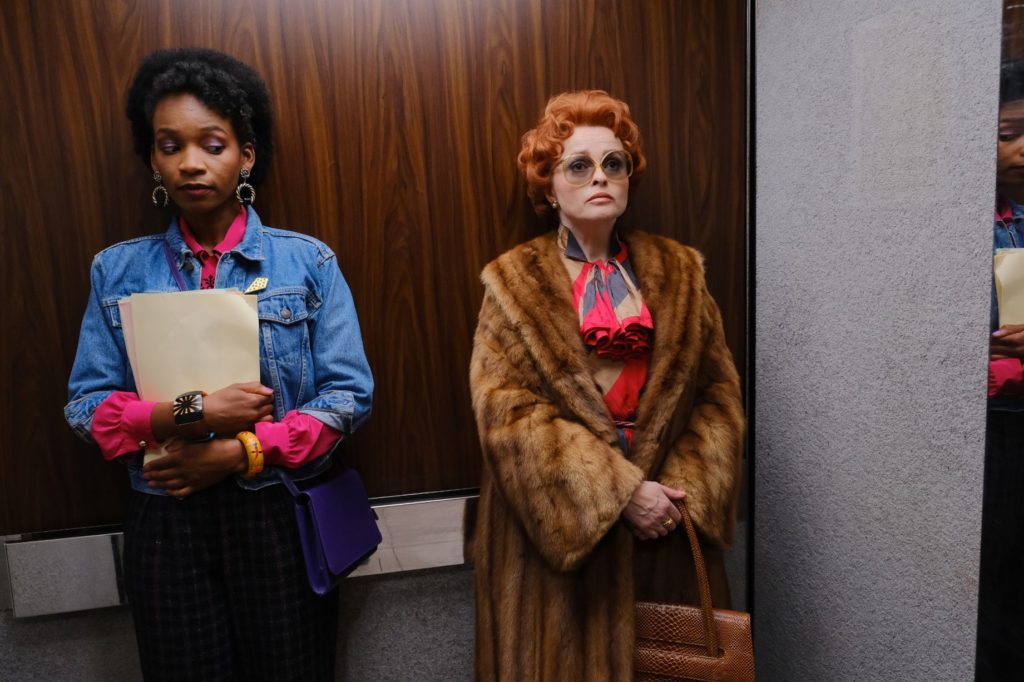
Unfortunately, not everything in the three-part series is perfect. The authors forget to close some storylines. For example, they completely abandon Poppy. Bethany Antonia's character appeared at the very beginning as the first black actress, with the creators clearly intending to add a racial statement. She immediately marked herself as a "black sheep," not only in skin color but also in her views, and then they simply forgot about her.
Also, the other members of the Crossroads cast are not particularly developed, giving the impression that many serve only as extras in Nolly's story. I would have liked a bit more immersion into their relationships with Miss Gordon, as it leaves a feeling that all of them (except Tony Adams) feel only awe and admiration for the star, which sometimes seems feigned.
So What's the Verdict?
"Nolly" is a very solid and relevant project with excellent acting. The mini-series tells the interesting story of a woman who, despite being aware of her ordinariness in the acting craft, managed to become a symbol and idol for many housewives. She lived a bright and worthy life in her own way, gave herself entirely to her work, and rightfully earned a screen adaptation of a piece of her biography, even if in a rather modest three-part series. As Tony Adams said after Noele Gordon's death: "Crossroads never had a star, although Nolly was Crossroads."
Comments
0No comments yet.
Sign in to join the discussion.