
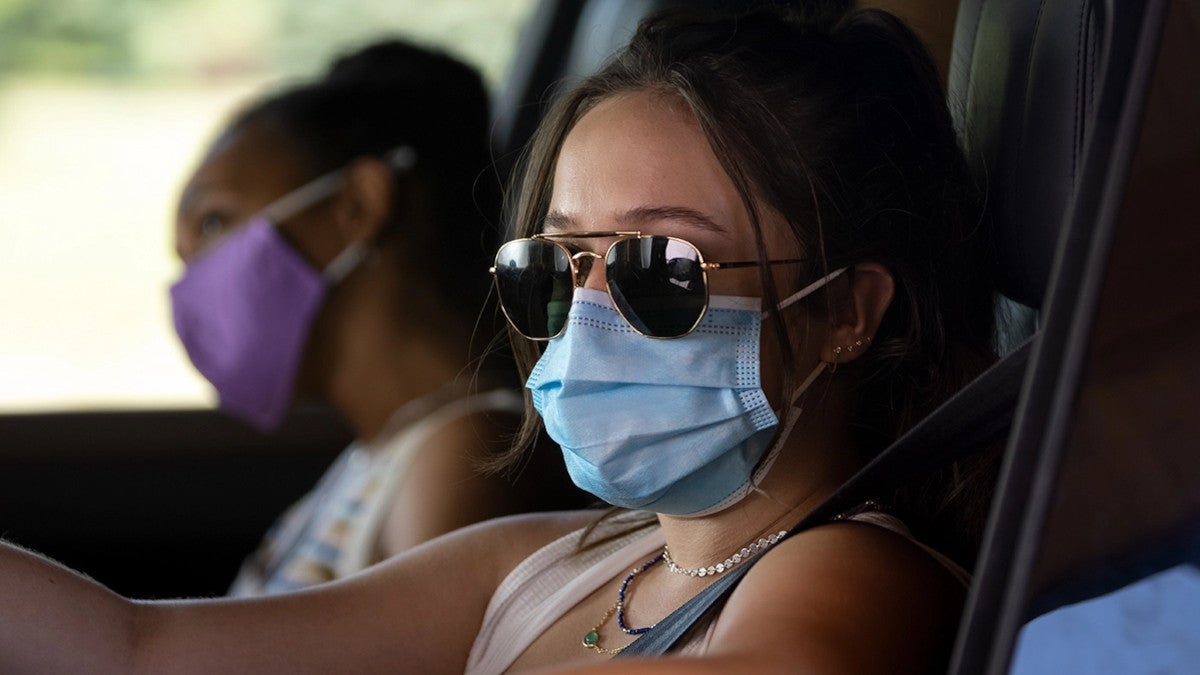
Peacock has released 'Sick', a COVID slasher written by Kevin Williamson, the man who created 'Scream'. We figure out what Williamson is screaming about, why his new film is the best statement about the pandemic era so far, and what 'Friday the 13th'...
'Sick' begins with a trip to the supermarket by a hero who will be killed five minutes later. Why and for what reason is unknown; it's also unclear who sent him the SMS with text that in the '90s would have been ominously voiced during an anonymous call: 'Going to the party?', 'Did you get tested for COVID?' The concept of creepy calls was born long before the '90s – there was, for example, the wonderful film 'Black Christmas' – but it was screenwriter Kevin Williamson who perfected it in the brilliant prologue to the first 'Scream'. By 2023, calls had inevitably evolved into creepy texts (because calling Zoomers is just too scary), but the essence remained the same: death on the line; the subscriber, if not dead, will die soon.
After an elegant prologue, the main action begins: two college girls, one smart and one rich, plan to quarantine at the richer one's country house. Parker (Gideon Adlon), the owner of the mansion, doesn't care much about the raging COVID (it's April 2020) and, oh horror, didn't get tested before isolating with her friend. The other girl, Miri (Bethlehem Million), is somewhat more socially responsible, smart, and periodically sighs when her friend openly enjoys her popularity. The thing is, Parker is dating one guy, having fun with another at parties, calling it an open relationship, and in general, in any '80s slasher, she would have died first.
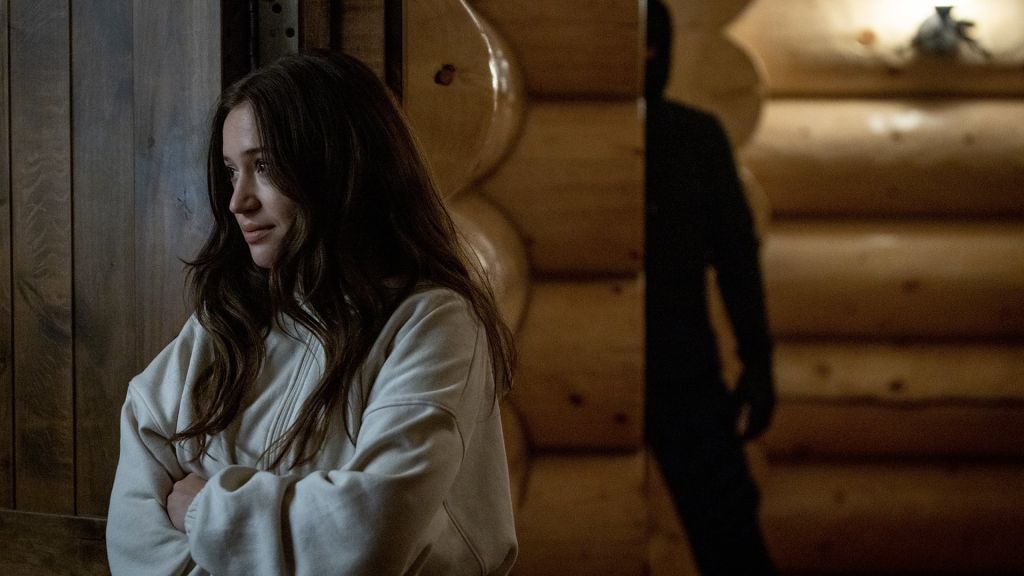
But times have changed, and that's in a sense what the whole film is about, where the classic locations of teen horror, its classic tropes, and methods of killing don't so much gain new meaning as lose their old one. Here, almost frame by frame, they quote various parts of 'Friday the 13th' (director Hyams makes you want to trust him with a new Jason movie – he won't let you down): squabbles from the fourth and fifth, several metatextual jokes in the spirit of 'Scream' and the sixth 'Friday' (without which, as we know, 'Scream' wouldn't exist), and of course, a grand finale straight out of the first film. But despite the abundance of quotes, the carefree spirit of the Jason Voorhees saga, that man and steamship, is nowhere to be felt – the world around has strangely and unexpectedly darkened; devilry happens not only on Friday the 13th but on other days too.
And if in the '80s you still felt sorry for a couple of stupid teenagers, now you don't feel sorry for anyone; if in the '90s you came to a country house only in a large group, now everyone is afraid of every extra rustle – it's even cramped with three people. Only the main plot element remains unchanged: the murders are still a disproportionately bloody revenge for the inevitable, an attempt to measure deadliness with fate.
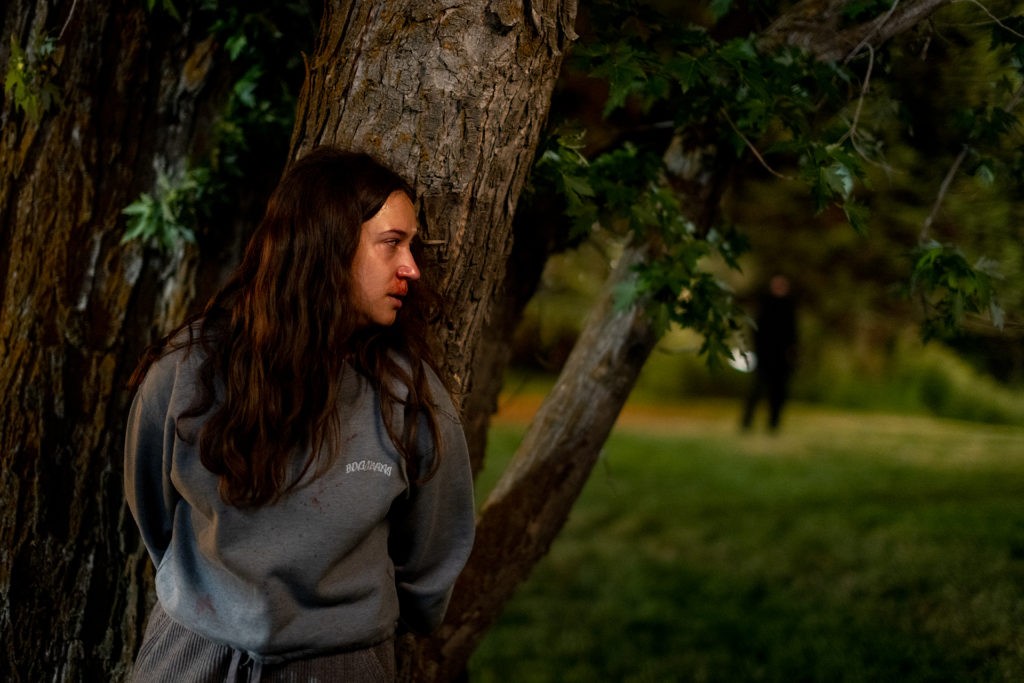
Without revealing the killer's identity (here, as in 'Scream', it's an important part of the mystery), we note that people put on masks in such films for a reason. The generic trauma of the slasher – the disproportion between the carnage and its cause – here appears not just as a variation of revenge tragedy (and some slasher plots, as we know, would make Jacobins step aside – 'The Strangers', for example), but as a metaphor for the coronavirus epidemic. The murders, however, seem not only a metaphor but also an interesting way of posing the question: can psychopaths still scare us as before, when there is a much more invulnerable evil around? Has our humanism suffered so much that the bloody bath of 'Sick' seems like a statistical error in the era of a pandemic? The questions, characteristically, remain unanswered, but it would be naive to demand them now, especially from a slasher.
Of course, 'Sick' is an unpretentious spectacle: some masters make such films with their eyes closed, and some viewers watch them with their eyes closed. But in its close-ups of slightly emotionless faces, in the smart script, and in the inevitability that shows through the conventional happy ending, there is still something worth opening your eyes for. At least to see in the senseless carnage a portrait of the era.
Comments
0No comments yet.
Sign in to join the discussion.