
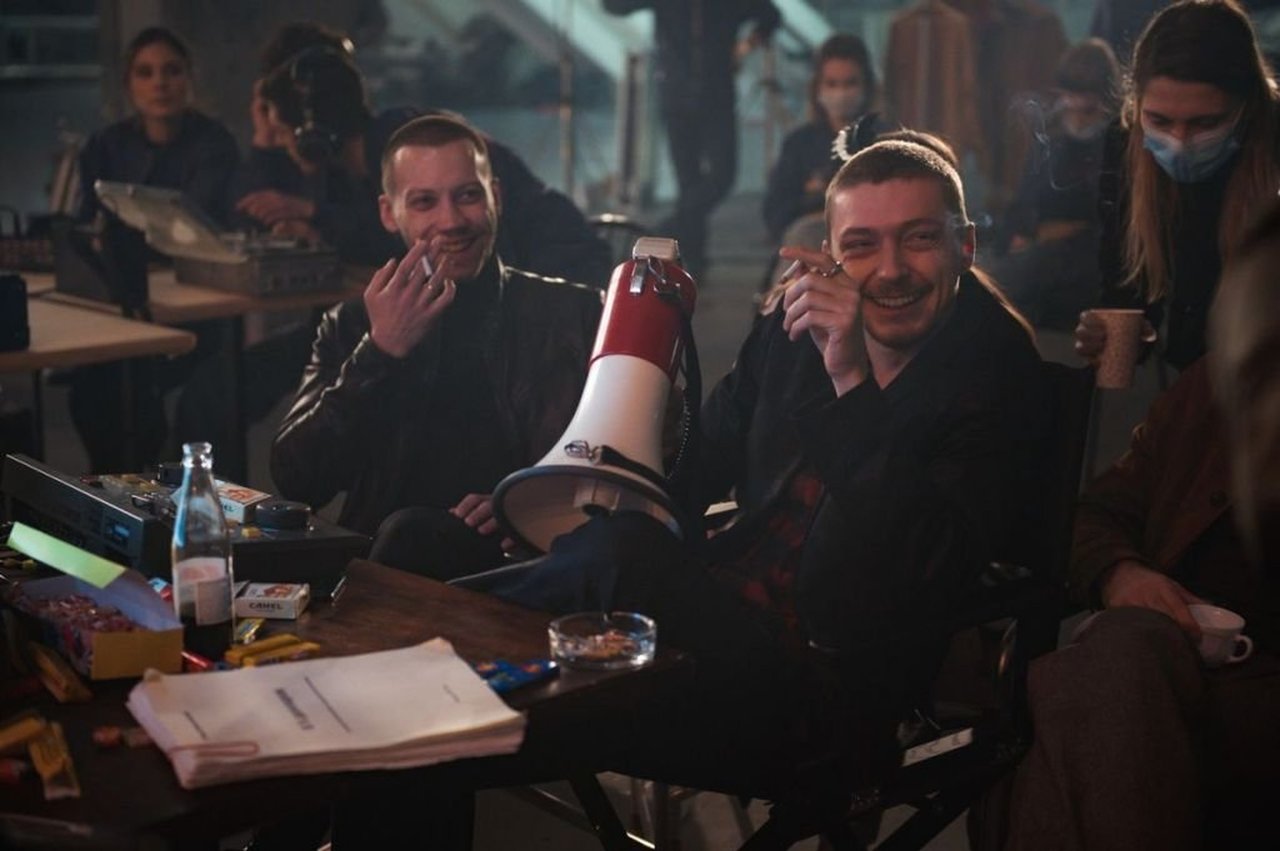
“Grigory Konstantinopolsky reimagines the 90s” is already a well-established genre. Even in his works about the present day, the legacy of this decade occupies an important position. But when the director decides to turn to real events from the past...
The film “Clipmakers” is divided into four chapters named after the main characters, with months and years shifting within each chapter, the picture jumping from 1992 to 1999. Shootouts, parties, casino games, and other obvious and not-so-obvious signs of the times flash before us. Sometimes the story is interrupted by inserted novellas or the actual filming of music videos. “Clipmakers” ultimately feels like a series of clips, even though it tells the story of the unfolding events in the lives of the same characters.
Grigory Konstantinopolsky usually keeps the narrative much more cohesive, even in a series format. His “Drunk Company” and “Dead Souls” (especially the latter project) work excellently with a multitude of characters and diverse clip inserts in style and mood. Here, the film falls apart into fragments, and this seems intentional.
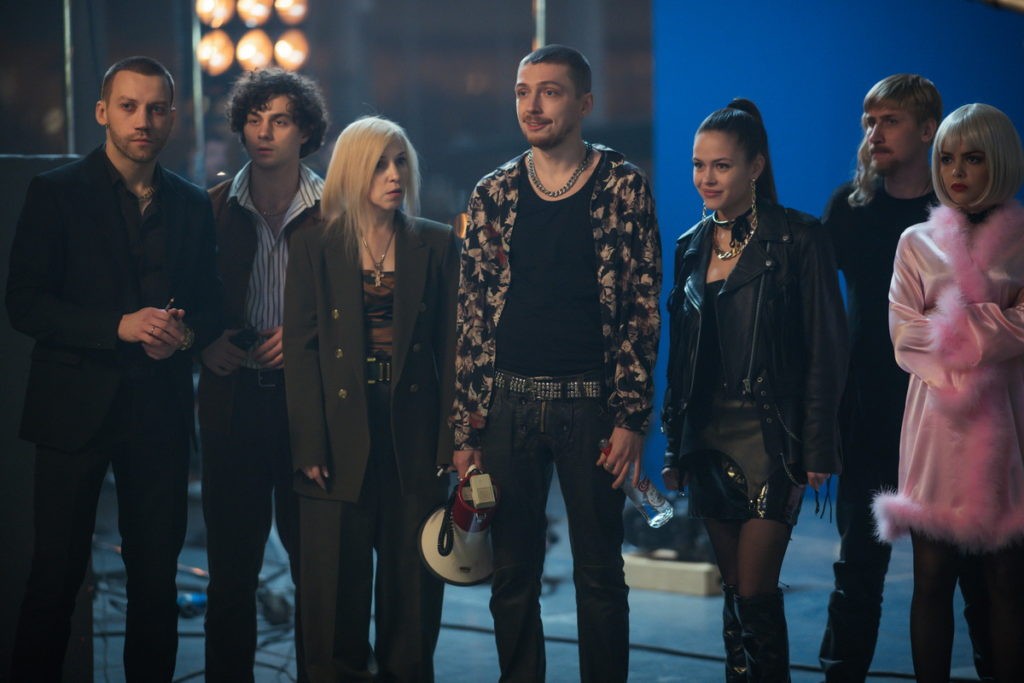
“Clipmakers” looks like fragmentary memories, clouded by nostalgia, and the author himself sneers caustically at this nostalgia. Both the adventurous comedy and the clownish retelling of real events contain bitter comments about days past and, in a way, about the present day. Different parts of this clip-film help us, with varying degrees of success, to feel the elusive image of the era.
If we break down the film by chapters, that is, by four storylines, we see the stories of screenwriter Tonya and directors Armen, Vasya, and Grisha. All of them correspond to real people but are rather vicious caricatures. The least conflicted of them, Armen, is a parody of director Armen Petrosyan. The most valuable thing about his character is drawing attention to the real person of Armen Petrosyan, a talented man who died too early to be remembered as well as his colleagues today.
Tonya is the embodiment of the now-successful screenwriter and director Avdotya Smirnova. Tonya is played by Maria Shalaeva in her usual image: when we first see the heroine, her green hair involuntarily reminds us of Shalaeva’s earlier work in “The Mermaid,” her first major role as a green-haired, flighty heroine. Despite her eccentricity, Tonya is conformist, and over the years she changes more than other characters, following the spirit of the times. She is the only one who talks about her values and beliefs, but they are superficial and easily change for pragmatic reasons.

Vasya Coppola (Alexander Kuznetsov), a parody of Fyodor Bondarchuk, also adapts. The son of a great director, Vasya can organize the “Clipmakers” award and give prizes to himself, confidently crash a showdown with only his own name as a trump card. In the late 90s, he easily starts collaborating with politicians and doing advertising for Yeltsin’s election campaign, because what times, such are the clips. The others readily support him in this, but the line of artists collaborating with the authorities does not develop: with the end of the 90s, the story of the clipmakers ends. In the new, well-fed, calm decade, there is no place for them.
By ending the story in this way, Konstantinopolsky seems to put an end to the revision of this period: the vague retelling of the events of the 90s increasingly turns into either a sentimental sigh or a clichéd anecdote.
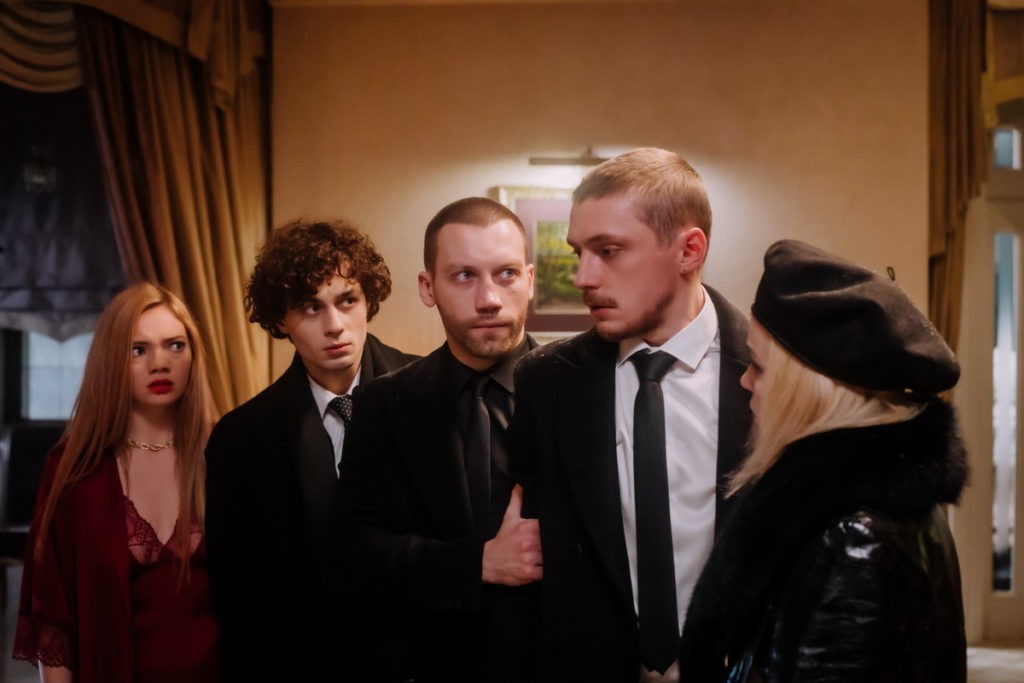
In the film, this idea is suggested by a recurring gag. Throughout the story, the characters encounter the bandit Beaver, wonderfully played by Vladimir Epifantsev, knock him out during a showdown, Beaver loses his memory for a few years, then remembers everything, and the chase starts again. Each time, Beaver understands less and less of what is happening around him; reality is being rewritten before his eyes; former enemies become partners, and then enemies again. This joke exhausts itself on the first repeat, but it clearly shapes the image of a person increasingly tired of endlessly reliving the past.
There is, however, a formal aspect that hinders the perception of what is happening. The 90s shown in the film alternately resemble the 2000s and the present day. This is especially noticeable in the scenes reproducing real clips once shot by Konstantinopolsky, Petrosyan, and Bondarchuk.
All the clips look the same, in identical neon sets built in a Soviet hotel. The filming process is conventional; the director just says “Action!” and asks for more sex. This approach works for the overall idea, but these hollowed-out videos, far from the ambitious, original originals, do not capture attention or draw you into the proposed period.

The sets and costumes also look uninspiringly glossy, more like from the 2010s. One might assume that the model girls with beautiful faces and absent personalities, of whom there are many here, do not change much over the years and even decades, but strange yet captivating images would have been all the more valuable.
The connection to the 90s is best established by the figure of the central character, Grisha Vizantiysky (Alexander Gorchilin), who embodies Konstantinopolsky himself. Grisha loves British punk and Soviet cinema, or pretends to. He is overwhelmed by suffering over a former lover he wants to brutally shoot, or romantic feelings disguised as “One Hundred Days After Childhood.” Grisha is caught between the Soviet past and the vague Russian future, and he observes how history will unfold more passively than all his friends.
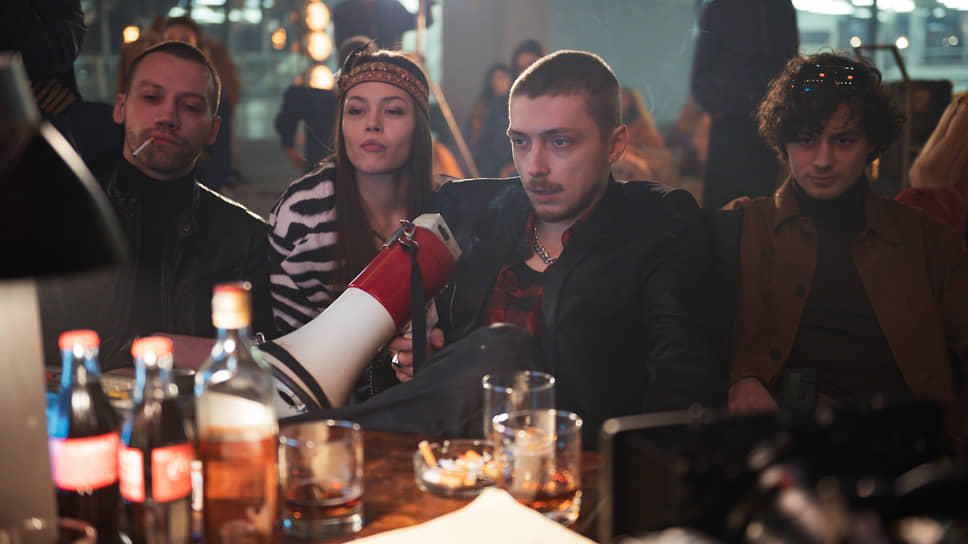
For a figure around whom the narrative is often built, Grisha lacks both strength of character and charm. His anti-hero figure might work in a modernist novel, where reality is also presented as uncertain and vague, but in the adventurous revelry of “Clipmakers,” he always seems out of focus, in the background.
In the crumbling, fragmentary world of “Clipmakers,” the adventurous spirit of still lively but already disjointed stories about the 90s is accurately captured, but this same fragmentation scatters attention, preventing you from latching onto anything. And the viewer, along with Grisha Vizantiysky, drifts through the eternal blizzard away from this restless time.
Comments
0No comments yet.
Sign in to join the discussion.