

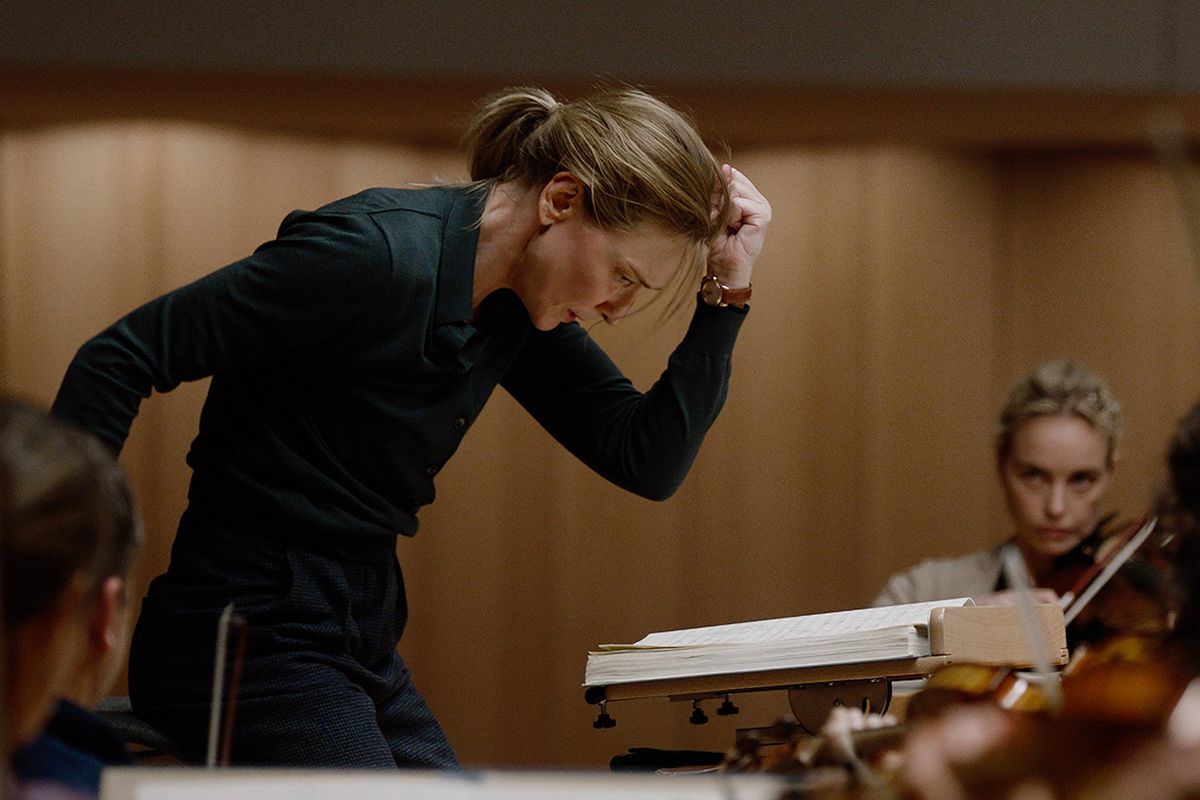
For her role in 'Tár,' Cate Blanchett has won an award in Venice, a Golden Globe, and a SAG nomination. And many have long predicted an Oscar for her, calling her character in the film her best acting work. Why an Oscar for Cate Blanchett is the most...
Lydia Tár is a world-renowned conductor who has achieved unprecedented career milestones while also managing her personal life. After becoming the first woman conductor of the Berlin Philharmonic, she has one last, crucial summit left: recording Gustav Mahler’s Fifth Symphony. Preparations begin, rehearsals with the orchestra, while Lydia simultaneously gives masterclasses at top music schools, networks with key figures in the art world, cares for her adopted daughter, and helps her assistant advance in her career... and everything goes smoothly, until Lydia’s flawless persona is called into question.
The new directorial work by Todd Field, after 15 years of silence, has one main and undeniable gem—Cate Blanchett. Opinions may diverge on the rest, because ‘Tár’ is an uneven film, both in rhythm and story development. At the very beginning, we see end credits, then we are more listeners than viewers during four lengthy dialogues between Blanchett’s character and various others—about art, the perception of music, and the significance of composers with controversial personal lives. Verbally, rather than through action, the director introduces us to Lydia Tár, and this introduction, lasting about 40 minutes, can be a real test for the viewer if they are not prepared for the slowness and viscosity of the first part.
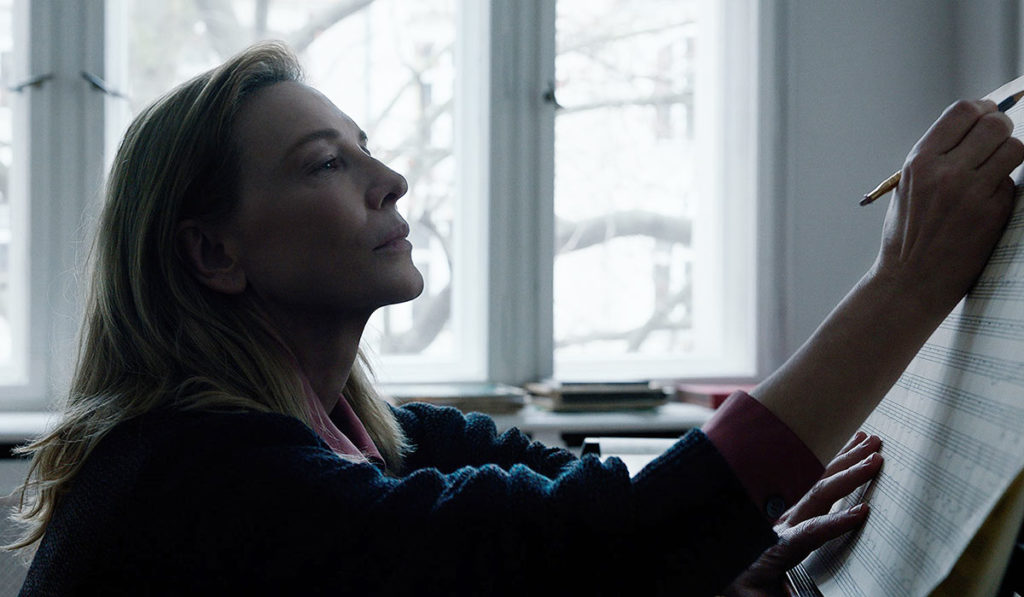
Then the film gradually picks up speed: in scattered fragments that alternate with shots of orchestra rehearsals, we learn a bit more about events from Lydia’s personal life, past and present, and her relationships with some musicians. And the initially perfect image, meticulously built in the first 40 minutes, begins to crack at the seams, as everything turns out to be not what the public (including the film’s audience) initially sees.
One careless event from the past triggers cascading problems that pile up and destroy everything built through immense effort and perseverance. And so the highly intellectual, virtuoso composer Lydia Tár, the first woman conductor in the history of the Berlin orchestra, increasingly loses her humanity, agrees to lies and cover-ups, and descends in her moral principles—which perhaps she never had, or lost long ago in the pursuit of recognition.
The superficial monolith of the heroine’s status and reputation is threatened and turns into quicksand, capable of dragging her to the bottom. Together with Lydia, we learn how quickly outward polish can fade, and how fragile the line between rise and fall can be. And all these psychological twists and the shift in narrative rhythm, from slow to chaotic, unfold against the beautiful and tense music of Oscar-winning Hildur Guðnadóttir.

At first glance, ‘Tár’ is a statement about several social phenomena that have captured the minds of modern society over the past five years: cancel culture and the #MeToo movement (which has no gender link, as the director notes). But if you dig deeper, this film is Todd Field’s reflection on the interpenetration of work and personality: where is the line that separates the real you from the image needed for work? How not to lose yourself and everything sincere and genuine on the arduous path to the pinnacle? And what can be overlooked, compromised on, justified by talent and giftedness, and what is unacceptable?
In ‘Tár,’ Cate Blanchett’s acting talent reaches an extraordinary height: despite the fact that we are dealing with a completely fictional character, we want the woman conductor to exist in real life, so vivid and real does she appear on screen. For this not just performed but truly lived role of Lydia Tár, the actress has already won the Volpi Cup at the Venice Film Festival, a Golden Globe, and a Screen Actors Guild Award nomination. And some foreign publications predict an Oscar win for the actress, and frankly, with all due love for Michelle Yeoh and Ana de Armas, among all the contenders, Blanchett is the strongest and most deserving of the award.
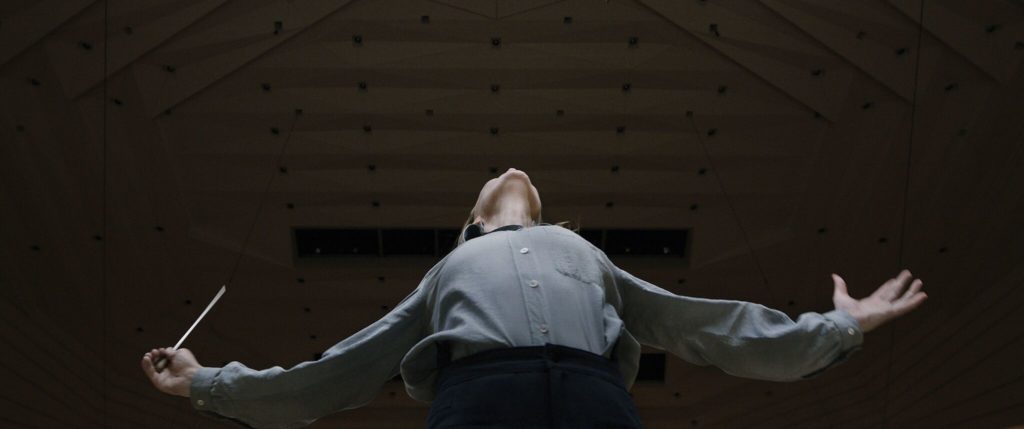
So, what is ‘Tár’ in the end? Visually beautiful, a thoughtful statement not only about modern society but also about a person in art. Yes, it’s an imperfect film that tells the story of an imperfect but talented personality, Lydia Tár. Both the heroine and the film have strengths and weaknesses. But the main thing is that the movie makes you think, because there is no purely black and white in it.
If you’re not ready for the 40-minute viscosity with long dialogues at the beginning, and you’re not a fan of philosophical reflections on art and the role of a person in it, then simply put the film on mute, play tracks of your favorite band, and enjoy the magnificent Cate Blanchett. You might not grasp all the intricacies of the plot, but you’ll catch the main conflict and tragedy. It sounds sacrilegious, but better that than without ‘Tár’ at all.
Comments
0No comments yet.