

Recently, a new season of the series 'Strike' based on J.K. Rowling's novel 'Troubled Blood' was released on foreign streaming services. About why the fifth part of the adaptation of the detective cycle by one of the best British writers turned out b...
Those who have read the Strike novels already know why the adaptation of 'Troubled Blood' should be watched first thing on the very first weekend – the fifth book in the series was not only the most successful but also turned out to be an exemplary detective novel. The viscous narrative about investigating a cold case was enlivened not only by the general feeling that justice has no statute of limitations, but also by the interaction of the detectives – Cormoran Strike and Robin Ellacott – characters who are clearly destined for each other, but for five years and several thousand pages have been evading their fate.
The relationship between the detectives – very touching, confusing, heading in an understandable direction but constantly straying off course – turned out to be a point of attraction for many readers. Although J.K. Rowling's detective talent is also amazing, she is one of the few authors who can turn atmosphere into plot: both in 'Harry Potter' and in the Strike novels (a trait, by the way, captured by the creators of both adaptations), despite a stable lack of a clear plot, everything always comes together into a story of rare beauty.

Rowling's second main talent – creating charming, almost familiar characters – is supported in the series by a perfectly assembled cast. Many veterans of British television have graced the fifth season with their presence, but even against this noble background, it's hard not to note Tom Burke (the star of 'The Souvenir' plays Cormoran Strike) and Holliday Grainger (Robin).
In this equal duet, Burke's melancholy, the active longing in his eyes, is complemented by Grainger's fervor, firmness, and confidence in her movements. And in playing the main sign of falling in love on British television – raising eyebrows into unexpected shapes – these two have succeeded so much that somewhere out there, Colin Farrell, the champion in this sport, seems to be getting worried.
The season begins with a stranger cautiously approaching Strike, who is peacefully drinking beer in his native Cornwall, and asking him to find her mother. It would seem that to find someone's mother in Cornwall, there's no need to turn to one of the best London detectives who is just visiting his aunt and uncle, but the thing is that this woman's mother disappeared forty years ago. Margot Bamborough in '74 went after work (she was a doctor at a private clinic) to a pub to meet a friend and got lost somewhere between these locations.
The body was never found, the presumed murder was pinned on the serial killer Creed, who was operating in London at the time, kidnapping, torturing, and killing young women; the case was closed, and everyone tried to forget Margot, including her husband, colleagues, and former lovers. In general, only her only daughter, who has suffered all her life from the lack of even memories of her own mother, and her best friend, whom Margot never reached that fateful night, did not forget her.
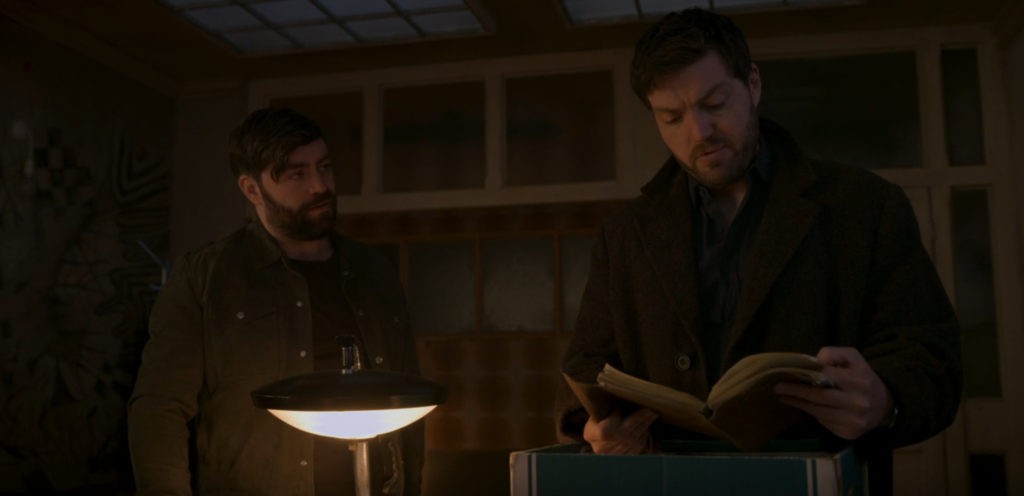
After listening to a similarly confusing story, Strike agrees for some reason to investigate this completely hopeless cold case. Perhaps because he was born in the year of Margot's disappearance, or because he was won over by the client's desperate desire to come to terms with her own past – something Strike has been carefully avoiding for all five seasons and six books. In a difficult period of his own life – approaching forty, his aunt's incurable illness who raised him for a significant part of his childhood, general melancholy, and the detective's unrequited love for his partner – Strike, as usual, begins to dig deeper into someone else's, and it turns out that even wounds forty years old still hurt, in general, just as much.
Strike and Robin, in whom a thirst for justice has also stirred, begin meeting with various kinds of pensioners, of different wealth and goodwill, in their mostly lonely apartments, to find out what really happened forty years ago; how a woman walking along a straight and familiar route strayed from it. Of course, this question turns out to be a framing device for both Rowling and the series creators: through Margot Bamborough's fate, the fate of second-wave feminists and the general turn of British history are shown.
The main question the characters ask themselves at some point is not only where Margot actually went, but where the time went. When and how much did everything go wrong, did our bright future get stolen by the serial killer Creed, the Italian mafia, or some other villains, known or not. In this sense, the theme of memory becomes key for the new season – about the dead and the living, but mainly, perhaps, about the former. The investigation here, as in the recent adaptation of the Maigret novel with Depardieu, is not so much a way to find something out as to remember, which in the end is not so little.
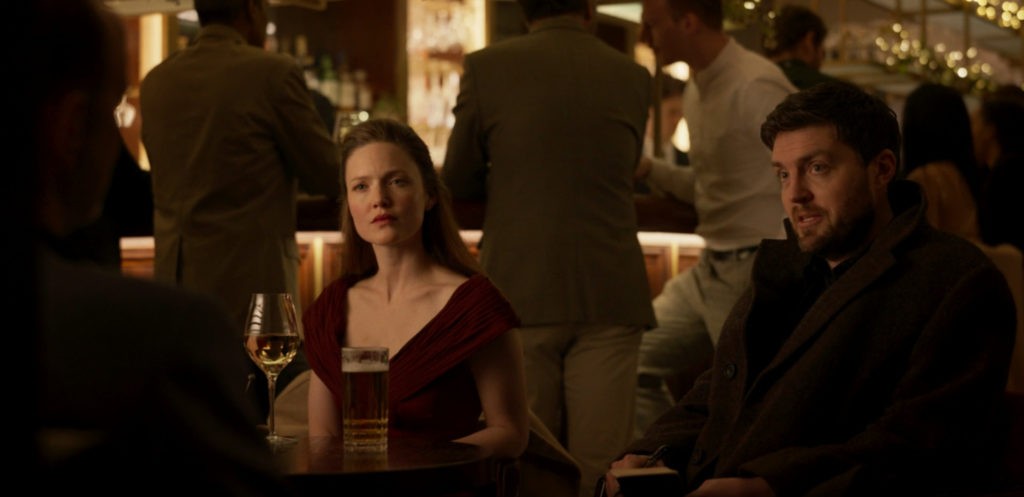
Strike, with his beer alcoholism, difficult character, and astonishing pursuit of justice, and Robin, somewhat impulsive in the series but resourceful and compassionate to the degree of Austen's heroines, of course, ultimately solve the crime, but the adaptation of 'Troubled Blood', although secondary to the novel, turns out to be wise enough to show that finding the murderer makes it hard to truly fix anything; we all didn't make it to the pub. But peace, even forty years later, can be found – and this is probably the main thought with which to meet the holidays this year.
Comments
0No comments yet.
Sign in to join the discussion.