
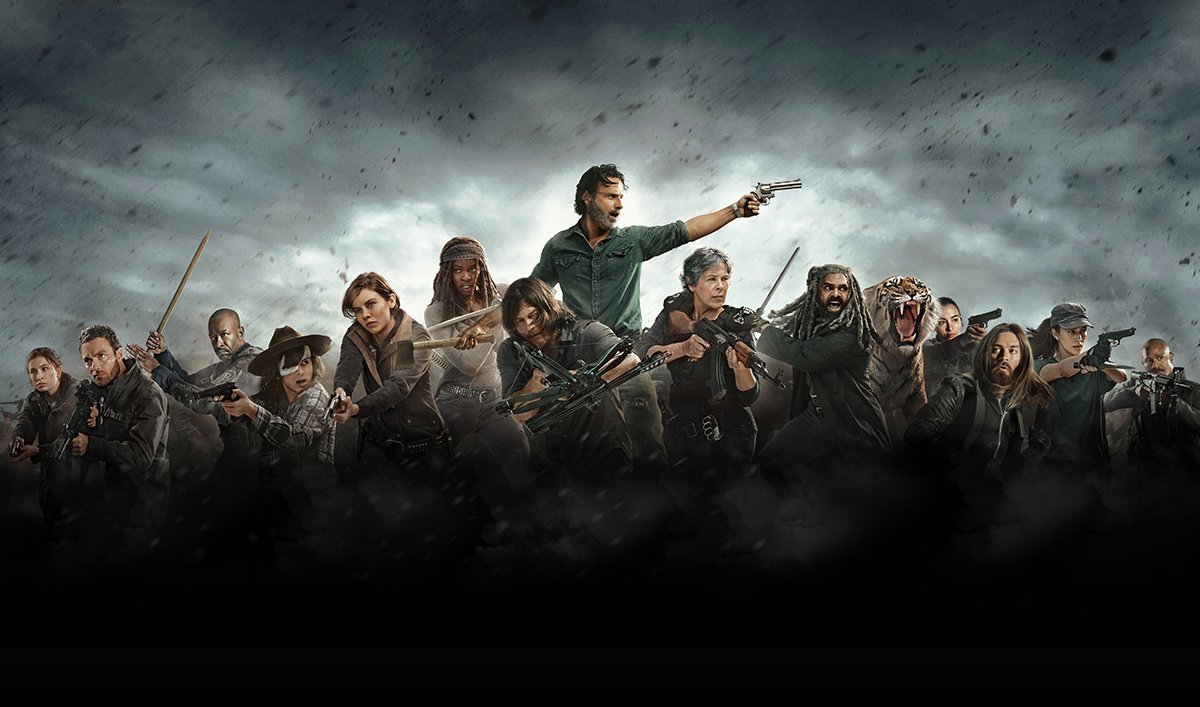
On November 20, one of the cult series of the 21st century came to an end. Starting briskly, 'The Walking Dead' gained momentum for five seasons in a row. Scandals, lawsuits, changes of showrunners, deviations from the source material — none of this...
ATTENTION! This is the second part of the material about the series 'The Walking Dead'! You can read the first part here. ALSO, BE AWARE THAT THE TEXT CONTAINS SPOILERS, SO IF YOU HAVEN'T WATCHED IT, ALL RESPONSIBILITY LIES WITH YOU!
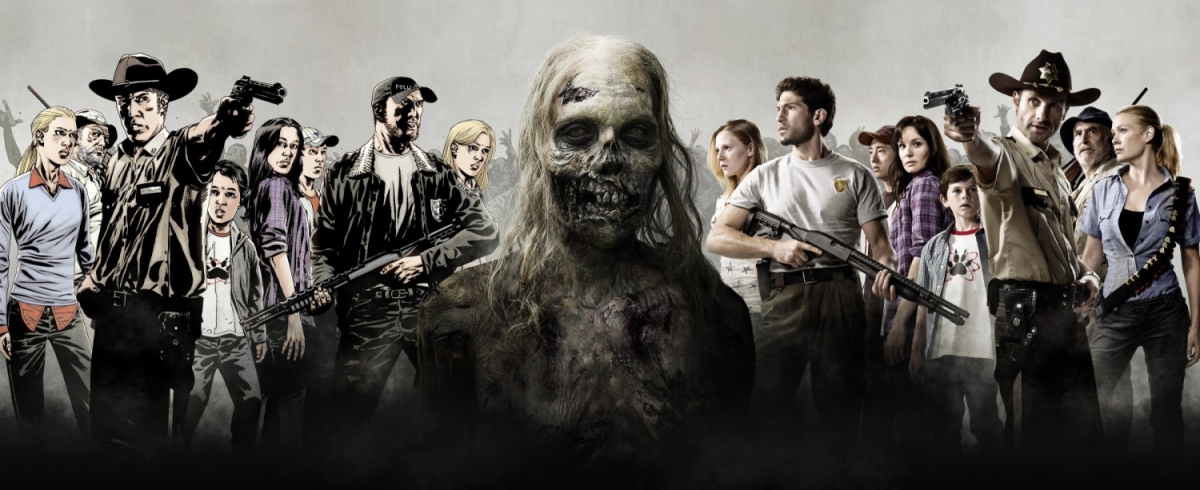
Today, November 20, 2022, the final episode of the series 'The Walking Dead' airs. In honor of such a significant event, we invite you to recall the full twelve-year journey
Open materialThe path to the scaffold is thorny (Season 6)
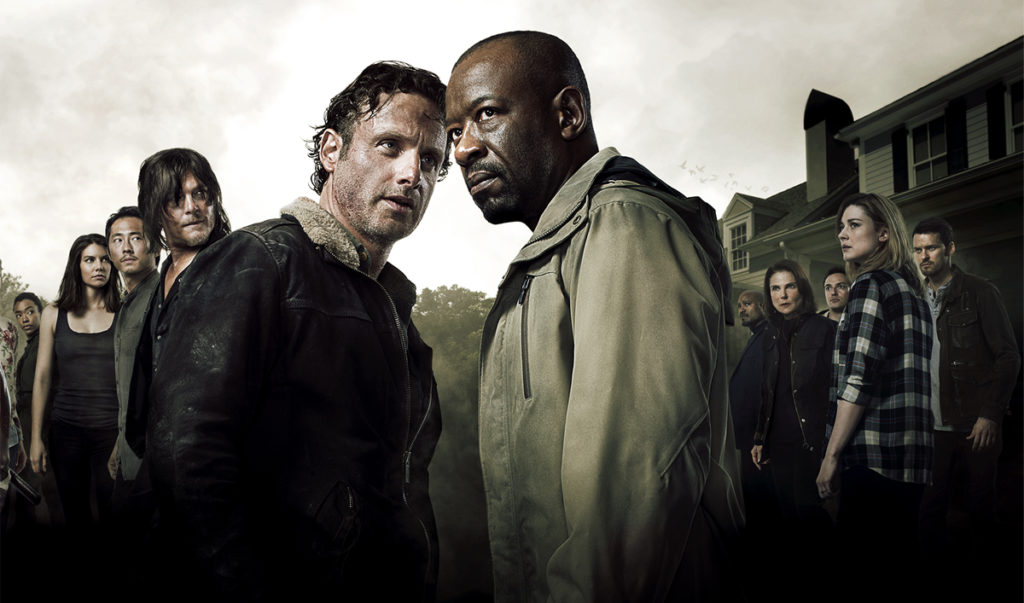
The sixth season of 'The Walking Dead' returned to the air on October 11, 2015. Literally a week before that, the debut season of the project titled 'Fear the Walking Dead' had concluded. The spin-off told the story of the first days of the pandemic. Viewers had not seen this period before, as Rick Grimes was in a coma and woke up in a new world teeming with living corpses. 'FTWD' did not reach the numbers of the main project, but gathered an impressive 10.1 million viewers at the start, although it dropped to 6.8 million by the finale. The new show gathered its own fan base and went its own way, which continues to this day.
'The Walking Dead' itself began to lose ground a bit during this time. There was certainly no talk of any new records. In the first half of the season, Rick and his group try to adapt to life in Alexandria. After long wanderings, such a settled life is new to the characters, so watching them is still interesting, though not as much as before. Moreover, the heroes need to deal with another hostile group of people calling themselves the Wolves, and the zombies don't let them forget about themselves, breaking through the community's walls.
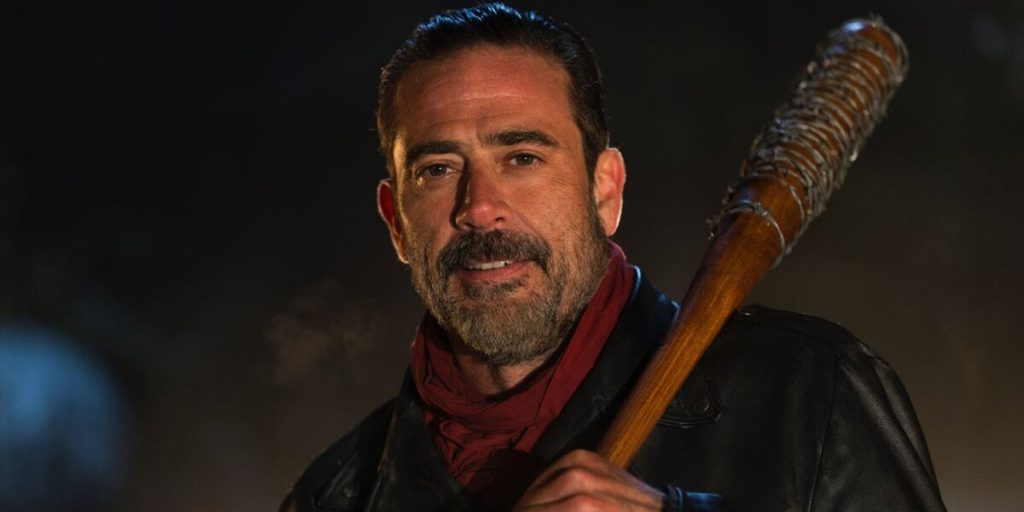
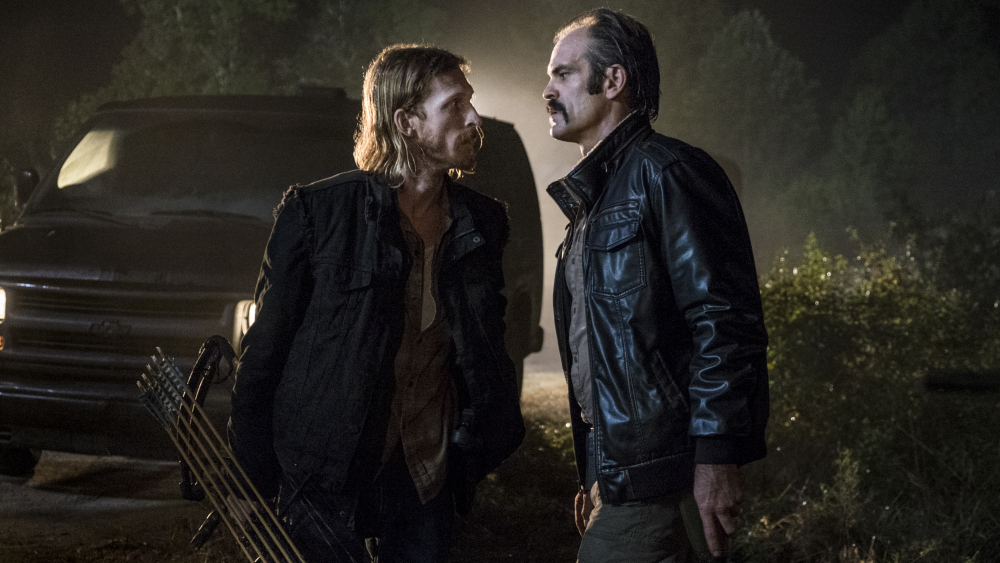
In the remaining eight episodes, another new survivor community called the Hilltop appears, with whom the Alexandrians build friendly relations and form an alliance, but bad people calling themselves the Saviors, led by the charismatic and cruel Negan (magnificent Jeffrey Dean Morgan), burst into the plot again. By the way, new actors were also added. Jesus (Tom Payne), Dwight (Austin Amelio), Gregory (Xander Berkeley), and Simon (Steven Ogg) appeared.
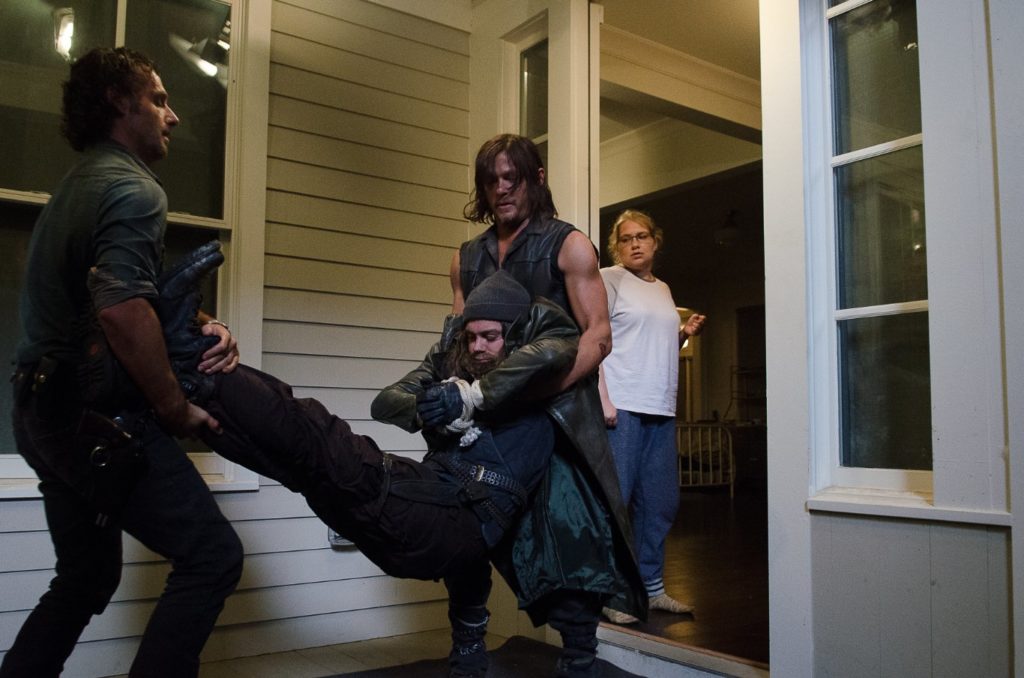
'The Walking Dead' in this season, as if by inertia, received good reviews and another 'Saturn' award (how many are there already?), but viewers began to gradually lose interest in the series. Throughout the broadcast, the number of viewers stayed around 12 million, which is obviously still a lot, but clearly less than in the previous year. So AMC pulls out their trump card in the form of Negan, whom fans had been waiting for a very long time.
Moreover, episode 16 ends with a harsh cliffhanger that viewers received very ambiguously. In the finale, Morgan's character puts all the main characters on their knees and, using a children's counting rhyme, chooses which of them will become the victim of his bat wrapped in barbed wire, named Lucille, but we are not told who was chosen, leaving the question open for discussion. Most considered it barbaric to interrupt the narrative at such a moment, but all that was left was to accept it, build theories, and patiently wait for the next fall to see the continuation.
Touchdown coming up (Season 7)
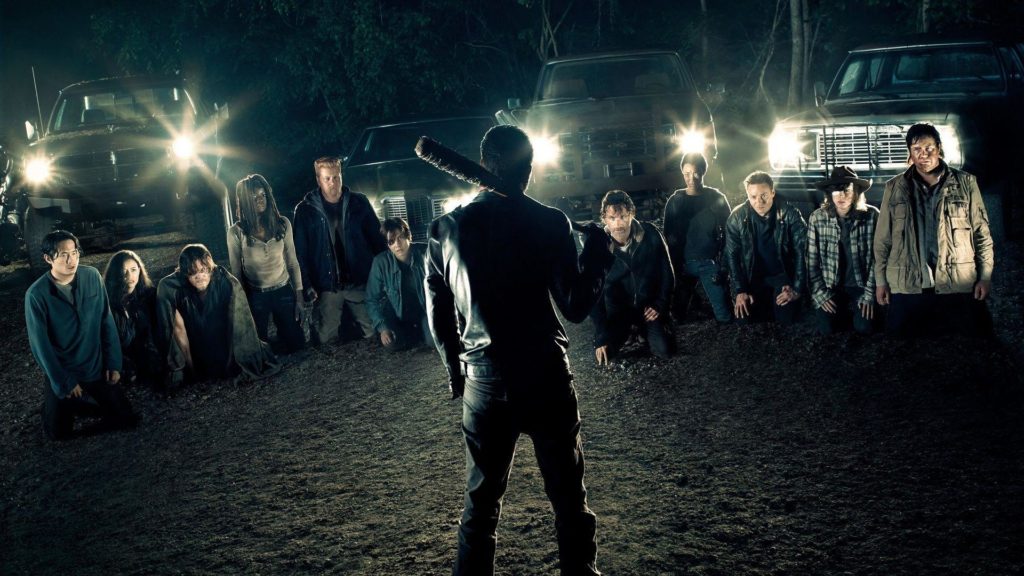
No matter how viewers felt about the ending with Negan's counting rhyme, it worked flawlessly. The premiere of the seventh season on October 23, 2016, was watched by 17 million people. Such numbers brought the show back to the past when it was at its peak. Unfortunately, the success was fleeting. The second episode immediately dropped by 4.5 million viewers, continuing to fall until the sixth (10.4 million). A pity, of course. After that, 'The Walking Dead' would no longer walk with such a confident step.
The season as a whole undermined trust and for the first time gathered mixed reviews from critics. They managed to shock viewers at the premiere and take another 'Saturn' award, but there seemed to be nothing more to surprise with. Over 16 episodes, the writers killed off three main characters, but only three new communities appeared — the Kingdom, Oceanside, and the Scavengers. Accordingly, new heroes in the form of King Ezekiel (Khary Payton), Jerry (Cooper Andrews), Dianne (Kerry Cahill), Jadis (Pollyanna McIntosh), and a bunch of new extras that no one will remember. It's funny that the Kingdom and Oceanside are associated with two of the worst episodes in the season (and maybe in the series).
The first is the introduction of Ezekiel, who theatrically sits on a throne in an auditorium. Fans were quite skeptical about the leader of the Kingdom even in Robert Kirkman's comic (he, by the way, also eventually sued AMC), because the character has a pet tiger, Shiva. It would be interesting to know how a former zookeeper managed to feed a predator in zombie pandemic conditions. In the show, the tiger was made using CGI, which sometimes looks very ridiculous. It's understandable, actor salaries are rising, and the show's budget is being cut. What quality special effects can you expect? Hopefully enough for sets and makeup. And every year the budget issue will become more acute.
The second worst episode is the solo episode of Tara (Alanna Masterson), who ends up in Oceanside. Throughout an entire episode, the girl tries to convince the community to join the war against the Saviors. Honestly, this spectacle is quite boring and unnecessary. Tara's role in the plot has always been inflated, and the fans' attitude towards her solo episode is a clear confirmation of that. But what can you do? Again, budget problems. Showing Lincoln and Reedus in every episode is expensive, but the runtime needs to be stretched, hence the fillers, the number of which will only increase further.
Nevertheless, the drop in ratings did not seem to bother the management. AMC blindly continued to stretch the series. Negan remained undefeated over 24 episodes, and 'The Walking Dead' was renewed again. Well, the walk continues despite the obvious decline in strength and cramps in the legs.
On the same road, but in different directions (Season 8)
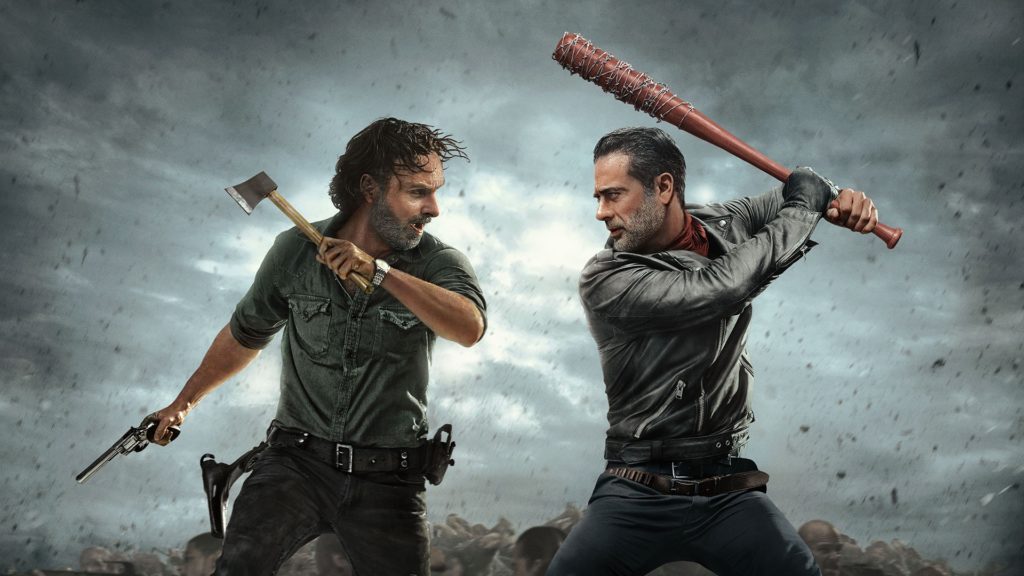
The eighth season of 'The Walking Dead' aired on October 22, 2017, and its first episode was the hundredth for the show. In honor of the anniversary, it was watched by 11.4 million viewers, but during the season, ratings fell again, this time to 6.3 million. Even the finale could not reach an eight-digit viewership number. Obviously, the series was losing ground significantly. And this is with the adaptation of one of the most large-scale arcs of the comic, All Out War, about the direct confrontation between the Alliance of communities and the Saviors.
The fight with Negan stretched over 2.5 seasons. 'The Walking Dead' never devoted more time to any antagonist. Jeffrey Dean Morgan was a breath of fresh air, but even his charisma could not carry the series alone. The show became mired in self-repetition, fillers, budget shortages, and excessive seriousness. Living corpses have long ceased to be a problem for anyone, and everyone has come to terms with it. Now the focus is on the war of villages for resources. Most likely, if a zombie pandemic happened in reality, much of 'The Walking Dead' would cross over to us, but watching endless dialogues, ridiculous action, and the stupidity of the heroes is tiring.
Moreover, almost no trace of the road movie remains, and the characters have become burdened with acquired property, which they intend to preserve by all means. In such realities, it seemed that for someone to be bitten, either something incredible must happen, or the bitten person must be stupid. And so it happened. In the middle of the season, viewers learn that Chandler Riggs is leaving the series. Carl was simply bitten by a zombie in the woods, so his death was inevitable. The fact is that AMC fired the actor because he was not coping with his duties. They said that the younger Grimes was supposed to take on enormous responsibility, but Riggs was lazy and could not handle the role, so he was removed.
Many fans did not like this decision, as in the comic, Carl remains alive until the very end. Almost everyone believed that the character had a kind of protection from death (like Rick Grimes), but Scott Gimple decided otherwise. Unsurprisingly, a lot of people criticized the showrunner, including Riggs' two fathers — on-screen (Andrew Lincoln) and biological (William Riggs). What can you do? The decision was made, Carl cannot be resurrected. Before his death, by the way, he brought another new face to the community — a guy named Siddiq (Avi Nash). It is extremely surprising that the younger Grimes, who had gone through so many life obstacles, was simply bitten by a zombie and, before dying, managed to trust a stranger in the midst of a community war.
Also leaving the series are Lennie James (Morgan) and Austin Amelio (Dwight). Their characters move to the spin-off 'Fear the Walking Dead', so in this season, more faces decreased than increased (in total, 224 characters died in the season, but who remembers them? Extras die constantly). But nothing, in the future, 'The Walking Dead' will make up for this kind of omission.
Nevertheless, the fight with Negan ended in Rick's favor. The creators presented us with a nice twist involving Eugene, but the season ended without any particular hooks for the future. Who is interested when everything is good for the heroes? Even when things are bad, the audience runs away. Smarter people gradually stop torturing themselves, while others (like me) watch on by inertia, moving on fuel from phrases like: 'Well, I've been watching for so long, how can I quit?' or 'I'm just curious how it will end, and I'm already used to the monotony, fillers, and repetitions.' So AMC moves on to the ninth season.
Good riddance (Season 9)
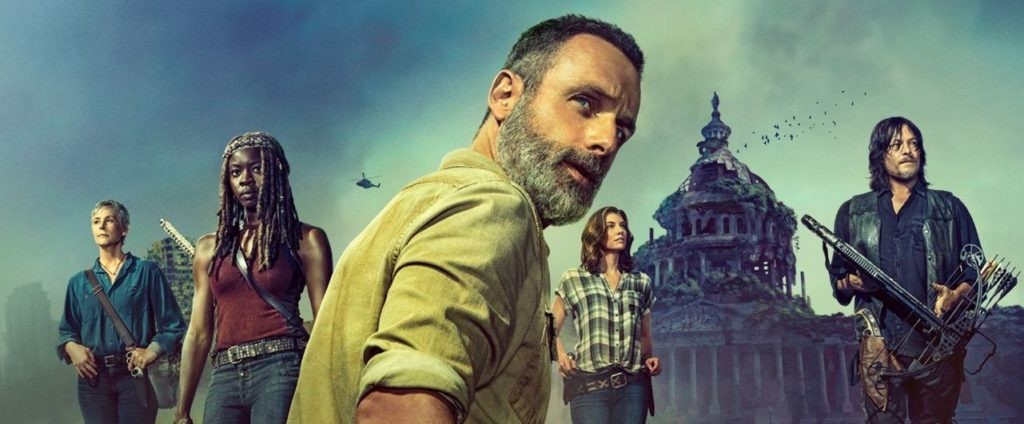
The tired 'The Walking Dead' returned to viewers once again on October 7, 2018. This time, big changes awaited the show. First, Scott M. Gimple left the post of showrunner, which he had held for a record five seasons. And no, he was not fired for the series losing its audience. On the contrary, Gimple was promoted to director of content for the 'Walking Dead' universe. His position and responsibilities were taken over by Angela Kang, who had worked on the creative team since the second season. She was tasked not only with refreshing the project after the protracted war with Negan but also with writing out two key characters — Rick and Maggie.
The actors announced their departure right during Comic-Con in San Diego (that's how they created intrigue for the viewers). The series is bursting at the seams. First, AMC kills Carl and fires Chandler Riggs, followed by Andrew Lincoln and Lauren Cohan deciding to part with their characters. True, their characters did not die, but the reasons are purely commercial (both will return to their roles in the future).
Lincoln decided to leave the role of Rick due to a catastrophic lack of time spent with his family, who live in England. Filming took the head of the family away from home for at least six months or longer. However, the actor did not plan to leave the sheriff role forever, as was announced after the premiere of episode 5 of season 9. AMC transparently said that Grimes would return in future projects within the 'Walking Dead' universe. And Lauren Cohan, instead of the role of Maggie Greene, prioritized filming in the new project 'Whiskey Cavalier'. The actress stated that she had stopped developing and became fixated on one character, but a couple of years later, 'Whiskey Cavalier' was canceled, and Cohan returned to the image of Glenn's widow.
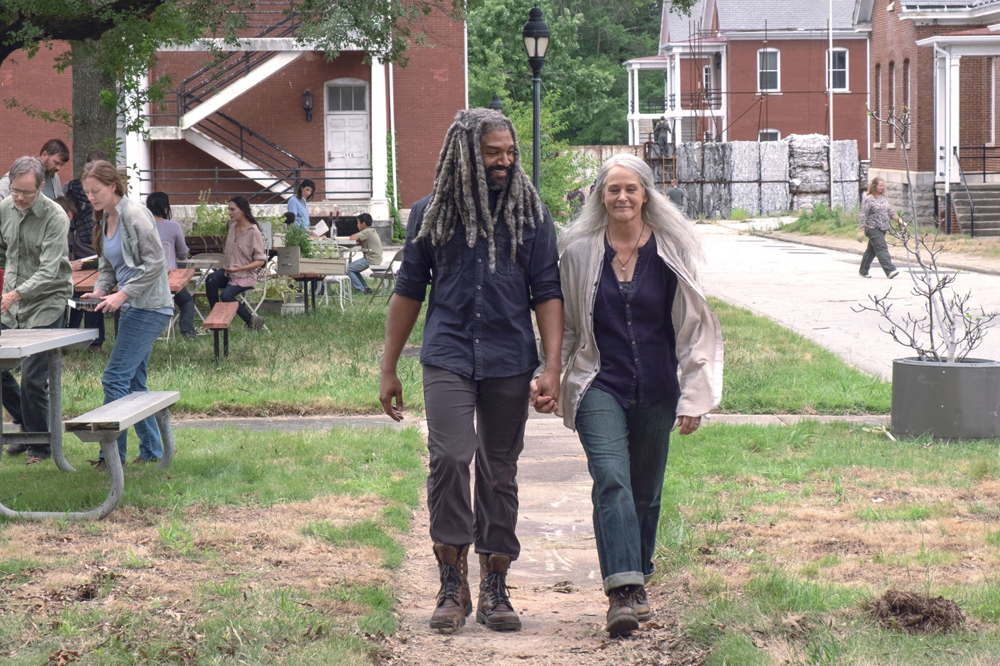
The first five episodes of the ninth season of 'The Walking Dead' prepared the viewer for the already known fact, so fans carefully watched how the main characters would leave the project. And overall, Rick was written out of the series quite well. Important flashbacks featured Shane (Jon Bernthal), Sasha (Sonequa Martin-Green), and Hershel (Scott Wilson, who died the day before the season premiere), which incredibly pleased all viewers.
The farewell episode turned out very well, and if it had ended there and Rick had died, it would have been simply magnificent. Imagine, the series ends with the death of the main character. Fans would undoubtedly have been building theories and discussing the ending for a long time. But no. Grimes was kidnapped by helicopter so that the character could return in side projects. Maggie's departure was explained by the fact that she and her son Hershel Jr. went to Georgie, a woman who trades knowledge for food. There, the widow helps to establish life in the community and sometimes writes letters to friends, telling them how she and her son are doing. And Hilltop began to be run by Tara and Jesus.
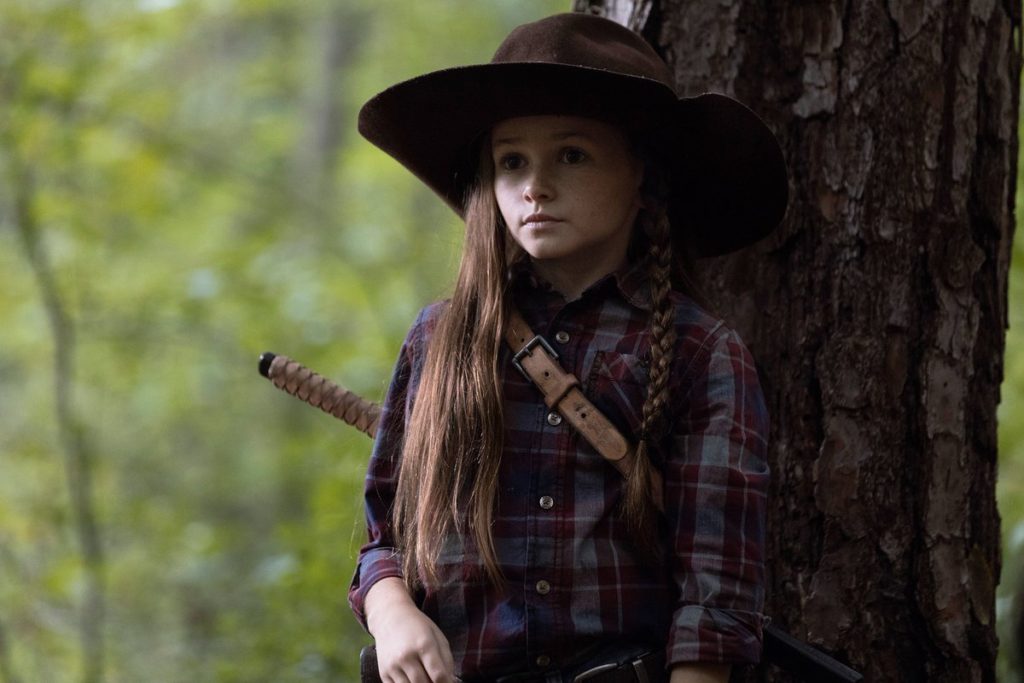
After the fifth episode, the creators resorted to the biggest time skip in the entire history of the series. Rick and Carl were no more, and someone had to take over the utopian goal, so the six-year time jump helped Judith (Cailey Fleming) grow up. It is she who should become the best version of her father and brother in the future. 'The Walking Dead' continued as if nothing had happened. Fillers and self-repetitions returned to their places. Everything went on as usual.
Naturally, new faces appeared. Or rather, even a whole group led by Magna (Nadia Hilker). Its members included Yumiko (Eleanor Matsuura), Kelly (Angel Theory), Connie (deaf-mute actress Lauren Ridloff), and Luke (Dan Fogler). It's even hard to list them in the text, let alone remember them. But nevertheless, the newcomers do not end there, because a new threat appeared before the heroes — the Whisperers. Their leader Alpha (Samantha Morton) with her right-hand man Beta (Ryan Hurst) wish to subjugate all communities. In one of the skirmishes with the Whisperers, Daryl and Michonne manage to take Alpha's daughter Lydia (Cassady McClincy) prisoner, who gradually renounces the lifestyle imposed by her mother.
Despite the changes and 'reboot', the ratings of 'The Walking Dead' continued to fall and dropped to the numbers of the first season and even lower (the highest indicator — 6 million, the lowest — 4.15 million). The audience did not return, even though the season received quite tolerable press. And where would they return to? To an obviously sinking ship? Viewers have long understood the algorithm by which the series works:
Rick's group either looks for shelter or restores it —> A new hostile community appears, living by its own rules that do not coincide with the views of our heroes —> A protracted conflict occurs (possibly with small truces) —> Rick and his people (in season 9 and beyond without Grimes) destroy the hostile community, killing and losing a bunch of extras and a couple of secondary characters —> Return to the beginning of the algorithm.
Hershel's farm, the Governor, the cannibals, Alexandria, the Wolves, the Saviors, and so on down the list. 'Rick and Co.' managed to get their hands everywhere. Even in Hilltop, Maggie became the leader, displacing Gregory. What is this if not political cronyism in the conditions of a zombie apocalypse? It's funny that the mechanism of each community worked perfectly until our heroes appeared on the horizon. Yes, the communities were not a Utopia, but people survived and were more or less satisfied with it, since no one went against the leaders before the ill-fated appearance of the former sheriff and his team.
In general, frankly limping and falling apart, 'The Walking Dead' hobbled to episode 16 and was renewed for the anniversary tenth season, which became a record holder for ratings, however, the lowest in the entire history of the show.
I won't say where from, but I don't know where to myself (Season 10)
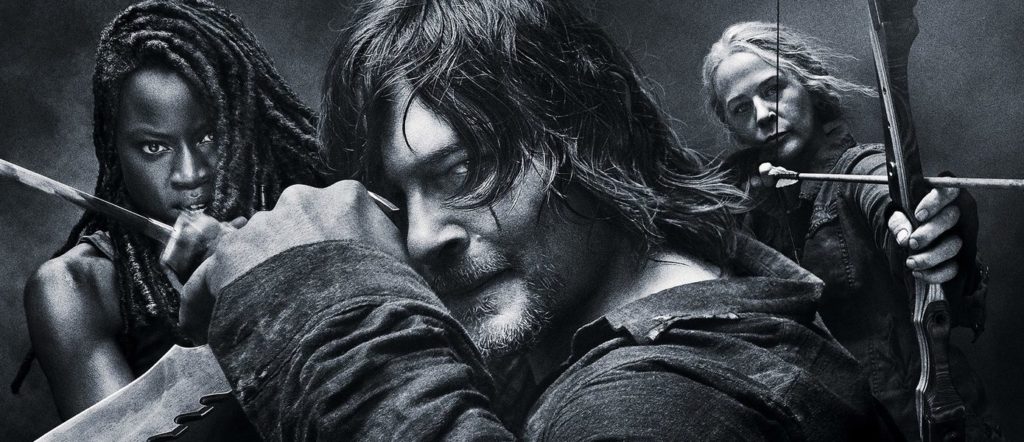
The penultimate season of the once high-rated series began airing on October 6, 2019. It was entirely devoted to the fight against the Whisperers. They, by the way, were defeated faster than Negan — in just 26 episodes (1.5 seasons), while it took a whole 40 (2.5 seasons) for the Saviors. It's understandable, Jeffrey Dean Morgan was liked by viewers, while Alpha did not impress the majority. Even Norman Reedus said in an interview that he would change her storyline and delve deeper into the character's story.
The season premiere was watched by only 4 million viewers, which was a record low for a start. And although the numbers at a distance reached a paltry, compared to the past, 1.9 million viewers, the plot did not do without some pretty good twists, like the murder of Alpha. She is killed by none other than Negan, who spent a long time in captivity and now tries to reform and make amends. What can I say, the charismatic Dean Morgan is still good. All the character's tricks remained with him, but the hero's inner views changed, which made him a damn cool protagonist.
Unfortunately, the ship continues to sink, and the series again loses one of its main characters. In episode 13, Michonne sets off to search for Rick, leaving her children in the care of Daryl, Carol, and everyone else. Unlike Grimes, her departure from the project was not so rosy. It simply does not logically fit with the plot. Okay, Lincoln's character was kidnapped and taken in an unknown direction, so he probably cannot return to his family and children in Alexandria. But Michonne...
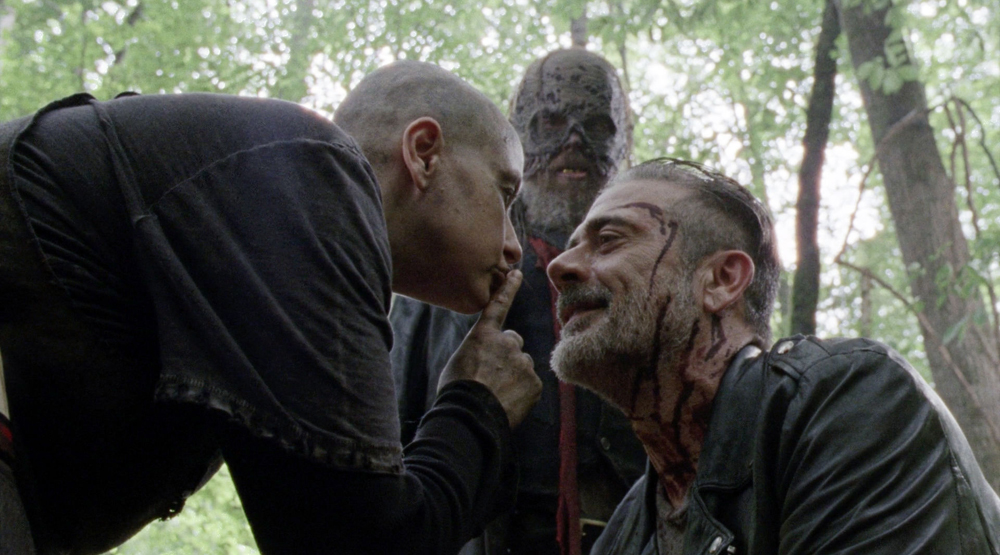
What mother would abandon her children in the midst of a war with another brutal community in the realities of a zombie apocalypse to suddenly go in search of a loved one who may not even be alive? While hanging the upbringing and provision of her own children on strangers, even if they are close friends. Only the most terrible mother. Even Alpha worries more about her daughter. But Michonne abandoned them, she could not help but abandon them, because Danai Gurira had previously informed viewers of her departure.
In exchange for Michonne, Maggie returns in episode 16. She brings with her a new batch of heroes for the viewer, whom no one will bother to remember anymore. There are already so many characters that it's hard to remember them not only by name but even by face (although Princess (Paola Lázaro) is very good, but that's an exception). Unfortunately, 'Whiskey Cavalier' was canceled, so Lauren Cohan's character 'returned from her journey' with a grown-up Hershel, adding storylines to the show.
That's how it happens: you buy yourself a new expensive car, tell everyone around that the old one is no longer the same: the seats are worn out, dents on the body, and so on. You switch to a fresh one, and it breaks down after a couple of years, so much so that you don't have enough money for major repairs. Then you immediately remember, maybe not so fancy and fresh, but so dear and reliable, your old lady. What was I talking about? Oh, yes, 'The Walking Dead', sorry.
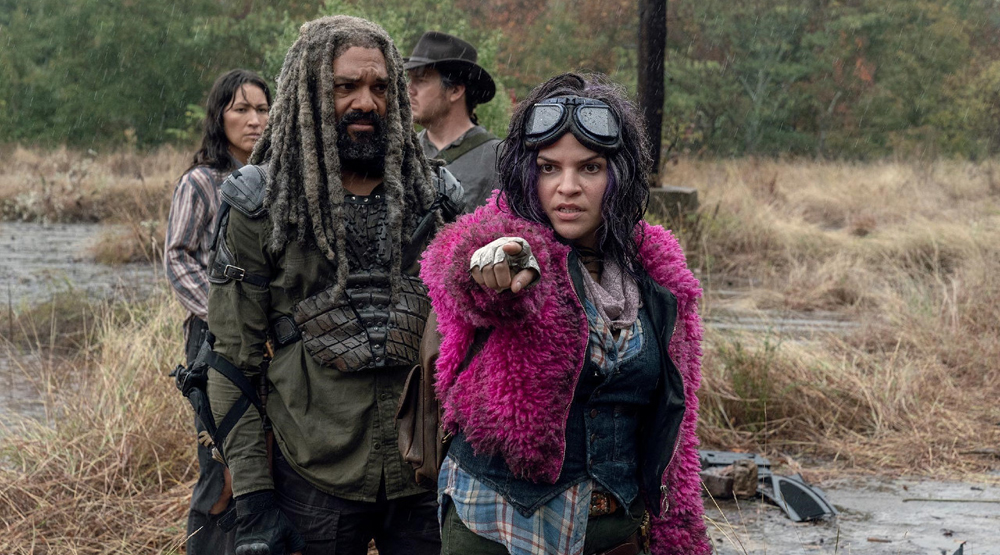
This time, the season took a somewhat unusual format. Instead of the established 16 episodes, there were 22, and they were released in a rather peculiar way. 15 episodes went according to schedule (8 before the New Year, 7 after), but in March, the studio announced that the finale had not been completed in post-production due to the COVID-19 pandemic, so the Whisperers arc would end a little (if six months is a little) later as a single episode. And after another break, we were promised six more additional episodes.
Imagine, what a coincidence: the finale saw the light on October 4, 2020, and it was on this day that another spin-off in the 'Walking Dead' universe, 'The Walking Dead: World Beyond', was released. Miracles, otherwise the coincidence of circumstances cannot be explained. I wonder who it helped and who it harmed?
Four months later, in February 2021, AMC began releasing six additional episodes, which were mostly fillers. They were, of course, preparing us for the next arc with the Reapers and a full introduction to the Commonwealth, but why does the viewer need to watch Aaron and Gabriel look for supplies, and Carol cook soup for an entire episode? Unsurprisingly, ratings fell to such low levels. There could be no talk of any previous numbers. 'The Walking Dead' had entered its final stage. Its last season and closure awaited. The story is coming to an end, sort of.
The long road home (Season 11)
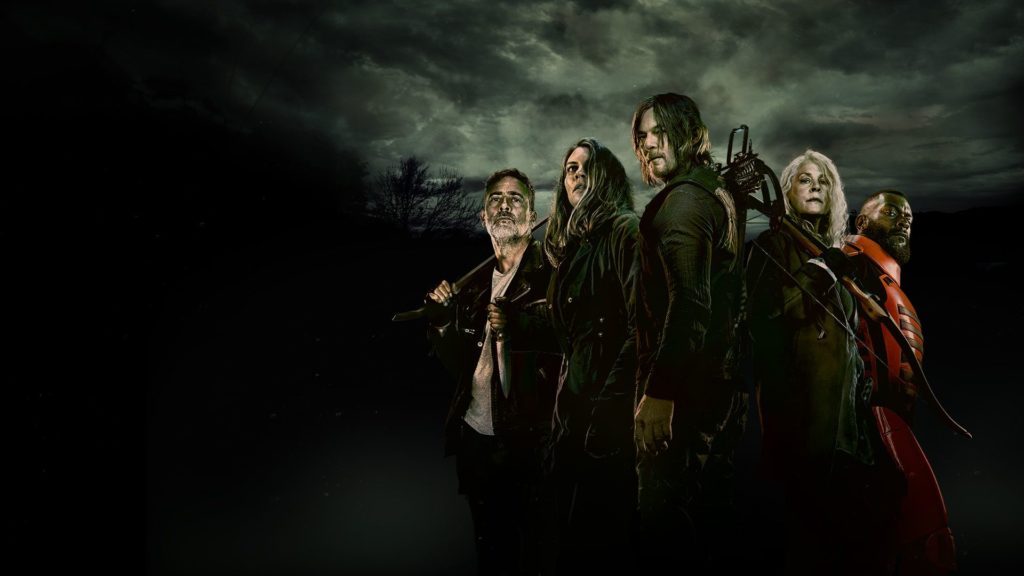
The last season was divided into three parts, and its release stretched over a whole year. The premiere took place on August 22, 2021, the finale fell, as already mentioned, on November 20, 2022. In total, season 11 contained 24 episodes, which is very conveniently divided into three parts of eight. So, in fact, with six additional episodes in February and eight extra here, the creators crammed another season into two others.
Stretched runtime, fillers, self-repetitions, budget problems still did not go away even in the series' conclusion. 'The Walking Dead' no longer surprises. The viewer understands perfectly well that interesting events, if they happen, will be either in the premiere episode, or around the break (before/after), or towards the end. Everything else is outright hackwork that practically does not move the plot forward.
For example, why should we watch for two episodes as the Alexandrians board up windows during a storm? What is this scheme with zombies in the spirit of 'when convenient, then a hindrance'? The characters have been living in post-apocalyptic conditions for over ten years, but still cannot hear one dead person sneaking up? Next — a mandatory fall and a very long resistance, and as a result, the hero either manages to kill the zombie-ninja with improvised means, or at the last moment an arrow/bullet flies into the corpse's head. A universal technique, migrating from season to season, from episode to episode. If you need to stretch the runtime, the walkers will definitely help; otherwise, they easily fly off like bowling pins from a bowling ball.
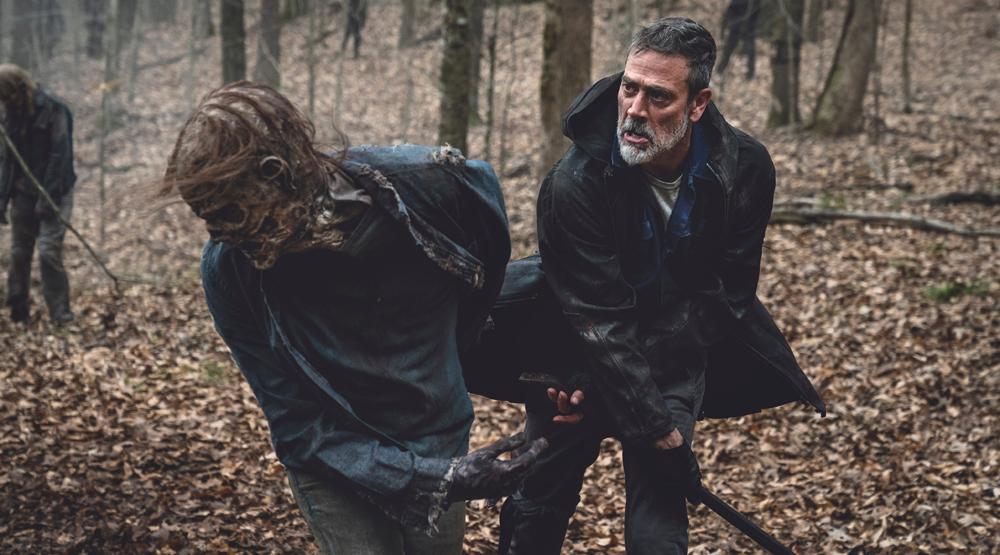
The first eight episodes are devoted to the fight against a small but very well-prepared group of people called the Reapers. The Alexandrians are experiencing food shortages, and Maggie tells them that a place where there was enough for everyone was taken from them, so they need to gather people and go take back the government supplies! Naturally, along the way, all the extras that Rick's widow brought in the previous season and whom no one remembered die. But our guys exterminate the Reapers and take a whole cart of food (wow! incredible! and that's for a whole settlement!).
It will sound tedious, but why not just go to Oceanside and catch some fish there? It's clear that for the series this would be boring, but it would be quite logical. No one would have to choke on horse meat, which almost everyone dislikes. But no, the heroes do not look for easy ways, so they needed to gather people, go to war with another community (all according to Rick's code) and lose a bunch of people for one cart.
By the way, about Oceanside. How conveniently they forgot about it. The community appears for about ten minutes throughout the entire season. Apparently, after Negan, it became such an unnecessary settlement for the authors that practically nothing is heard about it. Maybe that's why fishing didn't occur to anyone, because neither the writers nor the characters remember what Oceanside is anymore.
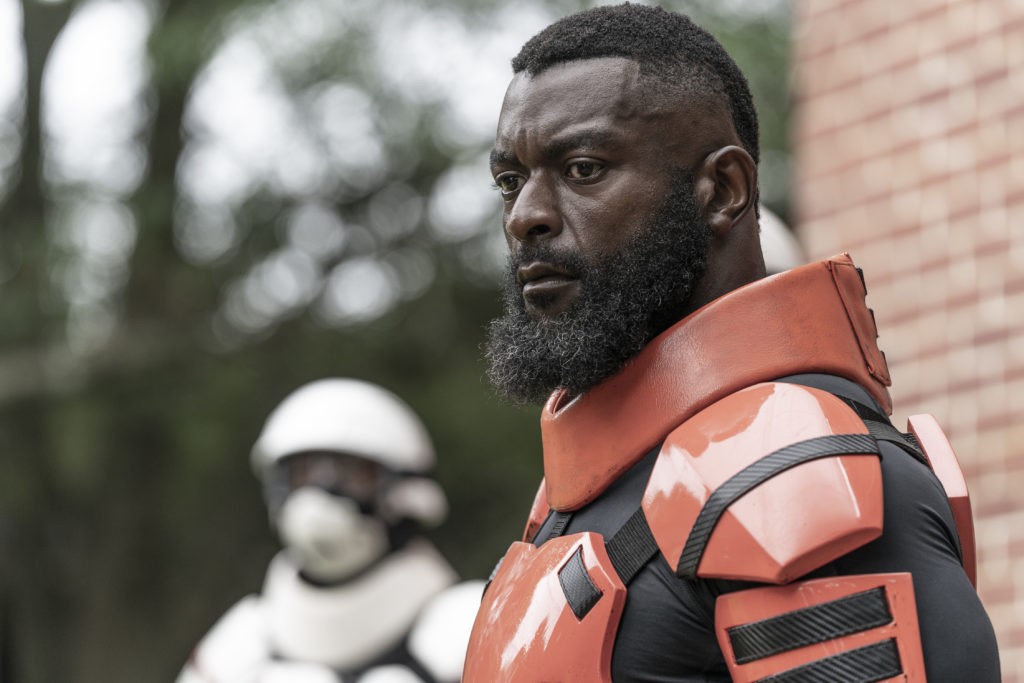
After the showdown with the Reapers, Rick Grimes' team moves to their final level. To the destruction of the largest community in the history of the series — the Commonwealth. About 50 thousand people live here, and everything around is incredibly reminiscent of the old world, with all its problems. The Commonwealth is run by Governor (ahem-ahem) Pamela Milton (Laila Robins), and she is assisted by Lance Hornsby (Josh Hamilton).
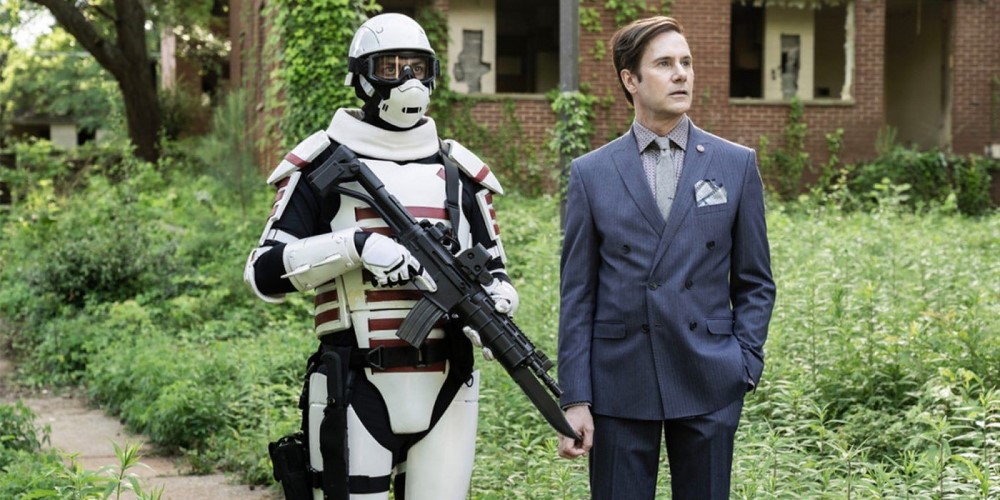
The community is extremely large, so it has all the infrastructure: medicine, shops, a legal system, various professions, monetary circulation, and, of course, an organized army led by General Mercer (Michael James Shaw). The army looks exactly like the Stormtroopers from 'Star Wars'. Seriously, they are a dead ringer. Firstly, incredibly cool when it comes to any danger, except for those cases when they need to act stupid according to the script. For example, if a battle with the protagonists occurs, they immediately shoot less accurately and die easily. Secondly, their magnificent uniform resembles the Imperial one. All ordinary soldiers wear white armor, and Mercer, as the main one, wears orange. All that's missing is for Hornsby to breathe heavily through a black suit, and Milton to shoot lightning from her hands.
The Commonwealth, obviously, turns out to be not ideal (as always), but a working community (as always). People lived here peacefully and did not complain until our guys arrived. As a result, the territory and size of the community turn out to be so large that 'The Walking Dead' itself does not notice how it turns into a political detective story. Corruption, investigations, intrigues, conspiracies, and political scandals. All of this is now much more than zombies. The protagonists infiltrate this system, exploit its flaws, and then decide to change it. They are seen as a threat and they try to get rid of them, but Rick's team is like weeds, not so easy to deal with, and they have colossal experience in dismantling communities.
It's surprising that many heroes believed in Hornsby's propaganda and joined the Commonwealth. As if they were still at the beginning of their journey, and not hardened by years of survival. In general, Josh Hamilton's character is a dead ringer for Saul Goodman in the conditions of a zombie apocalypse. AMC simply took and pulled him from one project to another. The style, character, and even appearance are similar to the cunning lawyer. Does the TV channel really have no ideas?
In the last eight episodes, almost every episode begins with a flashback and Judith's voice reminds viewers of the journey traveled. It's as if they are shouting at us that 'The Walking Dead' is coming to an end. The finale is near, and it should conclude many storylines, but everything turns out chaotic. Suddenly, evolved dead appear, capable of opening doors, climbing walls, and using improvised means. This already happened in the first season, but then the idea was abandoned, and now it was brought back without any explanation for the sake of the script.
At a breakneck pace, but they brought it to the finale. The protagonists won, some secondary characters died (who would remember them anyway to believe in the drama), and many characters got their happy ending. Not all, of course. They had to sacrifice someone, otherwise it would seem like everyone had an aura of inviolability for a long time. The creators got off with little bloodshed. In the end, Rosita was bitten by a zombie, so her death was inevitable. The authors did not create drama and did not pretend to have a twist, so the heroine died very peacefully in bed, having said goodbye to everyone. No shock, no particular emotions. 'The Walking Dead' had finally gone soft.
The series ended, and it became a little sad. It's always like that when a long story comes to an end. Whatever it was, the viewer has come a long way with the characters from beginning to end. 'The Walking Dead' lasted 12 years. A total of 11 seasons were released, comprising 177 episodes. It was a big story full of adventures, so it's a little sad to say goodbye to the characters. It would be. If not for the announcements of spin-offs. A wild feeling that many of us will see again in the future purely for the capitalist reasons of the TV channel management. All the hits at AMC have run out, and they need to make a profit from someone, so even the farewell turned out to be blurry. Especially since the finale ended with a teaser featuring Rick Grimes and Michonne, and some storylines remained open.
That's the kind of finale we got. But still, the original series 'The Walking Dead' has completed its long walk, so we can safely say: 'Well, we've arrived.'
Comments
0No comments yet.
Sign in to join the discussion.