
While Tim Burton's series 'Wednesday' is breaking records one after another on Netflix, our team decided to select the 10 best projects of the master of gothic and unconventional cinema.
When the name Tim Burton is mentioned, a kaleidoscope of bizarre characters, grotesque sets, and magical melodies comes to mind. Like no one else, he knows how to create new worlds, regularly inviting viewers in and making them forget about the mundane world for a while. His filmography is full of ups and downs, but this time we'll focus on the positive – Burton's best films. Can you guess which work our editorial team considers the most successful?
10th place — Mars Attacks!
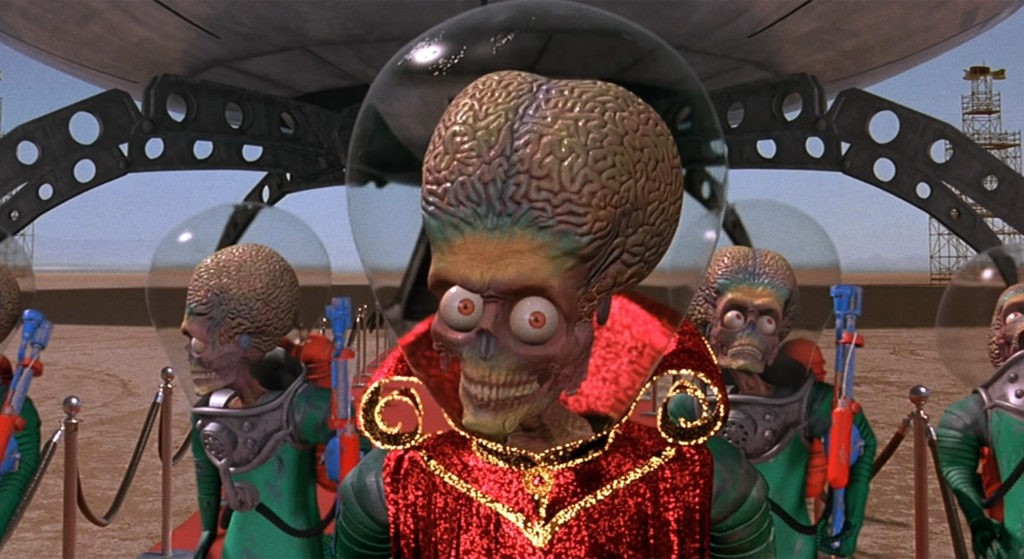
Not a great film, but a memorable one that Ed Wood would probably appreciate — the Martians here are vicious and funny, the humans even funnier, the special effects hark back to the 50s, and the plot follows suit. In fact, it was all made for the sake of firing Martian ray guns. There's no signature Burton neo-Gothic here, nor is there the signature Johnny Depp. But Pierce Brosnan smokes a pipe, Natalie Portman says "so it's not about the pigeons," and Jack Nicholson plays both the president and a casino magnate.
This is genuinely funny cinema, where the aesthetic of bad 50s films is combined with a sarcastic commentary on modernity, which, due to its vagueness, will probably always be relevant. The perfect double feature is Ridley Scott's "Prometheus," a significantly more serious film about little green men not liking us.
9th place — Charlie and the Chocolate Factory
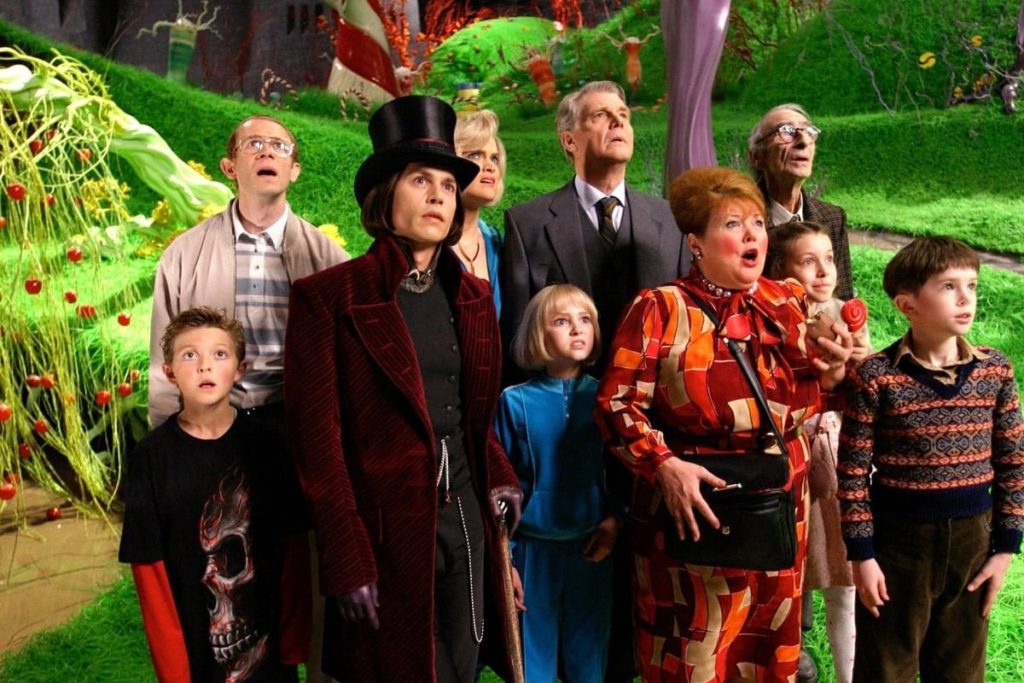
A children's fairy tale with an adult "rating" and Burton's favorite crew: Helena Bonham Carter and Johnny Depp. This is a film about loneliness, about family, and of course about morality. Children watching the movie need to be taught that gluttony, greed, capriciousness, and stubbornness are bad. All of this is packaged in a vibrant visual wrapper, seasoned with songs, dances, and black humor. Just look at the thousands of Oompa-Loompas (factory workers), all played by a single actor, Deep Roy. He repeated the same movements hundreds of times — astonishing work ethic. And you can never get tired of watching Johnny Depp as the eccentric factory owner.
8th place — Batman Returns
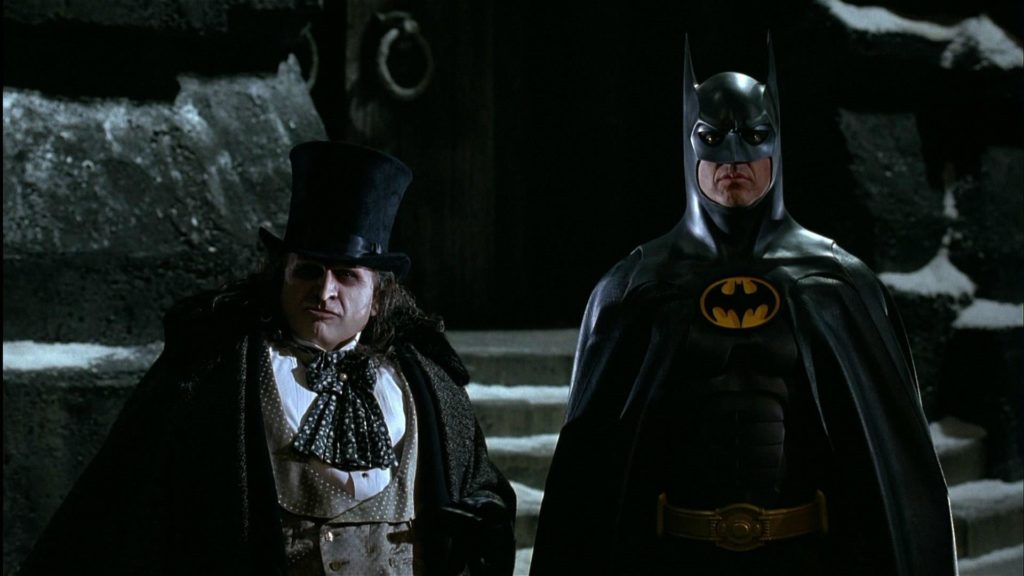
One of the darkest, most cumbersome (mostly due to props and cardboard sets), and monumental superhero films about the Dark Knight. And, alas, sadly underrated by audiences. When it comes to Burton's Gotham duology, people usually remember the first part from 1989 (mainly because of the mega-star of that era – Jack Nicholson, who brilliantly played the Joker). Whereas it is in "Batman Returns" that the director most successfully managed to recreate the grim tone of Frank Miller's comics on screen. Moreover, he pitted three charismatic villains against Batman, made the protagonist oscillate even more between the bat suit and the persona of a wealthy man, cleverly twisted the plot, and even criticized factory owners for toxic emissions into the environment, which gave rise to monsters like the Penguin.
In terms of tension, this part is in no way inferior to Nolan's "The Dark Knight" and even, in some ways, still surpasses it. That's why it's terribly disappointing that Burton was never allowed to make a third part. Who knows what it would have been like.
7th place — Big Fish
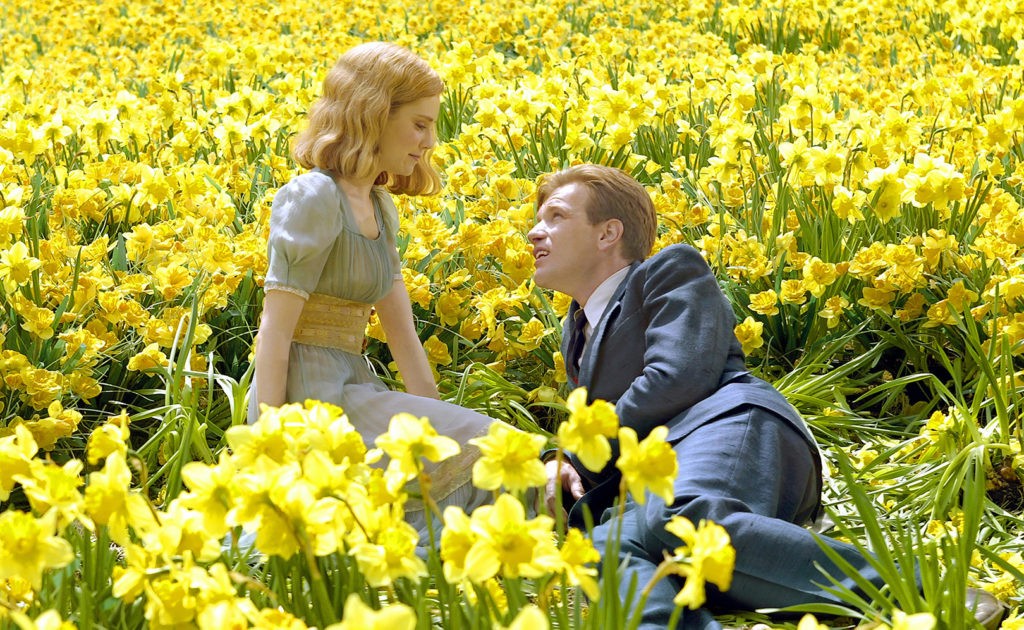
"Big Fish" is considered one of Tim Burton's kindest films.
The film tells the story of William Bloom, a journalist who is comfortable in reality, and his father, Ed Bloom, a retired traveling salesman who loves to tell fantastic stories, passing them off as truth. Before his father's death, the son immerses himself in these memories again, trying to understand where the truth lies and where the fiction is, and finally to find out who his father Edward Bloom really was.
Tim Burton took on "Big Fish" at the invitation of the Jinks/Cohen company after the failure of "Planet of the Apes," so his career was in dire need of such a reliable project.
Aesthetically, the film is not typical for the Maestro of Gloom — his signature gothic aesthetic is very neat and restrained here, and the cheerful, literally vibrant Ewan McGregor (young Edward Bloom) in the lead role contrasts with Burton's usual cast.
But this doesn't stop the film from being "Burtonesque": the director once again masterfully blends the real and fictional worlds, making the viewer look at life and death in a new way.
6th place — Big Eyes

"Big Eyes" was a very interesting attempt by Burton to step away from his own, long-established formula. The lead roles were not Johnny Depp and HBC, but the unexpected (and very bright) Amy Adams and Christoph Waltz, while the setting was done in a realistic style, as opposed to the standard gothic fantasy.
The story itself brings many interesting aspects to a narrative that, in the hands of any other creator, could have been another standard and boring biopic. But Burton's signature style still shows through in the details and small scenes. Therefore, the characters on screen seem alive. Real. And the story of the creation of the paintings of girls with big eyes keeps you in slight suspense until the end.
5th place — Edward Scissorhands
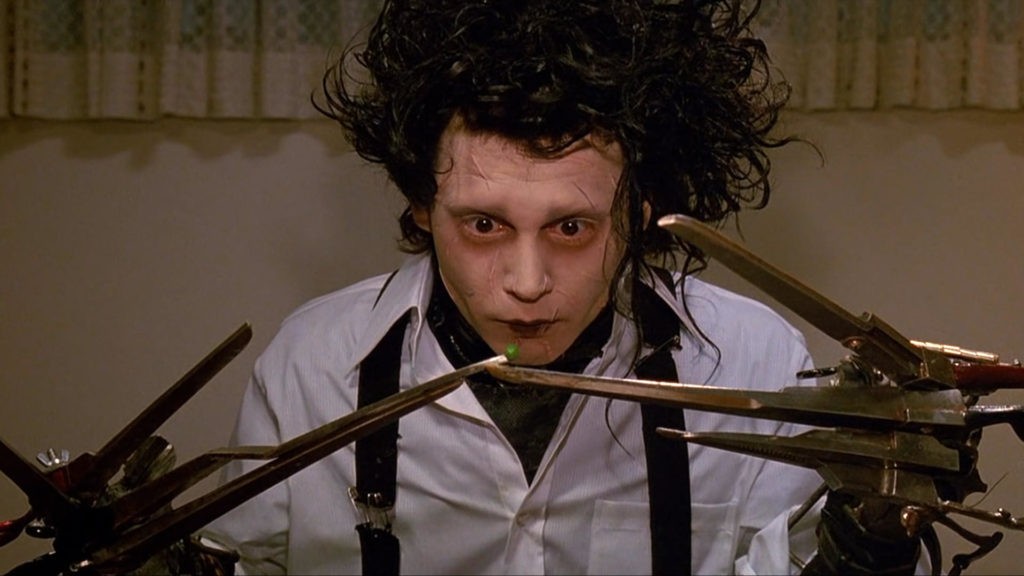
"Edward Scissorhands" is a big, heartfelt, incredibly beautiful, and perhaps the most touching film in Tim Burton's filmography. It is a colossal example of skillful and painstaking work on form and content, where the director masterfully mixed in one vessel both an authorial perspective and a story of growing up, first love, the tragedy of parting, and societal rejection that many can understand.
In many ways, for Burton (who himself was an outsider in childhood), this is a deeply personal story, turned into a beautiful fairy tale, albeit with a dark and unhappy ending. His alter ego Edward remains a child, unwilling to grow up, locking himself away in a Disney castle on a high mountain — far from everyone and from himself. But otherwise, this story would not be so poignant and would not still captivate the hearts of viewers today.
4th place — Beetlejuice
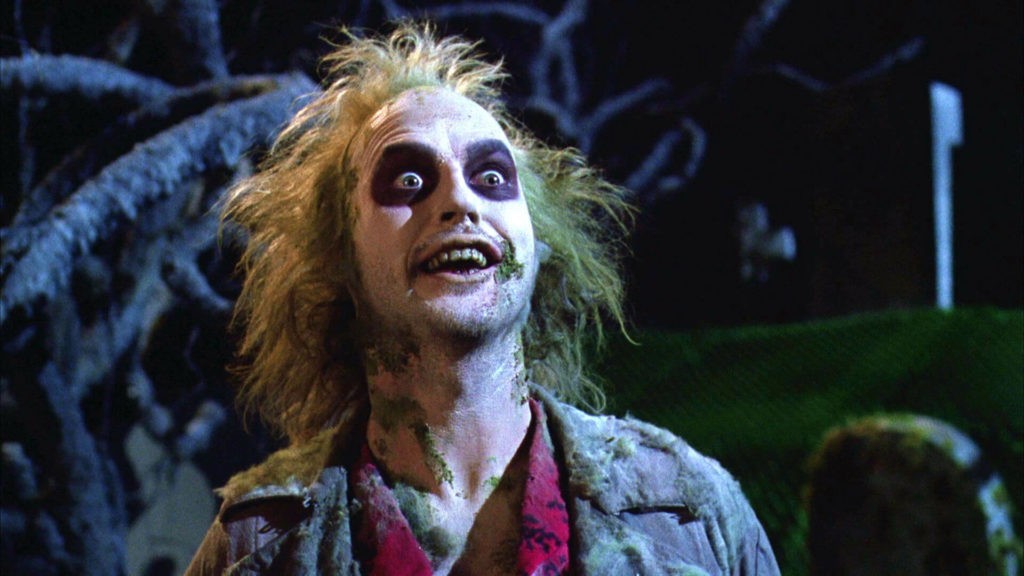
"Beetlejuice" is, in a way, the quintessence of early Burton. Here you have the gothic female lead, dark humor, and the signature color palette. Add to the mix a magnificent soundtrack by Danny Elfman — and you get such a strange and unusual film that it's hard to forget.
Don't overlook Michael Keaton either, who was the mascot actor for the eccentric director at the time. He appeared in the film for only a short time, despite being the title character, but left such an impression on audiences that he earned himself a second (post-afterlife) life in the form of an animated series and even an almost cult Broadway musical.
We also recommend you rewatch "Beetlejuice" one of these days. It's not all work all night on a drink a rom.
3rd place — Corpse Bride
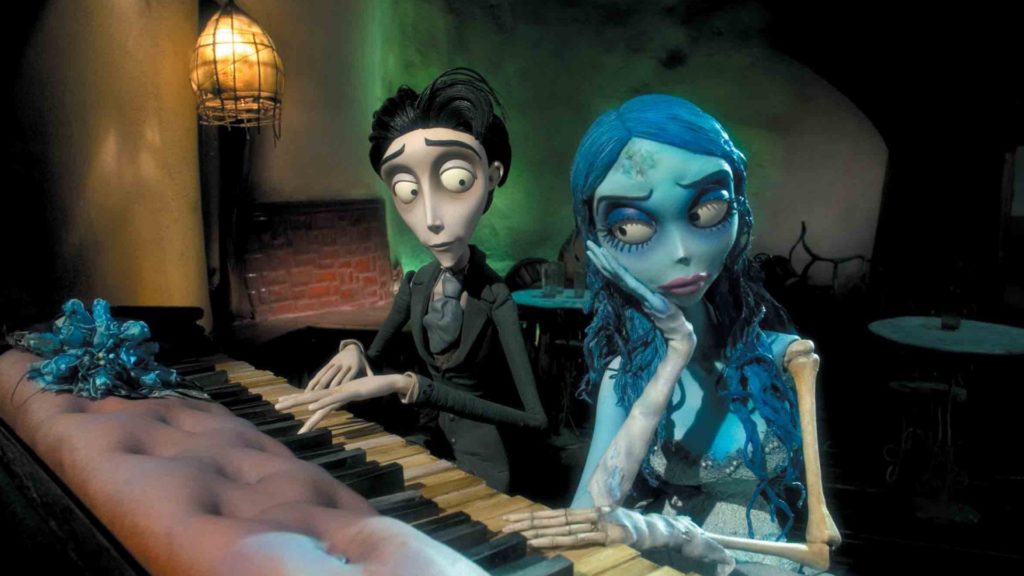
Nowadays, "Corpse Bride" looks a bit strange. The main problems of the characters stem from an inability to set personal boundaries. But in the 19th century, hardly anyone knew about psychotherapy, so the characters have to act on instinct. Their actions are followed by a crowd of the dead, throwing a danse macabre to the music of Danny Elfman, and watching it is a pure pleasure. As is the animation, which is stop-motion, and as it turns out, it was done by Laika Studios, which later produced the wonderful "Coraline" and "Kubo and the Two Strings."
The project involved the now-famous Alberto Mielgo. So, Tim Burton nurtured future talents! But their influence is hardly felt here; this is a thoroughly Burton project. Johnny Depp is there, gloom and reflections on death are there, and every frame is steeped in a gothic atmosphere. Pure Burton, no additives.
2nd place — Sweeney Todd: The Demon Barber of Fleet Street
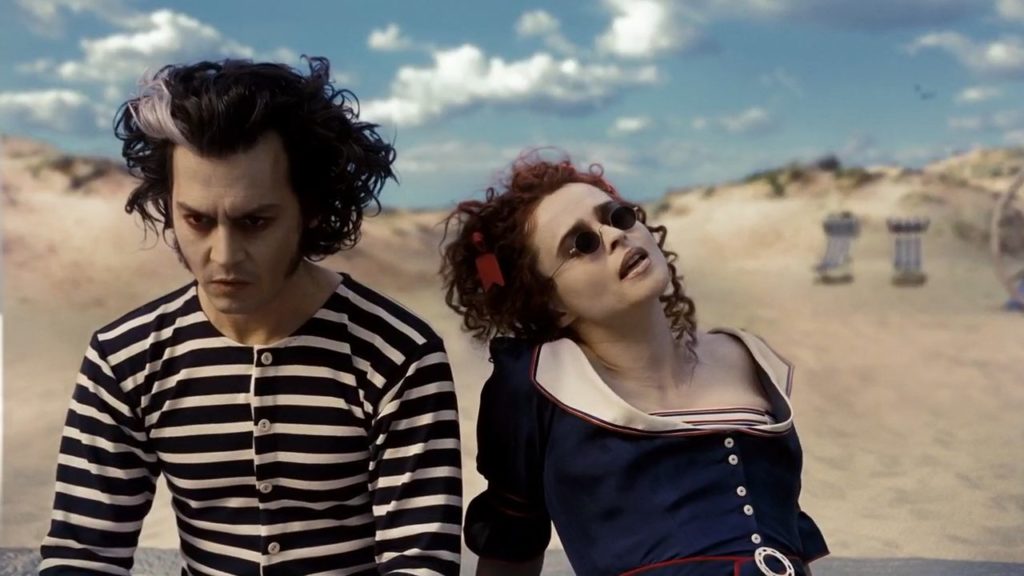
So, Captain Jack Sparrow, Bellatrix Lestrange, Severus Snape, and Peter Pettigrew walk into a barbershop. Sounds like a joke, doesn't it? But in reality, this is the cast of our hero's unexpected musical.
Almost nowhere in the promotional materials was it mentioned that "Sweeney Todd: The Demon Barber of Fleet Street" is a musical. Only one of the four promotional trailers for the film features a snippet where Johnny Depp sings. A week before the premiere, an international promotional trailer was released, also containing musical numbers. Every single actor underwent a preliminary audition with the musical's author, Stephen Sondheim.
Despite the film receiving mixed reviews at the box office, due to Johnny Depp's fear of blood (which ended up looking more like pumpkin juice), the result was a decent adaptation and a transfer of the story of the hero from the "Penny Dreadful" cycle to the screen. For Burton himself, the film became the most brutal and dark in terms of its staging in his filmography.
1st place — Sleepy Hollow
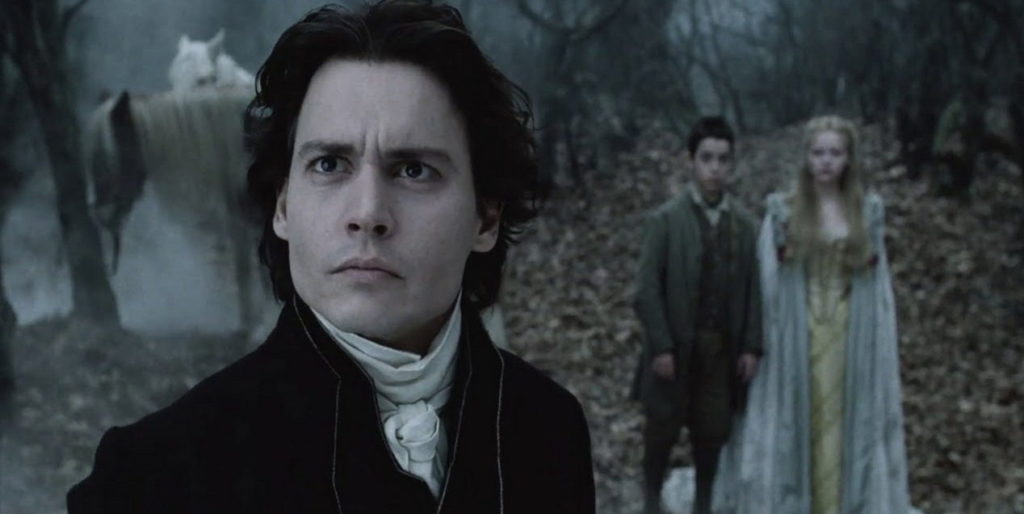
In "Sleepy Hollow," Tim Burton fully managed to combine his unbridled fantasies and humor on the edge of kitsch with a perfectly viable plot, based on Washington Irving's work about the Headless Horseman.
The macabre atmosphere of the film is compensated by the eccentric performance of Johnny Depp, who was approaching the peak of his acting prowess. The visual and musical framing are brought almost to perfection. You want to watch and rewatch this work not only on Halloween, when it is especially relevant, but also on any other day when you want to escape from this world and immerse yourself headlong in a story where the rational collides with the mystical in a stylish and captivating dance.
Comments
0No comments yet.
Sign in to join the discussion.