
Cult American indie director James Gray has made his own '400 Blows' and 'Radio Days' about injustice in the eighties. We figure out what went more wrong – Reagan's America or the film 'Armageddon Time' – in our review.
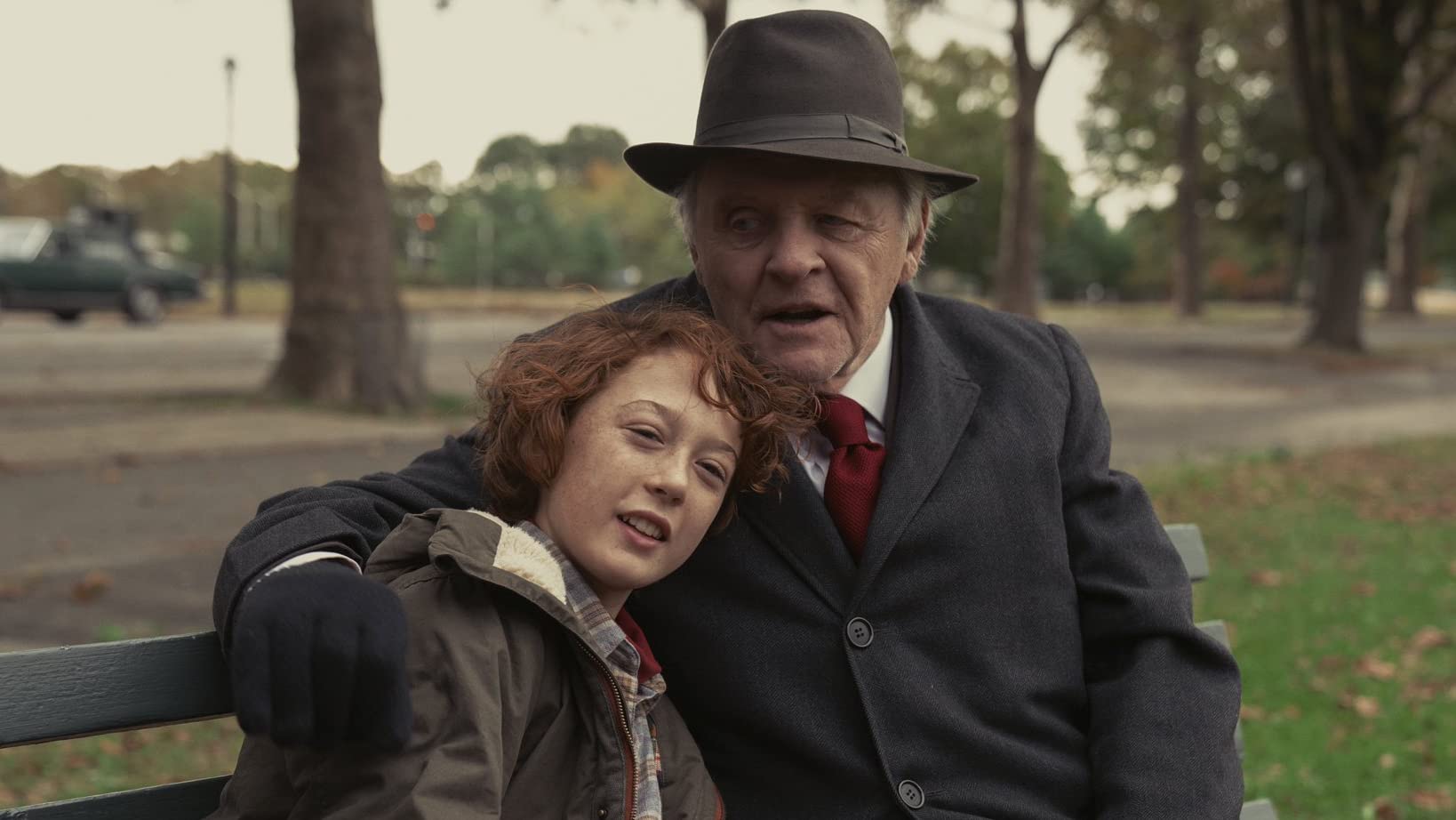
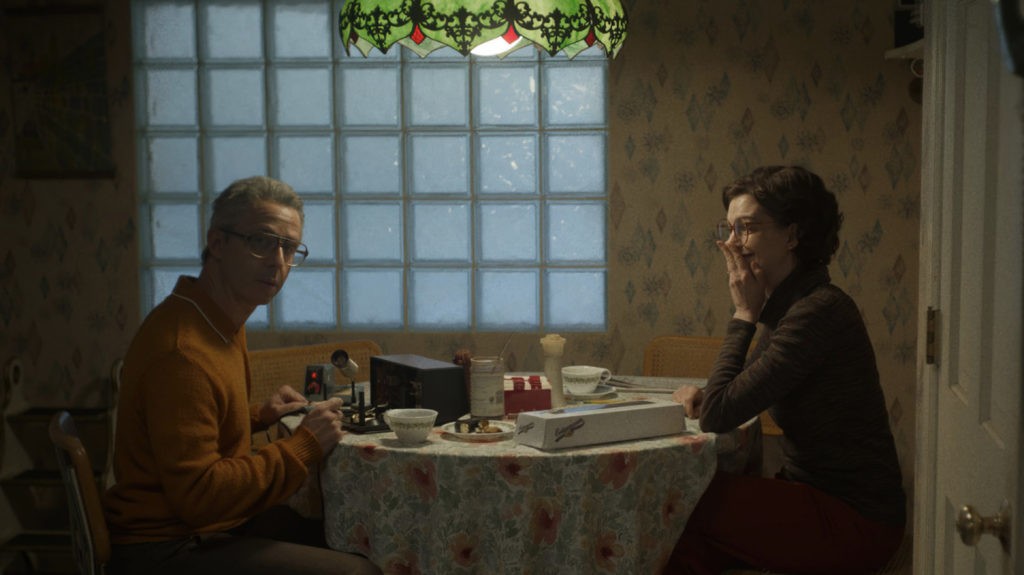
Twelve-year-old Paul Graff (Micheal Banks Repeta) attends public school, argues with his parents – a loving but exhausted mother (Anne Hathaway in a supporting but interesting role) and a father with issues (Jeremy Strong, a big role) – loves his grandfather very much (an outstanding performance) and dreams of becoming a great artist. This not-too-well-disguised self-portrait of the director's childhood references in some sense Truffaut's 'The 400 Blows' and in some sense Woody Allen's 'Radio Days.' Unlike the former, it lacks fury; unlike the latter, nostalgia. Don't be fooled by the grainy image and the autumnal golden frames – this is a melancholic story the director remembers clearly but has no desire to return to.
Having watched dozens of varied films, our team has settled on a list of the 10 best films of 2021 and is eager to share it with you.
Open materialThe main plot – what usually fills the space between the opening and closing credits – is not exactly absent here, but quickly takes a backseat. The central conflict of the film is that Paul Graff starts a friendship with a black boy named Johnny (Jaylin Webb), and his liberal parents disapprove of this friendship, even though they themselves, as Jews, are often looked down upon. In this oppression of the oppressed, there is, alas, a bitter irony.
One day, Johnny brings a marijuana cigarette to school and smokes it with his friend. This rather harmless transgression forces Paul's parents to send him to a private school, which they cannot afford (his father is a plumber, mother a teacher), but for which his enterprising grandfather is willing to help pay. Naturally, the private school is bad (and it's even sponsored by Donald Trump's father!), but that's neither the scariest nor the most important part.
The important part lies in conversations with his grandfather, who teaches his grandson not to contribute to class and racial inequality, in the fear of his father, in the pity for his mother, and in many other things Paul Graff has to face at the age of twelve. It's not that the burden of his troubles is unbearable – and, note, neither is the burden of his privileges (compared to Johnny, it's pure happiness) – but at that age, changing schools is a tragedy, a fight with his father is an event, and his grandfather's stories about the Holocaust are perceived as anything but historical facts.
In principle, it is an engaging film, especially if you are about fifty years old and your name is James Gray. The director here somewhat shamelessly recalls his own childhood, some of whose problems clearly preoccupy him, and to make them resonate with others, he adds a political dimension to the personal, rhyming the fate of a child with the fate of the country. It cannot be said that 'Armageddon Time' is dedicated to trying to understand when exactly everything in America went wrong (Paul Thomas Anderson has staked that claim in American cinema, so let's not interfere), but Gray keenly feels social injustice and shares that feeling.
A hippie detective investigates the disappearance of his ex, an alcoholic with PTSD turns to faith, a neurotic finds love, and a prospector finds oil. All of Paul Thomas Anderson's films from worst to best.
Open materialOf course, one should not expect revelations from the film; there is quite a lot of the obvious here: Gray, for example, condemns the practice of private schools. And it's clear why – yes, the education is better there, but the main point of school is not education, but rather that it reinforces the reality of the class structure of post-industrial society. The offspring of the rich grow up with the rich and from childhood learn to despise the poor, reproduce class practices, and listen to speeches from a man named Trump. Yes, this is no great idea and certainly not a revelation, but demanding revelations is generally bad form.
Moreover, naturally, although political problems do concern the author, he does not make the film because of them, but because of still relevant childhood experiences. 'Armageddon Time' is a story about how a moderately pleasant boy made a series of moderately critical mistakes, then messed up big time, and is still pondering what could have been done differently. Such a thoughtful, self-indulgence-free look at his own past, while not guaranteeing a successful film, makes Gray a remarkably likable person.
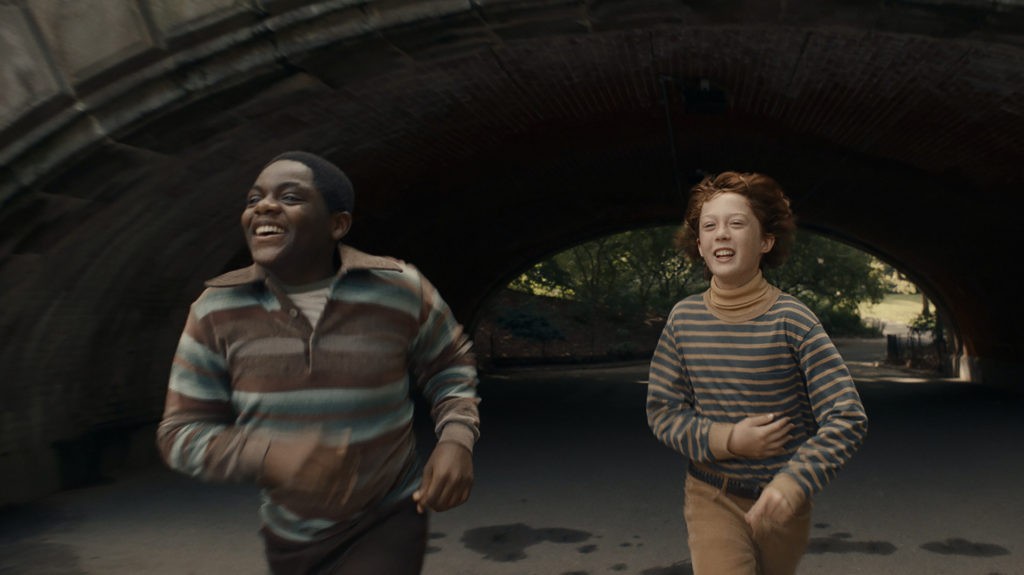
Despite its title, 'Armageddon Time' hardly makes the heart beat any faster, but interestingly it induces melancholy. A galaxy of talented actors flickers on screen; they interact, argue, create the atmosphere, but their collisions do not form any coherent action. It is a cast of memory, the reality already slightly worn; the former 3D of memories replaced by grainy film, any texture leveled with the landscape, this entire shimmering stream occasionally interrupted by flashes in unexpected and therefore, perhaps, particularly charming places – here a boy launches a rocket with his grandfather, there the same boy examines a Kandinsky painting, and then a completely different boy says goodbye forever to his grandmother.
The subjectivity of the perspective is seriously disrupted only once – when instead of Gray's conventional memories, we see this farewell scene from Johnny's point of view. This very brief episode – half a minute of screen time – sticks in the memory. Unable to change the world, defeat injustice, or correct mistakes, Gray at least in cinema grants the protagonist's friend the agency that all characters will sooner or later deny him.
'Armageddon Time,' while telling about the eighties and peering into the twenties, convincingly shows that the era is not great and life is so-so, that the titular armageddon is apparently imminent, it is unclear who to be in such a situation, or what to do. James Gray, as usual, gives no answers (and what answers can a person give from the perspective of a twelve-year-old boy facing the world's injustice?), simply reminding us that life is hard. Not that we, honestly, ever forgot, but here we have Anthony Hopkins and periodically The Clash playing, so what more could one want?
Comments
0No comments yet.
Sign in to join the discussion.