

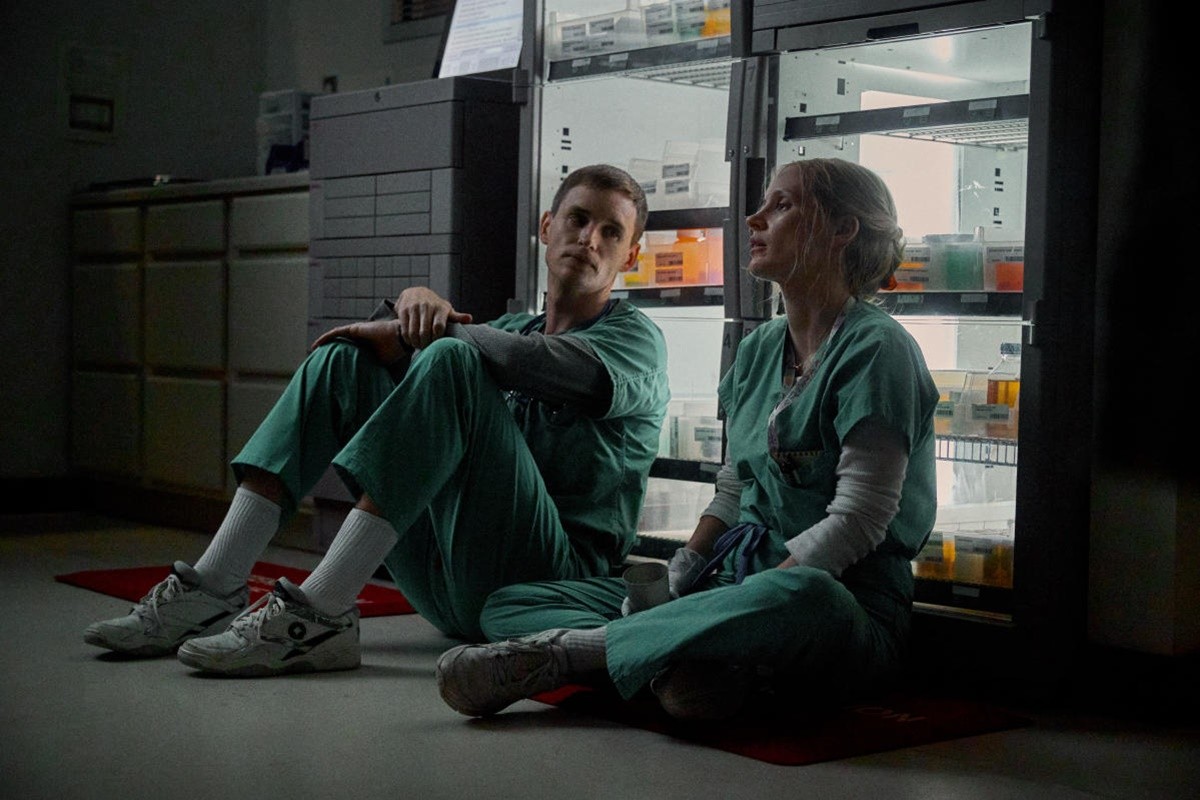
In 'The Silence of the Lambs', in addition to investigating murders, the ethical side of the unhealthy relationship between Hannibal Lecter and FBI agent Clarice Starling was explored. Another opinion on this topic is offered by the drama 'The Good N...
The film tells the story of a nurse named Charles Cullen (Eddie Redmayne), who killed about 300 people in nine US hospitals over a 16-year career. In one of them, he meets Amy (Jessica Chastain), who becomes his good colleague and unsuspecting friend. Gradually, she uncovers the truth, which puts her before a difficult choice.
Due to the popularity of the true crime genre, streaming services compete with each other for the best adaptation of 'based on real events'. Warmly received at the Toronto Film Festival, 'The Good Nurse' is just such a project. The film, directed by Tobias Lindholm, is based on Charles Graeber's book 'The Good Nurse: A True Story of Medicine, Madness, and Murder', which tells the story of a healthcare worker who destroyed the lives of innocent patients. Moreover, it feels as if Cullen didn't care who died because of his games with the healthcare system.
In real life, Charles himself never revealed the motive for his crimes, but in the film, Redmayne's character explains his actions with the phrase: 'Because I didn't get caught', hinting at obvious problems in the US healthcare system. According to the director himself, he wanted to achieve this emphasis: to show how much more important status and reputation are for hospitals than the collateral victims.
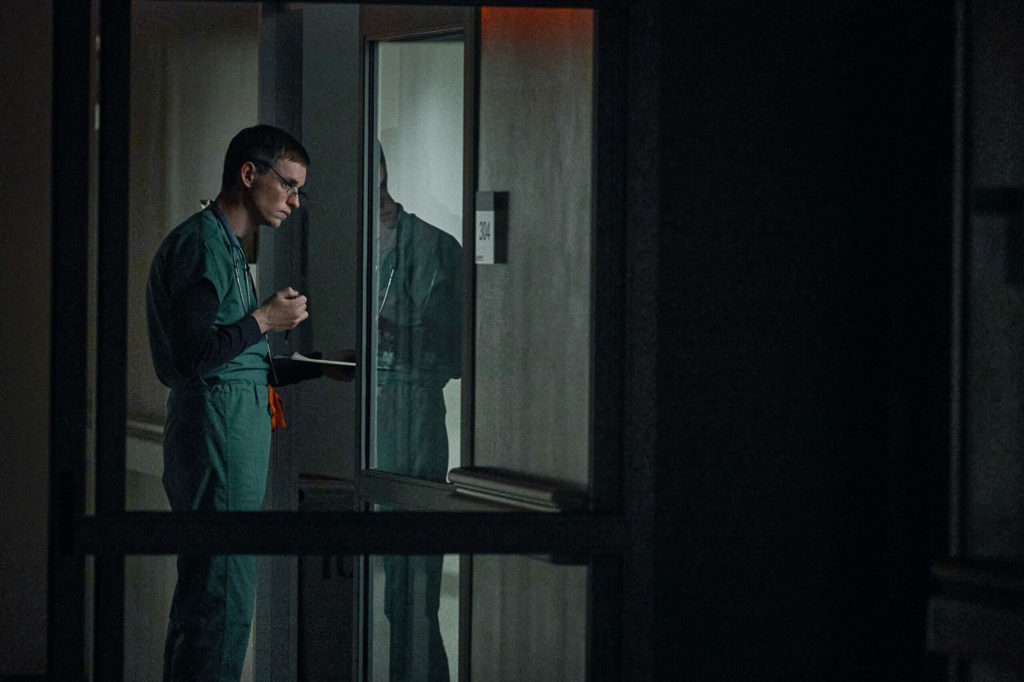
But still, the main theme that Tobias Lindholm dissects is the ethical dilemma arising from the relationship between Charlie and Amy. How can good coexist with evil? Is it possible to feel love and sympathy for a murderer without a guilty conscience? Is humane treatment a privilege only for law-abiding citizens? Here, 'The Good Nurse' enters an absolutely gray area where there are no right answers. And the characters are forced to blindly figure out what is good and what is bad for themselves. This is the uniqueness of this story — the director doesn't even try to judge or evaluate the characters from the standpoint of general moral values. The film examines what is happening from the personal perspective of each character. What would you do in the place of Jessica Chastain's heroine?
The incredible luck of this film is the cast. Eddie Redmayne and Jessica Chastain are actors of great depth, deserving all compliments for their performances in 'The Good Nurse' and their dedication to the profession: to prepare for the filming, both underwent training at a 'nursing school'. The film has many close-ups, so attention unconsciously focuses on the slightest changes in facial expressions, eye movements, lip twitches. The level of emotional tension and anxiety is created not by artificial methods, but mainly through the subtle acting of the actors at the limit of their capabilities. The scene in the cafeteria, partially shown in the trailer, is perhaps the peak where the watershed finally occurs, leaving a deep impression. At the same time, the mise-en-scène itself is built quite simply.
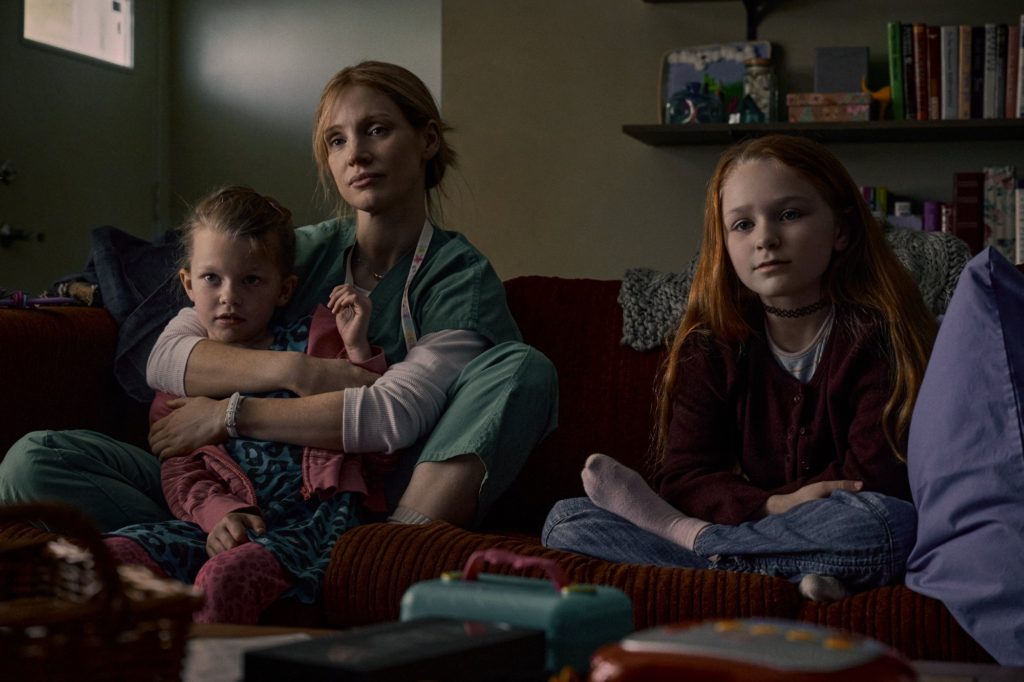
No less attention is paid to physicality: Redmayne's character's movements convey a repulsive otherness, while Chastain seems to know from her own experience what cardiomyopathy is. An additional bonus to the impressive acting comes from interesting angles, visual finds, and color grading of the frame — all of this works to create the atmosphere, setting the right tone for the story.
I also want to mention Kim Dickens. The star of 'The Walking Dead' spin-off performed very well here. Despite her small role, she had several scenes where she delivered a strong performance.
However, there is one criticism of 'The Good Nurse', but it is specifically addressed to those who handled the Russian localization of the film. Because judging by the last words, the main character of this story is not a nurse at all.
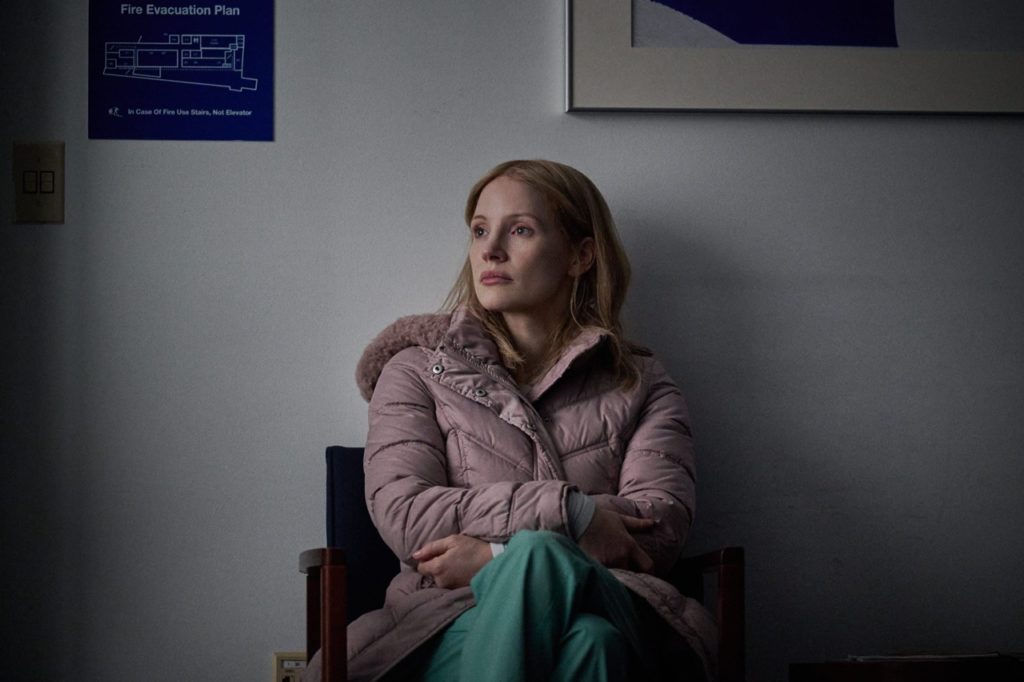
Can a criminal, especially a murderer, be tamed using only kindness? Where is the line where a person ends and a monster begins? This can be discussed a lot and at length. And thanks to 'The Good Nurse', this question has become a little more gray and ambiguous, as in any conversation about people.
Comments
0No comments yet.
Sign in to join the discussion.