
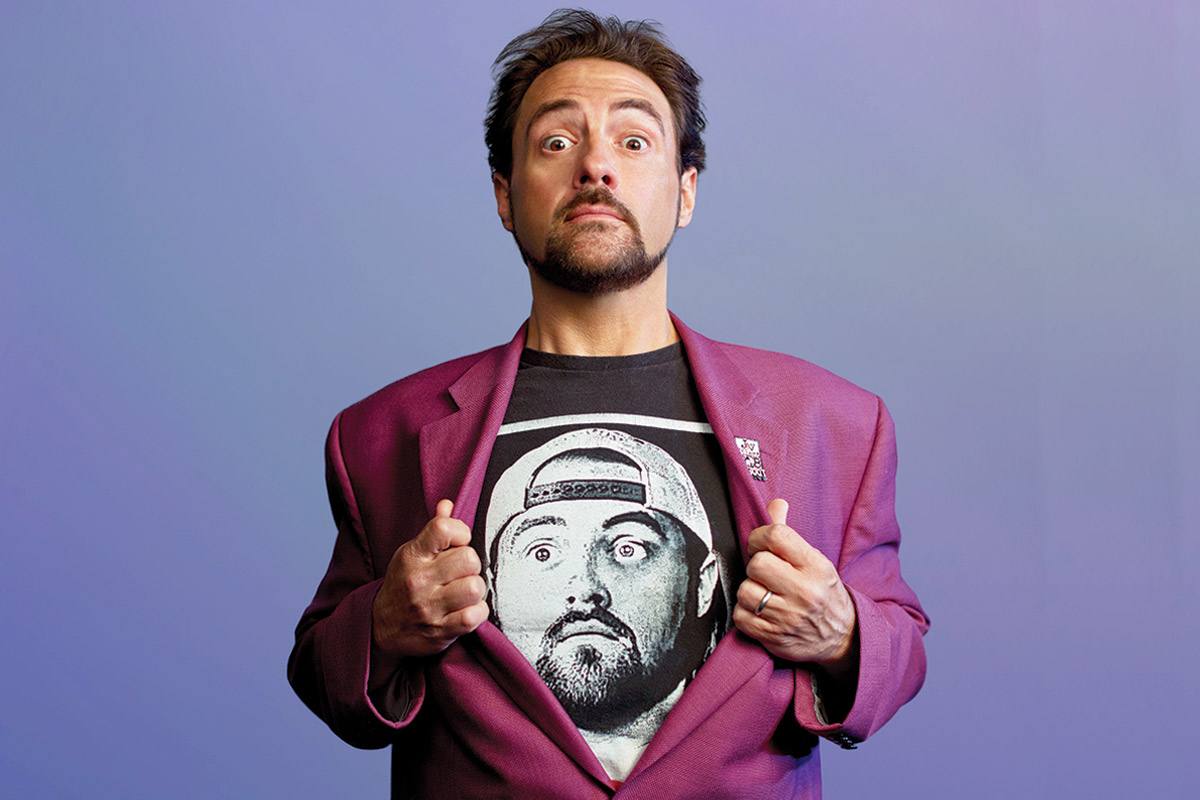
I won't hide it—I haven't seen the third "Clerks" yet, but I'm already thrilled! Isn't that a reason for us to remember why Kevin Smith is so good?
In his youth, Kevin Smith worked in film distribution (a magical place that nurtured directors at the turn of the century). Even then, he loved all things geeky, cool space blockbusters, and the comedy genre. When he was just over 20, he saw Richard Linklater's film "Slacker" and realized what kind of movies he wanted to make.
How Did It All Begin?
Smith's debut was "Clerks" (1994). An intimate black-and-white comedy made with his own money, it conquered Sundance and the Cannes Film Festival with its simplicity, humor, and sincerity. The aspiring comedian and director was given a blank check—after one of the festivals, Miramax bought the distribution rights.
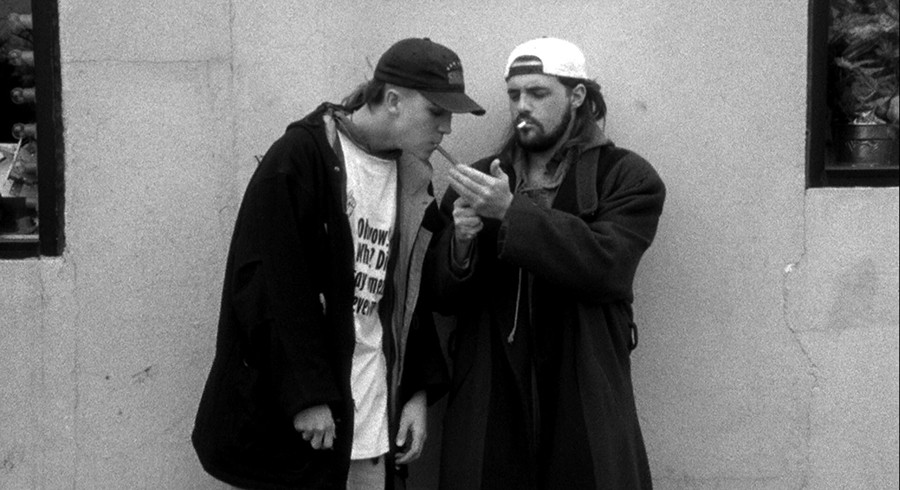
"Clerks" is a unique film whose script was written according to the canons of de-dramatization. In this way, it is very reminiscent of the works of . And because of the black-and-white film, chosen, according to Smith himself, due to lack of money for color, it even resembles the work of Michelangelo Antonioni .
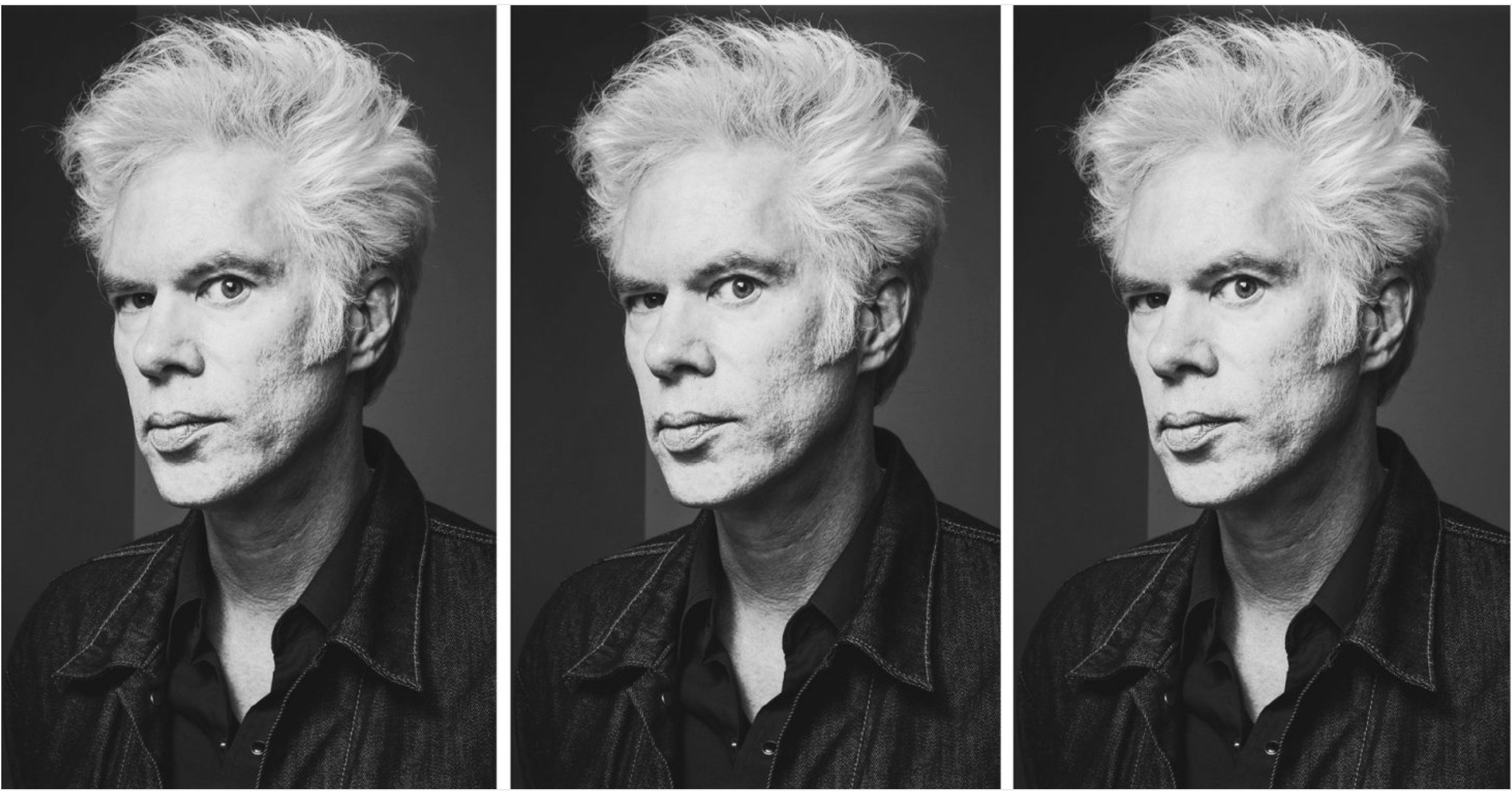
Jim Jarmusch is 68! Let's remember why we love this outstanding and unlike any other American director.
Open materialThe story of guys with boring lives and clichéd dreams really resonated with audiences used to seeing very different characters on screen. This turned "Clerks" from a low-budget independent film into an anthem for geeks.
"Clerks," by the way, was the first film to feature some of the most iconic characters of the 21st century—the small-time drug dealers Jay and Silent Bob.
Some of Smith's films take place in the fictional town of View Askew in New Jersey. Fans call this series the View Askewniverse (View Askewniverse). It includes the aforementioned "Clerks" and its two sequels, "Mallrats," the cult classic "Dogma," the Jay and Silent Bob duology, and "Chasing Amy."
In these films, Kevin Smith emerged as a text-based comedian. He doesn't have long dialogues or over-explanation—every pompous monologue is squeezed to the maximum and always ends with a worthy sharp punchline.
Man is neither physically nor psychologically capable of withstanding the boundless power of the true voice of God. If you heard it, your mind would boil and your heart would explode. We wrote off five Adams before we figured it out.
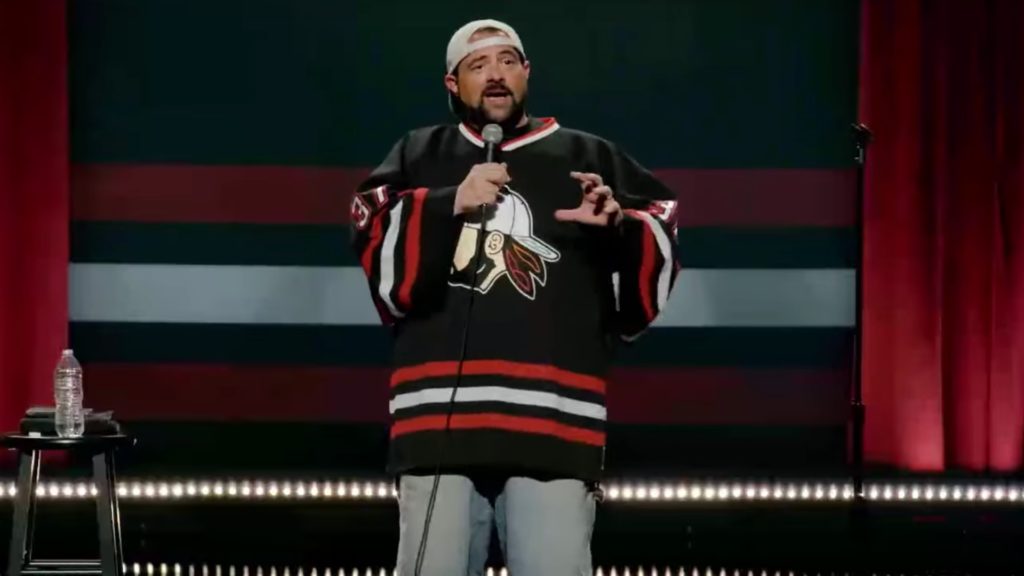
By the way, despite the fact that Smith delivers jokes well (you can watch his specials and see for yourself), Silent Bob, whom he plays, is known for his silence. His pauses are very appropriately written from a screenwriting perspective—another technique of literary humor.
Not Just One Genre
But it can't be said that Kevin Smith is only a comedy director. It is precisely in combining genres and constant experimentation in storytelling that his directorial style lies. Kevin Smith knows how to take a situation to the point of absurdity, but in such a way that the viewer believes in what is happening as much as possible. This is achieved through well-complementing characters.
For example, Bethany, the main character of "Dogma" played by Linda Fiorentino, a Christian who has lost her faith, is given an important task by God—to prevent the exiled angels Bartleby (Ben Affleck) and Loki (Matt Damon) from returning to heaven. She gets help from Jay and Silent Bob, guys who have been selling weed to schoolkids their whole lives. Such contrasts help the plot develop in unexpected and exciting ways, regardless of genre.
Never Make "Jersey Girl"...
In the second period of his work (the division is quite arbitrary, let's call it the period of the 7th rule), Smith made very unexpected films—"Jersey Girl," "Zack and Miri Make a Porno," "Red State." These films were far from the director's previous work and had neither commercial success nor audience love (although everyone who once watched movies at 9 PM on the STS channel knows "Jersey Girl" by heart).
The projects turned out to be controversial. But Smith himself regretted "Jersey Girl" the most. It was too ordinary a project, without his signature authorial style, with a very slow and predictable plot that was supposed to hook audiences with star actors (take Bennifer, for example), but didn't hook them for such big sums.

Dark times came for fans of Smith's work—the director they loved for a certain style and specific themes was now telling completely different stories in a different cinematic language.
The Old New Smith
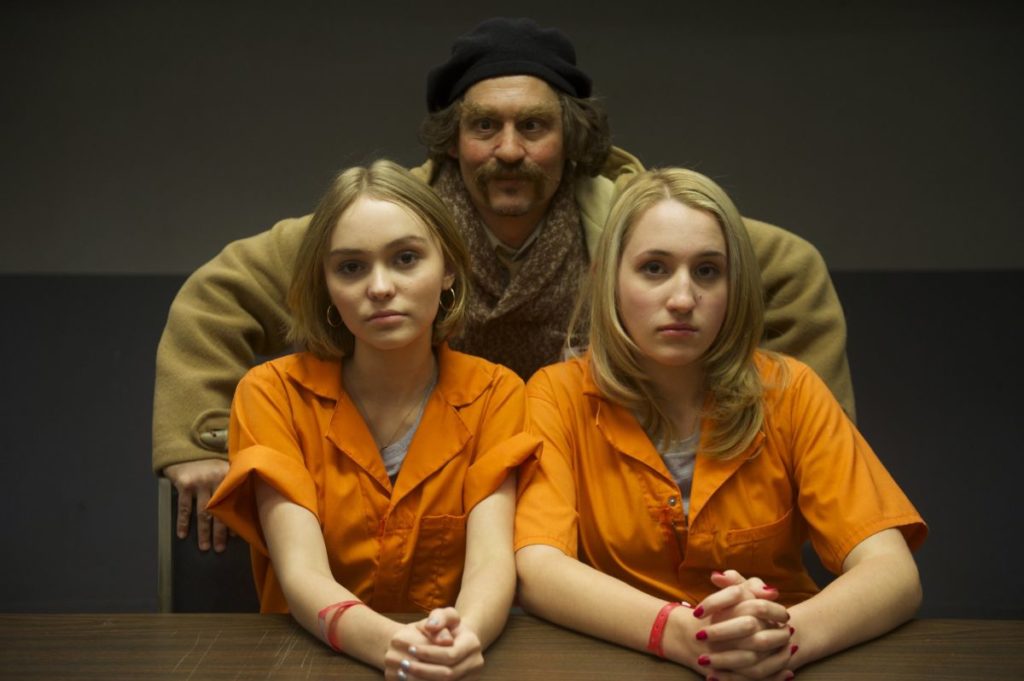
In 2014, the film "Tusk" was released—a trash comedy whose idea Kevin Smith and his friend and colleague Scott Mosier came up with during one of their podcasts. Smith even held a vote on Twitter asking if fans wanted to see this film.
The final work was received ambiguously. Some rejoiced, claiming that the good old Smith had returned. Others were outraged, expecting more geek satire instead of absurdity. The director himself wanted to make an anthology in this setting, but due to the failure of the second part—"Yoga Hosers"—he decided to close the project.
The Biggest Geek in All of Hollywood
I've already used the word "geek" several times in this article, but there's no other way, because Kevin Smith is called the biggest geek in Hollywood (a more than honorable title). There are many reasons for this.
In his work, he often references comics and popular science fiction. Smith even wrote comics for Marvel in the late '90s, and named his daughter after Harley Quinn. The characters in his films are very organic, without the caricature quality seen in the heroes of "The Big Bang Theory" (where, by the way, he had a cameo).
Smith's projects themselves have become so popular that they are now referenced: "Captain Marvel," for example, inserted a signature cameo of Stan Lee reading the script for "Mallrats."
The character names in many View Askewniverse films are borrowed from the heroes of the cult classic "Jaws"—one of the greatest films according to Kevin Smith.
In fact, Smith's references are much deeper and more interesting than they seem at first glance. Besides pop culture, he often cites the mythology of different peoples, Christianity, independent films, and even... hockey—in many of his films, either someone plays this sport or uses its equipment for unintended purposes.
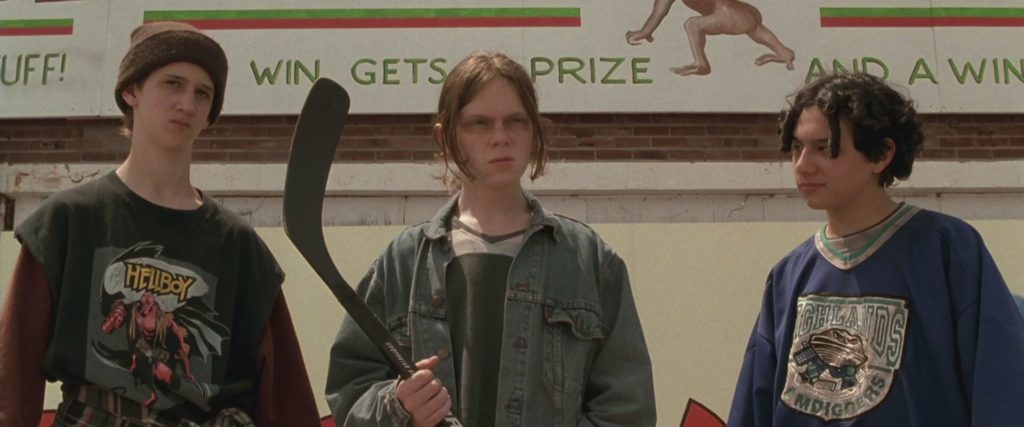
Easter eggs in his works can also be seen referencing himself. Kevin Smith has mastered the art of referencing his own work to perfection. He often quotes previous works, leaves MacGuffins from past projects as allusions. You could even call it his own ecosystem (not without some pomposity, of course). Each subsequent View Askewniverse film is an organic and, in my opinion, elegant deconstruction of that very movie magic. Characters develop not only according to age and time, but also in the context of Kevin Smith's own worldview and the evolution of comedy and cinema as a whole.
Judging by the trailer, the third "Clerks" seems meant to conclude this long story about two seemingly boring, but actually not, Dante and Randal. Personally, I expect something completely new and very touching, and you?
Comments
0No comments yet.
Sign in to join the discussion.